Jun 20, 2012

Group looks to turn forest waste into fuel for jets : Missoulian: News and Resources for Western Montana


LINDA THOMPSON/Missoulian
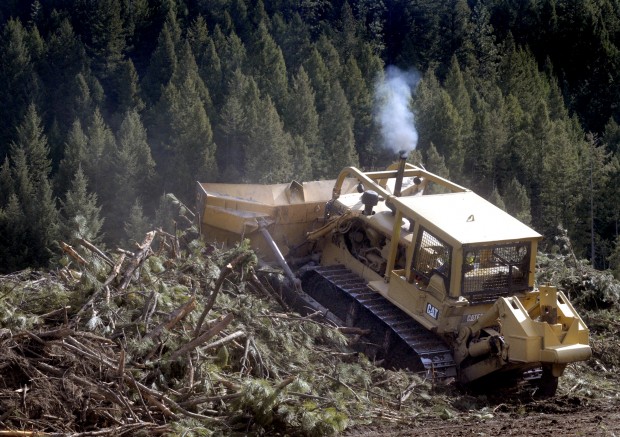
Wood waste from a thinning project is pushed into piles in the Bitterroot National Forest. The Northwest Advanced Renewables Alliance is looking to help the science and the infrastructure develop to produce jet fuel from such waste.

Related Links
Northwest Advanced Renewables Alliance website

The future of Pacific Northwest forests may lie in the stuff loggers now leave behind.

That’s the bet the Northwest Advanced Renewables Alliance has made in networking a roomful of professors, business leaders and government officials to turn wood waste into jet fuel. They’re working through a $40 million federal grant to envision all the mills, pipelines, refineries, outreach programs, permits and spinoffs the industry could create.

There’s just one hitch: Nobody has yet figured out how to economically make isobutanol fuel out of tree tops.

“We know that figuring out how to break cellulose down into sugars is the big gridlock,” said Montana State University extension forester Peter Kolb. “But you can’t afford not to pursue wood. Producing bioenergy from forests is the only agricultural practice in the world that also provides clean water and recreation and doesn’t compete with food production.”

Last week, about 20 NARA members and an equal number of interested stakeholders met in Missoula to hear the effort’s progress. Washington State University engineering professor Michael Wolcott acknowledged the program was a little like planning a city on Mars before anyone has a rocket to get there. But he argued there were plenty of good reasons to prepare for the rocket’s arrival.

Alternative energy ideas come in dozens of flavors. With cars, designers have promoted plug-in electric motors, hydrogen fuel cells, modified diesel fuels and mass-transit alternatives. But the aviation world is different.

“We can’t fly planes on electricity,” Wolcott said. “They’re going to be depending on liquid fuels for quite a while. Nothing else can match the energy density.”

That’s the amount of work a given technology can wring from a given amount of fuel. Nuclear power can move an aircraft carrier, but its reactors are too heavy to put in an aircraft. And so far, no one’s come up with a better plane-pusher than the internal combustion engine.

So NARA’s organizers feel safe betting that some scientist will crack the secret of turning wood into jet fuel. And when that breakthrough arrives, a lot of other things need to be in place.

“We need to understand the whole ecology of this industry,” said University of Idaho education coordinator Steve Hollenhorst. “There are decisions to be made about business locations, supply chains, how to develop the work force. We need to get people more literate about the implications.”

The concept resembles the old description of a good butcher who makes use of every part of a pig except the squeal. Kolb said traditional logging and present-day hazardous fuels reduction both produce huge amounts of now-valueless branches, needles, bark and skinny trees that can’t pay their way out of the woods. A biofuel industry would turn that material into a valuable resource supporting forest conservation as well as community jobs, he said.

Scientists already know ways to turn wood into jet fuel. The current methods can’t compete with conventional petroleum-based fuels. But anyone shopping for a plane ticket knows how much the airline industry gets whipsawed by the volatile nature of fuel prices. Adding a new supply source of jet fuel, even if it only met a fraction of the demand, would stabilize those price swings, according to Paul Smith, a NARA member from Pennsylvania State University.

“Just that stability is worth a premium,” Smith said. And both the private aviation industry and the U.S. military have committed to biofuel blends as a way to control their fuel costs.

The industry would need infrastructure that doesn’t currently exist. It takes people and equipment to haul the slash out of the woods and prepare it for fermentation that would turn the wood fibers to sugars and then alcohols. Fuel refineries would need capacity to process the wood fuels into forms that don’t corrode pipelines or engine parts, the way ethanol from corn now does. Those plants and processes might differ greatly between the wet Douglas fir forests of western Washington and Oregon and the dry pine forests of Montana, Wyoming and Idaho.

Kolb added that a host of environmental concerns needed attention, too. While harvesting slash could reduce the amount of waste burning in the forest, collection could affect water quality, wildlife habitat and forest health. The still-unclear effects of climate change and beetle-kill must be considered.

“This doesn’t mean vacuuming up all the woody debris in the forest,” Kolb said. “But in Montana, we’re looking at piles of thinning debris we’re spending $2,000 to $3,000 an acre to clean up. In this dry climate, they will persist for 50 years, unless they burn, in which case they burn so hot we get soil sterilization issues. This is a gold pile nobody’s using.”

NARA formed two years before winning its U.S. Department of Agriculture funding. It now wants to have its roadmap for industrial development ready for review by September. Then it will spend the next four or five years researching the ways that roadmap can become reality.

“I don’t want to see another study sitting on a shelf that I can’t use,” warned Tracy McIntire, the current president of the Montana Cooperative Development Center. “Who’s going to find the business models to run with this?”

“There are six companies in the hunt for this right now,” Wolcott responded. “They don’t start lawsuits over technologies that aren’t worth fighting over. We know cracking softwood is the hardest one to do. But if we’re able to crack that nut, the larger potential infrastructure is already there. That’s our big challenge.”

Reporter Rob Chaney can be reached at 523-5382 or at rchaney@missoulian.com.

Jun 19, 2012

Hines Farm Coal Creek - 2008 Storm Damage Cleanup


Larger Image

Hines Farm Coal Creek - 2008 Storm Damage Cleanup reaching conclusion. Damaged tree debris and brush being burnt and turned into biochar... to be used with composting materials...With Heat Index today at 96 degrees, glad we finished up around 2:00 PM...

Marsh Marigold at Merwin Nature Preserve Illinois - YouTube


Published on Apr 4, 2012 by illinoisbay
March blooming Marsh Marigold in cold seep.

Marsh Marigold
Caltha palustris
Buttercup family (Ranunculaceae)

Description: This native perennial plant is about ½–2' tall; it branches regularly. The stems are hairless and hollow. Basal leaves are produced early in the year, while alternate leaves are produced along the stems. The blades of these leaves are up to 4" long and 4" across; they are orbicular-cordate, finely crenate along the margins, and glabrous. Their venation is palmate. The petioles of the basal leaves are up to 6" long, while the petioles of the alternate leaves are shorter than this. The upper stems produce small clusters of bright yellow flowers on short petioles. Each flower spans about ¾–1½" across; it consists of 5-9 petal-like sepals, a thick ring of abundant stamens, and a cluster of carpels in the center. There are no true petals. The sepals are bright yellow, well-rounded, and slightly overlapping. The blooming period occurs during mid-spring and lasts about a month. There is no noticeable floral scent. Each of the carpels matures into a seedpod that contains several seeds. This seedpod is flattened and recurved; it splits open along the upper side to release the seeds (technically, it is a follicle). The root system consists of a short crown with fibrous roots. This plant spreads by reseeding itself. It occasionally forms loose colonies at favorable sites.


Cultivation: The preference is full or partial sun, wet conditions, and mucky soil. Shallow standing water is tolerated. Growth and development begin early in the year.

Range & Habitat: Marsh Marigold occurs primarily in central and northern Illinois, where it is occasional. In southern Illinois, it is uncommon or absent (see Distribution Map). This circumpolar species also occurs in Eurasia, where it is native as well. Habitats include various wetlands, including vernal pools in low woodlands, swamps, soggy meadows in river floodplains, marshes, fens, seeps and springs, and ditches. Marsh Marigold prefers sunny areas where the soil is consistently wet from underground seepage of water, although it occurs in other wetlands as well.

Faunal Associations: The nectar and pollen of the flowers attract flies and bees primarily. This includes Bombylius major (Giant Bee Fly), Syrphid flies, Halictid bees, honey bees, and others. Two leaf beetles are occasionally found on the foliage of Marsh Marigold: Plateumaris nitida and Hydrothassa vittata. It is possible that they eat the foliage. For other herbivores, specific information for Marsh Marigold is lacking. Because the acrid foliage contains toxic alkaloids and glycosides, it is usually avoided by mammalian herbivores. The seeds of plants in the closely related Ranunculus genus are eaten by the Wood Duck, Sora Rail, and some upland gamebirds. The seeds of such plants are also eaten by the Meadow Vole, Eastern Chipmunk, and other small rodents.


Photographic Location: Near the Collinson Marsh in Vermillion County. Several colonies of Marsh Marigold were growing in a ditch along a field where there was underground seepage of water from a neighboring bluff.

Comments: In sunny wetlands, Marsh Marigold is one of the first wildflowers to bloom during the spring. The flowers are showy and conspicuous because of their bright color and relatively large size. The foliage is an attractive bright green. This species is not a true marigold of the Aster family, in spite of its common name. Instead, it is closely related to the many Ranunculus spp.(Buttercups) that occur within the state. The various species of Buttercups have smaller flowers (less than ¾" across) and they usually bloom later in the year.

PERENNIAL MAXIMILIAN Sunflower - Seeds Forever


Uploaded by cookingupastory on Aug 17, 2007
A field of shimmering sunflowers; a flock of hungry birds feeding , and a farmer who shares some of his stories about his sunflower fields.

Maximilian's Sunflower
Helianthus maximilianii
Aster family (Asteraceae)
Description: This adventive perennial plant is 3-8' tall and largely unbranched, except where the flowers occur. The central stem is stout, round, light green to light red, and densely covered with short white hairs. The leaves occur alternately along the central stem, except for some of the lower leaves, which may occur oppositely from each other. These leaves are up to 12" long and 2" across. They are sessile against the stem, and narrowly lanceolate. Their upper and lower surfaces are light green and covered with fine white hairs. The margins of the leaves are smooth, or they may have widely spaced small teeth. Furthermore, the typical leaf folds upward from the central vein, and curls downward from the stem on account of its length. From the axils of the upper leaves, there are short flowering stalks. Each of these stalks is more or less erect, bearing a single composite flower and possibly 1 or 2 leaves. Each composite flower is about 2–3½" across. There are 20-40 yellow ray florets, which surround numerous disk florets. Behind each composite flower, there are green bracts that are lanceolate or narrowly lanceolate; they are covered with fine white hairs as well. The blooming period is late summer to fall and lasts about 1 month. The achenes are linear-oblong with a pair of awns on top. They are blown about by the wind, or distributed by animals. The root system consists of fleshy, fibrous roots and rhizomes. Like other perennial sunflowers, this plant can form vegetative colonies.

Cultivation: The preference is full sun and mesic to dry conditions. The soil can contain clay-loam, rocky material, or loess. This plant appears to have few problems with pests or foliar disease. It can grow tall and spread aggressively, and may flop over while in bloom if it is grown in moist rich soil.

Range & Habitat: Maximilian's Sunflower is an uncommon plant that occurs in NE Illinois, west central Illinois, and SW Illinois (seeDistribution Map). It is adventive from the west in most, if not all, of these areas. It is possible, however, that Maximilian's Sunflower is native to a few of the western counties where it occurs in high quality natural habitats. Habitats include rocky upland prairies, loess hill prairies, ledges of rocky cliffs, areas along railroads and roadsides, and waste ground. This plant is more common in states that lie west of the Mississippi River.

Faunal Associations: The flowers of this species probably attract many of the same insects as other sunflowers, including long-tongued bees, short-tongued bees, butterflies and skippers, and beetles. These insects seek nectar or pollen. The seeds of sunflowers are an attractive food source to both birds and small mammals (see Wildlife Table). The caterpillars of the butterfly Chlosyne nycteis (Silvery Checkerspot) feed on the foliage, while the caterpillars of several Papaipema spp. (Borer Moths) bore through the stems (see the Insect Table for additional species that feed on sunflowers). The foliage of young plants may be eaten by rabbits and groundhogs, while large plants are eaten by livestock.

Photographic Location: A city park in Champaign, Illinois, where a colony of plants occurred along a small lake.

Comments: Maximilian's Sunflower is named after an early botantical explorer of North America. This plant has attractive foliage and flowers, and it is easy to identify because of the unusual leaves. These narrow leaves are longer (up to 12") than the leaves of other Helianthus spp. in Illinois, and they have a distinctive light green or greyish green appearance because of their fine white hairs. Two native species, Helianthus grosseserratus (Sawtooth Sunflower) and Helianthus giganteus (Giant Sunflower), also have narrow leaves, but they are not covered with dense white hairs. Another species resembling Maximilian's Sunflower is Helianthus salicifolius (Willow Sunflower), which occurs in the southern Great Plains. The Willow Sunflower has narrow leaves that are even longer than Maximilian's Sunflower, but they are only ½" across or less. The Willow sunflower is not known to occur in Illinois at the present time, although a colony of 500 plants once existed in Cook County before it was destroyed by commercial development. These plants were undoubtedly adventive from the west

Jun 18, 2012

Coal Creek "Arch" - Hines Farm


Larger Image
"Arch" - Looking North - 2008 Wind Blown - Downed Cottonwood Tree


Larger Image
"Arch" - Looking South - 2008 Wind Blown - Downed Cottonwood Tree

St. Louis, Mo. has "Gateway Arch" and we have "Coal Creek Arch"... (-:

Wild Wood Duck Hen and 8 Babies Hiding From Camera - Hines Farm Coal Creek


Published on Jun 18, 2012 by HRT87

After being surprised by Wild Wood Duck Hen and 8 Babies swimming in Coal Creek, we attempted to video. Eileen was able to film 8 cute baby ducklings being called away by Mother Wood Duck Hen...
Nature is amazing....
Best viewed HD Full Screen

Jun 17, 2012

Korean Ginseng, Learn all about it's health benefits


Published on Jun 17, 2012 by overlander

Interesting story about how this interview came about. On Wednesday last week I decided I would like to do a story on Korean Ginseng after reading about it's benefits on the internet. So I put out a message on South Korean Facebook and couch surfing groups. Within 10 minutes someone replied to me on Facebook with a contact from the USA, the son of Shi Keum, the chairman of the Korea Ginseng Association. Only problem was Mr Keum did not speak English, so I needed a translator. I put out a call for anyone wanting to help with translation on couch surfing and that day Minji took up my offer. This is the english version of the interview with Mr Keum, with Minji providing translation ( I will upload the Korean version also)
We discuss the health benefits of Ginseng, why Korean Ginseng is considered the best in the world, what varieties of Ginseng are available, such as Red and Mountain Ginseng, how Ginseng can be taking and who should take it. This coming Wednesday I will be visiting the Geumsan province, which is the main area where Ginseng is grown to film how Ginseng is farmed and manufactured.

Jun 13, 2012

Technique: Organic Squash-Bug Control

Squash bugs feed on all members of the cucurbit family, which includes cucumbers, melons, pumpkins, and summer and winter squash.

The adults overwinter in garden debris and begin laying eggs in early summer.

In the OG Test Garden, we reduce squash-bug numbers, and their damage, by killing their eggs before they have a chance to hatch.

Find the eggs

Squash bugs lay eggs on the undersides of leaves in evenly spaced groups.

Get in the habit of scouting your squash plants for the shiny, yellowish brown to reddish eggs.

Also, keep your eyes peeled for the small, light gray or green, wingless squash-bug nymphs, which suck on the plant's sap, causing the leaves to wilt, blacken, and die.

Squish the eggs

Kill the squasheggs by gently rubbing them back and forth with your fingers, making sure you don't damage the leaf.

Squash-bug nymphs are also often present near squash-bug eggs.

If you see any squash-bug nymphs, be sure to squish them, too.

Check out our Growing Guide for more help with your squash.
Source URL: http://www.organicgardening.com/learn-and-grow/technique-organic-squash-bug-control


Links:
[1] http://www.organicgardening.com/learn-and-grow/cucumbers
[2] http://www.organicgardening.com/learn-and-grow/squash-growing-guide

Major Threat to Religion? Clergy People Coming Out as Atheists | Belief | AlterNet

June 10, 2012 |

A burst of media attention has been focused on atheists of an unexpected stripe -- clergy members. Could non-believing clergy change how we see religion?

Photo Credit: Monika Wisniewska/ Shutterstock.com

What happens when a clergy person -- a minister, a priest, a rabbi, an imam -- realizes he doesn't believe in God?

And what happens when he says it out loud? What happens when they find each other; when they support each other in coping with their crises, when they help each other with resources and job counseling and other practical assistance? What happens when they encourage each other to come out?

Could this affect more than just these clergy people and their followers? Could it change how society as a whole thinks and feels about religion?

That's what the Clergy Project is finding out. In recent months and years, atheists have been all over the news. But over the last few weeks, a burst of media attention has been focused on atheists of an unexpected stripe: clergy members. And in particular, attention is going to the Clergy Project, an online meeting place and support group that exists specifically for these unexpected additions to the ranks of the godless.

The project was inspired by the 2010 pilot study by Daniel C. Dennett and Linda LaScola, "Preachers Who Are Not Believers" (PDF), which exposed and explored the surprisingly common phenomenon of non-believing clergy. The need to give these people support -- and if possible, an exit strategy -- was immediately recognized in the atheist community, and starter funding for the Clergy Project was quickly provided by the Richard Dawkins Foundation for Reason and Science. Founded in March of 2011 with 52 members, the Clergy Project currently has over 270 members -- and since recent news stories about it began appearing, in outlets fromMSNBC to NPR to the Religious News Serviceto CNN, applications to join have been going up at an even more dramatic rate.

The cascade of news stories began when Methodist minister Teresa MacBain came to the American Atheists convention following last March's Reason Rally -- and made a dramatic unscheduled appearance at the podium, to announce that she was an atheist. "Being in a group of people with whom I could share openly without fear of persecution gave me the courage to come out," she told me. "The opportunity to stand before the crowd, come out as an atheist and share about the Clergy Project was too good to pass up. I was at the end of my rope and I knew it. It was now or never for me. As I walked up on that stage, I felt fear like no other."

MacBain had been questioning her faith since her early teens, when she came across contradictions in the Bible. "I went to my dad for answers," she said. "He simply shared that God's ways are so much higher than our ways that we can not understand everything in the Bible. Our response should be faith, not doubting. He then told me that doubting was a sin. I left that day and suppressed those questions. This practice followed me for decades."

But eventually, the questions became too much. She let go of her Biblical literalism, which at first helped resolve her doubts about Biblical contradictions -- but this soon made room for other questions to press on her. "Things such as theodicy [the problem of suffering and evil], the question of hell, God's omnipotence yet lack of intervention in heinous events, the historicity of Jesus... all these bubbled to the surface and demanded to be answered," she said. "My work to answer these questions began with the thought that as I discovered the truth, it would create a stronger faith and give me comforting answers to those in my church who were dealing with the same issues. Instead, the truth I found led me away from faith."

This experience is common among members of the Clergy Project. Clergy people, almost by definition, are people who take their faith seriously. They tend to think about religion carefully. They often (although not always) study their religion carefully. Unlike many believers, they actually read the Bible, or Torah, or Koran, or whatever the sacred text of their religion is. They think hard about questions that more casual believers are willing to let slide. After all -- that's their job.

But as many atheists will tell you, thinking carefully about religion is exactly what led them to abandon it. When you ask atheists, "What made you become an atheist?" reading the Bible is one of the highest items on the list. And when I asked Jerry DeWitt -- Recovering From Religion executive director, Clergy Project graduate and new-member screener for CP -- what kinds of ideas and experiences most commonly lead clergy members to question and eventually leave their faith, he answered simply, "Religion's inability to answer for or relieve human suffering."

Lawrence Hunter shares this experience. A former associate minister in the Black Pentecostal denomination Church of God in Christ, he says that a bad marriage "allowed me to see how life really was instead of the fairy tale versions that are espoused every Sunday... questions about good and evil, the Bible, marriage, suffering, tithes, church corruption and hell filled my mind. I realized that I needed to expand my understanding."

He adds that the failures of religion to meet basic human needs -- and the failures of church leaders to live up to the moral standards they demanded of their flock -- contributed to his questioning. "As a preacher," he says, "I could see that prayers weren't healing people, despite preaching on wealth the only people getting rich were the pastor. I could see that many, many people were mentally disturbed and a host of problems. Not to mention the scandals and adultery. This caused me to look deeper and really find out the true essence of my faith and why the holy spirit wasn't active like it supposedly was back in the Bible days. The rest is history."

And Catherine Dunphy, one of the original 52 members of the Clergy Project, agrees. "I was always curious about the Bible," she told me, "and read it, despite the fact that the church and its priests say, 'Don't bother.' In it I found ridiculous stories that only furthered my confusion." Dunphy, a former Catholic, also had her faith shaken by the widespread child rape scandals in the Catholic Church -- and by the Church's inexplicable response to them. "The bishop of my diocese, an asshole named Colin Campbell, issued a statement saying that the victims were responsible since they kept going back to the predatory priests!"

But for Dunphy, the final nail in the coffin of her faith was realizing that highly trained religious authorities didn't have any better reasons for their beliefs than anyone else. "I remember how frustrated I would become in class," she said, "given that it didn't appear to me that my profs had any more authority than I did!... I came to realize that we were all complicit in making this stuff up as we go."

For many people, questioning and eventually abandoning religion can involve deep emotional and psychological struggles. Atheists commonly say that they do feel relief, even liberation, when they finally relinquish the cognitive dissonance that religion requires, but the process is often difficult. This is often even more pronounced in clergy people... who, again, tend to take religion more seriously than the average believer-in-the-street.

But for clergy people, this internal struggle is only the beginning. For clergy people, losing religion doesn't just mean asking questions like, "How do I accept the permanence of death?" and "What is my place in the universe?" It means asking the question, "How am I going to pay the rent?" For most clergy members, coming out as atheist means the automatic loss of their livelihood. But staying closeted about their atheism means living a lie. As MacBain said, "Once I realized my faith was gone, I began looking for a way out. My conscience nagged at me continually but I felt that the needs of my family required that I work my way out slowly. I took a temporary job (causing me to work 80 hour weeks) in order to pay some bills off which would make the transition easier. As the weeks passed, the turmoil increased exponentially."

And clergy members who leave their faith aren't just faced with losing their livelihoods. They're likely to lose the stature and respect that religious leaders are so commonly given. And while anyone coming out as atheist can be targeted with hostility and bigotry, the venom can get dialed up to eleven when it's a member of the clergy. When Teresa MacBain came home from the American Atheists convention, "The church leadership changed the locks of the church and it took me almost two months to collect my belongings. My email server, mail box and voicemails were filled daily with veiled threats, hateful pronouncements of my impending doom and downright nasty messages. One gentleman stated that he couldn't wait till he stood in heaven and looked down at me in hell while the flesh burned off my body!"

This is exactly why the Clergy Project was founded. In this confidential online community, members can freely discuss the challenges they face in leaving ministry and establishing a new life. This involves emotional and psychological support, of course -- help wrestling with ethical and philosophical issues that often come with becoming atheist, advice on coming out as atheist to family and friends, and so on. But it can also involve practical advice and support: members can share ideas on finding a way out of the ministry and looking for new careers, and can share resources that newcomers to atheism may not be aware of.

Right now, the Clergy Project is primarily a peer support group. But the organization is working to expand its scope, to provide more tangible assistance that atheist clergy people so desperately need. They're preparing now to launch a group of resources that includes re-employment preparation -- resume prep, interviewing techniques, recruiting firms that will work with members to provide leads -- as well as secular counseling, working with the Therapist Project to offer services of secular counselors who are donating their time to Clergy Project members. And they're planning -- soon, they hope -- to provide job training, short-term loans, and temporary housing for atheist clergy members who want to leave.

But they may have their work cut out for them. Nobody knows for sure how many clergy members are secretly atheists (or are secretly on the fence, with serious doubts about their religion). But almost everyone I've spoken with in Clergy Project strongly suspects that the numbers are high -- higher than anyone would expect. MacBain says, "It is definitely more common than anyone thinks." DeWitt agrees: "My experience says it's very common. Over 25 years of ministry I witnessed very few examples of anything other than ministers living 'normal' lives regardless of their supernatural claims. They have to see the disconnect." And Dunphy concurs: "Before I discovered the LaScola Study I thought I was some sort of oddity. I mean, who goes into theology and comes out an atheist? It looks like a lot of people."

The surge of interest in the Clergy Project would seem to bear this out. Since Teresa MacBain outed herself at the American Atheists convention in March, 77 new members have joined the project -- and as of this writing, there are 86 more applicants awaiting interviews. As MacBain says, "This seems to indicate that there are hundreds, if not thousands, who are trapped in the pulpit."

So what does this all mean? Why does this matter, not just to the atheist clergy themselves, but to anyone who cares about religion?

It matters because, if clergy members start publicly abandoning religion, the whole house of cards could collapse.

For most believers, religion isn't something they think about very carefully. Most believers stay with whatever religion they were brought up with as children. Most believers are just trying to get on with their day-to-day lives, and if difficult or complicated questions about their faith occur to them, they often assume that their religious leaders know the answers... the way we assume that pilots know how to keep airplanes in the sky. As Lawrence Hunter said, many believers "are simply unable or unwilling to do the work to read and research their beliefs and other aspects of their lives. It's easier to be told who to believe, vote for and buy from, etc. Religion is the balm that soothes difficult questions."

But if religious authorities start acknowledging that they don't know, either? If religious authorities start acknowledging that they have the exact same questions, and haven't found any good answers? If religious authorities start acknowledging that they've just been making it up as they go along? If religious authorities begin to abandon the tacit agreement among themselves that these questions and doubts should be kept among themselves, and should not be shared with their followers? If religious authorities start saying, out loud, that the best answer they've found to these questions is, "God doesn't exist"? If religious authorities start publicly abandoning their religion? And if they start doing this in significant numbers?

It's going to be much, much harder for ordinary believers to hang on to their beliefs.

I was in the audience at the American Atheists convention when Teresa MacBain came out. It was one of the most dramatic, most powerful moments I've experienced. There aren't that many people in the world who have that much courage, that much integrity, that much fierce passion for the truth. There aren't that many people in the world who are willing to risk losing their families, their communities, their stature, the emotional and philosophical foundation of their lives, even their very livelihood... because they prioritize the truth over their personal well-being.

These people are an inspiration. Regardless of what you think of religion or atheism, they are an inspiration. And there is clearly a place in our society for them. Listen to Lawrence Hunter: "If I were a pastor, who had complete control over my church, I would take the title of 'church' [and change it] to 'community center.' I wouldn't preach from the bible, I would quote from numerous sources of literature and wisdom. As an African American I would focus on neighborhood issues, such as poverty, lack of education and a host of other ills. Gone would be silly rituals of baptism and communion. There's so much that churches can and should do to help their communities, but choose to ignore them."

There is clearly a place in our society for these people. And the Clergy Project is trying to create it.

Jun 12, 2012

Hines Farm - White Oak Log Timber Bench


Larger Image
Homemade 74" x 13" x 20" White Oak Log Timber Bench, completed 6/12/2012


Larger Image
Bench Placement in Hines Farm Timber Landscape

Jun 10, 2012

The Rock Island Arsenal at 150 Years Old


The History 

  • Timeline


  • In War and Peace


  • People


  • Landmarks


  • Famous Visitors


  • Mini-documentary


  • Order your DVD


  • A long effort to establish an armory at Rock Island on the Mississippi River in Illinois was rewarded on July 11, 1862, when President Abraham Lincoln signed an act creating a national arsenal there.

    In the 150 years that have followed, the Rock Island Arsenal has had a major impact on the Quad-Cities and the military personnel it has supported around the world.

    To commemorate the Arsenal's rich history and sesquicentennial, The Dispatch, The Rock Island Argus and the Quad-City Times have collaborated to produce this site, a special print section and DVD.

    Special thanks go to the Arsenal historians, civilian and military personnel who provided invaluable assistance and resources, and to the project's platinum sponsor, the Quad Cities Chamber of Commerce.

    Jun 9, 2012

    Morel Mushroom Habitat - YouTube


    Published on Jun 9, 2012 by YourProduceGuy

    YourProduceGuy shows you how to make a Morel Mushroom Habitat. Morel Mushrooms are a delicacy that people will go out into the woods to hunt for. A lot of people don't have any luck finding them. So I'm going to grow my own at home and have plenty, and I'll find them all too.

    You can get your own Morel Mushroom Spores at the website below.
    http://www.gmushrooms.com/MHK.HTM

    Keep up with YourProduceGuy!
    Facebook: http://www.facebook.com/YourProduceGuy
    Twitter: http://www.twitter.com/YourProduceGuy
    Pinterest: http://www.pinterest.com/yourproduceguy

    "Beyond Sustainability" - Great, great speech!!! Great man, with great passion!!! - John Ikerd Keynote Address at the 2012 NOFA-NY Winter Conference

    Uploaded by nofany2012 on May 3, 2012
    John Ikerd's Keynote speech on 1/20/12 at the 2012 NOFA-NY Winter Conference in Saratoga Springs, NY.

    Great, great speech!!!  Great man, with great passion!!! I believe John Ikerd knows and communicates more about sustainability economics than any other person living today. He understands and communicates what is necessary to live a meaningful life. He understands and communicates the social cooperation and ecology necessities in order for us to improve life's quality. Should be common sense but is not in today's world! Inspiring! Worth watching!   Monte & Eileen Hines


    Related Links:
    http://www.permies.com/t/15230/meaningless-drivel/Beyond-Sustainability-John-Ikerd-Keynote

    Jun 8, 2012

    How to Roast Potatoes


    Published on Jun 8, 2012 by allrecipes

    See how to make easy roasted red potatoes. In this video, you'll see a great trick for coating your potatoes with olive oil and seasonings and a smart tip for getting crispy potatoes. Serve these crispy potatoes with roasted meats, chicken, and fish. Save some for morning, too, and fry them up with eggs!

    Get the recipe for Oven-Roasted Potatoes @http://allrecipes.com/recipe/oven-roasted-red-potatoes/detail.aspx

    Latest Garden Tools Added to Hines Farm


    Larger Image
    Earthwise TC70001 11-Inch 8-1/2 Amp Electric Tiller/Cultivator
    Lightweight & Powerful!!!


    Larger Image
    Turbo Tiller Plus TT1000 with Shovel Vane Tumbler
    Till - Drill - Dig - Remove Dirt - Powerful - Labor Saver

    Ducky's Bike Night - Thursday June 7, 2012 as seen from Hines Farm


    Larger Image

    Jun 5, 2012

    The Science Barge - Three ways to Grow High - Vertical growing! - YouTube


    Published on Jun 5, 2012 by ecojaunt

    Hello out there! Welcome to the Science Barge. A floating sustainable greenhouse! Listen as Bob takes us through three great ways to grow vertically.

    Student Illinois Experiences: Jackie DiMonte


    Published on Jun 1, 2012 by Illinois1867

    Meet Jackie DiMonte. Not only is she a top-notch Illinois Engineering student, but she's also an Illinois Cheerleader. Jackie discusses why she chose Engineering at Illinois, how she manages her busy schedule, and what her future looks like as she becomes an Illinois alumna.

    Another Proud Illini Engineer Graduate... GO ILLINI!  Monte

    Jun 4, 2012

    Stump Grinder/Mulcher on Steroids! -- Denis Cimaf Mulcher DAF


    Published on Jun 4, 2012 by woodharvesting
    Denis Cimaf Mulcher DAF
    From: Denis Cimaf Brasil.
    Website: http://www.deniscimaf.com.br

    Wow !!! Kind of like atomic energy, could be used for good and bad uses...  Monte

    The new, larger version of the Internet: IPv6


    Published on Jun 4, 2012 by Google

    google.com/ipv6 -- Vint Cerf, Chief Internet Evangelist at Google, and a founding father of the Internet, discusses the next version of the Internet, IPv6, and why we need it.

    When the Internet launched operationally in 1983, no one ever dreamed that there might be billions of devices and users trying to get online. But like a telephone network that is running out of phone numbers, the current Internet is running out of IP addresses, and if we don't roll out Internet Protocol v6 (IPv6), we won't have the room we need to grow and the Internet would become tangled, unsafe and unsustainable.

    Springtime - Andalusia Slough Hines Farm


    Larger Image
    Sunset Andalusia Slough - June 1, 2012


    Larger Image
    Elieen, with Grand Children, Cola And Kala, playing in Coal Creek


    Larger Image
    Landscaping Timber


    Larger Image
    Landscaping Timber

    Jun 3, 2012

    Geoff Lawton Explaining Permaculture Ethics During a PDC - YouTube


    Published on May 27, 2012 by survivalpodcasting

    This is Geoff Lawton explaining the role of Permaculture's Three Ethics during a PDC in Australia in 2006. You will notice that there is no mention of "fair share" instead surplus is to be returned to the system or invested. This places the decision of how to manage surplus with each individual not subject to a third parties assessment of what is "fair".

    The entire PDC is on DVD and is about 60 hours in total length. You an find it here, http://www.powells.com/biblio/18-1110000041488-0 or herehttp://permaculture.org.au/2010/04/28/permaculture-design-certificate-course-...

    Jun 1, 2012

    How to Make Sandwich Bread - YouTube


    Published on Jun 1, 2012 by allrecipes

    In this video, you'll see how to make easy, foolproof sandwich bread in your bread machine. This simple loaf of bread will come out with a flaky crust and very soft center. Made in your bread machine, it's the easiest thing since sliced bread. Soon the aroma of freshly baking bread will fill your home.

    See the recipe for LuAnn's Bread Machine Bread @http://allrecipes.com/recipe/best-bread-machine-bread/detail.aspx

    May 29, 2012

    A Man, A Motorcycle & A Mission


    Published on May 29, 2012 by MotorTrend

    On this episode of The Downshift, we meet Murph, a former multi-millionare who lost it all and decided to live on a BMW R1150GS Adventure motorcycle. His mission? To travel all around the world on two wheels and photograph his adventures. Follow along on his journey athttp://www.wherethehellismurph.com.

    The Downshift appears every Tuesday on the new Motor Trend channel.
    http://www.youtube.com/motortrend

    Subscribe now to make sure you're in on all the action!
    http://www.youtube.com/subscription_center?add_user=motortrend

    Facebook - http://facebook.com/motortrendmag
    Twitter - http://twitter.com/motortrend
    Google+ - https://plus.google.com/101867967859016552744/posts
    Website - http://www.motortrend.com

    May 28, 2012

    How to Make Apple Pie


    Published on May 27, 2012 by allrecipes

    See how to make a top-rated apple pie. This interesting twist on the classic treat can be served warm with ice cream or Cheddar cheese, or cooled with whipped cream. Make the easy, impressive latticework crust just before baking, and see how it helps make an unusual, flavorful version of everyone's favorite dessert.

    Get the recipe for Apple Pie by Grandma Ople @http://allrecipes.com/recipe/apple-pie-by-grandma-ople/detail.aspx

    How to Make Soft Chocolate Chip Cookies


    Published on May 28, 2012 by allrecipes

    Watch how to make these incredibly popular chocolate chip cookies. In this video, you'll see how to bake Debbi's top-rated chocolate chip cookies. Discover the secret ingredient that makes this recipe such a winner. It's been saved to 122,000 recipe boxes.

    Get Debbi's top-rated recipe for Award-Winning Soft Chocolate Chip Cookies @ http://allrecipes.com/recipe/award-winning-soft-chocolate-chip-cookies/detail...

    Annual Vines To Try in the Garden


    Published on May 28, 2012 by UIExtension
    Thunbergia and Manettia provide lots of color all season long.

    How to Make Alfredo Sauce - YouTube


    Published on May 27, 2012 by allrecipes

    See how to make a rich, creamy Alfredo sauce from scratch. The secret to rich, delicious, and inexpensive Alfredo sauce is cream cheese! In this video, you'll see how to make a five-star recipe that's creamy and rich, but also simple to make and wonderfully cheap, too. A great weeknight recipe, it's also worthy of guests! No wonder this popular recipe has more than 2,500 rave reviews.

    Get the recipe for Quick and Easy Alfredo Sauce @http://allrecipes.com/recipe/quick-and-easy-alfredo-sauce/detail.aspx

    Rocket Stove Outdoor System: New front-loading batch burn configuration


    Published on May 27, 2012 by broaudio

    Well, this may be the final configuration for this system. It now features a front door which allows large batches of wood to be loaded for extended burn time. So far it's working very well, and I'm excited about the possibilities for an indoor system. Anyway, enjoy!

    Very Nice Rocket Stove Configuration!!!  Monte

    May 26, 2012

    This Land Is My Teacher: Preserving Native Agriculture and Traditions

    Saturday, 26 May 2012 
    By Beverly Bell,
    Other Worlds | "Birthing Justice" Series

    (Photo: Clayton Brascoupe)Nayeli Guzman is a young Mexican woman who went to New Mexico to be part of the effort to restore traditional agriculture. Throughout the US, Native, Chicano, and other peoples are rejecting industrialized agriculture and are growing their own food instead, thereby reclaiming the health of their traditions, culture, bodies, and land. They are contributing to one of the largest movements in the US today: creating a sustainable food supply chain. Here, Nayeli talks of one such program at the Tesuque Indian Pueblo, where she and other farmers are using long-abandoned farmland to grow long-abandoned crops, building up seed libraries, and teaching others ecological methods for growing food.


    Nayeli Guzman | New Mexico, USA

    Damn, I should have brought my beans! I wanted to show you my collection. One of my favorites is called powami, a Hopi ceremonial bean. There’s a really beautiful one called Maine Yellow Eye, which is all white and right at the part where the bean sprouts, there’s a little yellow moon on there. There’s another one called Provider. When you put it against the sun, it looks like an oil spill from your car. Man, those beans are so beautiful.

    We cooked some red Mexican beans for the harvest festival, and everyone loved them.

    It’s always good to be able to give food. It’s the best, dude. We don’t think of what we’re producing in terms of money, but just in terms of health and food for our families.

    Farming was in my prayers for a long time. This land is my teacher; it’s my altar. It’s at the heart of my culture. We’ve always done that. We’ve strayed so far from it that I feel we have to go back, no matter where we come from. I’m just being responsible to the struggles my ancestors went through. They fought for tierra y libertad, which means land and liberty. In fact, we’re still going through that struggle today, with our food and even our genes being colonized.

    A goal of this program is for the Pueblo to become completely self-sustaining so that during the growing season, people don’t have to purchase what they can grow themselves. Another goal is to preserve the traditional way of life here. We need to keep the traditions alive. We need to preserve the seeds. We need to preserve the soil. We need to preserve the planet.

    What we want to do next year at the Head Start is to have each kid have their own little garden. This year our program was too young to do that, but we were able to deliver pumpkins for Day of the Dead. The kids carved them´and gave them to us as gifts, like a little thank-you note. We want to have workers from the Tesuque farm program go in and help them maintain the gardens.

    We are also working with the senior center, giving them food from the harvest. For our harvest festival we gave them squash, pumpkins, cucumbers, all kinds of things. We’re trying to stay connected with the elders and to keep them around as long as possible.

    We sell food at the farmers’ market, and people on the Pueblo can order the food they want from the fields. Part of me feels like we should be giving the food away to the people because we’re growing it on their land. But if they’re able to work, they should be farming for themselves, at least having a little plot of corn.

    A few have become inspired to go out there and do it themselves. And I’ve noticed a higher level of pride among the people about being Native and preserving their way of life.

    I see this plan spreading to different communities, not just the reservations but all over the place. I see other communities coming over here and learning, and taking that back to their people and starting it up all over again. We see it happening on a global scale already. There are farmers meeting together from all over the world. We need to all work together as land-based people and not look at what color we are or where we come from, because the land is not like that. Creator is not exclusive, so there’s no reason we should be. They tell us, “The more biodiversity you have, the richer your soil is going to be.” It’s like that with people. The more different kinds of people you have, the more we’re going to be able to survive. That’s why we need everybody working together. We can’t compartmentalize ourselves. That’s what industrial agriculture does.

    If people would only open their eyes and their ears and their hearts to living in community, everything would work so much smoother. It’s not a Native thing. Community is a human thing. It’s already in us, we just have to bring it back out. One person can grow corn, one person can grow something else, and they can share. That’s how people used to survive way back when.

    What we’re doing is very simple. These ideas are not an alternative for us, they’re just a way of life. We’re just doing what Creator meant for us to do.

    Inspired? Here are a few suggestions for getting involved!
    Just Harvest USA bridges the healthy and local food movement with the farmworker rights movement. Join them (www.justharvestusa.org/getinvolved.html).
    Grassroots groups all over the US are forming food policy councils to strengthen food systems that meet local needs. Consider joining one near you, or starting your own (www.foodsecurity.org/FPC/council.html).
    The US Food Sovereignty Alliance brings together food justice initiatives to organize for domestic food sovereignty and link up with the global movement for food sovereignty. Consider having your organization join (www.usfoodsovereigntyalliance.org).
    Organize a local campaign to protect your community from corporate farming and other corporate takeovers of natural resources. The Community Environmental Legal Defense Fund runs the Democracy Schools to help you get started (www.celdf.org).
    Organize a plant or seed swap. Boycott corporate-owned seeds, especially those owned by the largest agro-corporations such as Monsanto and Syngenta. Get involved with campaigns against agro-giants; check out the Organic Consumers’ campaign against Monsanto (www.organicconsumers.org/monsanto/index.cfm).
    Sign up for the Community Food Security Coalition’s policy email list for monthly updates on federal policy that affects community food security. Check out their platform for the 2012 Farm Bill (www.foodsecurity.org/2012FarmBill.html).
    Encourage your or your child’s school to buy local and healthy food through farm-to-school programs.
    Organize with other parents or students to make it happen (www.farmtoschool.org).
    Share a garden space with your neighbors or friends. Share your harvest with those you love (and those you haven’t met yet!)

    And check out the following resources and organizations:
    National Family Farm Coalition, www.nffc.net
    Food First, www.foodfirst.org
    Family Farm Defenders, www.familyfarmers.org
    Grassroots International, www.grassrootsonline.org
    Agricultural Missions, www.agriculturalmissions.org
    Fair Food Network, www.fairfoodnetwork.org
    The Institute for Local Self-Reliance, www.ilsr.org
    International Indian Treaty Council, The Right to Food,www.treatycouncil.org/new_page_5241.htm
    New Farm of the Rodale Institute, www.rodaleinstitute.org/new_farm
    Women, Food, and Agricultural Network, www.wfan.org
    White Earth Land Recovery and Native Harvest Online Catalog, www.welrp.org &www.nativeharvest.com
    Peter Rosset, Food Is Different (Zed Book, 2006)
    Vandana Shiva, Earth Democracy: Justice, Sustainability, and Peace (South End Press, 2005)

    May 25, 2012

    How to Make Restaurant Slaw - YouTube


    Published on May 24, 2012 by allrecipes

    Make creamy coleslaw just like the restaurant kind! You love the tangy, slightly sweet coleslaw they serve in fried-chicken and fish restaurants. Now see how to make it at home. It's simple and quick to make, and the perfect side dish for picnics or barbeques beside fried chicken, hamburgers, hot dogs, and all the summer grilling classics.

    Get the recipe for Sweet Restaurant Slaw @http://allrecipes.com/recipe/sweet-restaurant-slaw/detail.aspx

    How to Make Italian Beef for Sandwiches


    Published on May 24, 2012 by allrecipes

    Make creamy coleslaw just like the restaurant kind! You love the tangy, slightly sweet coleslaw they serve in fried-chicken and fish restaurants. Now see how to make it at home. It's simple and quick to make, and the perfect side dish for picnics or barbeques beside fried chicken, hamburgers, hot dogs, and all the summer grilling classics.

    Get the recipe for Sweet Restaurant Slaw @http://allrecipes.com/recipe/sweet-restaurant-slaw/detail.aspx

    How to Make Boston Baked Beans - YouTube


    Published on May 25, 2012 by allrecipes

    See how to make old-fashioned Boston baked beans. These tasty beans are a great main course or side dish served with corn bread or biscuits. And best of all, the preparation is simple and straightforward.

    Get the recipe for Boston Baked Beans @ http://allrecipes.com/recipe/boston-baked-beans/detail.aspx?src=PL_RelatedRecipe

    May 23, 2012

    John Liu's Green Gold Documentary (English)


    As most of our readers will know, John Liu caught a vision years ago, and, thankfully, he ran with it. We’ve shared John’s excellent media work before (see here and here), and today have the pleasure of doing so again….

    This new video, Green Gold, was first aired last month on Dutch TV, and will be shared at the Rio+20 United Nations Conference on Sustainable Development (to a captive audience of influential representative delegates during their dinner!), which is being held next month in Brazil (20-22 June 2012).

    The video takes you to China, Jordan, Ethiopia, Rwanda and Bolivia, and features the PRI’s own Geoff Lawton (and a cameo appearance from Nadia!), who adds impetus and technical know-how to John’s impressive toolbox, as well as the ‘Permaculture Princess‘ (Princess Basma bint Ali of Jordan), and others.

    It’s the story of healing landscapes at scale, and, with it, restoring life, livelihoods, security and a future.


    "It’s possible to rehabilitate large scale damaged eco-systems. So, if we can rehabilitate large scale damaged eco-systems… why don’t we do that?" — John Liu
    Having this video aired at Rio+20 is an immense victory in itself — it feels like no small reward for our dogged efforts to bring permaculture into mainstream media and thus into mainstream consciousness. All of our readers and contributors are part of this effort, as you learn, share and help us inspire a new generation.

    This video is not just a tale of hope, it’s evidence of hope — it’s proof that we do not need to give in to apathy, despair and an ‘eat drink and be merry for tomorrow we die’ mentality. Instead, we see we have the simple solutions right in front of us. The only challenge is the people systems to make it happen — education and fostering collaboration.

    If the main obstacle to change is our not having the vision to do so, well, now we have it…. Please share

    Related Links:
    http://www.permies.com/t/14871/permaculture/Rehabilitate-large-scale-damaged-eco#132095
    http://whatifwechange.com/#/home

    We really can change the world for the betterment of our children and grandchildren... Monte

    Games Primates Play: The evolution and economics of human relationships - YouTube


    Published on May 23, 2012 by theRSAorg

    Leading primatologist Dario Maestripieri visits the RSA to reveal how our ancient past governs our current behaviour.

    Chaired by Suzy Walton, Deputy Chair, The RSA

    Listen to the podcast of the full event including audience Q&A:http://www.thersa.org/events/audio-and-past-events/2012/games-primates-play-t...

    Our events are made possible with the support of our Fellowship. Support us by donating or applying to become a Fellow.

    Donate: http://www.thersa.org/support-the-rsa
    Become a Fellow: http://www.thersa.org/fellowship/apply

    Amazing what we can learn from nature...   Monte

    What is Engineering Technology

    Hans Rosling: Religions and babies | Video on TED.com

    10 Easy Ways to Beat Weeds

    2012-04-17

    A single weed can produce as many as 250,000 seeds. Though some seeds are viable for only a year, others can lie dormant for decades, just waiting for their chance to grow. When they’re buried several inches deep, the lack of light keeps them from germinating. But bring weeds to the surface, and they’ll germinate right along with your flower and vegetable seeds.

    Even if you’re diligent at hoeing and pulling weeds, more seeds arrive—by air, by water runoff, and in bird droppings. You may accidentally introduce weeds by bringing seeds in on your shoes, clothing, or equipment or in the soil surrounding the roots of container-grown stock.

    If you had more weeds then seedlings last year or are already feeling defeated by the number of weeds choking out your favorite plants, don’t worry! These surefire tips will help you keep down weed populations during the growing season:

    Know your enemy.
    Before you can determine your best defense strategy against weeds, you need to know what you’re up against. Some weeds, such as miner’s lettuce, chickweed, purslane, and dozens of grasses, are shallow-rooted annuals. Others, such as dock, comfrey, thistles, and certain runner grasses, are deep-rooted perennials. The two types require different control methods. Arm yourself with a good field guide, then identify and inventory your weeds. After that, you can ...

    Photo: (cc) Dawn Endico/Flickr

    Assault annual weeds when it’s dry.
    Wait for the weather to be hot and dry for several days, then attack young annual weeds with a rake, hoe, or trowel. That way, the drought-stressed weeds are sure to shrivel and die, even if your cultivation doesn't remove the entire root of the plant.

    Photo: (cc) John Tann/Flickr

    Give perennial weeds a shower.
    The long taproots of perennial weeds cannot be pulled out when the soil is dry. To remove these weeds, wait for wet soil—either from rainfall or from your hose. If the soil is wet and loose, even pesky thistles should come out with their roots intact—which means they won't grow back!

    Photo: (cc) Lazurite/Flickr

    Comb that grass right out of your beds.
    If invasive grasses, such as Johnsongrass or bermudagrass, threaten your garden, use a pitchfork to “comb” your beds before you plant in spring, suggests an Organic Gardening reader. Work the soil until it’s sufficiently loose for planting, then go over the entire area with a pitchfork, stabbing into the ground and levering it back toward the soil’s surface. The tines of the fork will catch any buried grass roots, which you can then remove by hand. This technique has removed about 90 percent of the grasses from a reader’s market garden in Texas.

    Photo: (cc) Con O'Brien

    Become a mulching maniac.
    Deprive weeds of the light they need by covering bare soil with a thick layer of grass clippings, shredded leaves, pine needles, or other organic mulch. Any survivors that do manage to penetrate the mulch usually are so weak that you can easily remove them by hand.

    Photo: (cc) Hard Working Hippy/Flickr

    Cook ’em.
    If you’ve got a large-scale weed problem, bake the plants beneath a sheet of clear plastic. For best results, wet the soil before you cover it with the plastic. Leave the plastic in place for at least 3 weeks—ideally, when the weather is hot and sunny. This method is especially effective against cool-season weeds and annual grasses.

    Photo: Photodisc

    Let lettuce help your peas.
    Peas and other shallow-rooted crops can be damaged easily by cultivating the surrounding soil. That's why broad-leaved weeds can easily overtake them. So why not establish an edible, living mulch to fight the weeds and provide an extra early-season crop? Sow seeds of a fast-growing leaf lettuce thickly between young pea plants. The lettuce will outperform the weeds, and you can harvest the lettuce thinnings as you pick your peas.

    Photo: (cc) Buck/Flickr

    Squash pigweed.
    If you're faced with a pugnacious patch of pigweed, fight back by planting a mixture of squash and buckwheat. The vigorous squash and quick-growing buckwheat will easily overtake the weeds. At the end of the season, harvest the squash, pull out the vines, and turn under the buckwheat. The buckwheat will add organic matter and nutrients to the soil for next year's crops.

    Photo: (cc) PawPaw67/Flickr

    Berry your weeds.
    Use strawberries to smother weeds! These perennial fruits spread by runners and are vigorous enough to overcome many weeds—even in light shade. In mild-winter areas, such as Zone 9, they'll grow (and hold off weeds) all year long. Try growing them as a groundcover beneath blueberries and roses.

    Photo: (cc) Amanda Slater/Flickr

    Till ’em two times ...
    In Maine’s chilly Zone 5, organic market gardener Eliot Coleman uses a tiller to battle redroot pigweed, the seeds of which can remain viable in the soil for years. Coleman runs the tiller through his beds as early as possible in spring to bring the weed seeds closer to the soil’s surface, where they can germinate. That’s right: Coleman encourages the weed seeds to sprout! Then, a week or two later, he tills a second time to clear the area of the young weeds before he plants his vegetables.

    Photo: (cc) Pawel Loj

    Keep Reading: 8 Weeds You Can Eat!
    Source URL: http://www.organicgardening.com/learn-and-grow/10-easy-ways-to-beat-weeds

    Links:
    [1] http://www.flickr.com/photos/candiedwomanire/117828666/
    [2] http://www.flickr.com/photos/31031835@N08/5362522847/
    [3] http://www.flickr.com/photos/lazurite/3616936985/
    [4] http://www.flickr.com/photos/dok1/3743220218/
    [5] http://www.flickr.com/photos/hardworkinghippy/3652759179/
    [6] http://www.flickr.com/photos/9229859@N02/3633579484/
    [7] http://www.flickr.com/photos/luschei/1367403088/
    [8] http://www.flickr.com/photos/pikerslanefarm/6040503585/
    [9] http://www.flickr.com/photos/limaoscarjuliet/5952580243/
    [10] http://www.organicgardening.com/learn-and-grow/8-weeds-you-can-eat

    Iowa State team gets grant for biomass pretreatment research

    Iowa State team gets grant for biomass pretreatment research
    By Kris Bevill | May 17, 2012


    Iowa State University's Song-Charng Kong, left, and Nicholas Creager examine a new bio-oil gasifier developed and built on campus. It is one of three projects getting funding from the Iowa Energy Center.
    PHOTO: BOB ELBERT, IOWA STATE UNIVERSITY


    The Iowa Energy Center recently awarded three grants to research projects focused on improving thermochemical conversion of biomass to biofuels and renewable chemicals. The selected projects will receive one-year research and demonstration grants with negotiated renewal terms of up to three years. Projects will be conducted by research teams at Iowa State University’s Bioeconomy Institute.

    The Iowa Energy Center, which is based in Ames, Iowa, and administered by Iowa State University, awards grants annually to projects that are designed to improve energy efficiency and renewable energy technologies in the state. “Part of the Iowa Energy Center’s mission is to develop alternate energy systems that are based on renewable resources,” said Chitra Rajan, interim director of the center and associate vice president for research at Iowa State. “And so we’re excited about these grants because they support studies of technologies that produce and use biorenewable fuels and products.”

    One of the projects selected for funding will research pre-treatment methods that can improve the fermentation of inedible biomass-derived substrates when subjecting them to fast pyrolysis conversion methods. The project is eligible to receive up to $315,000 for three years and will be led by Laura Jarboe, assistant professor of chemical and biological engineering at Iowa State. The project will also include an economic analysis of the entire process to identify areas of improvement. “Our focus is on increasing the economic viability of this overall process so that the chemicals and fuels we produce will be economically competitive with petroleum-based products,” Jarboe said.

    Red oak is being used as the model biomass for this project, but Jarboe said some research is also being conducted on corn stover. “There are many variables involved in our hybrid processing platform and at this time we are working mainly with the one biomass type,” she said. Eventually the team would like to expand its project to include other biomass types. The research project will experiment with a variety of chemical and biological pre-treatment processes, all targeting the contaminant compounds that currently inhibit the activity of biocatalysts used to ferment biomass during pyrolysis. One of the chemical pre-treatment methods proposed by Jarboe’s team is overliming, which Jarboe said has already been proven effective in decreasing hydrolysate toxicity. “In this manner, we can build on the results already established by cellulosic ethanol research,” she said. All of the pretreatment methods explored as part of the project will be considered in the team’s economic analysis.

    Jarboe’s team includes Robert Brown, Anson Marston Distinguished Professor in Engineering and the Gary and Donna Hoover Chair in mechanical engineering, Zhiyou Wen, Iowa State associate professor of food science and human nutrition, Zhanyou Chi, research associate for the Center for Sustainable Environmental Technologies, and Shengde Zhou, assistant professor of biological sciences at Northern Illinois University in DeKalb, Ill.

    Biofuel Breakthrough !!!


    http://youtu.be/AW51_zbaPtc
    May 20, 2012
    U.S. military looking at wood-based biofuels
    UNIVERSITY OF MAINE 

    In this video, UMaine faculty and student researchers demonstrate and discuss their major breakthrough in wood-based biofuels. The discovery could be an important key in making biofuels a viable alternative to traditional fuels.
    The U.S. military is very interested in alternative fuels — in particular, the wood-based biofuels being researched and produced at the University of Maine. Three methods, or pathways, to producing biofuel for use in military jets are being explored by UMaine chemical and biological engineers affiliated with the university’s Forest Bioproducts Research Institute (FBRI). The pathways all aim to produce what are known as drop-in fuels — those that can be used easily in a number of fuel tanks and pipelines.

    May 22, 2012

    Stronger | Seattle Childrens Hospital | "HOPE"


    Published on May 6, 2012 by rumsssauce

    The hemoncology floor of Seattle Children's Hospital performs Kelly Clarkson's song "Stronger" NEW! Check out a quick behind the scenes clip of how the video was made http://www.youtube.com/watch?v=b4w1beZg8mM


    The Power of Networks - RSA Animate


    Published on May 21, 2012 by theRSAorg

    In this new RSA Animate, Manuel Lima, senior UX design lead at Microsoft Bing, explores the power of network visualisation to help navigate our complex modern world. Taken from a lecture given by Manuel Lima as part of the RSA's free public events programme. Listen to the full talk:http://www.thersa.org/events/audio-and-past-events/2011/the-power-of-networks...

    Our events are made possible with the support of our Fellowship. Support us by donating or applying to become a Fellow.

    Donate: http://www.thersa.org/support-the-rsa
    Become a Fellow: http://www.thersa.org/fellowship/apply

    Wonderful presentation on networks and how everything is interdependent... Monte

    Hines Farm - Wild Fungi, Wild & Tame Animals


    Larger Image
    Morel Mushrooms


    Larger Image
    Wild Hen Turkey


    Larger Image
    Tame Rouen Ducks playing their "mini wood pool"


    Larger Image
    Tame Rouen Ducks foraging and fertilizing yard...


    Hines Farm - Go Anywhere Water Collection, Transport, Distribution, and Irrigation System


    Larger Image
    320 Gallons of Water being Transported to Area of Need


    Larger Image
    Filling 320 gallon water tank from creek


    Larger Image
    Eileen watering fresh planting of Crimson Clover


    Larger Image
    Taking a break after irrigation completed...


    Larger Image
    Portable water system allows timber landscape plantings, washing of freshly placed boulders, etc.


    Wayne Water Systems VIP50 1/2 HP 2,500 GPH Submersible Utility Water Pump (Amazon.com)
    Submersible utility water pump can handle material up to 1/2-inch thick without getting clogged. Works excellent in getting high volume of water water from creek. It can pump 2500 gallons per hour, with a bottom suction that takes out water to within an eighth of an inch of the surface.  1 1/4in. discharge is also adaptable to garden hose thread.


    Portable Utility Pump
    Harbor Freight, Pacific Hydrostar - Item#65836
    (HarborFreight.com)
    120 ft. lift capacity.Max. flow rate: 1500 GPH/25 GPM
    Brass standard water hose connections
    Cast iron pump body
    Easily maintains high volume of water to two 3/4" Garden hoses at 50 psi

    Related Links:
    http://www.permies.com/t/14834/homestead/Go-Anywhere-Water-Collection-Transport

    May 21, 2012

    A Twenty-One Protest Song Salute | BillMoyers.com


    May 18, 2012

    Singer and activist Tom Morello says it’s his job as a musician “to steel the backbone of people on the front lines of social justice struggles, and to put wind in sails of those struggles.” Here’s a list of 21 songs that have done just that — from Woody Guthrie’s This Land is Your Land to Public Enemy’sFight the Power.

    Submit your own song suggestions in the comments below. If you have protest songs of your own on YouTube, include links to them or tag them “moyersprotestsongs”.

    [Warning to parents and teachers: Some songs contain profanity. Also, Moyers & Companyand Public Affairs Television do not endorse any advertisements or promotional links contained within the embedded videos.]

    Which Side Are You On, Florence Reece (1931)
    Strange Fruit, Billie Holiday (1939)
    This Land Is Your Land, Woody Guthrie (1940/1944)
    We Shall Overcome, sung here by Joan Baez (traditional)
    Folsom Prison Blues, Johnny Cash (1955)
    A Change is Gonna Come, Sam Cooke (1964)
    Times They Are A-Changing, Bob Dylan (1964)
    Compared to What? Les McCann and Eddie Harris (1969)
    Fortunate Son, Creedence Clearwater Revival (1969)
    Give Peace A Chance, John Lennon (1969)
    John Lennon – Give Peace A Chance by hushhush112

    The Revolution Will Not Be Televised Gil Scott-Heron (1970)
    Ohio; Crosby, Stills, Nash and Young (1970/1974)
    What’s Going On, Marvin Gaye (1971)
    Get Up, Stand Up , Bob Marley (1973)
    Zombie, Fela Kuti (1977)
    F— tha Police, N.W.A (1988)
    Fight the Power, Public Enemy (1989/1990)
    The Ghost of Tom Joad, Bruce Springsteen, featuring Tom Morello (1995)
    Clandestino Manu Chao, (1998)
    Sleep Now in the Fire, Rage Against the Machine (1999)
    American Idiot, Green Day (2004)

    May 20, 2012

    Soil Stories - The Whole Story - YouTube


    Uploaded by Buzatesri on Jul 13, 2011

    In "Soil Stories", our protagonist, Francine, embarks on a journey of discovery that begins with her realization that soil is alive and that without soil, life as we know would not exist. In her journey of discovery she meets with soil scientists who help her "see" beneath the surface of the soil and help her understand how diverse yet ordered soil bodies are in the landscape and how much work has been done in soil survey. In the second half of the story, Francine meets with characters that help her take an up close and personal look at some physical and biological attributes of soils without which they would not function. In the final part of the video, a character from history shares an epiphany about soils with Francine and translates this to modern terms.

    "Soil Stories" was born out of a collaborative effort between ESRI-SC and SC NRCS. We (Buz Kloot and Pam Thomas) wanted to get all the information about soils across, but in a way that was engaging. While facts came easy, it's not always easy to be engaging on this subject. Until that is, when I (Buz Kloot) was at a ScienceFilm workshop with Jeff Morales and Colin Bates where I began to see that the story trumps all when making videos. Colin's advice to me one morning was "why don't you make a movie about people who have a relationship with the soil?" - well, the rest is history. Credit goes to so many and I have tried to acknowledge all at the end of the video, but I fear I may still have left some out. To those I apologize. This series along with other experiences of making video for the NRCS in the last three has changed the way I look at natural resources in general and more specifically, at soils . My profound thanks to all of the professionals in the NRCS and to the many land owners who have helped shape my thinking.