
Aug 13, 2013
Shift: Beyond the Numbers of the Climate Crisis | Watch Free Documentary Online
What is climate change? For many, it sparks images of polar bears on melting ice caps, rising oceans, and polluting smokestacks. We easily ignored the changing climate when it just led to these distant problems, but now we’re experiencing the effects of climate change firsthand. The dots are being connected. These super-storms, droughts, wildfires, they’re getting worse and more frequent because of climate change. This isn’t going to be a film about the daunting facts behind climate change, the ones we feel like we don’t have any control over.
However, it is important to note that the US ranks second among global emissions producers. They produce 19% of all global carbon emissions. The deep dependence on fossil fuel is at the root of the problem. Coal, oil, and natural gas take the blame. It’s not difficult to understand that burning these fuels is bad for the climate, but there’s been a piece missing from the conversation. We know that we humans are causing the problem, but what’s the human cost? Who are the people affected by these fuels, the extractions, the drilling, the mining? What’s it look like from their world?
Sam and his sister Kate are environmentally aware. They turn off their lights. They use their own Virtue bags, ride their bikes when possible, and take shorter showers… all of the usual things. As they started learning more and more about climate change, they began to see that riding their bikes and taking shorter showers wasn’t really going to solve the problem, and, like many people, they didn’t really know where to go from there. They were spending a lot of time talking about the issue, and for such a daunting problem, they wondered why it wasn’t a little more mainstream.
In the midst of the hottest year on record in U.S. history, presidential candidates left climate out of the debates, and it was with this that they realized that sitting around and talking about it was no longer an option. They needed to dive in headfirst and figure out what was really driving climate change and the movement surrounding it. So they loaded up for a 17-day long road trip around the country, a whirlwind tour to see those affected by the fossil-fuel extraction, ending at the Forward on Climate rally, the biggest climate rally in U.S. history.
From the coal-rich mountains of Appalachia to the North Dakota oil fields, down to the Texas tar-sands pipelines, they began to uncover the David versus Goliath story of people that had already taken up action to stop climate change. In some cases, they chose to fight, while others, the fight chose them. Either way, they were all people striving for a better planet. The public realized that climate change is real and that it’s man-caused, but where do we go from here?
Shift: Beyond the Numbers of the Climate Crisis


Aug 12, 2013
Thomas L Friedman - Middle East, Middle West parallel - Kansas and Al Qaeda
By Thomas L Friedman
THREAT: The use of fossil fuels to power monoculture farms and power wars is unhealthy for the 'commons'
I'VE spent the last few months filming a Showtime documentary about how climate and environmental stresses helped trigger the Arab awakening. It's been a fascinating journey because it forced me to look at the Middle East through the lens of Arab environmentalists instead of politicians.
When you do that, you see the problems and solutions very differently. Environmentalists always start by thinking about the health of the "commons" -- the shared air, soil, forests and water -- that are the basis of all life, which, if not preserved, will undermine the whole society. The notion that securing the interests of any single group -- Shia or Sunni, Christian or Muslim, secular or Islamist -- over the health of the commons is nuts to them. It's as laughable as pictures of gun-toting fighters strutting on the rubble of broken buildings in Aleppo or Benghazi, claiming "victory", only to discover that they've "won" a country with eroding soil, degrading forests, scarce water, shrinking jobs -- a deteriorating commons.
Our film crew came to look at the connection between the drought in Kansas and the rise in global food prices that helped to fuel the Arab uprisings. But I stumbled upon another powerful environmental insight here: the parallel between how fossil fuels are being used to power monoculture farms in the Middle West and how fossil fuels are being used to power wars to create monoculture societies in the Middle East. And why both are really unhealthy for their commons.
My teacher here was Wes Jackson, the MacArthur award winner, based in Salina, where he founded The Land Institute. Jackson's philosophy is that the prairie was a diverse wilderness, with a complex ecosystem that supported all kinds of wildlife, not to mention American Indians -- until the Europeans arrived, ploughed it up and covered it with single-species crop farms, mostly wheat, corn, or soya beans. Jackson's goal is to restore the function of the diverse polyculture prairie ecosystem and rescue it from the single-species, annual monoculture farming, which is exhausting the soil, the source of all prairie life. "We have to stop treating soil like dirt," he says.
Jackson knows this has to be economically viable. That's why his goal is to prove that species of wheat and other grains that scientists at The Land Institute are developing can be grown as perennials with deep roots -- so you would not need to regularly till the soil or plant seeds. The way to do that, he believes, is by growing mixtures of those perennial grains, which will mimic the prairie and naturally provide the nutrients and pesticides. The need for fossil-fuel-powered tractors and fertilisers would be much reduced, with the sun's energy making up the difference. That would be so much better for the soil and the climate, since most soil carbon would not be released.
Annual monocultures are much more susceptible to disease and require much more fossil fuel energy -- ploughs, fertiliser, pesticides -- to maintain. Perennial polycultures, by contrast, notes Jackson, provide species diversity, which provides chemical diversity, which provides much more natural resistance and "can substitute for the fossil fuels and chemicals that we've not evolved with".
Jackson maintains some original prairie vegetation. As we walk through it, he explains: This is nature's own "tree of life". This prairie, like a forest, "features material recycling, runs on sunlight, and does not have an epidemic that wipes it all out. You know during the Dust Bowl years of the 1930s, the crops died, but the prairie survived".
Then he points to his experimental perennial grain crops: "That's the tree of knowledge." Our challenge, and it will take years, he notes, is to find a way to blend the tree of life with the tree of knowledge to develop domestic prairies that could have high-yielding fields planted once every several years, whose crops would only need harvesting and species diversity could "take care of insects, pathogens and fertility".
And that brings us back to the Middle East. Al-Qaeda often says that if the Muslim world wants to restore its strength, it needs to go back to the "pure" days of Islam, when it was a monoculture unsullied by foreign influences. In fact, the "Golden Age" of the Arab/Muslim world was when it became a polyculture between the 8th and 13th centuries.
Of that era, Wikipedia says: "During this period the Arab world became an intellectual centre for science, philosophy, medicine and education..." It was "a collection of cultures, which put together, synthesised and significantly advanced the knowledge gained from the ancient Roman, Chinese, Indian, Persian, Egyptian, Greek, Byzantine and Phoenician civilisations".
What is going on in the Arab world today is a relentless push, also funded by fossil fuels, for more monocultures. It's al-Qaeda trying to "purify" the Arabian Peninsula. It's Shias and Sunnis, funded by oil money, trying to purge each other in Iraq and Syria. It's Alexandria, Egypt, once a great melting pot of Greeks, Italians, Jews, Christians, Arabs and Muslims, now a city dominated by the Muslim Brotherhood, with most non-Muslims gone.
It makes these societies much less able to spark new ideas and much more susceptible to diseased conspiracy theories and extreme ideologies. To be blunt, this evolution of Arab/Muslim polycultures into monocultures is a disaster.
Pluralism, diversity and tolerance were once native plants in the Middle East -- the way the polyculture prairie was in the Middle West. Neither ecosystem will be healthy without restoring its diversity.

This prairie features material recycling, runs on sunlight and does not have an epidemic that wipes it all out.
THREAT: The use of fossil fuels to power monoculture farms and power wars is unhealthy for the 'commons'
I'VE spent the last few months filming a Showtime documentary about how climate and environmental stresses helped trigger the Arab awakening. It's been a fascinating journey because it forced me to look at the Middle East through the lens of Arab environmentalists instead of politicians.
When you do that, you see the problems and solutions very differently. Environmentalists always start by thinking about the health of the "commons" -- the shared air, soil, forests and water -- that are the basis of all life, which, if not preserved, will undermine the whole society. The notion that securing the interests of any single group -- Shia or Sunni, Christian or Muslim, secular or Islamist -- over the health of the commons is nuts to them. It's as laughable as pictures of gun-toting fighters strutting on the rubble of broken buildings in Aleppo or Benghazi, claiming "victory", only to discover that they've "won" a country with eroding soil, degrading forests, scarce water, shrinking jobs -- a deteriorating commons.
Our film crew came to look at the connection between the drought in Kansas and the rise in global food prices that helped to fuel the Arab uprisings. But I stumbled upon another powerful environmental insight here: the parallel between how fossil fuels are being used to power monoculture farms in the Middle West and how fossil fuels are being used to power wars to create monoculture societies in the Middle East. And why both are really unhealthy for their commons.
My teacher here was Wes Jackson, the MacArthur award winner, based in Salina, where he founded The Land Institute. Jackson's philosophy is that the prairie was a diverse wilderness, with a complex ecosystem that supported all kinds of wildlife, not to mention American Indians -- until the Europeans arrived, ploughed it up and covered it with single-species crop farms, mostly wheat, corn, or soya beans. Jackson's goal is to restore the function of the diverse polyculture prairie ecosystem and rescue it from the single-species, annual monoculture farming, which is exhausting the soil, the source of all prairie life. "We have to stop treating soil like dirt," he says.
Jackson knows this has to be economically viable. That's why his goal is to prove that species of wheat and other grains that scientists at The Land Institute are developing can be grown as perennials with deep roots -- so you would not need to regularly till the soil or plant seeds. The way to do that, he believes, is by growing mixtures of those perennial grains, which will mimic the prairie and naturally provide the nutrients and pesticides. The need for fossil-fuel-powered tractors and fertilisers would be much reduced, with the sun's energy making up the difference. That would be so much better for the soil and the climate, since most soil carbon would not be released.
Annual monocultures are much more susceptible to disease and require much more fossil fuel energy -- ploughs, fertiliser, pesticides -- to maintain. Perennial polycultures, by contrast, notes Jackson, provide species diversity, which provides chemical diversity, which provides much more natural resistance and "can substitute for the fossil fuels and chemicals that we've not evolved with".
Jackson maintains some original prairie vegetation. As we walk through it, he explains: This is nature's own "tree of life". This prairie, like a forest, "features material recycling, runs on sunlight, and does not have an epidemic that wipes it all out. You know during the Dust Bowl years of the 1930s, the crops died, but the prairie survived".
Then he points to his experimental perennial grain crops: "That's the tree of knowledge." Our challenge, and it will take years, he notes, is to find a way to blend the tree of life with the tree of knowledge to develop domestic prairies that could have high-yielding fields planted once every several years, whose crops would only need harvesting and species diversity could "take care of insects, pathogens and fertility".
And that brings us back to the Middle East. Al-Qaeda often says that if the Muslim world wants to restore its strength, it needs to go back to the "pure" days of Islam, when it was a monoculture unsullied by foreign influences. In fact, the "Golden Age" of the Arab/Muslim world was when it became a polyculture between the 8th and 13th centuries.
Of that era, Wikipedia says: "During this period the Arab world became an intellectual centre for science, philosophy, medicine and education..." It was "a collection of cultures, which put together, synthesised and significantly advanced the knowledge gained from the ancient Roman, Chinese, Indian, Persian, Egyptian, Greek, Byzantine and Phoenician civilisations".
What is going on in the Arab world today is a relentless push, also funded by fossil fuels, for more monocultures. It's al-Qaeda trying to "purify" the Arabian Peninsula. It's Shias and Sunnis, funded by oil money, trying to purge each other in Iraq and Syria. It's Alexandria, Egypt, once a great melting pot of Greeks, Italians, Jews, Christians, Arabs and Muslims, now a city dominated by the Muslim Brotherhood, with most non-Muslims gone.
It makes these societies much less able to spark new ideas and much more susceptible to diseased conspiracy theories and extreme ideologies. To be blunt, this evolution of Arab/Muslim polycultures into monocultures is a disaster.
Pluralism, diversity and tolerance were once native plants in the Middle East -- the way the polyculture prairie was in the Middle West. Neither ecosystem will be healthy without restoring its diversity.
This prairie features material recycling, runs on sunlight and does not have an epidemic that wipes it all out.
Paleo Crumble with Maple Roasted Rhubarb
May 16, 2013 | Jenny @ BAKE

Paleo Crumble (Image Credit: Jenny @ Bake)
As an avid blog reader barely a day goes by without seeing a reference to ‘paleo diets’. For those who are unaware the paleolithic diet (or caveman diet) is a nutritional plan based around food types that were available to our ancestors nearly 2.5 million years ago.
By eliminating grains, dairy and processed foods (among other food groups) the diet claims to help you lose weight, reduce the risk of and in some cases reverse the effects of certain diseases including type 2 diabetes and heart disease.

Paleo Crumble (Image Credit: Jenny @ Bake)
There are as many arguments against this diet as there are for, including lack of conclusive proof, potential nutritional deficiencies, and that restricting your diet to that extent is extremely hard to maintain (read more about it here, here and here).
Whilst I personally don’t have much time for diets that insist that you cut out whole food groups, and I fully subscribe to my Mother’s mantra of ‘everything in moderation’, it’s hard not to agree with the underlying message of the paleo diet. Reduced to the simplest level, replacing processed convenience foods with natural alternatives will help you live a healthier life.
Crumbles (or crisps to you in the US) have to be one of my favourite desserts, a sweet buttery topping heaped thickly above soft tart fruit is my idea of heaven. I could quite honestly eat it every day topped with custard or ice cream, hot or cold or even straight out of the baking dish with a spoon.
Whilst it does have a high fruit content which makes it a healthier dessert than others, it is high in sugar and fat (100g each per tray of dessert) so I tend to reserve it as a treat. This paleo version is not only lower in oil and maple syrup (only 2 tbsp of each) it’s easier to make, and is absolutely delicious. The mixture of nuts, coconut and seeds creates a really lovely texture, with the oil and syrup lightly binding and sweetening the topping without overpowering the natural flavours.
This recipe is easily customisable, as you can substitute the nuts and seeds for whatever you have to hand, and whilst I refrained from adding any spice a teaspoon of cinnamon or nutmeg would make a welcome addition. I chose rhubarb as it is in season at the moment, and I can’t get enough of it, but like with regular crumbles you can use whichever fruit takes your fancy.

Paleo Crumble (Image Credit: Jenny @ Bake)
Paleo Crumble with Maple Roasted Rhubarb Recipe
Serves 4
Ingredients
400g (about 1 3/4 cups) rhubarb cut into 1 inch chunks
50ml (about 1 3/4 ounces) maple syrup
¾ cup of ground almonds
½ cup hazelnuts
⅛ cup almond slithers
⅛ cup whole almonds
⅛ cup sunflower seeds
⅛ cup sesame seeds
¼ shredded coconut
2 tbsp olive or coconut oil (melted)
2 tbsp maple syrup
pinch of salt
Directions
Preheat the oven to 175C (about 350F)
Spread the rhubarb over the bottom of the baking dish and drizzle evenly the 50ml (about 1 3/4 ounces) of maple syrup.
In a separate bowl mix the rest of the ingredients until well combined.
Using a dessert spoon spoon the mix evenly over the rhubarb.
Bake for 35 min in the middle of the oven, after this time cover with foil to stop the top from burning and cook for a further 15 minutes.
Serve hot.
Paleo Crumble with Maple Roasted Rhubarb by Jenny @ BAKE | The Daily Quirk
Paleo Crumble (Image Credit: Jenny @ Bake)
As an avid blog reader barely a day goes by without seeing a reference to ‘paleo diets’. For those who are unaware the paleolithic diet (or caveman diet) is a nutritional plan based around food types that were available to our ancestors nearly 2.5 million years ago.
By eliminating grains, dairy and processed foods (among other food groups) the diet claims to help you lose weight, reduce the risk of and in some cases reverse the effects of certain diseases including type 2 diabetes and heart disease.
Paleo Crumble (Image Credit: Jenny @ Bake)
There are as many arguments against this diet as there are for, including lack of conclusive proof, potential nutritional deficiencies, and that restricting your diet to that extent is extremely hard to maintain (read more about it here, here and here).
Whilst I personally don’t have much time for diets that insist that you cut out whole food groups, and I fully subscribe to my Mother’s mantra of ‘everything in moderation’, it’s hard not to agree with the underlying message of the paleo diet. Reduced to the simplest level, replacing processed convenience foods with natural alternatives will help you live a healthier life.
Crumbles (or crisps to you in the US) have to be one of my favourite desserts, a sweet buttery topping heaped thickly above soft tart fruit is my idea of heaven. I could quite honestly eat it every day topped with custard or ice cream, hot or cold or even straight out of the baking dish with a spoon.
Whilst it does have a high fruit content which makes it a healthier dessert than others, it is high in sugar and fat (100g each per tray of dessert) so I tend to reserve it as a treat. This paleo version is not only lower in oil and maple syrup (only 2 tbsp of each) it’s easier to make, and is absolutely delicious. The mixture of nuts, coconut and seeds creates a really lovely texture, with the oil and syrup lightly binding and sweetening the topping without overpowering the natural flavours.
This recipe is easily customisable, as you can substitute the nuts and seeds for whatever you have to hand, and whilst I refrained from adding any spice a teaspoon of cinnamon or nutmeg would make a welcome addition. I chose rhubarb as it is in season at the moment, and I can’t get enough of it, but like with regular crumbles you can use whichever fruit takes your fancy.
Paleo Crumble (Image Credit: Jenny @ Bake)
Paleo Crumble with Maple Roasted Rhubarb Recipe
Serves 4
Ingredients
400g (about 1 3/4 cups) rhubarb cut into 1 inch chunks
50ml (about 1 3/4 ounces) maple syrup
¾ cup of ground almonds
½ cup hazelnuts
⅛ cup almond slithers
⅛ cup whole almonds
⅛ cup sunflower seeds
⅛ cup sesame seeds
¼ shredded coconut
2 tbsp olive or coconut oil (melted)
2 tbsp maple syrup
pinch of salt
Directions
Preheat the oven to 175C (about 350F)
Spread the rhubarb over the bottom of the baking dish and drizzle evenly the 50ml (about 1 3/4 ounces) of maple syrup.
In a separate bowl mix the rest of the ingredients until well combined.
Using a dessert spoon spoon the mix evenly over the rhubarb.
Bake for 35 min in the middle of the oven, after this time cover with foil to stop the top from burning and cook for a further 15 minutes.
Serve hot.
Paleo Crumble with Maple Roasted Rhubarb by Jenny @ BAKE | The Daily Quirk
Luscious and Local – Rhubarb Sauce: Stevia or Honey Sweetened
By Fairin, June 13, 2013
Rhubarb Sauce: Stevia or Honey Sweetened

Here are some of my secrets for making rhubarb sauce. Watch your pot of rhubarb so it doesn't boil over. Know that the sauce tastes sweeter after it cools. If you want a great red colored sauce use only the red parts of the stalk for that batch of sauce. To remove some of the oxalic acid cover the rhubarb chunks with boiling water. Let it sit for 1-2 minutes and then drain off the water and cook as usual. Removing some of the oxalic acid is an option, not necessarily a recommendation. It seems other nutrients would flush away as well.
Use this beautiful sauce: On pancakes, layered under sliced fresh strawberries, pack as a dessert in your brown bag lunch, serve over your steaming hot oatmeal, served over a scoop of yogurt, or serve along side a meat entree. This sauce freezes very well. So sometimes it goes into my brown bag lunch directly from the freezer! This way it doubles first as an ice pack and then as my dessert or snack.
A word of caution, I want to emphasize rhubarb leaves are toxic because they contain high amounts of oxalates. We have always cut them off as part of the harvesting process and dropped them in the compost bin on the way in to the kitchen. Keeping part of the leaf intact is helpful to keep the stalk fresh and avoids splitting and spoilage when rhubarb is sold at a market. Be sure to cut off all the leaf from each stalk and throw it in the compost or garbage.

Serves
4 – 8
Prep time
7 minutes
Cook time
20 minutes
Total time
27 minutes
Dietary
Diabetic, Gluten Free, Vegetarian
Meal type - Breakfast, Dessert, Snack
Misc
Child Friendly, Freezable, Serve Cold
Ingredients
4 cups rhubarb stalks (cut stalks into 1 inch lengths)
1 cup water
stevia or honey (add sweetener of your choice to taste)
Directions
Step 1

Cut off any remains of the rhubarb leaf from the top of the stalk and trim the bottom of the stock where it was connected to the root. Wash the stalks and cut a few stalks at a time with a sharp knife.
Step 3

Let the sauce cool. Sweeten to taste with your choice of sweetener. I recommend stevia or local honey. It is easier to judge and adjust the sweetness when the sauce is cool. And there are times when unsweetened rhubarb sauce is called for. Stay tuned for the reveal of that recipe!
Luscious and Local – Rhubarb Sauce: Stevia or Honey Sweetened
Rhubarb Sauce: Stevia or Honey Sweetened
Here are some of my secrets for making rhubarb sauce. Watch your pot of rhubarb so it doesn't boil over. Know that the sauce tastes sweeter after it cools. If you want a great red colored sauce use only the red parts of the stalk for that batch of sauce. To remove some of the oxalic acid cover the rhubarb chunks with boiling water. Let it sit for 1-2 minutes and then drain off the water and cook as usual. Removing some of the oxalic acid is an option, not necessarily a recommendation. It seems other nutrients would flush away as well.
Use this beautiful sauce: On pancakes, layered under sliced fresh strawberries, pack as a dessert in your brown bag lunch, serve over your steaming hot oatmeal, served over a scoop of yogurt, or serve along side a meat entree. This sauce freezes very well. So sometimes it goes into my brown bag lunch directly from the freezer! This way it doubles first as an ice pack and then as my dessert or snack.
A word of caution, I want to emphasize rhubarb leaves are toxic because they contain high amounts of oxalates. We have always cut them off as part of the harvesting process and dropped them in the compost bin on the way in to the kitchen. Keeping part of the leaf intact is helpful to keep the stalk fresh and avoids splitting and spoilage when rhubarb is sold at a market. Be sure to cut off all the leaf from each stalk and throw it in the compost or garbage.
Serves
4 – 8
Prep time
7 minutes
Cook time
20 minutes
Total time
27 minutes
Dietary
Diabetic, Gluten Free, Vegetarian
Meal type - Breakfast, Dessert, Snack
Misc
Child Friendly, Freezable, Serve Cold
Ingredients
4 cups rhubarb stalks (cut stalks into 1 inch lengths)
1 cup water
stevia or honey (add sweetener of your choice to taste)
Directions
Step 1
Cut off any remains of the rhubarb leaf from the top of the stalk and trim the bottom of the stock where it was connected to the root. Wash the stalks and cut a few stalks at a time with a sharp knife.
Step 2

Combine the rhubarb and water in a sauce pan. Cook with a loose fitting lid over medium or low heat stirring every 7 minutes or so until all the rhubarb in very soft. The total cooking time averages about 20 minutes.
Combine the rhubarb and water in a sauce pan. Cook with a loose fitting lid over medium or low heat stirring every 7 minutes or so until all the rhubarb in very soft. The total cooking time averages about 20 minutes.
Step 3
Let the sauce cool. Sweeten to taste with your choice of sweetener. I recommend stevia or local honey. It is easier to judge and adjust the sweetness when the sauce is cool. And there are times when unsweetened rhubarb sauce is called for. Stay tuned for the reveal of that recipe!
Luscious and Local – Rhubarb Sauce: Stevia or Honey Sweetened
Aug 9, 2013
We're Not Kid-ding: Goats Graze Historic Capitol Hill
Published on Aug 9, 2013
Washington is known for its donkeys and elephants, but with Congress on recess, a new herd has taken over the Hill. Goats have been hired as a clean-up crew at the historic but overgrown Congressional Cemetery, feasting on an all-you-can-eat buffet of poison ivy and kudzu. Kwame Holman reports.
We're Not Kid-ding: Goats Graze Historic Capitol Hill - YouTube
Aug 8, 2013
Goats Eat Weeds Ecological Restoration Weed Control Green Alternative
Ewe4icEcological.com
10 Reasons to Manage Weeds with Goats
Do you have unwanted weeds? Are you unable or unwilling to apply herbicides or pesticides to manage them?
Goats can be utilized as an effective bio-control agent to reduce weed populations to economically acceptable levels
Eliminate the use of harmful herbicides and pesticides
Goats eat poisonous plants like Hemlock, Poison Oak, Pampas Grass, blackberry bushes, blooming Yellow Star Thistle, and Mustard species
Renting goats are an eco-friendly fuel reduction benefit
Goats help prevent forest fires—or at best slow a fire down—by eating the dry stuff before the fire season strikes
Goats browse year-round and are an important part of grazing land management
Goats are browsers, whose diet consists of about 70 percent non-grassy species, so they do not to compete with cattle for grass
Goat grazing tends to make good cattle pastures and cattle grazing tends to make good goat pastures
Goats eat 25 percent of their body weight each day
Goat hooves till and aerate the soil and trample in their own fertilizer
Lani Malmberg, owner of Ewe4ic Geological Servcices, uses goats in a controlled grazing environment to gradually and naturally remove weeds and return your land to a healthy, natural ecosystem.
Malmberg wanders the meadows, hillsides and waterways of the West, hooked staff in hand, pitting 1,500 cashmere goats against pockets of unwanted weeds that infest the landscape.

Do you have unwanted weeds? Are you unable or unwilling to apply herbicides or pesticides to manage them?
Goats can be utilized as an effective bio-control agent to reduce weed populations to economically acceptable levels
Eliminate the use of harmful herbicides and pesticides
Goats eat poisonous plants like Hemlock, Poison Oak, Pampas Grass, blackberry bushes, blooming Yellow Star Thistle, and Mustard species
Renting goats are an eco-friendly fuel reduction benefit
Goats help prevent forest fires—or at best slow a fire down—by eating the dry stuff before the fire season strikes
Goats browse year-round and are an important part of grazing land management
Goats are browsers, whose diet consists of about 70 percent non-grassy species, so they do not to compete with cattle for grass
Goat grazing tends to make good cattle pastures and cattle grazing tends to make good goat pastures
Goats eat 25 percent of their body weight each day
Goat hooves till and aerate the soil and trample in their own fertilizer
Lani Malmberg, owner of Ewe4ic Geological Servcices, uses goats in a controlled grazing environment to gradually and naturally remove weeds and return your land to a healthy, natural ecosystem.
Malmberg wanders the meadows, hillsides and waterways of the West, hooked staff in hand, pitting 1,500 cashmere goats against pockets of unwanted weeds that infest the landscape.


2013 Forum: Organic Land Management and Cutting Edge Alternatives (Panel and Workshop) - YouTube
Published on May 22, 2013
This workshop teaches participants about the opportunities and challenges of organic land management. This session was part of "Sustainable Families, Farms, and Food: Resilient communities through organic practices," Beyond Pesticides 31st National Pesticide Forum, April 5-6, 2013, Albuquerque, NM.
Panelists:
--Lani Malmberg, Beyond Pesticides board member; owner, Ewe4ic Ecological Services, Cheyenne, WY
--Matthew Chew, assistant research professor, Arizona State University, Tempe, AZ
--Ann Adams, director of community services, Holistic Management International, Albuquerque, NM
--John McMullin, owner, Embudo Organic Turkey Farm, Embudo, NM
--Joran Viers, moderator, county program director, Bernalillo County Cooperative Extension Service Office, New Mexico State University, Albuquerque, NM
Goat Management! Great Monte
2013 Forum: Organic Land Mangement and Cutting Edge Alternatives (Panel and Workshop)
Aug 7, 2013
Michael Pollan: A plant's-eye view
What if human consciousness isn't the end-all and be-all of Darwinism? What if we are all just pawns in corn's clever strategy game to rule the Earth? Author Michael Pollan asks us to see the world from a plant's-eye view.
Michael Pollan: A plant's-eye view - YouTube
The Vegetarian Myth
What we eat is destroying both our bodies and the planet, according to author Lierre Keith, a recovering twenty-year vegan. While she passionately opposes factory farming of animals, she maintains that humans require nutrient-dense animal foods for good health. A grain-based diet is the basis for degenerative diseases we take for granted (diabetes, cancer, heart disease) - diseases of civilization. Annual grain production is destroying topsoil and creating deserts on a planetary scale. Lierre urges the restoration of perennial polycultures for long term sustainability.
Audio and transcript of this show athttp://www.peakmoment.tv/conversation....
Friend us on Facebook Peak Moment TV pagehttp://www.facebook.com/pages/Peak-Mo...
or Janaia http://www.facebook.com/janaia.donaldson
The Vegetarian Myth - YouTube
Low Carb Paleo with Mark Sisson - YouTube
Here's a man who wants to improve the health and lives of 10 MILLION people! And he might just succeed.
Mark Sisson runs the wildly popular fitness blog Mark's Daily Apple, and is the author of a number of books including the bestseller The Primal Blueprint. He's also one of the leaders behind the growing Paleo movement.
Despite running a small fitness / health empire Mark Sisson also finds the time to stay in a shape that would be the envy of just about anybody half his age. And he seems to enjoy every minute. How is it possible? In this interview he shares his secrets.
Furthermore, as the debate rages whether Paleo is low carb or not, Mark Sisson stays calm and sticks to what works.
Mark Sisson's blog:
http://www.marksdailyapple.com
More for your health:
http://www.dietdoctor.com
More similar videos:
http://www.youtube.com/playlist?list=...
Low Carb Paleo with Mark Sisson - YouTube
Aug 5, 2013
Farm fertilizer runoff wreaking havoc | TheGazette
Nitrogen pulse’ impacting Mississippi River, worsening Gulf of Mexico’s dead zone

The world’s strongest man opening and dumping bag after bag of nitrogen fertilizer into the Mississippi River could not begin to keep up with the stream of nitrogen flowing this spring from the Iowa River into the main conduit to the Gulf of Mexico’s dead zone.
A near-record pulse of nitrogen, driven by last year’s drought and this spring’s record rainfall, has been leaving Iowa farm fields, bound for ecological and economic damage in the gulf and along the way, according to researchers studying the phenomenon in the watershed of the Cedar and Iowa rivers.
A real-time nitrate gauge near Wapello, 20 miles above the Iowa’s confluence with the Mississippi, was recording 25 kilograms (55 pounds) of nitrate per second during the first week of June, said Amy Burgin of the University of Nebraska School of Natural Resources, one of several scientists studying the nitrate pulse.
It is a prime example of innocents downstream paying for actions upstream in the same watershed, said Burgin, the lead researcher on the project, which also involves scientists from Coe College and the University of Iowa.
Nitrogen pulse
After the 2012 drought, in which crops fell far short of using all the applied nitrogen, Burgin, an Iowa native and Coe College graduate, and Terry Loecke, her husband and research colleague, suspected that Corn Belt rivers would transport a major nitrogen pulse this year. In October, they applied for a $200,000 National Science Foundation grant to document and study the pulse, and they received their approval within six days.
“We knew that (the excess nitrogen) had to come out, and we wanted to find out how climate and precipitation would affect the timing and magnitude of the pulse,” said Loecke, a University of Nebraska biogeochemist and Manchester native.
“Once it started raining, it came out all of a sudden,” said Burgin, who grew up in the south-central Iowa town of Lacona.
“We would have had high nitrate levels this year, even if farmers had not applied nitrogen for this year’s crop,” said project collaborator Marty St. Clair, a Coe College chemistry professor who has been monitoring water quality in Lime Creek, a Cedar River tributary, for the past 12 years.
Scientists on Monday completed their annual measurement of the gulf dead zone, which encompassed 5,800 square miles — about twice the size of last year’s dead zone but well short of the 8,561 square miles predicted by the National Oceanic and Atmospheric Administration.
Much of the 2013 nutrient load is still en route to the Gulf, said Larry McKinney, executive director of the Harte Research Institute for Gulf of Mexico Studies at Texas A&M University — Corpus Christi.
Pollution dangers
Excess nitrogen and phosphorus pollution primarily from agricultural sources throughout the basin stimulates the growth of algae, which deprives gulf waters of oxygen as it decomposes on the bottom.
Fish and other mobile aquatic life can move, but organisms rooted to the bottom “don’t have a prayer,” said Paul Montagna, a scientist at the Harte Research Institute.
“Shrimp and crabs are somewhat mobile and try to escape but often can’t,” Montagna said.
McKinney, who has been diving in Gulf waters since the 1980s, said it is pathetic to see aquatic animals climb whatever structure is available, seeking more oxygen-rich water farther from the bottom, before they finally suffocate.
Montagna said the shallow northern gulf waters are an important commercial fishery, whose greatest dead zone economic losses are associated with shrimp.
“The boats working near the dead zone harvest less shrimp and have to go farther afield,” he said.
Some boats sit idle each year because they can’t afford additional fuel costs or don’t want to infringe upon other boats’ home waters, McKinney said.
Gulf residents “are not resentful of Midwest farmers, but they understand the hypoxia issue and want to see it resolved,” he said.
Mississippi threat
Though less dramatic than manure and chemical spills, nitrogen and phosphorus pollution also degrades waters throughout the Mississippi River Basin and its tributaries, threatening wildlife and recreation as well as the safety of drinking water.
The Environmental Protection Agency requires nitrate in drinking water be kept at less than 10 milligrams per liter to avoid potential human health problems, especially for infants and pregnant mothers.
A large study of children in Iowa and Texas, published in late June, found that babies whose mothers consume nitrates in drinking water have a higher risk of spina bifida, cleft palate and other birth defects.
May nitrate readings reached record levels in the Raccoon River (24 milligrams per liter) and the Des Moines River (18 milligrams per liter), both water sources for the Des Moines water plant, which has spent more than half a million dollars this year to operate its treatment facility.
“Both rivers were above the EPA limit for about 90 consecutive days,” said Water Works General Manager William Stowe, who said the plant’s denitrification apparatus, the nation’s largest, costs about $7,000 per day to operate.
The Environmental Protection Agency has ordered Iowa and 11 other states in the Mississippi River basin to reduce their contributions of nitrogen and phosphorous to the gulf dead zone.
Reduction plan
After extensive research by state agencies and Iowa State University, Iowa responded last year with a science-based but strictly voluntary plan to assess the nutrient load in Iowa waterways and reduce it by 45 percent, with most of the burden falling upon agriculture.
Environmental groups contend the Nutrient Reduction Strategy provides little incentive for farmers to limit fertilizer applications or to take land out of production to create wetlands, buffer strips and other conservation practices that can keep nutrients out of waterways.
“We have repeatedly called on state leaders to set clear, measurable goals for reducing Iowa’s contribution to the dead zone,” said Ralph Rosenberg, executive director of the Iowa Environmental Council.
The Iowa plan, he said, “does not currently explain how this will take place, when it will take place, and when many stakeholders — those who drink from Iowa’s waters or fish or canoe — will know that progress is being made.”
Stowe described the plan as “completely unrealistic” and “a non-starter for us.”
Progress toward the plan’s goals will not be made in flood years following droughts, sai another study collaborator, University of Iowa geologist Adam Ward.
“For me, the big conclusion (of the Iowa-Cedar nitrate study) is how weather interacts with human management decisions. When you plan for normal weather and get the worst, you get negative results with social consequences,” he said.
The nitrate load, calculated by multiplying the concentration by the volume, has reached the second highest level on record for the combined Cedar and Iowa rivers, second only to the persistently rainy summer of 1993, according to Burgin.
Nitrate levels
Most of the nitrogen leaves farm fields dissolved in water flowing through tile drainage systems, Loecke said.
“We’ve recorded it coming out of tile lines at 40 milligrams per liter this year,” he said.
Ward said he has recorded nitrate readings above 30 milligrams per liter at his three test sites on Clear Creek, which empties into the Iowa River at Coralville.
The Cedar River reached one of its highest recorded nitrate levels, 18.5 milligrams per liter, upstream from Cedar Rapids, but the city’s drinking water, which is drawn from a series of wells, has consistently tested well below the EPA limit.
Cedar Rapids Water Department spokeswoman Megan Murphy said this year’s annual spring rise in nitrogen levels came earlier and went higher than usual.
The city draws water from more than 45 wells that are fed by Cedar River water that is first filtered naturally through the river bank, where microbes break down nitrogen.
“The bugs were not fully active in early spring, when nitrate levels started climbing,” she said.
To compensate, the city increased its well monitoring and mixed water from wells with lower nitrate levels — a routine that diverted staff but did not add to overall operating expenses, she said.
Treatment changes
If high nitrate levels become the norm, Cedar Rapids may have to adjust its treatment procedures, Murphy said.
Burgin said the peak nitrogen flow at the Wapello gauge, 25 kilograms (55 pounds) per second, lasted about three days in early June. A smaller peak, about 44 pounds per second, occurred in mid-May, she said.
“For about the past 100 days, we’ve had a consistent (baseline) load of 8 to 10 kilograms of nitrogen per second at that same site,” she said.
This year’s nitrogen load at that site is about double what it is in a normal year and 10 times greater than it was in last year’s drought, Burgin said.
“In comparison to the longer-term record, we have not yet quite reached the total (nitrogen) load of 1993, but as of July, we were closing in on that record,” she said.
Burgin said this year’s nitrogen load almost equals the record, even though there is much less water in Iowa streams and rivers than in 1993.
- See more at: http://thegazette.com/2013/08/04/farm-fertilizer-runoff-wreaking-havoc/#sthash.pdMVsV38.dpuf
Farm fertilizer runoff wreaking havoc | TheGazette
The world’s strongest man opening and dumping bag after bag of nitrogen fertilizer into the Mississippi River could not begin to keep up with the stream of nitrogen flowing this spring from the Iowa River into the main conduit to the Gulf of Mexico’s dead zone.
A near-record pulse of nitrogen, driven by last year’s drought and this spring’s record rainfall, has been leaving Iowa farm fields, bound for ecological and economic damage in the gulf and along the way, according to researchers studying the phenomenon in the watershed of the Cedar and Iowa rivers.
A real-time nitrate gauge near Wapello, 20 miles above the Iowa’s confluence with the Mississippi, was recording 25 kilograms (55 pounds) of nitrate per second during the first week of June, said Amy Burgin of the University of Nebraska School of Natural Resources, one of several scientists studying the nitrate pulse.
It is a prime example of innocents downstream paying for actions upstream in the same watershed, said Burgin, the lead researcher on the project, which also involves scientists from Coe College and the University of Iowa.
Nitrogen pulse
After the 2012 drought, in which crops fell far short of using all the applied nitrogen, Burgin, an Iowa native and Coe College graduate, and Terry Loecke, her husband and research colleague, suspected that Corn Belt rivers would transport a major nitrogen pulse this year. In October, they applied for a $200,000 National Science Foundation grant to document and study the pulse, and they received their approval within six days.
“We knew that (the excess nitrogen) had to come out, and we wanted to find out how climate and precipitation would affect the timing and magnitude of the pulse,” said Loecke, a University of Nebraska biogeochemist and Manchester native.
“Once it started raining, it came out all of a sudden,” said Burgin, who grew up in the south-central Iowa town of Lacona.
“We would have had high nitrate levels this year, even if farmers had not applied nitrogen for this year’s crop,” said project collaborator Marty St. Clair, a Coe College chemistry professor who has been monitoring water quality in Lime Creek, a Cedar River tributary, for the past 12 years.
Scientists on Monday completed their annual measurement of the gulf dead zone, which encompassed 5,800 square miles — about twice the size of last year’s dead zone but well short of the 8,561 square miles predicted by the National Oceanic and Atmospheric Administration.
Much of the 2013 nutrient load is still en route to the Gulf, said Larry McKinney, executive director of the Harte Research Institute for Gulf of Mexico Studies at Texas A&M University — Corpus Christi.
Pollution dangers
Excess nitrogen and phosphorus pollution primarily from agricultural sources throughout the basin stimulates the growth of algae, which deprives gulf waters of oxygen as it decomposes on the bottom.
Fish and other mobile aquatic life can move, but organisms rooted to the bottom “don’t have a prayer,” said Paul Montagna, a scientist at the Harte Research Institute.
“Shrimp and crabs are somewhat mobile and try to escape but often can’t,” Montagna said.
McKinney, who has been diving in Gulf waters since the 1980s, said it is pathetic to see aquatic animals climb whatever structure is available, seeking more oxygen-rich water farther from the bottom, before they finally suffocate.
Montagna said the shallow northern gulf waters are an important commercial fishery, whose greatest dead zone economic losses are associated with shrimp.
“The boats working near the dead zone harvest less shrimp and have to go farther afield,” he said.
Some boats sit idle each year because they can’t afford additional fuel costs or don’t want to infringe upon other boats’ home waters, McKinney said.
Gulf residents “are not resentful of Midwest farmers, but they understand the hypoxia issue and want to see it resolved,” he said.
Mississippi threat
Though less dramatic than manure and chemical spills, nitrogen and phosphorus pollution also degrades waters throughout the Mississippi River Basin and its tributaries, threatening wildlife and recreation as well as the safety of drinking water.
The Environmental Protection Agency requires nitrate in drinking water be kept at less than 10 milligrams per liter to avoid potential human health problems, especially for infants and pregnant mothers.
A large study of children in Iowa and Texas, published in late June, found that babies whose mothers consume nitrates in drinking water have a higher risk of spina bifida, cleft palate and other birth defects.
May nitrate readings reached record levels in the Raccoon River (24 milligrams per liter) and the Des Moines River (18 milligrams per liter), both water sources for the Des Moines water plant, which has spent more than half a million dollars this year to operate its treatment facility.
“Both rivers were above the EPA limit for about 90 consecutive days,” said Water Works General Manager William Stowe, who said the plant’s denitrification apparatus, the nation’s largest, costs about $7,000 per day to operate.
The Environmental Protection Agency has ordered Iowa and 11 other states in the Mississippi River basin to reduce their contributions of nitrogen and phosphorous to the gulf dead zone.
Reduction plan
After extensive research by state agencies and Iowa State University, Iowa responded last year with a science-based but strictly voluntary plan to assess the nutrient load in Iowa waterways and reduce it by 45 percent, with most of the burden falling upon agriculture.
Environmental groups contend the Nutrient Reduction Strategy provides little incentive for farmers to limit fertilizer applications or to take land out of production to create wetlands, buffer strips and other conservation practices that can keep nutrients out of waterways.
“We have repeatedly called on state leaders to set clear, measurable goals for reducing Iowa’s contribution to the dead zone,” said Ralph Rosenberg, executive director of the Iowa Environmental Council.
The Iowa plan, he said, “does not currently explain how this will take place, when it will take place, and when many stakeholders — those who drink from Iowa’s waters or fish or canoe — will know that progress is being made.”
Stowe described the plan as “completely unrealistic” and “a non-starter for us.”
Progress toward the plan’s goals will not be made in flood years following droughts, sai another study collaborator, University of Iowa geologist Adam Ward.
“For me, the big conclusion (of the Iowa-Cedar nitrate study) is how weather interacts with human management decisions. When you plan for normal weather and get the worst, you get negative results with social consequences,” he said.
The nitrate load, calculated by multiplying the concentration by the volume, has reached the second highest level on record for the combined Cedar and Iowa rivers, second only to the persistently rainy summer of 1993, according to Burgin.
Nitrate levels
Most of the nitrogen leaves farm fields dissolved in water flowing through tile drainage systems, Loecke said.
“We’ve recorded it coming out of tile lines at 40 milligrams per liter this year,” he said.
Ward said he has recorded nitrate readings above 30 milligrams per liter at his three test sites on Clear Creek, which empties into the Iowa River at Coralville.
The Cedar River reached one of its highest recorded nitrate levels, 18.5 milligrams per liter, upstream from Cedar Rapids, but the city’s drinking water, which is drawn from a series of wells, has consistently tested well below the EPA limit.
Cedar Rapids Water Department spokeswoman Megan Murphy said this year’s annual spring rise in nitrogen levels came earlier and went higher than usual.
The city draws water from more than 45 wells that are fed by Cedar River water that is first filtered naturally through the river bank, where microbes break down nitrogen.
“The bugs were not fully active in early spring, when nitrate levels started climbing,” she said.
To compensate, the city increased its well monitoring and mixed water from wells with lower nitrate levels — a routine that diverted staff but did not add to overall operating expenses, she said.
Treatment changes
If high nitrate levels become the norm, Cedar Rapids may have to adjust its treatment procedures, Murphy said.
Burgin said the peak nitrogen flow at the Wapello gauge, 25 kilograms (55 pounds) per second, lasted about three days in early June. A smaller peak, about 44 pounds per second, occurred in mid-May, she said.
“For about the past 100 days, we’ve had a consistent (baseline) load of 8 to 10 kilograms of nitrogen per second at that same site,” she said.
This year’s nitrogen load at that site is about double what it is in a normal year and 10 times greater than it was in last year’s drought, Burgin said.
“In comparison to the longer-term record, we have not yet quite reached the total (nitrogen) load of 1993, but as of July, we were closing in on that record,” she said.
Burgin said this year’s nitrogen load almost equals the record, even though there is much less water in Iowa streams and rivers than in 1993.
- See more at: http://thegazette.com/2013/08/04/farm-fertilizer-runoff-wreaking-havoc/#sthash.pdMVsV38.dpuf
Farm fertilizer runoff wreaking havoc | TheGazette
Aug 4, 2013
Market to Market (August 2, 2013) - YouTube
Published on Aug 2, 2013
Closely watched economic reports move the markets from Wall Street to LaSalle Street. Tainted lettuce sickens hundreds of consumers, but authorities aren't disclosing its producer. In yet another year dominated by unusual weather, hay producers struggle to produce a crop. Market analysis with Jamey Kohake.
Market to Market (August 2, 2013) - YouTube
Fertilizer, fishing and Farmer Specht | Twin Cities Daily Planet
By Brian DeVore, Loon Commons
July 19, 2013
Dan Specht, who was taken from us all too soon last week by a haying accident, was the embodiment of the stewardship farmer. His kind, curious nature—housed in a powerfully-built, bear-like body—was complemented nicely by a passion for the land. And he represented what may be our best bet for balancing food production with a healthy ecosystem: the ability to connect the dots near and far. His use of innovative production systems on the northeast Iowa hills overlooking the Mississippi River should be a model for countless farmers who want to leave the landscape better than they found it.
It is a particularly bitter irony that we lost Dan at a time when nitrogen fertilizer pollution in the Corn Belt seems to be worse than ever. Last month’s report from the Minnesota Pollution ControlAgency showing widespread, increasing nitrogen runoff from crop fields was a rude reminder that mono-cropping imposes huge costs on our society. And reports out of Iowa indicate that one of those costs—an increased burden on public drinking water facilities—is becoming too big to ignore. Predictions are that the Gulf of Mexico’s “dead zone” will be the largest it ever has beenby the end of the summer.

July 19, 2013
Dan Specht, who was taken from us all too soon last week by a haying accident, was the embodiment of the stewardship farmer. His kind, curious nature—housed in a powerfully-built, bear-like body—was complemented nicely by a passion for the land. And he represented what may be our best bet for balancing food production with a healthy ecosystem: the ability to connect the dots near and far. His use of innovative production systems on the northeast Iowa hills overlooking the Mississippi River should be a model for countless farmers who want to leave the landscape better than they found it.
It is a particularly bitter irony that we lost Dan at a time when nitrogen fertilizer pollution in the Corn Belt seems to be worse than ever. Last month’s report from the Minnesota Pollution ControlAgency showing widespread, increasing nitrogen runoff from crop fields was a rude reminder that mono-cropping imposes huge costs on our society. And reports out of Iowa indicate that one of those costs—an increased burden on public drinking water facilities—is becoming too big to ignore. Predictions are that the Gulf of Mexico’s “dead zone” will be the largest it ever has beenby the end of the summer.
Dan Specht was one of the first farmers I ever met who understood perfectly well why so much nitrogen was escaping Midwestern farm fields—our corn, bean, feedlot machine is inherently leaky and inefficient. He also understood what we needed to do to deal with a problem that’s threatening water quality both here and hundreds of miles downstream. Part of that interest in the role nitrogen plays in our agro-environment came from the fact that he farmed near Big Spring, a hole in the ground from which massive amounts of groundwater erupt daily. The Big Spring “watershed” has been home to one of the country’s longest-running nitrogen runoff demonstration projects.
Virtually from the first time I met Dan at a 1994 grazing field day, he began talking to me about the importance of “closing the nutrient cycle.” In other words, developing farming systems that would integrate crops and livestock in such a way that something like manure would be a ignition switch for a self-perpetuating biological cycle, rather than a waste product that needs to be disposed of.
Many other farmers are aware of this, but Dan had that rare ability to explain things in a way that made sense to a journalist who had barely passed chemistry and soil science in college. His razor-sharp insights were not evident at first, given Dan’s naturally shy nature, but once he got going it became clear this guy was an incredible source of practical information on what was going on above and below the ground.
And as anyone who ever attended one of Dan’s field days knows, he was also very willing to showus what was going on. In 1999 I called Dan and said I wanted to interview him about nitrogen runoff in the Upper Midwest and the impact it was having on the Gulf of Mexico. He was the perfect candidate to anchor the story: he not only was farming in a way that promised to solve such a pollution problem, but had visited the Gulf to see the impacts of all that runoff firsthand.
He was hesitant to be interviewed at first, but finally agreed that a little public embarrassment was a small price to pay if it resulted in publicizing a critical problem (and some possible solutions). But Dan had one caveat: the interview had to be done while we were fishing on his beloved Mississippi River near McGregor, Iowa. That deal-sealer revealed one more reason he cared so deeply about this issue: he loved the Mississippi and didn’t want to do anything that would harm it downstream, as well as in his own backyard. It’s one thing to say you love a River—it’s quite another to show you love it.
I agreed, and what resulted was one of the most edifying conversations I’ve ever had on everything from nutrient cycling and basic crop chemistry to farm policy and the best way to limit out on walleye.
I used the basis of that conversation to write about nitrogen pollution for the Land Stewardship Letter in 1999 as well as the Minnesota Conservation Volunteer in 2001, and later for the 2002 book, The Farm as Natural Habitat: Reconnecting Food Systems with Ecosystems.

Virtually from the first time I met Dan at a 1994 grazing field day, he began talking to me about the importance of “closing the nutrient cycle.” In other words, developing farming systems that would integrate crops and livestock in such a way that something like manure would be a ignition switch for a self-perpetuating biological cycle, rather than a waste product that needs to be disposed of.
Many other farmers are aware of this, but Dan had that rare ability to explain things in a way that made sense to a journalist who had barely passed chemistry and soil science in college. His razor-sharp insights were not evident at first, given Dan’s naturally shy nature, but once he got going it became clear this guy was an incredible source of practical information on what was going on above and below the ground.
And as anyone who ever attended one of Dan’s field days knows, he was also very willing to showus what was going on. In 1999 I called Dan and said I wanted to interview him about nitrogen runoff in the Upper Midwest and the impact it was having on the Gulf of Mexico. He was the perfect candidate to anchor the story: he not only was farming in a way that promised to solve such a pollution problem, but had visited the Gulf to see the impacts of all that runoff firsthand.
He was hesitant to be interviewed at first, but finally agreed that a little public embarrassment was a small price to pay if it resulted in publicizing a critical problem (and some possible solutions). But Dan had one caveat: the interview had to be done while we were fishing on his beloved Mississippi River near McGregor, Iowa. That deal-sealer revealed one more reason he cared so deeply about this issue: he loved the Mississippi and didn’t want to do anything that would harm it downstream, as well as in his own backyard. It’s one thing to say you love a River—it’s quite another to show you love it.
I agreed, and what resulted was one of the most edifying conversations I’ve ever had on everything from nutrient cycling and basic crop chemistry to farm policy and the best way to limit out on walleye.
I used the basis of that conversation to write about nitrogen pollution for the Land Stewardship Letter in 1999 as well as the Minnesota Conservation Volunteer in 2001, and later for the 2002 book, The Farm as Natural Habitat: Reconnecting Food Systems with Ecosystems.
Dan’s death is a setback in the struggle to control nitrogen pollution. But judging by the reaction—some of it incredibly heartfelt and almost poetic—from people he touched over the years, his passion to “close that nutrient cycle” lives on. Through his work with the Land Stewardship Project, Practical Farmers of Iowa and the National Sustainable Agriculture Coalition, he had an outsized influence on a movement while operating from what some would call a remote corner of the universe. This almost guarantees more Dan Spechts are out there, combining their passion for farming and the land in a positive way.
In the hopes of introducing a few more people to Dan’s way of thinking, here’s an excerpt of his story from The Farm as Natural Habitat:
Many pasture wetlands or well-managed streams can add up to one big ecological boon downstream. No one knows that better than Dan Specht. On a late summer evening, Specht wrapped up hog and cattle chores, hopped in his pickup truck and descended to the Mississippi River, just a few minutes’ drive away. He had fishing gear in the back, northeast Iowa soil under his fingernails, and nutrient runoff on his mind. That’s not unusual. It’s difficult for this farmer to separate his various passions—even if they seem to conflict. People concerned about the future of fishing in the Gulf of Mexico would say that farmers like Specht are a direct threat to that industry (both commercial and recreational). Nutrient runoff from Midwestern farms is creating a biological “dead zone” in the Gulf.
Unlike many farmers, Specht, who’s been farming near the Iowa community of McGregor for almost three decades, is willing to shoulder some of the blame for gasping fish in the Gulf. He believes the key is for farmers like him to keep the amount of water and contaminants that leave their fields to a minimum. That’s a challenge on the more than 700 acres of steep land that produces crops and livestock for Specht. In these parts, squirrel hunters joke about hiking to the top of backbone-like ridges and pointing their .22-caliber rifles down at the trees, rather than up, and that’s not much of an exaggeration.
Specht produces beef on his steepest ground using management intensive rotational grazing. This means he doesn’t have to raise corn and soybeans on his most erosive acres.
On the rest of the land he farms, Specht uses a sophisticated mix of rotations and cover crops. One method the farmer uses is to plant rye in the fall after harvest. By the time the snow melts the following spring, he has a lush, green ground cover that suppresses weeds.
The result of all this effort? A soil surface protected by green vegetation throughout much of the growing season rather than just a few months in the summer. These plants soak up nitrogen as they grow and create a soil structure that stymies runoff.
Such a system can be labor intensive, but it hasn’t hurt Specht’s production. He recently won a local yield contest with a stand of organic soybeans.
Livestock plays a major role in managing nutrients on Specht’s farm. It’s difficult to justify the production of small grains like oats and forages like alfalfa, let alone pasture grasses, if there are not hogs or cattle to add value to these crops.
“The system of agriculture where you’ve got these livestock operations eating the crops they grow on the farm is way more efficient at recycling those nutrients, especially if you can use forages and small grains as part of your rotation,” says Specht, who has done on-farm grazing and cover crop research with Iowa State University and Practical Farmers of Iowa. “You’re going to be keeping your nutrients where they belong.”
The farmer’s latest project is a low-cost “hoop house” for raising hogs. This allows him to use bedding from corn stalks and straw from small grains to capture nutrients in the form of manure.
“I’m always working on my nutrient cycle.”
Why this desire to zealously control nutrient movement? Part of Specht’s concern about what sneaks off his fields is based on the fact that area well water is heavily contaminated with nitrogen, posing a public health threat, particularly to babies. Much of the blame for that contamination can be placed on a Swiss cheese-like limestone geological system called “karst,” which underlies northeast Iowa’s topsoil. It allows water, and anything that’s along for the ride, to easily flow through. That’s been shown clearly in Specht’s neighborhood by the Big Spring Demonstration Project, one of the nation’s longest-running and most detailed studies of the relationships between agriculture and water quality.

In the hopes of introducing a few more people to Dan’s way of thinking, here’s an excerpt of his story from The Farm as Natural Habitat:
Many pasture wetlands or well-managed streams can add up to one big ecological boon downstream. No one knows that better than Dan Specht. On a late summer evening, Specht wrapped up hog and cattle chores, hopped in his pickup truck and descended to the Mississippi River, just a few minutes’ drive away. He had fishing gear in the back, northeast Iowa soil under his fingernails, and nutrient runoff on his mind. That’s not unusual. It’s difficult for this farmer to separate his various passions—even if they seem to conflict. People concerned about the future of fishing in the Gulf of Mexico would say that farmers like Specht are a direct threat to that industry (both commercial and recreational). Nutrient runoff from Midwestern farms is creating a biological “dead zone” in the Gulf.
Unlike many farmers, Specht, who’s been farming near the Iowa community of McGregor for almost three decades, is willing to shoulder some of the blame for gasping fish in the Gulf. He believes the key is for farmers like him to keep the amount of water and contaminants that leave their fields to a minimum. That’s a challenge on the more than 700 acres of steep land that produces crops and livestock for Specht. In these parts, squirrel hunters joke about hiking to the top of backbone-like ridges and pointing their .22-caliber rifles down at the trees, rather than up, and that’s not much of an exaggeration.
Specht produces beef on his steepest ground using management intensive rotational grazing. This means he doesn’t have to raise corn and soybeans on his most erosive acres.
On the rest of the land he farms, Specht uses a sophisticated mix of rotations and cover crops. One method the farmer uses is to plant rye in the fall after harvest. By the time the snow melts the following spring, he has a lush, green ground cover that suppresses weeds.
The result of all this effort? A soil surface protected by green vegetation throughout much of the growing season rather than just a few months in the summer. These plants soak up nitrogen as they grow and create a soil structure that stymies runoff.
Such a system can be labor intensive, but it hasn’t hurt Specht’s production. He recently won a local yield contest with a stand of organic soybeans.
Livestock plays a major role in managing nutrients on Specht’s farm. It’s difficult to justify the production of small grains like oats and forages like alfalfa, let alone pasture grasses, if there are not hogs or cattle to add value to these crops.
“The system of agriculture where you’ve got these livestock operations eating the crops they grow on the farm is way more efficient at recycling those nutrients, especially if you can use forages and small grains as part of your rotation,” says Specht, who has done on-farm grazing and cover crop research with Iowa State University and Practical Farmers of Iowa. “You’re going to be keeping your nutrients where they belong.”
The farmer’s latest project is a low-cost “hoop house” for raising hogs. This allows him to use bedding from corn stalks and straw from small grains to capture nutrients in the form of manure.
“I’m always working on my nutrient cycle.”
Why this desire to zealously control nutrient movement? Part of Specht’s concern about what sneaks off his fields is based on the fact that area well water is heavily contaminated with nitrogen, posing a public health threat, particularly to babies. Much of the blame for that contamination can be placed on a Swiss cheese-like limestone geological system called “karst,” which underlies northeast Iowa’s topsoil. It allows water, and anything that’s along for the ride, to easily flow through. That’s been shown clearly in Specht’s neighborhood by the Big Spring Demonstration Project, one of the nation’s longest-running and most detailed studies of the relationships between agriculture and water quality.
The research project, which is coordinated by the Iowa Department of Natural Resources, has found that nitrogen and other agricultural contaminants move quickly through karst geological features into the groundwater. A key component of the research project is the encouragement of farming practices that rely less on heavy tillage and intense chemical applications.
Specht has also had the opportunity to get a big-picture, downstream view of the problem. In the late 1990s, he visited the Gulf and met with commercial fishermen and women whose livelihoods are threatened by excess nutrients from Midwest fields destroying fish habitat.
“It’s really fragile. It’s vast, but it’s fragile,” he says of the area where the Mississippi River meets the Gulf.
After making the drive from his farm to the river bottom, Specht pulled into a boat landing below McGregor and met up with frequent fishing partner and fellow farmer Jeff Klinge. While Klinge guided a small aluminum boat out through the backwaters, the two farmers pointed out the natural beauty of the area and talked passionately about fishing.
A bald eagle coasted overhead while a great blue heron stood on a point as still as a lawn ornament. Tent caterpillar webs drooped from trees along the water’s edge, just a few yards from where a Burlington Northern freight train rattled the Wisconsin side of the river. Massive barges plied their way up and down the main channel as the farmers began trolling for walleye. This area is vast and fragile as well.
Links:
MCGREGOR, Iowa — With the Mississippi River as an altar, friends and family said goodbye to McGregor farmer Dan Specht at a memorial service at Pike\'s Peak State Park July 20. He was killed in a farming accident July 8. Specht, who raised cattle on his organic, grass–based farm, was remembered for his kindness, his commitment to sustainable agriculture and the environment and his quest to find policy that would reward farmers whose practices protected the environment. One of the most poignant moments came when Kayla Koether, whose family has a grass–based cattle, lamb and goat farm at Giard, near Specht\'s farm, performed \"Dan\'s Song,\" which she composed after Specht\'s death.
Specht has also had the opportunity to get a big-picture, downstream view of the problem. In the late 1990s, he visited the Gulf and met with commercial fishermen and women whose livelihoods are threatened by excess nutrients from Midwest fields destroying fish habitat.
“It’s really fragile. It’s vast, but it’s fragile,” he says of the area where the Mississippi River meets the Gulf.
After making the drive from his farm to the river bottom, Specht pulled into a boat landing below McGregor and met up with frequent fishing partner and fellow farmer Jeff Klinge. While Klinge guided a small aluminum boat out through the backwaters, the two farmers pointed out the natural beauty of the area and talked passionately about fishing.
A bald eagle coasted overhead while a great blue heron stood on a point as still as a lawn ornament. Tent caterpillar webs drooped from trees along the water’s edge, just a few yards from where a Burlington Northern freight train rattled the Wisconsin side of the river. Massive barges plied their way up and down the main channel as the farmers began trolling for walleye. This area is vast and fragile as well.
Links:
MCGREGOR, Iowa — With the Mississippi River as an altar, friends and family said goodbye to McGregor farmer Dan Specht at a memorial service at Pike\'s Peak State Park July 20. He was killed in a farming accident July 8. Specht, who raised cattle on his organic, grass–based farm, was remembered for his kindness, his commitment to sustainable agriculture and the environment and his quest to find policy that would reward farmers whose practices protected the environment. One of the most poignant moments came when Kayla Koether, whose family has a grass–based cattle, lamb and goat farm at Giard, near Specht\'s farm, performed \"Dan\'s Song,\" which she composed after Specht\'s death.
Max Levchin, University of Illinois at Urbana-Champaign graduate - Charlie Rose Interview
Born in Kyiv, Ukraine (then part of the Soviet Union) to a Jewish family he moved to the United States under political asylum,[3][4][5] and settled in Chicago in 1991.
He attended Mather High School and then earned his bachelor in Computer Science at the University of Illinois at Urbana-Champaign in 1997 and co-founded two companies that made Internet-tools, NetMeridian Software and SponsorNet New Media.[5]
PayPal - In 1998, Levchin founded Fieldlink with John Bernard Powers (who left the company shortly thereafter) and Peter Thiel. After changing the company name to Confinity, they developed a popular payment product known as PayPal. After a merger with X.com, the combined entity was renamed PayPal Inc.
PayPal Inc. went public in February 2002, and was subsequently acquired by eBay. Levchin worked there with Peter Thiel, Roelof Botha, and David Sacks. Levchin's 2.3% stake in PayPal was worth approximately $34 million at the time of the acquisition.[6] In 2002, he was named to the MIT Technology Review TR100 as one of the top 100 innovators in the world under the age of 35, as well as Innovator of the Year.[7] He is primarily known for his contributions to PayPal's anti-fraud efforts[8] and is also the co-creator of the Gausebeck-Levchin test, one of the first commercial implementations of a CAPTCHA.
Links:
http://en.wikipedia.org/wiki/Max_Levchin
Max Levchin - Charlie Rose Interview
Loren Cordain On Why The Paleo Diet Makes So Much Sense
Dr. Loren Cordain talks about how the paleo diet makes so much sense. We talk about the ancestral diet and which foods are best for humans. Should we be vegetarian, should we eat raw meat or cooked meat? Should we be raw vegan? What diet is best for mankind?
▶ Loren Cordain On Why The Paleo Diet Makes So Much Sense - YouTube
As Cost of Importing Food Soars, Jamaica Turns to the Earth - NYTimes.com

Andrea Bruce for The New York Times
Students feeding chickens before class at Rennock Lodge All-Age School in east Kingston, Jamaica.
KINGSTON, Jamaica — The scent of coconut oil and fiery jerk spice blows through kitchens across this green island, but as the country’s food imports have become a billion-dollar threat to finances and health, Jamaica has taken on a bold new strategy: make farming patriotic and ubiquitous, behind homes, hospitals, schools, even prisons.
Across the Caribbean, food imports have become a budget-busting problem, prompting one of the world’s most fertile regions to reclaim its agricultural past. But instead of turning to big agribusinesses, officials are recruiting everyone they can to combat the cost of imports, which have roughly doubled in price over the past decade. In Jamaica, Haiti, the Bahamas and elsewhere, local farm-to-table production is not a restaurant sales pitch; it is a government motto.
“We’re in a food crisis,” said Hilson Baptiste, the agriculture minister of Antigua and Barbuda. “Every country is concerned about it. How can we produce our own? How can we feed our own?”
In a region where farming is still often seen as a reminder of plantations and slavery, the challenge runs deep, yet at regional meetings for years, Caribbean officials have emphasized that “food security,” primarily availability and access, is a top priority. Many countries are now responding, branding foreign food like meats and high-calorie snacks a threat, and locally grown food responsible and smart.
Jamaica started earlier than most. A decade ago, the government unveiled a national food security campaign with the slogan “grow what we eat, eat what we grow.” Grocery stores now identify local produce with large stickers and prominent displays.
Members of rival political parties have also been mostly unified in support of expanding agriculture by experimental means; Jamaica is now one of several countries that have given out thousands of seed kits to encourage backyard farming.
Schools are heavily involved in the effort: 400 in Jamaica now feature gardens maintained by students and teachers. In Antigua and Barbuda, students are now sent out regularly on planting missions, adding thousands of avocado, orange, breadfruit and mango trees to the islands, but in Jamaica, gardening and cooking are often part of every school day.
Teachers like Jacqueline Lewis, the acting director of a small school in east Kingston with a thriving farm, are on the front lines of what is considered a battle. That is how Ms. Lewis, 53, treats food and farming, as issues of national and local security.
A grinning disciplinarian who is quick to pull a lollipop from a second grader’s mouth, or to shout “Why ya late?” to dawdling students, she studied food and agriculture after growing up poor and walking barefoot with a grumbling belly as a child to the school where she now teaches. In 1998, she planted her first garden on a craggy strip of dirt in front of the school.
It stayed small, mostly peppers and cabbage, until a few years ago when a European development agency helped pay for a chicken coop and an expansion. Now her garden includes a second, larger plot. The government has yet to give her a cent (the agriculture minister said rural schools were the first priority), but officials have often praised her work, and so have her students.
On one recent morning, a dozen boys wandered toward her an hour before classes. Following quick directions, one group gave water to the chickens. Another, alongside Ms. Lewis, gingerly stepped into the garden to water Scotch bonnet peppers, and check if the callaloo — spinach, kind of, but earthier — was ready to harvest.
When Ms. Lewis grabbed a machete to show one shy 14-year-old how to loosen a carrot stalk, all the boys watched. When he pulled out a thick bunch, with stalks as bright as a sugary orange soda, they all cheered. “You will not go to town and find carrots like this,” Ms. Lewis said.
She later noted that many of the children came from troubled backgrounds and struggled in class. Farming, she said, gave them a reason to come: attendance and achievement have soared since the school, Rennock Lodge All-Age School, started offering free breakfast for students, usually stews made with ingredients they grew themselves.
“You can’t think when you’re hungry,” Ms. Lewis said.
Jamaica has always farmed — sugar and bananas, mostly — and imports have been part of the mix since at least the colonial era because grains are hard to grow in the region. But the balance tipped more significantly toward foreign food in the 1990s. From 1991 to 2001, Jamaica’s total food and beverage imports increased by two-and-a-half times, to $503 million before doubling after that.
Much of the initial growth coincided with agriculture surpluses around the world and changing tastes, as more Jamaicans favored meat and processed food. Many of the country’s 200,000 farmers cut production in the ’90s and early 2000s because they found it hard to compete.
Then came the food shortages of 2008. Storms in the Caribbean and drought elsewhere drove food prices to new heights. Jamaica found that exporting countries were holding on to food for their own populations.
With concerns that climate change will make future bad years even worse, an intensified regional focus on “food security” followed. Results have varied.
Mr. Baptiste said that Antigua and Barbuda was on track to produce half its food this year, up from only 20 percent in 2009, but most of the Caribbean has seen less astounding improvement. Jamaica’s progress, even after so many years, is subtle. Its food import bill has held steady around a billion dollars a year and though some production has grown — 79 percent of the country’s potato consumption now comes from Jamaican sources — there are still challenges of taste. “We import a lot of French fries,” said the country’s agriculture minister, Roger Clarke.
The transformation that Caribbean officials seek faces other obstacles as well. Mr. Clarke said many Jamaicans who received free seeds gave up on farming once they saw an increase in their water bills, or when thieves plundered their fields or stole their chickens.
Still, officials across the region say more young people are getting involved, partly because food prices have soared, but also because governments have promised that agriculture means steady work, and not just in the fields.
The Bahamas is building a gleaming food science university to emphasize agricultural best practices.
Haiti, which experienced food riots in 2008, recently broke ground on a series of silos for a “strategic food reserve,” while Jamaica is considering investments in juicing and food preservation start-ups.
“We have idle hands and arable land,” Mr. Clarke said. “We are trying to see how we can bring those two together.”
As Cost of Importing Food Soars, Jamaica Turns to the Earth - NYTimes.com
“We’re in a food crisis,” said Hilson Baptiste, the agriculture minister of Antigua and Barbuda. “Every country is concerned about it. How can we produce our own? How can we feed our own?”
In a region where farming is still often seen as a reminder of plantations and slavery, the challenge runs deep, yet at regional meetings for years, Caribbean officials have emphasized that “food security,” primarily availability and access, is a top priority. Many countries are now responding, branding foreign food like meats and high-calorie snacks a threat, and locally grown food responsible and smart.
Jamaica started earlier than most. A decade ago, the government unveiled a national food security campaign with the slogan “grow what we eat, eat what we grow.” Grocery stores now identify local produce with large stickers and prominent displays.
Members of rival political parties have also been mostly unified in support of expanding agriculture by experimental means; Jamaica is now one of several countries that have given out thousands of seed kits to encourage backyard farming.
Schools are heavily involved in the effort: 400 in Jamaica now feature gardens maintained by students and teachers. In Antigua and Barbuda, students are now sent out regularly on planting missions, adding thousands of avocado, orange, breadfruit and mango trees to the islands, but in Jamaica, gardening and cooking are often part of every school day.
Teachers like Jacqueline Lewis, the acting director of a small school in east Kingston with a thriving farm, are on the front lines of what is considered a battle. That is how Ms. Lewis, 53, treats food and farming, as issues of national and local security.
A grinning disciplinarian who is quick to pull a lollipop from a second grader’s mouth, or to shout “Why ya late?” to dawdling students, she studied food and agriculture after growing up poor and walking barefoot with a grumbling belly as a child to the school where she now teaches. In 1998, she planted her first garden on a craggy strip of dirt in front of the school.
It stayed small, mostly peppers and cabbage, until a few years ago when a European development agency helped pay for a chicken coop and an expansion. Now her garden includes a second, larger plot. The government has yet to give her a cent (the agriculture minister said rural schools were the first priority), but officials have often praised her work, and so have her students.
On one recent morning, a dozen boys wandered toward her an hour before classes. Following quick directions, one group gave water to the chickens. Another, alongside Ms. Lewis, gingerly stepped into the garden to water Scotch bonnet peppers, and check if the callaloo — spinach, kind of, but earthier — was ready to harvest.
When Ms. Lewis grabbed a machete to show one shy 14-year-old how to loosen a carrot stalk, all the boys watched. When he pulled out a thick bunch, with stalks as bright as a sugary orange soda, they all cheered. “You will not go to town and find carrots like this,” Ms. Lewis said.
She later noted that many of the children came from troubled backgrounds and struggled in class. Farming, she said, gave them a reason to come: attendance and achievement have soared since the school, Rennock Lodge All-Age School, started offering free breakfast for students, usually stews made with ingredients they grew themselves.
“You can’t think when you’re hungry,” Ms. Lewis said.
Jamaica has always farmed — sugar and bananas, mostly — and imports have been part of the mix since at least the colonial era because grains are hard to grow in the region. But the balance tipped more significantly toward foreign food in the 1990s. From 1991 to 2001, Jamaica’s total food and beverage imports increased by two-and-a-half times, to $503 million before doubling after that.
Much of the initial growth coincided with agriculture surpluses around the world and changing tastes, as more Jamaicans favored meat and processed food. Many of the country’s 200,000 farmers cut production in the ’90s and early 2000s because they found it hard to compete.
Then came the food shortages of 2008. Storms in the Caribbean and drought elsewhere drove food prices to new heights. Jamaica found that exporting countries were holding on to food for their own populations.
With concerns that climate change will make future bad years even worse, an intensified regional focus on “food security” followed. Results have varied.
Mr. Baptiste said that Antigua and Barbuda was on track to produce half its food this year, up from only 20 percent in 2009, but most of the Caribbean has seen less astounding improvement. Jamaica’s progress, even after so many years, is subtle. Its food import bill has held steady around a billion dollars a year and though some production has grown — 79 percent of the country’s potato consumption now comes from Jamaican sources — there are still challenges of taste. “We import a lot of French fries,” said the country’s agriculture minister, Roger Clarke.
The transformation that Caribbean officials seek faces other obstacles as well. Mr. Clarke said many Jamaicans who received free seeds gave up on farming once they saw an increase in their water bills, or when thieves plundered their fields or stole their chickens.
Still, officials across the region say more young people are getting involved, partly because food prices have soared, but also because governments have promised that agriculture means steady work, and not just in the fields.
The Bahamas is building a gleaming food science university to emphasize agricultural best practices.
Haiti, which experienced food riots in 2008, recently broke ground on a series of silos for a “strategic food reserve,” while Jamaica is considering investments in juicing and food preservation start-ups.
“We have idle hands and arable land,” Mr. Clarke said. “We are trying to see how we can bring those two together.”
As Cost of Importing Food Soars, Jamaica Turns to the Earth - NYTimes.com
Aug 2, 2013
Exports at Stake Without WRDA Passage
AUGUST 2, 2013
By: Tyne Morgan, Ag Day TV National Reporter

RELATED STORIES
Rough Waters Still Ahead on the Mississippi River
Record Crop Could Mean Train Troubles This Fall
The Water Resources Development Act provides funding for U.S. waterways, including locks, dams and dredging.
As Congress finishes up work before its summer recess, the Water Resources Development Act (WRDA) remains on the table. WRDA is the legislation that provides funding for U.S. waterways, including locks and dams and dredging.
While the legislation could be taken up on the House floor this fall, the Senate passed their version in May. Debra Colbert, senior vice president of the Waterways Council, says the House has finished drafting its version of the bill, but she’s yet to see the legislation.
"What the industry is pushing for is those process delivery reforms with the Corp of Engineers," says Colbert. "We're also calling for the removal of Olmsted and we're also calling for an increase in the user fee that we pay from the current 20 cent per gallon of diesel fuel that's burned on the system to between 26 and 29 cent per gallon." Colbert says the Olmsted Project is in Kentucky and the Ohio River. It's aimed to establish a state-of-the-art lock-and-dam system. Funding was first put into place in the 1980s with an original price tag of $775 million. She says due to engineering issues and other complications, that price tag is now more like $3.2 billion and still not complete. "We would like to see that Olmsted Project removed from: inland waterways trust fund, that only about 300 tow operators pay into , because if it's not removed, we'll never be able to finish any other projects on the system, and it could draw out until about 2090," says Colbert. Currently, she says there are more than 25 locks and dams projects on a high priority maintenance list. Colbert says if funding for the Olmsted project continues in WRDA, then it will continue to eat away at the money available to fix the crumbing infrastructure system on U.S. waterways. For Colbert, failure to pass WRDA means U.S. exports will be at stake. "We hear daily about China's trillions of dollars in reinvestment and South America's investment," she says. "That gap will close, and we're starting to see it now."
Exports at Stake Without WRDA Passage
By: Tyne Morgan, Ag Day TV National Reporter
RELATED STORIES
Rough Waters Still Ahead on the Mississippi River
Record Crop Could Mean Train Troubles This Fall
The Water Resources Development Act provides funding for U.S. waterways, including locks, dams and dredging.
As Congress finishes up work before its summer recess, the Water Resources Development Act (WRDA) remains on the table. WRDA is the legislation that provides funding for U.S. waterways, including locks and dams and dredging.
While the legislation could be taken up on the House floor this fall, the Senate passed their version in May. Debra Colbert, senior vice president of the Waterways Council, says the House has finished drafting its version of the bill, but she’s yet to see the legislation.
"What the industry is pushing for is those process delivery reforms with the Corp of Engineers," says Colbert. "We're also calling for the removal of Olmsted and we're also calling for an increase in the user fee that we pay from the current 20 cent per gallon of diesel fuel that's burned on the system to between 26 and 29 cent per gallon." Colbert says the Olmsted Project is in Kentucky and the Ohio River. It's aimed to establish a state-of-the-art lock-and-dam system. Funding was first put into place in the 1980s with an original price tag of $775 million. She says due to engineering issues and other complications, that price tag is now more like $3.2 billion and still not complete. "We would like to see that Olmsted Project removed from: inland waterways trust fund, that only about 300 tow operators pay into , because if it's not removed, we'll never be able to finish any other projects on the system, and it could draw out until about 2090," says Colbert. Currently, she says there are more than 25 locks and dams projects on a high priority maintenance list. Colbert says if funding for the Olmsted project continues in WRDA, then it will continue to eat away at the money available to fix the crumbing infrastructure system on U.S. waterways. For Colbert, failure to pass WRDA means U.S. exports will be at stake. "We hear daily about China's trillions of dollars in reinvestment and South America's investment," she says. "That gap will close, and we're starting to see it now."
Exports at Stake Without WRDA Passage
Aug 1, 2013
Boardroom to Barnyard
JULY 31, 2013
By Sean Patrick Farrell
Tara Smith, a California business woman, traded in her plush city life for the hard work of starting a farm from scratch.
Tara Smith, a California business woman, traded in her plush city life for the hard work of starting a farm from scratch.
RELATED Articles:
Life on the Farm: E-I-E-I ...Oh?

Drew Kelly for The New York Times
Clockwise from top left, biodynamic pigs, chicks, laying hens and cattle raised on Tara Smith's 300-acre spread in Sonoma County, Calif. More Photos »
Boardroom to Barnyard
Drew Kelly for The New York Times
Clockwise from top left, biodynamic pigs, chicks, laying hens and cattle raised on Tara Smith's 300-acre spread in Sonoma County, Calif. More Photos »
Boardroom to Barnyard
Jul 31, 2013
The Paleo Diet Explained
Published on May 20, 2012
What is the Paleo diet and why should you care? Well, it's the original human diet and it's probably still the healthiest way you could eat.
Here the world's #1 expert, professor Loren Cordain, explains what you need to know and answers common questions. For example: Is Paleo always low carb? What's wrong with vegan diets? What single dairy product is ok to eat?
Professor Cordain's website:
http://thepaleodiet.com
More similar interviews:
http://www.youtube.com/playlist?list=...
More for your health:
http://www.dietdoctor.com
The Paleo Diet Explained
Pastured vs Omega-3 vs Conventional Eggs - What's The Difference?
by Kris Gunnars

I love eggs and eat 3-4 of them for breakfast, every single day.
I don’t lose sleep over it, because research shows that they are good for my health.
But depending on what the hens themselves ate, the nutritional value of the eggs can differ greatly.
The Different Types of Eggs Are a Confusing Mess
There are several different types of eggs, which can leave people confused.
What all of them have in common is that they come from chickens, but they vary depending on how the chickens were raised and what they were fed.
Conventional Eggs – These are your standard supermarket eggs. The chickens are usually raised in an overfilled hen house or a cage and never see the light of day.
They are usually fed grain-based crap, supplemented with vitamins and minerals. May also be treated with antibiotics and hormones.
Organic Eggs – Were not treated with antibiotics or hormones and received organic feed. May have had limited access to the outdoors.
Pastured Eggs – Chickens are allowed to roam free, eating plants and insects (their natural food) along with some commercial feed.
Omega-3 Enriched Eggs – Basically, they’re like conventional chickens except that their feed is supplemented with an Omega-3 source like flax seeds. May have had some access to the outside.
Conventional vs. Omega-3 Eggs
A study compared the fatty acid composition of 3 types of eggs: conventional, organic and omega-3 enriched (1).

Omega-3 eggs had 39% less Arachidonic Acid, an inflammatory Omega-6 fatty acid that most people eat too much of.
Omega-3 eggs had 5 times as much Omega-3 as the conventional eggs.
There was very little difference between organic and conventional eggs.
It is clear that hens fed an omega-3 enriched diets lay eggs that are much higher in Omega-3 than conventional eggs.
This is important because most people eat too little Omega-3.
Unfortunately this study didn’t measure other nutrients, only the fatty acid composition.
Conventional vs. Pastured Eggs
In 2007, Mother Earth News magazine decided to test the nutritional value of pastured eggs and received such eggs from 14 different farms.
They were measured in a chemical lab, then compared to the USDA standard conventional egg.

Full chart here.
As you can see, eggs from pastured hens are more nutritious than the conventional eggs you might find at the supermarket.
They are higher in Vitamin A, E and Omega-3s. They are also lower in Cholesterol and Saturated Fat, but I don’t think that matters.
A study I found on pastured eggs produced similar results (2).
Other Terms For Eggs

There are other more loose and confusing terms, including Free Range and Cage Free, which may or may not be any better than conventional eggs.
Free range could mean that there’s a small window on the hen house where the hens have the option of going outside.
Cage free just means that they aren’t raised in a cage. They could still be raised in a smelly, dirty overstuffed hen house.
Take Home Message
At the end of the day, pastured eggs are your best bet. They are more nutritious and the hens were allowed free access to the outside and ate a more natural diet.
If you can’t get pastured eggs (like me) then Omega-3 enriched eggs will be your second best choice. If you can’t get either pastured or Omega-3 eggs, then try to find eggs that are either free-range, cage-free or organic.
But even if that’s not an option, then conventional eggs are still among the healthiestand most nutritious foods you can eat.
To sum up:
Pastured > Omega-3 > Organic > Free Range/Cage Free > Conventional
This just goes to show that what we eat isn’t all that matters… it also matters whatour foods eat.
Pastured vs Omega-3 vs Conventional Eggs - What's The Difference?
I don’t lose sleep over it, because research shows that they are good for my health.
But depending on what the hens themselves ate, the nutritional value of the eggs can differ greatly.
The Different Types of Eggs Are a Confusing Mess
There are several different types of eggs, which can leave people confused.
What all of them have in common is that they come from chickens, but they vary depending on how the chickens were raised and what they were fed.
Conventional Eggs – These are your standard supermarket eggs. The chickens are usually raised in an overfilled hen house or a cage and never see the light of day.
They are usually fed grain-based crap, supplemented with vitamins and minerals. May also be treated with antibiotics and hormones.
Organic Eggs – Were not treated with antibiotics or hormones and received organic feed. May have had limited access to the outdoors.
Pastured Eggs – Chickens are allowed to roam free, eating plants and insects (their natural food) along with some commercial feed.
Omega-3 Enriched Eggs – Basically, they’re like conventional chickens except that their feed is supplemented with an Omega-3 source like flax seeds. May have had some access to the outside.
Conventional vs. Omega-3 Eggs
A study compared the fatty acid composition of 3 types of eggs: conventional, organic and omega-3 enriched (1).
Omega-3 eggs had 39% less Arachidonic Acid, an inflammatory Omega-6 fatty acid that most people eat too much of.
Omega-3 eggs had 5 times as much Omega-3 as the conventional eggs.
There was very little difference between organic and conventional eggs.
It is clear that hens fed an omega-3 enriched diets lay eggs that are much higher in Omega-3 than conventional eggs.
This is important because most people eat too little Omega-3.
Unfortunately this study didn’t measure other nutrients, only the fatty acid composition.
Conventional vs. Pastured Eggs
In 2007, Mother Earth News magazine decided to test the nutritional value of pastured eggs and received such eggs from 14 different farms.
They were measured in a chemical lab, then compared to the USDA standard conventional egg.
Full chart here.
As you can see, eggs from pastured hens are more nutritious than the conventional eggs you might find at the supermarket.
They are higher in Vitamin A, E and Omega-3s. They are also lower in Cholesterol and Saturated Fat, but I don’t think that matters.
A study I found on pastured eggs produced similar results (2).
Other Terms For Eggs
There are other more loose and confusing terms, including Free Range and Cage Free, which may or may not be any better than conventional eggs.
Free range could mean that there’s a small window on the hen house where the hens have the option of going outside.
Cage free just means that they aren’t raised in a cage. They could still be raised in a smelly, dirty overstuffed hen house.
Take Home Message
At the end of the day, pastured eggs are your best bet. They are more nutritious and the hens were allowed free access to the outside and ate a more natural diet.
If you can’t get pastured eggs (like me) then Omega-3 enriched eggs will be your second best choice. If you can’t get either pastured or Omega-3 eggs, then try to find eggs that are either free-range, cage-free or organic.
But even if that’s not an option, then conventional eggs are still among the healthiestand most nutritious foods you can eat.
To sum up:
Pastured > Omega-3 > Organic > Free Range/Cage Free > Conventional
This just goes to show that what we eat isn’t all that matters… it also matters whatour foods eat.
Pastured vs Omega-3 vs Conventional Eggs - What's The Difference?
Jul 30, 2013
Loren Cordain - Origins and Evolution of the Western Diet: Health Implications for the 21st Century. - YouTube
Another lecture in IHMC's award winning lecture series.http://www.ihmc.us
There is growing awareness that the profound changes in the environment (e.g. in diet and other lifestyle conditions) that began with the introduction of agriculture and animal husbandry approximately 10,000 years ago occurred too recently on an evolutionary timescale for the human genome to adjust. In conjunction with this discordance between our ancient, genetically-determined biology and the nutritional, cultural and activity patterns of contemporary western populations, many of the so-called diseases of civilization have emerged. In the U.S. and most western countries, diet-related chronic diseases represent the single largest cause of morbidity and mortality. These diseases are epidemic in contemporary, westernized populations and typically afflict 50-65 % of the adult population, yet are rare or non-existent in hunter-gatherers and other less westernized people. Evidence gleaned over the past three decades now indicates that virtually all so-called diseases of civilization have multifactorial dietary elements that underlie their etiology, along with other environmental agents and genetic susceptibility. This talk will trace the origins of the Western diet and discuss the health implications.
Dr. Cordain is a Professor in the Department of Health and Exercise Science at Colorado State University in Fort Collins, Colorado. His research emphasis over the past 15 years has focused upon the evolutionary and anthropological basis for diet, health and well being in modern humans.
Dr. Cordain's scientific publications have examined the nutritional characteristics of worldwide hunter-gatherer diets as well as the nutrient composition of wild plant and animal foods consumed by foraging humans. Over the past five years his work has focused upon the adverse health effects of the high dietary glycemic load that is ubiquitous in the typical western diet. A number of his recent papers have proposed an endocrine link between dietary induced hyperinsulinemia and acne. Currently, Dr. Cordain's research team is exploring the connection between dietary
elements that increase intestinal permeability (primarily saponins and lectins) and autoimmune disease, particularly multiple sclerosis.
Dr. Cordain is the author of more than 100 peer review publications, many of which were funded by both private and governmental agencies. He is the recent recipient of the Scholarly Excellence award at Colorado State University for his contributions into understanding optimal human nutrition. He has lectured extensively world wide, and has written three popular books (The Paleo Diet, John Wiley & Sons; The Paleo Diet for Athletes, Rodale Press; The Dietary Cure for Acne) summarizing his research findings.
Loren Cordain - Origins and Evolution of the Western Diet: Health Implications for the 21st Century. - YouTube
Shocking, Powerful & Heart Breaking Testimony From US Soldiers - YouTube
Published on Apr 13, 2013
The following Testimony Compilation is from Soldiers who have been in the wars in the middle East and therefore their accounts obviously are more credible than the propaganda we are subjected to by the mass media
Follow Choice and Truth at;
- https://www.facebook.com/CHOICEandTRUTH
- https://twitter.com/CHOICEandTRUTH
- https://choiceandtruth.blogspot.com/
Free book online "War is a Racket" -http://www.ratical.org/ratville/CAH/w...
Shocking, Powerful & Heart Breaking Testimony From US Soldiers - YouTube
Ian Mitchell-Innes Interview on Holistic Management Planned Grazing - YouTube
Published on Mar 19, 2013
From the Archive: Interview from HMI's Future Farmers & Ranchers course held at Mt. Vernon Farm, by Holistic Management International. Ian Mitchell-Innes is a South African whose family has been on the same ranch since 1863. He has practiced many forms of ranching and farming: growing crops, feedlotting, conventional extensive ranching, irrigated tropical and cool season grasses. At the age of 48, he determined to practice Holistic Management, and completed the Certified Educators Program. Over the past 8 years, Ian has trained ranchers, farmers, families, businesses and communities in Holistic Management.
After taking Holistic Management Financial planning training, he turned off his irrigation pumps and has never turned them on again. He ceased all forms of farming (turning the soil). This amounted to a huge savings with no electricity, tractor, labor or fertilizer costs.
He reports that no dosing or dipping is done and as far as possible no chemicals are used. This past year the only supplementation given to all the cattle has been salt and bone meal (phosphate). No hay, bales or protein licks are used at all.
High Density Grazing and Holistic Grazing Planning have resulted in such an increased production and palatability of grass that half the ranch has been leased out for three years. This is despite the country being in the worst drought of 40 years. The utilization of the available grass has improved to the point of having to bring in more cattle to prepare the ground for spring.
In 2005 Ian's son, William, came back to the ranch (14,000 acres) and they have tripled the number of cattle, running two breeds. Ian runs Beefmaster cattle and William decided to ranch with Ngunis, an indigenous breed. Services that were previously outsourced are now being kept in the family with the return to South Africa of our daughter, Georgina, even though she is not living on the ranch.
Ian Mitchell-Innes Interview on Holistic Management Planned Grazing - YouTube
Editorial: Lessons of the Great Flood of '93? We haven't learned them yet : Stltoday
By the Editorial Board
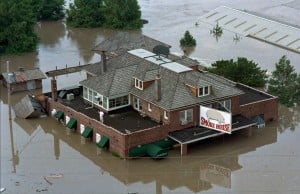
The Smoke House in Chesterfield Valley, Chesterfield, Mo., is surrounded by more than 10 feet of flood waters from the Missouri River Aug. 1, 1993. The popular resturant was one of many businesses in Chesterfield Valley that was flooded when the Monarch Levee gave way flooding the valley during the 1993 flood. (AP Photo/St. Louis Post-Dispatch, Larry Williams)
(1) More Photos
Since the Great Flood, Missouri river towns are safer from rising waters
ST. LOUIS — Twenty years ago Tuesday, the surging Missouri River burst through the levee at Chesterfield, Mo., and drowned its commercial dist…Read more
'The mess was indescribable': It's been 20 years since the Great Flood of 1993
More than 250 communities in the Midwest were affected 20 years ago by the worst Mississippi River flood in recorded history. Read more
Twenty years ago today, Gumbo Flats ceased to exist.
The expansive area of Missouri River bottomland on the far west side of Chesterfield was inundated when the Big Muddy punched a hole in the Monarch-Chesterfield Levee. The floodwater covered Highway 40 and runways at Spirit of St. Louis Airport. It caused the evacuation of 450 inmates at what was then the county’s Adult Corrections Center. Water stood eight feet high in some of the buildings in Gumbo’s small commercial district.
This was an epic flood, the sort that leads to a capital letter name: the Great Flood of ‘93. It’s the sort of flood that leads to calls for change and scientific reports examining things like “how did this happen?” And “how do we make sure it doesn’t happen again?”
In the case of the Great Flood of ‘93, the White House commissioned a report asking 30 of the nation’s top water experts to answer those two questions.
Twenty years later, the Galloway Report might as well be buried under a ton of dirty river silt.
Reading it today, and comparing its recommendations with what emerged in the Chesterfield Valley (alas, the name “Gumbo” was a flood victim, too), makes a compelling case that our city, state and federal leaders learned little in the two decades since the Great Flood.
The Galloway Report urged limits on floodplain development. Leaders in Chesterfield brag about doing the exact opposite.
The Galloway Report suggested changes to flood insurance, crop insurance and federal damage assistance programs, to reduce incentives that promote building in areas that taxpayers might have to bail out. That didn’t happen, either. In fact, if Congress passes the Farm Bill under consideration, the agricultural incentives will be even greater.
The Galloway Report suggested managing the entire Missouri River basin as one unified watershed. There was even some movement toward that when another capital-letter flood hit in 2011. But that momentum has been lost.
“We said, if you don’t need to develop in a flood plain, don’t do it,” retired Brig. Gen. Gerald Galloway told the Post-Dispatch in 2005, when, more than a decade after the Great Flood, it was clear his report was being ignored.
He should see the Chesterfield Valley now.
Not one, but two outlet malls are being added to the more than 1.5 miles of nonstop strip-mall erected behind the rebuilt Monarch-Chesterfield Levee, in a gluttonous tribute to valuing profits over good sense.
Developers and government officials point to the more than $70 million that has been put into that levee. No doubt it’s an engineering marvel, built to withstand a so-called 500-year flood; that means the odds are 1 in 500 every year that the levee will be topped or breached.
“I am never concerned about another flood,” developer Michael Staenberg arrogantly told the West Newsmagazine this month for a story celebrating the Chesterfield Valley’s rebirth.
Here’s a better quote, one that is more informed, more accurate, and more illustrative of 20 years of ignorant development policies:
“There is no doubt in my mind that we will, some day, have a flood even higher than ’93,” David R. Busse, chief engineer for the Army Corps of Engineers in St. Louis, told the Post-Dispatch’s Tim O’Neil for a Sunday story examining the 20 years since the Great Flood.
When that flood comes — and Mr. Busse is right, it will — it will be much worse than what St. Louis experienced when sleepy Gumbo Flats led national telecasts. Multiple billions of dollars will go down the drain. Flooding downriver will come faster and higher than before. Think Katrina. Think Hurricane Sandy. Think about the fact that climate change has rendered meaningless the old formulas and the old maps for 500-year floods.
The developers, of course, will laugh all the way to the bank. In 1993, many landowners in Gumbo Flats waited until just 5 days before the flooding hit to buy insurance. They were covered. Now they’ve rebuilt on the taxpayers’ dime, and the changes proposed to flood insurance policies by the Galloway Report have been ignored. The valley will flood again. And all of us will pay.
The levee protecting their investments is bigger and badder, but it’s not as mighty as the Missouri. Even if the levee holds, it will merely push a wall of water elsewhere. Let it be somebody else’s problem.
Here’s what we’ve learned 20 years after the Great Flood of ‘93: Not one damned thing.
Editorial: Lessons of the Great Flood of '93? We haven't learned them yet : Stltoday
The Smoke House in Chesterfield Valley, Chesterfield, Mo., is surrounded by more than 10 feet of flood waters from the Missouri River Aug. 1, 1993. The popular resturant was one of many businesses in Chesterfield Valley that was flooded when the Monarch Levee gave way flooding the valley during the 1993 flood. (AP Photo/St. Louis Post-Dispatch, Larry Williams)
(1) More Photos
Since the Great Flood, Missouri river towns are safer from rising waters
ST. LOUIS — Twenty years ago Tuesday, the surging Missouri River burst through the levee at Chesterfield, Mo., and drowned its commercial dist…Read more
'The mess was indescribable': It's been 20 years since the Great Flood of 1993
More than 250 communities in the Midwest were affected 20 years ago by the worst Mississippi River flood in recorded history. Read more
Twenty years ago today, Gumbo Flats ceased to exist.
The expansive area of Missouri River bottomland on the far west side of Chesterfield was inundated when the Big Muddy punched a hole in the Monarch-Chesterfield Levee. The floodwater covered Highway 40 and runways at Spirit of St. Louis Airport. It caused the evacuation of 450 inmates at what was then the county’s Adult Corrections Center. Water stood eight feet high in some of the buildings in Gumbo’s small commercial district.
This was an epic flood, the sort that leads to a capital letter name: the Great Flood of ‘93. It’s the sort of flood that leads to calls for change and scientific reports examining things like “how did this happen?” And “how do we make sure it doesn’t happen again?”
In the case of the Great Flood of ‘93, the White House commissioned a report asking 30 of the nation’s top water experts to answer those two questions.
Twenty years later, the Galloway Report might as well be buried under a ton of dirty river silt.
Reading it today, and comparing its recommendations with what emerged in the Chesterfield Valley (alas, the name “Gumbo” was a flood victim, too), makes a compelling case that our city, state and federal leaders learned little in the two decades since the Great Flood.
The Galloway Report urged limits on floodplain development. Leaders in Chesterfield brag about doing the exact opposite.
The Galloway Report suggested changes to flood insurance, crop insurance and federal damage assistance programs, to reduce incentives that promote building in areas that taxpayers might have to bail out. That didn’t happen, either. In fact, if Congress passes the Farm Bill under consideration, the agricultural incentives will be even greater.
The Galloway Report suggested managing the entire Missouri River basin as one unified watershed. There was even some movement toward that when another capital-letter flood hit in 2011. But that momentum has been lost.
“We said, if you don’t need to develop in a flood plain, don’t do it,” retired Brig. Gen. Gerald Galloway told the Post-Dispatch in 2005, when, more than a decade after the Great Flood, it was clear his report was being ignored.
He should see the Chesterfield Valley now.
Not one, but two outlet malls are being added to the more than 1.5 miles of nonstop strip-mall erected behind the rebuilt Monarch-Chesterfield Levee, in a gluttonous tribute to valuing profits over good sense.
Developers and government officials point to the more than $70 million that has been put into that levee. No doubt it’s an engineering marvel, built to withstand a so-called 500-year flood; that means the odds are 1 in 500 every year that the levee will be topped or breached.
“I am never concerned about another flood,” developer Michael Staenberg arrogantly told the West Newsmagazine this month for a story celebrating the Chesterfield Valley’s rebirth.
Here’s a better quote, one that is more informed, more accurate, and more illustrative of 20 years of ignorant development policies:
“There is no doubt in my mind that we will, some day, have a flood even higher than ’93,” David R. Busse, chief engineer for the Army Corps of Engineers in St. Louis, told the Post-Dispatch’s Tim O’Neil for a Sunday story examining the 20 years since the Great Flood.
When that flood comes — and Mr. Busse is right, it will — it will be much worse than what St. Louis experienced when sleepy Gumbo Flats led national telecasts. Multiple billions of dollars will go down the drain. Flooding downriver will come faster and higher than before. Think Katrina. Think Hurricane Sandy. Think about the fact that climate change has rendered meaningless the old formulas and the old maps for 500-year floods.
The developers, of course, will laugh all the way to the bank. In 1993, many landowners in Gumbo Flats waited until just 5 days before the flooding hit to buy insurance. They were covered. Now they’ve rebuilt on the taxpayers’ dime, and the changes proposed to flood insurance policies by the Galloway Report have been ignored. The valley will flood again. And all of us will pay.
The levee protecting their investments is bigger and badder, but it’s not as mighty as the Missouri. Even if the levee holds, it will merely push a wall of water elsewhere. Let it be somebody else’s problem.
Here’s what we’ve learned 20 years after the Great Flood of ‘93: Not one damned thing.
Editorial: Lessons of the Great Flood of '93? We haven't learned them yet : Stltoday
2013 Gulf of Mexico oxygen-free "dead zone" put at 5,840 square miles - UPI.com

This map shows the hypoxia area on the Louisiana Gulf of Mexico shelf in 2013. Credit: LUMCON (Rabalais), NOAA
Published: July 29, 2013 at 6:32 PM
WASHINGTON, July 29 (UPI) -- This year's Gulf of Mexico "dead zone" from nutrient runoff from the Mississippi River is large but not as huge as expected, scientists say.
Researchers supported by the National Oceanographic and Atmospheric Administration said the 2013 oxygen-free or hypoxic "dead" zone measures 5,840 square miles, an area the size of Connecticut. They said it shows nutrients from the Mississippi River watershed are affecting the nation's commercial and recreational marine resources in the gulf.
Models had predicted the gulf hypoxic zone would range in size from 7,286 to 8,561 square miles.
Nutrients from agricultural runoff and other human activities stimulate an overgrowth of algae in the gulf that sinks, decomposes and consumes most of the oxygen needed to support life.
"A near-record area was expected because of wet spring conditions in the Mississippi watershed and the resultant high river flows, which deliver large amounts of nutrients," Nancy Rabalais, executive director of the Louisiana Universities Marine Consortium, said. "But nature's wind-mixing events and winds forcing the mass of low oxygen water towards the east resulted in a slightly above average bottom footprint."
The hypoxic zone that forms each summer threatens valuable commercial and recreational gulf fisheries that in 2011 had a commercial dockside value of $818 million, researchers said.
Read more: 2013 Gulf of Mexico oxygen-free "dead zone" put at 5,840 square miles - UPI.com
Bears pole dance when you’re not looking - What goes on when you are not there!

Published on Jul 25, 2013
Ever wonder what bears do when we're not looking? These bears were caught on camera in Kananaskis Country. These images were taken during May and June 2013. Wildlife cameras are part of a research project throughout Kananaskis Country.
By studying wildlife in Alberta's provincial parks, we can better identify population distribution, animal activity and key biodiversity hotspots. Learn more about human/wildlife conflict prevention at www.wildsmart.ca. For more information about our research, visit http://albertaparks.ca/albertaparksca...
Many thanks to Ewan Dobson for letting us use his incredible music!
Links:
Agriculture and Climate Change: An Interview with Darren Doherty - National Bioneers Conference
July 24, 2013 By bioneers

Darren Doherty has developed a set of ecological agricultural practices for large-scale farming that he calls Regrarianism, based on the work of master agrarians like Rudolf Steiner, Joel Salatin, Elaine Ingham and others. Regrarianism integrates Permaculture, Keyline design, Holistic management and carbon farming to transform farms from their current atrophic condition into regenerative systems that provide ecological profit as well as economic benefit.
Bioneers: What are the basic principles of Regrarianism?
Darren: Some of the key principles are to produce stable environments with sound watersheds; increase wildlife species and stability of populations; improve water, soil and vegetation resources of cities, industry and agriculture; prevent waste of financial, human and natural resources; utilize Permaculture design principles; and develop viable decentralized energy production systems.
Bioneers: How does Regraranism help farmers mitigate and adapt to climate change?
Darren: One of the things we look at, which might seem like an unusual climate change strategy, is reducing debt, which in an agricultural environment is really crippling because it disempowers farmers from making the land stewardship decisions they would normally make. We try to get the debt out of the way by getting some higher margin activities in the stream of an enterprise so we can start to self-fund the more regenerative practices.
Bioneers: What’s the most important agricultural climate change practice?
Darren: We can start to build more soil carbon into the equation because that's one of the great buffers against climate change. Not only does it download atmospheric carbon out of the process, but it also creates a resiliency against the biggest problem in a lot of zones where there has been reliable rainfall in the past and now rainfall is unreliable.
Bioneers: How does carbon farming work?
Darren: There's an amount of carbon right above any landscape that can be utilized, primarily in the form of carbon dioxide and other carbon compounds that soil organisms, plants and others use as nutrients.
We're looking to create systems that hold more of that carbon in the organisms and the residues of those organisms for the longest possible times, and then take advantage of the benefits that the diversity and the residues provide. Whether that's residues in the form of humus, which is a very stable carbon-compound, or whether it's residues in terms of a leaf litter that's on the soil surface, which reduces evaporation.
We're trying to increase the retention time of carbon in its solid form in landscapes for as long as possible as opposed to allowing it to become gaseous, that's when it becomes quite dangerous to us all. That is what carbon farming is all about.
Bioneers: What's the relationship between carbon and water?
Darren: Every unit of soil carbon holds about eight units of water. Any farmer knows that as their carbon levels grow in their soil, so does the water holding capacity of that soil, and that also happens to increase the nutrient exchange capacity of that soil as well.
Bioneers: Can enough carbon be sequestered in soil to significantly mitigate climate change?
Darren: The only place in the world where there's more carbon than in the soil is in the ocean and in the sedimentary rocks. We try to build in our system multiple elements with trees, ground cover, canopies of grasses or other plants, that keep carbon in its place for as long as possible, and therefore also hold water in place.
Bioneers: What’s the best way to keep carbon in place for as long as possible?
Darren: You have to understand the different kinds of carbon and the states of carbon soils. Let's look at compost, for example. Depending on the state of compost and how it's made, it's largely made up of what are called short-chain carbon molecules. So mulch, compost, leaf litter, cover crops, all of these things aren't processing carbon into its long-chain form. It's quite unstable, so as a result a lot of that carbon ends up being put back into the atmosphere.
Compost and cover crops certainly have a conditioning effect on the soil, but a lot of that carbon is being cycled within the top six inches of the soil, which is the highly aerobic zone of the soil, so carbon therefore is in a greater stage of flux.
Bioneers: Are you saying compost and cover crops are not effective ways to sequester carbon?
Darren: You might increase your net soil carbon quite heavily in the first few years by the application of compost, and all of the aforementioned methods, but will that last over the longer term? The answer is quite clearly no. Great techniques, great to do, but what we need more of is long-chain carbon. It's largely delivered in the form of polysaccharide exudate or nutrients released from plant root systems, particularly grasses.
Where we want the carbon and where farmers can look to increasing their carbon levels overall is in the depth of soil. You can have 10% carbon in the top six inches and 2% in the next 10 inches, and 1½% in the next 10 inches. That's not going to sustain agriculture over the long term, and the top 6 inches is not where carbon is going to be kept and stored and sequestered. It's pretty well impossible to get that short-chain carbon down into the depths without a lot of intervention, which requires a lot of fossil fuels. The best way to do that is to get plant roots to penetrate these depths and to put their exudates down in those depths. There are carbohydrates created out of the interaction between water, sunlight and carbon dioxide, and then manufactured by the plants as a residue, and their primary objective is to feed the soil microlife.
Bioneers: So deep-rooted plants are key to this process.
Darren: What drives the sustenance and the regeneration of the soil life is the plants. The plants are the conduit between the atmosphere and the lithosphere [the Earth’s deep outer layer, which includes soil]. They keep the lithosphere, the soil, and the rhizosphere, the root zone, alive, because they transfer the energy of the sun, manufacture the sugars as carbohydrates, as long chain carbons, and that's what feeds the economy of the soil.
I've been talking a lot lately about the relationship between using perennial systems and annual systems as an analog of our own human economy, and how if I look at an annual plant, for example, it lives fast, it dies young, it's quite profligate in the use of its resources because it leaves very little of the residue behind, it doesn’t have any savings; its whole objective is to reproduce.
If you look at a perennial plant, particularly a perennial grass, it puts very little energy into being in a nightclub, it has very fibrous, deep root systems, which have long, long term arrangements with the whole suite of soil life, it has all the very cultivated and highly developed and synergistic relationship; it has a carbohydrate starch reserve, which is like a bank where it puts a lot of its capital flows out into the general soil economy over the longest period and often when it's not raining, and it puts something behind so when disturbance occurs, it can come back. In fact, in many cases, it actually thrives on disturbance.
I think a lot of economists in the financial sector, if they wanted to know what would be a good model to base economies on, they could probably look no further than a tree or a forest or a perennial grass. Much of our agriculture is annual based. We're living fast and dying young.
Agriculture and Climate Change: An Interview with Darren Doherty - National Bioneers Conference
Darren Doherty has developed a set of ecological agricultural practices for large-scale farming that he calls Regrarianism, based on the work of master agrarians like Rudolf Steiner, Joel Salatin, Elaine Ingham and others. Regrarianism integrates Permaculture, Keyline design, Holistic management and carbon farming to transform farms from their current atrophic condition into regenerative systems that provide ecological profit as well as economic benefit.
Bioneers: What are the basic principles of Regrarianism?
Darren: Some of the key principles are to produce stable environments with sound watersheds; increase wildlife species and stability of populations; improve water, soil and vegetation resources of cities, industry and agriculture; prevent waste of financial, human and natural resources; utilize Permaculture design principles; and develop viable decentralized energy production systems.
Bioneers: How does Regraranism help farmers mitigate and adapt to climate change?
Darren: One of the things we look at, which might seem like an unusual climate change strategy, is reducing debt, which in an agricultural environment is really crippling because it disempowers farmers from making the land stewardship decisions they would normally make. We try to get the debt out of the way by getting some higher margin activities in the stream of an enterprise so we can start to self-fund the more regenerative practices.
Bioneers: What’s the most important agricultural climate change practice?
Darren: We can start to build more soil carbon into the equation because that's one of the great buffers against climate change. Not only does it download atmospheric carbon out of the process, but it also creates a resiliency against the biggest problem in a lot of zones where there has been reliable rainfall in the past and now rainfall is unreliable.
Bioneers: How does carbon farming work?
Darren: There's an amount of carbon right above any landscape that can be utilized, primarily in the form of carbon dioxide and other carbon compounds that soil organisms, plants and others use as nutrients.
We're looking to create systems that hold more of that carbon in the organisms and the residues of those organisms for the longest possible times, and then take advantage of the benefits that the diversity and the residues provide. Whether that's residues in the form of humus, which is a very stable carbon-compound, or whether it's residues in terms of a leaf litter that's on the soil surface, which reduces evaporation.
We're trying to increase the retention time of carbon in its solid form in landscapes for as long as possible as opposed to allowing it to become gaseous, that's when it becomes quite dangerous to us all. That is what carbon farming is all about.
Bioneers: What's the relationship between carbon and water?
Darren: Every unit of soil carbon holds about eight units of water. Any farmer knows that as their carbon levels grow in their soil, so does the water holding capacity of that soil, and that also happens to increase the nutrient exchange capacity of that soil as well.
Bioneers: Can enough carbon be sequestered in soil to significantly mitigate climate change?
Darren: The only place in the world where there's more carbon than in the soil is in the ocean and in the sedimentary rocks. We try to build in our system multiple elements with trees, ground cover, canopies of grasses or other plants, that keep carbon in its place for as long as possible, and therefore also hold water in place.
Bioneers: What’s the best way to keep carbon in place for as long as possible?
Darren: You have to understand the different kinds of carbon and the states of carbon soils. Let's look at compost, for example. Depending on the state of compost and how it's made, it's largely made up of what are called short-chain carbon molecules. So mulch, compost, leaf litter, cover crops, all of these things aren't processing carbon into its long-chain form. It's quite unstable, so as a result a lot of that carbon ends up being put back into the atmosphere.
Compost and cover crops certainly have a conditioning effect on the soil, but a lot of that carbon is being cycled within the top six inches of the soil, which is the highly aerobic zone of the soil, so carbon therefore is in a greater stage of flux.
Bioneers: Are you saying compost and cover crops are not effective ways to sequester carbon?
Darren: You might increase your net soil carbon quite heavily in the first few years by the application of compost, and all of the aforementioned methods, but will that last over the longer term? The answer is quite clearly no. Great techniques, great to do, but what we need more of is long-chain carbon. It's largely delivered in the form of polysaccharide exudate or nutrients released from plant root systems, particularly grasses.
Where we want the carbon and where farmers can look to increasing their carbon levels overall is in the depth of soil. You can have 10% carbon in the top six inches and 2% in the next 10 inches, and 1½% in the next 10 inches. That's not going to sustain agriculture over the long term, and the top 6 inches is not where carbon is going to be kept and stored and sequestered. It's pretty well impossible to get that short-chain carbon down into the depths without a lot of intervention, which requires a lot of fossil fuels. The best way to do that is to get plant roots to penetrate these depths and to put their exudates down in those depths. There are carbohydrates created out of the interaction between water, sunlight and carbon dioxide, and then manufactured by the plants as a residue, and their primary objective is to feed the soil microlife.
Bioneers: So deep-rooted plants are key to this process.
Darren: What drives the sustenance and the regeneration of the soil life is the plants. The plants are the conduit between the atmosphere and the lithosphere [the Earth’s deep outer layer, which includes soil]. They keep the lithosphere, the soil, and the rhizosphere, the root zone, alive, because they transfer the energy of the sun, manufacture the sugars as carbohydrates, as long chain carbons, and that's what feeds the economy of the soil.
I've been talking a lot lately about the relationship between using perennial systems and annual systems as an analog of our own human economy, and how if I look at an annual plant, for example, it lives fast, it dies young, it's quite profligate in the use of its resources because it leaves very little of the residue behind, it doesn’t have any savings; its whole objective is to reproduce.
If you look at a perennial plant, particularly a perennial grass, it puts very little energy into being in a nightclub, it has very fibrous, deep root systems, which have long, long term arrangements with the whole suite of soil life, it has all the very cultivated and highly developed and synergistic relationship; it has a carbohydrate starch reserve, which is like a bank where it puts a lot of its capital flows out into the general soil economy over the longest period and often when it's not raining, and it puts something behind so when disturbance occurs, it can come back. In fact, in many cases, it actually thrives on disturbance.
I think a lot of economists in the financial sector, if they wanted to know what would be a good model to base economies on, they could probably look no further than a tree or a forest or a perennial grass. Much of our agriculture is annual based. We're living fast and dying young.
Agriculture and Climate Change: An Interview with Darren Doherty - National Bioneers Conference
Subscribe to:
Posts (Atom)

 Posts
Posts


