
Mar 2, 2011
Stay Hungry. Stay Foolish.
This is the text of the Commencement address by Steve Jobs, CEO of Apple Computer and of Pixar Animation Studios, delivered on June 12, 2005.
I am honored to be with you today at your commencement from one of the finest universities in the world. I never graduated from college. Truth be told, this is the closest I've ever gotten to a college graduation. Today I want to tell you three stories from my life. That's it. No big deal. Just three stories.
The first story is about connecting the dots.
I dropped out of Reed College after the first 6 months, but then stayed around as a drop-in for another 18 months or so before I really quit. So why did I drop out?
It started before I was born. My biological mother was a young, unwed college graduate student, and she decided to put me up for adoption. She felt very strongly that I should be adopted by college graduates, so everything was all set for me to be adopted at birth by a lawyer and his wife. Except that when I popped out they decided at the last minute that they really wanted a girl. So my parents, who were on a waiting list, got a call in the middle of the night asking: "We have an unexpected baby boy; do you want him?" They said: "Of course." My biological mother later found out that my mother had never graduated from college and that my father had never graduated from high school. She refused to sign the final adoption papers. She only relented a few months later when my parents promised that I would someday go to college.
And 17 years later I did go to college. But I naively chose a college that was almost as expensive as Stanford, and all of my working-class parents' savings were being spent on my college tuition. After six months, I couldn't see the value in it. I had no idea what I wanted to do with my life and no idea how college was going to help me figure it out. And here I was spending all of the money my parents had saved their entire life. So I decided to drop out and trust that it would all work out OK. It was pretty scary at the time, but looking back it was one of the best decisions I ever made. The minute I dropped out I could stop taking the required classes that didn't interest me, and begin dropping in on the ones that looked interesting.
It wasn't all romantic. I didn't have a dorm room, so I slept on the floor in friends' rooms, I returned coke bottles for the 5¢ deposits to buy food with, and I would walk the 7 miles across town every Sunday night to get one good meal a week at the Hare Krishna temple. I loved it. And much of what I stumbled into by following my curiosity and intuition turned out to be priceless later on. Let me give you one example:
Reed College at that time offered perhaps the best calligraphy instruction in the country. Throughout the campus every poster, every label on every drawer, was beautifully hand calligraphed. Because I had dropped out and didn't have to take the normal classes, I decided to take a calligraphy class to learn how to do this. I learned about serif and san serif typefaces, about varying the amount of space between different letter combinations, about what makes great typography great. It was beautiful, historical, artistically subtle in a way that science can't capture, and I found it fascinating.
None of this had even a hope of any practical application in my life. But ten years later, when we were designing the first Macintosh computer, it all came back to me. And we designed it all into the Mac. It was the first computer with beautiful typography. If I had never dropped in on that single course in college, the Mac would have never had multiple typefaces or proportionally spaced fonts. And since Windows just copied the Mac, it's likely that no personal computer would have them. If I had never dropped out, I would have never dropped in on this calligraphy class, and personal computers might not have the wonderful typography that they do. Of course it was impossible to connect the dots looking forward when I was in college. But it was very, very clear looking backwards ten years later.
Again, you can't connect the dots looking forward; you can only connect them looking backwards. So you have to trust that the dots will somehow connect in your future. You have to trust in something — your gut, destiny, life, karma, whatever. This approach has never let me down, and it has made all the difference in my life.
My second story is about love and loss.
I was lucky — I found what I loved to do early in life. Woz and I started Apple in my parents garage when I was 20. We worked hard, and in 10 years Apple had grown from just the two of us in a garage into a $2 billion company with over 4000 employees. We had just released our finest creation — the Macintosh — a year earlier, and I had just turned 30. And then I got fired. How can you get fired from a company you started? Well, as Apple grew we hired someone who I thought was very talented to run the company with me, and for the first year or so things went well. But then our visions of the future began to diverge and eventually we had a falling out. When we did, our Board of Directors sided with him. So at 30 I was out. And very publicly out. What had been the focus of my entire adult life was gone, and it was devastating.
I really didn't know what to do for a few months. I felt that I had let the previous generation of entrepreneurs down - that I had dropped the baton as it was being passed to me. I met with David Packard and Bob Noyce and tried to apologize for screwing up so badly. I was a very public failure, and I even thought about running away from the valley. But something slowly began to dawn on me — I still loved what I did. The turn of events at Apple had not changed that one bit. I had been rejected, but I was still in love. And so I decided to start over.
I didn't see it then, but it turned out that getting fired from Apple was the best thing that could have ever happened to me. The heaviness of being successful was replaced by the lightness of being a beginner again, less sure about everything. It freed me to enter one of the most creative periods of my life.
During the next five years, I started a company named NeXT, another company named Pixar, and fell in love with an amazing woman who would become my wife. Pixar went on to create the worlds first computer animated feature film, Toy Story, and is now the most successful animation studio in the world. In a remarkable turn of events, Apple bought NeXT, I returned to Apple, and the technology we developed at NeXT is at the heart of Apple's current renaissance. And Laurene and I have a wonderful family together.
I'm pretty sure none of this would have happened if I hadn't been fired from Apple. It was awful tasting medicine, but I guess the patient needed it. Sometimes life hits you in the head with a brick. Don't lose faith. I'm convinced that the only thing that kept me going was that I loved what I did. You've got to find what you love. And that is as true for your work as it is for your lovers. Your work is going to fill a large part of your life, and the only way to be truly satisfied is to do what you believe is great work. And the only way to do great work is to love what you do. If you haven't found it yet, keep looking. Don't settle. As with all matters of the heart, you'll know when you find it. And, like any great relationship, it just gets better and better as the years roll on. So keep looking until you find it. Don't settle.
My third story is about death.
When I was 17, I read a quote that went something like: "If you live each day as if it was your last, someday you'll most certainly be right." It made an impression on me, and since then, for the past 33 years, I have looked in the mirror every morning and asked myself: "If today were the last day of my life, would I want to do what I am about to do today?" And whenever the answer has been "No" for too many days in a row, I know I need to change something.
Remembering that I'll be dead soon is the most important tool I've ever encountered to help me make the big choices in life. Because almost everything — all external expectations, all pride, all fear of embarrassment or failure - these things just fall away in the face of death, leaving only what is truly important. Remembering that you are going to die is the best way I know to avoid the trap of thinking you have something to lose. You are already naked. There is no reason not to follow your heart.
About a year ago I was diagnosed with cancer. I had a scan at 7:30 in the morning, and it clearly showed a tumor on my pancreas. I didn't even know what a pancreas was. The doctors told me this was almost certainly a type of cancer that is incurable, and that I should expect to live no longer than three to six months. My doctor advised me to go home and get my affairs in order, which is doctor's code for prepare to die. It means to try to tell your kids everything you thought you'd have the next 10 years to tell them in just a few months. It means to make sure everything is buttoned up so that it will be as easy as possible for your family. It means to say your goodbyes.
I lived with that diagnosis all day. Later that evening I had a biopsy, where they stuck an endoscope down my throat, through my stomach and into my intestines, put a needle into my pancreas and got a few cells from the tumor. I was sedated, but my wife, who was there, told me that when they viewed the cells under a microscope the doctors started crying because it turned out to be a very rare form of pancreatic cancer that is curable with surgery. I had the surgery and I'm fine now.
This was the closest I've been to facing death, and I hope it's the closest I get for a few more decades. Having lived through it, I can now say this to you with a bit more certainty than when death was a useful but purely intellectual concept:
No one wants to die. Even people who want to go to heaven don't want to die to get there. And yet death is the destination we all share. No one has ever escaped it. And that is as it should be, because Death is very likely the single best invention of Life. It is Life's change agent. It clears out the old to make way for the new. Right now the new is you, but someday not too long from now, you will gradually become the old and be cleared away. Sorry to be so dramatic, but it is quite true.
Your time is limited, so don't waste it living someone else's life. Don't be trapped by dogma — which is living with the results of other people's thinking. Don't let the noise of others' opinions drown out your own inner voice. And most important, have the courage to follow your heart and intuition. They somehow already know what you truly want to become. Everything else is secondary.
When I was young, there was an amazing publication called The Whole Earth Catalog, which was one of the bibles of my generation. It was created by a fellow named Stewart Brand not far from here in Menlo Park, and he brought it to life with his poetic touch. This was in the late 1960's, before personal computers and desktop publishing, so it was all made with typewriters, scissors, and polaroid cameras. It was sort of like Google in paperback form, 35 years before Google came along: it was idealistic, and overflowing with neat tools and great notions.
Stewart and his team put out several issues of The Whole Earth Catalog, and then when it had run its course, they put out a final issue. It was the mid-1970s, and I was your age. On the back cover of their final issue was a photograph of an early morning country road, the kind you might find yourself hitchhiking on if you were so adventurous. Beneath it were the words: "Stay Hungry. Stay Foolish." It was their farewell message as they signed off. Stay Hungry. Stay Foolish. And I have always wished that for myself. And now, as you graduate to begin anew, I wish that for you.
Stay Hungry. Stay Foolish.
Thank you all very much.


Revolution of the Middle... and The Pursuit of Happiness is now on-line

For those of you who want to better understand the economics behind
our current food system (which is part of a larger extraction
economy), listening to or reading John Ikerd will provide much
satisfying food for thought.
economy), listening to or reading John Ikerd will provide much
satisfying food for thought.
Download files to play or save on your computer or mp3 player...
Foreword and Introduction - A Revolution of the Middle
The Great Recession is not simply the consequence of a crisis of confidence; we are facing a crisis of sustainability. We simply can’t continue doing what we have been doing. We can’t sustain economic growth rates of the past 200-year. Those growth rates were only possible because of cheap fossil energy and the days of cheap oil, natural gas, and coal are over. In addition we haven’t made the investments in research and education necessary to sustain the productivity of our workforce. Our economy no longer functions for the good of the American people. It serves the interests of corporate managers and investors instead. We have the power restore sustainability to the U.S. economy, but we won’t do it until more people understand that we have lost control of their society. American economy is not suffering from a lack of confidence but instead a lack of sustainability.
Chapter 1. A Crisis of Confidence?
The current U.S. economy is not really capitalist. In many respects, it’s a betrayal of capitalism. The so called competitive free markets of today are not the capitalist markets envisioned by classical economists Adam Smith and David Ricardo. The current U.S. government is not democratic, as least not democratic in the sense envisioned in our founding documents. It does not ensure equal access to those things to which we all have equal rights. It is preoccupied with the pursuit wealth for the few rather than the pursuit of happiness for the many. To regain and sustain our economy and our society, we must return to the classical roots of capitalism and democracy. A capitalist economy must function within physical limits of nature and the social bounds of equity and justice, if it is to function sustainably.
Chapter 2. A Society Held Hostage
As the founding documents of the United States clearly state the purpose of government is to ensure the unalienable rights of all, including life, liberty, and the pursuit of happiness. Capitalism is about the pursuit of wealth. Democracy is about the pursuit of happiness. Nothing is more fundamental to democracy than equity and justice for all, and a capitalist economy will ensure neither. Economic incentives are inadequate to ensure the long run investments in nature and society necessary for sustainability. Government is the only means of restraining economic extraction and exploitation of nature and society. However, the only just power of the government to ensure sustainability must be derived from a consensus of the governed.
Chapter 3. Keeping the American Promise
As the founding documents of the United States clearly state the purpose of government is to ensure the unalienable rights of all, including life, liberty, and the pursuit of happiness. Capitalism is about the pursuit of wealth. Democracy is about the pursuit of happiness. Nothing is more fundamental to democracy than equity and justice for all, and a capitalist economy will ensure neither. Economic incentives are inadequate to ensure the long run investments in nature and society necessary for sustainability. Government is the only means of restraining economic extraction and exploitation of nature and society. However, the only just power of the government to ensure sustainability must be derived from a consensus of the governed.
Chapter 4. A New Way of Thinking
Sustainability is the defining question of the 21st century. How can we meet the needs of the present without compromising the future? To answer this question we must see the world differently; we must develop a new worldview. We must see the world as a dynamic, self-renewing, regenerative living system, of which we humans are but a part. Once we change our understanding of how the world works and our place within it, it will change virtually every aspect of our lives. Our personal relationships within families and communities and our impersonal relationships within nations and global society will all be different. The trends of the past will be reversed. Both our society and economy will become more diverse, dispersed, and decentralized. A sustainable economy must function in harmony with nature and society.
Chapter 5. A New Way of Life
The change we need will not come easy. The status quo will be defended by powerful economic and political interests. First, we must find the courage to change our way of life. We must abandon the relentless quest for economic growth and return to the pursuit of happiness. Beyond some modest level of income or wealth, happiness is determined much more by the quality of our relationships and our sense of purpose and meaning in life than by any amount of additional income or wealth. We must reclaim the American Dream. The American Dream was never meant to be about the pursuit of wealth, but instead the pursuit of happiness. We must be willing to challenge the conventional wisdom of today’s scientific thinking that denies the existence of purpose in life. When we live out our unique purpose in life, we make the greatest contribution we possibly can make and receive the greatest possible rewards; we will find happiness.
Chapter 6. Returning to Truth
There are no formulas or recipes for sustainability. The living world doesn’t function by precise laws. However, living things do function by basic principles that are just as true as any law of physics or chemistry. The principles of natural ecosystems include holism, diversity, and interdependence. A healthy natural ecosystem is something more than the sum of its diverse parts. The principles of human relationship are just as valid as any other law of nature. Healthy relationships must be built upon a foundation of trust and kindness. To sustain positive relationships in families, communities, and societies we must find the courage to be trusting and kind. The principles of economic are the basic principles of individual behavior. We matter as individuals as well as members of society. We must respect the economic principles of scarcity, efficiency, and sovereignty if we are to meet our individual needs.
Chapter 7. Reestablishing Integrity
A sustainable economy and society must be built on a foundation of ecological, social, and economic integrity. Integrity is a matter of wholeness, completeness, and internal consistency. To ensure sustainability, the ecological principles of holism, diversity, and interdependence must also permeate our society and economy. The social principles of trust, kindness, and courage must be reflected in our economic relationships and our relationships with nature. We must respect the economic principles of scarcity, efficiency, and sovereignty in formulating and implementing social and ecological policies. Finally, sustainability ultimately is a matter of ethics and morality. What are our responsibilities for the well-being of other people or for the future of humanity? The answers to these questions can be found only in the most basic of all principles – in faith, hope, and love.
Chapter 8. Reclaiming Democracy
It will take a revolution for the American people to reclaim their society and our economy. Like the American Revolution of 1776, this revolution will be won only people who willing to commit their lives, their fortunes, and their sacred honor to the cause. The political process must move beyond the art of compromise to reestablish a consensus among the governed. Government must return to its most basic function of ensuring equal access to those things to which we all have equal rights. This will result in government that is much smaller than today but a government with very different priorities than today’s government. It will require a new consensus regarding what we should expect from our government and what we should do for ourselves. The new revolution will not come from the political Left or Right. It must be a Revolution of the Middle.
Chapter 9. Restoring Consent
Restoring the new consensus among Americans will not be easy, but it certainly doable. The U.S. Constitution was written with the expectation that it would periodically be changed or amended. Our failure to amend the Constitution to address emerging issues has led to many questionable interpretations of the Constitution by the Supreme Court. None of these is more threatening to the sustainability of our society and economy than the Court rulings granting of personhood to corporations. To find the consensus necessary to respond to concerns from both the political Left and Right, we will need to break free of previous Court rulings and return to our founding documents. Among the rights necessary to ensure sustainability are the right to economic sovereignty, the right to a healthy environment, and the rights of future generations equal the rights of those today.
Chapter 10. Renewing Prosperity
The economic growth rates of industrial era are not sustainable. However, we can have continuing prosperity without unsustainable economic growth. The earth provides more than enough renewable solar energy to meet the basic needs of global society both today and in the future. Once the basic causes of overpopulation are addressed, global population can be stabilized as sustainable levels. There will be enough for all to be prosperous in terms of overall quality of life, just not enough for everyone to have everything they might want. There will be no limit to human progress if we can find the wisdom to abandon our unsustainable pursuit of ever greater wealth and return to the pursuit of happiness. And best of all, we don’t have to wait for the rest of the world to change to find contentment and happiness in our own lives. When we live with purpose, we are doing our part, which is all we can do and need to do, to help make the world a better place. Having done all we can do, we can just let go, and be happy.
Postscript - Rethinking Reality
This book reflects my truth. I call it my truth because I believe what I have written in this book in internally consistent. We can never be certain that we have found the truth, but we know truth can never be in conflict with truth. What I have written also reflects a concept of reality that is consistent with what we see in the world around us. I believe reality exists as potentials. The same reality has the potential to be seen quite differently by different people. Our individual experiences of reality are unique, but the different experiences of reality among individuals are always consistent with same set of potentials – the same reality. By sharing our various perspectives, we gain greater insights into true nature of reality. That is what I have attempted to do in this book by sharing my truth.
Mar 1, 2011
Biofuel boom could follow oil price spike
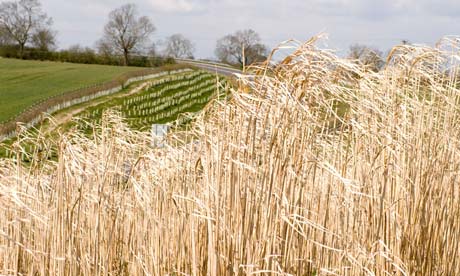 Miscanthus giganteus is a tall grass grown on European farms as a biofuel, such as this crop in rural Northamptonshire. Photograph: Alamy
The production of biofuels, good thing or not, will be decided by the setting of targets in the big western energy markets, right? Wrong, said bio-energy expert Jeremy Woods, at Imperial College, when I spoke to him yesterday.
He thinks biofuel production could pass a tipping point and start to rocket as rising oil prices make the plant-derived fuel cheaper in many developing countries around the world.
"Once oil is over $70 a barrel, conventional and new generation biofuels become cost competitive, certainly with tar sands and shale, and with oil from much of the Middle East and Brazil's new offshore fields," he says. "When oil and biofuels are competitive, we are into a different world."
Even more striking is his suggestion that this biofuel boom is most likely to happen in those developing countries that have fast growing populations and food needs. That's because those countries, including many African nations, are particularly vulnerable to high oil costs, for both transport and farming.
But Woods is not an opponent of biofuels. "Bioenergy done well is absolutely needed," he told me, at a Royal Society event titled Reducing greenhouse gas emissions from agriculture. He believes projects that work with smallholders and ensure benefits are kept within the country can produce biofuels responsibly. "Delivering investment in this way may be the only way to raise yields," he adds.
However, there are risks too, he says, and these are greater if demand drives the production of large volumes in a short period of time. In that scenario, foreign companies or governments would secure vast tracts of land and export all the fuel and profits. That will exacerbate existing problems in the host country, he says, and could lead to people being driven off the land. "The harder you pull the lever [of biofuel production], the more likely you are to get competition between fuel and food.
Also yesterday, an unexpected benefit of some biofuel production was revealed in a scientific paper - they can cool the local area by as much a 2C.
The modelling study, by Matei Georgescu at Arizona State University and colleagues, indicated that replacing conventional crops such as wheat and maize with perennial grasses used for biofuel production cut temperatures.
Georgescu says he is not advocating a widespread switch, but that this cooling phenomenon should be taken into account when making decisions about biofuels. "It dawned on me that some mechanisms were not being accounted for in this topic which has implications for millions of people," he told me.
The cooling happens for two reasons. First, the grasses - switchgrass or miscanthus - cover the ground for more of the year, preventing the sun heating the ground. Second, and more important, the plants transpire more, i.e. they evaporate more water into the atmosphere.
All this is unlikely to persuade some that biofuels can be green. Keith Taylor, the Green Party MEP for South East England said on Monday: "Although biofuels come from plants they are not a 'green' solution. Growing, transporting and burning biofuels has devastating effects on people and the environment both in the UK and around the world."
Keith added: "Relying on biofuels to solve our energy crisis simply dumps the problem on developing countries. What we need is more efficient use of energy and committed investment in clean renewables like wind, solar and tidal power."
We'll be following the biofuel story closely in the future, so feel free to let me know what you think we should be looking at in the comments below.
CITIZEN UNITED v. FEC
The Story of Citizens United v. FEC and an exploration of the inordinate power that corporations exercise in our democracy.
Feb 28, 2011
Can biochar help you realize more value from manure?


Dairy basics - Manure
When we look at the future of dairy manure management with the proper perspective, we see manure as an extremely valuable resource.
For many dairymen now, manure is just waste with serious handling and waste management expenses – a liability on the balance sheet. What would it take to move manure into the asset column?
Many paths have been traveled attempting to make money out of manure, ranging from low-tech paths like spreading it on fields raw, to more intensive methods of composting, all the way to high-tech, automated anaerobic digesters for the production of energy. There are many rusting tanks and empty lagoons attesting to their results.
A 2,000-year-old process has recently been adapted as a possible solution to concerns in the dairy industry. Biochar is one of the products from the process of converting biomass (forest/municipal waste, manure, crop residue, etc.) into a carbon-rich soil amendment.
The best-known biochar is the Terra Preta (dark earth) that has been a part of agriculture for more than 2,000 years in the Amazon Basin.
Biochar is produced in specifically designed bioenergy systems that heat biomass either through pyrolysis (no oxygen) or gasification (reduced oxygen). These systems can capture the liquids, solids and gases for beneficial use.
Each element of the process can be optimized to convert what was once a costly waste stream to several value-added products – the solids as biochar, and the gases to fuel the system and produce extra power.
From pyrolysis, the liquids can range from wood vinegar to bio-oil, depending upon the process. Each technology has its benefits.
After “manure happens” at a dairy, it is conveyed to a solids separator, and then dried thermally with excess heat from the gasification or pyrolysis system.
The dried material can be directly charred or further processed to produce pyroligneous acids similar to wood vinegar before the remaining solids are charred.
In the charring process the manure is heated and the resultant gases are directed to the production of heat to sustain the process.
With pyrolysis, any excess gases can be condensed to produce bio-oil or utilized in some other function.
In gasification they are combusted to produce heat that can be used for process heat, steam or power. The nutrient-rich charred manure is biochar.
However, not all biochars are created equal. The different feedstocks and methods of producing biochar can significantly alter its beneficial properties. Depending on the process, the pH can range very low to very high.
Care must be taken to match the characteristics of the soil with the right biochar so as to not be counterproductive.
The benefits of biochar can be remarkable. Not only do we improve the soil by retaining valuable elements, this very act reduces leaching and runoff of nutrients and makes a substantial reduction in gases that are said to be plaguing the environment (methane, CO2, and nitrous oxides).
Biochar also increases soil tilth, porosity, moisture retention capacity, CEC, soil biology and fertilizer efficiency. This is not an exhaustive list, but provides some very good indications of biochar’s intrinsic value.
On top of that, the fine-grained, highly porous char is a persistent, stable form of soil organic carbon. This means that both the carbon structures and its benefits last for hundreds to thousands of years. This will benefit the asset column for a long time to come.
Even directly applying biochar to the soil can provide some of its benefits almost immediately. Yet there is a more valuable process of “priming” the biochar so that it is able to take much greater advantage of current dairy waste streams.
The first step in the biochar “priming” process works similarly to the activated charcoal in a water filter. Instead of removing undesirables from tap water, it is used to filter valuable nutrients and particulates from dairy lagoon effluent.
The biochar is also colonized by beneficial microbes from the lagoon. The biochar and effluent slurry, enriched with nutrients and microbial populations, is then incorporated back into the manure stream during composting and replaced with fresh biochar.
Priming and then composting the enriched biochar with the manure reaps additional benefits by enhancing microbial activity and reducing the normal loss of nitrogen during the decomposition process.
Utilizing the biochar this way effectively converts an already powerful soil amendment into a biologically active media that is pre-loaded with concentrated nutrients and microbial populations.
When this “primed” biochar compost is land-applied, the needed nutrients and microbials continue a synergistic benefit that could otherwise take years to fully manifest in the soil, had it not been further developed.
Business leaders, scientists, politicians, environmentalists, venture capitalists and entrepreneurs are uniting in their belief that biochar truly is the future of manure management.
It is important to keep in mind that many valuable uses have been found for biochar, yet the biochar industry is very much in its infancy.
Although very fertile, char-rich soils were described long ago, the vast majority of research pertaining to biochar has occurred in the past 10 to 15 years.
Most biochar now available is wood-sourced, as only a handful of proven technologies can produce it consistently and fewer still can handle the throughput of various manures.
Due to the infancy of the biochar industry, while large-scale biochar equipment does exist, it isn’t sitting on a showroom floor just waiting to be installed. It is best to work with an experienced reputable company who can determine the best system design to maximize the needs of your operation.
Biochar demand far outstrips the supply, which is another supporting illustration of the infancy of the biochar industry. This lack of availability has produced a fair amount of frustration among researchers and consumers alike.
As a result, many researchers have had to build their own small charring units just to produce enough specific material so they could conduct the needed research.
Dr. Collins, a USDA soil scientist, stated that he has successfully demonstrated a model of using dairy manure to produce biochar, but has been unable to find a pyrolysis unit that can process enough material to allow widespread field application.
What does this mean for our dairies and manure management? The framework of the future and our part in it are still to be determined.
While each step has been proven individually in certain scenarios, the concepts discussed here are still in the formative stages and are being shaped by the needs of industry. We are the ones defining those needs and with every decision we make, we are choosing the architecture of our future.
Will we choose to continue “handling” manure as a waste product and incurring the associated expenses? Or will we adjust our vision to begin seeing the many benefits naturally contained in one of dairy’s valuable resources?
I guess it boils down to just one simple question: Will we make it a reality, that is, will we choose to realize more value in manure to benefit the environment and our bottom line? PD
For more information visit:
• www.biochar-us.org
• www.biochar-international.org/biochar
For industry-specific links and system manufacturers:
• www.dairybiocharcompost.com
References omitted due to space but are available upon request to editor@progressivedairy.com.
Garner has been working with biochar and studying its potential impact for the dairy industry for two years. He has previous experience providing quality assurance and testing for a large composting operation.
10 Ways Scott Walker Is Selling Out His Constituents to Corporations

By Kevin Donohoe, Think Progress
Posted on February 27, 2011
http://www.alternet.org/story/150065/
As the standoff between the Main Street Movement and Gov. Scott Walker (R-WI) continues for the twelfth day, much of the media coverage — and anger — from both sides has focused on Walker’s efforts to strip Wisconsin public workers of their right to collective bargaining. But Walker’s assault on public employees is only one part of a larger political program that aims to give corporations free reign in the state while dismantling the healthcare programs, environmental regulations, and good government laws that protect Wisconsin’s middle and working class. These lesser known proposals in the 144-page bill reveal how radical Walker’s plan actually is:
1. ELIMINATING MEDICAID: The Budget Repair Bill includes a little-known provision that would put complete control of the state’s Medicaid program, known as BadgerCare, in the hands of the state’s ultra-conservative Health and Human Services Secretary Dennis Smith. Smith would have the authority to “to override state Medicaid laws as [he] sees fit and institute sweeping changes” including reducing benefits and limiting eligibility. Ironically, during the 1990s it was Republicans, especially former Gov. and Bush HHS Secretary Tommy Thompson, who helped develop BadgerCare into one of the country’s most innovative and generous Medicaid programs. A decade later, a new generation of radical Republicans is hoping to destroy one of Wisconsin’s “success stories.”
2. POWER PLANT PRIVATIZATION AND ENVIRONMENTAL NEGLECT: The same budget bill calls for a rapid no-bid “firesale” of all state-owned power plants. One progressive blogger called the proposal “a highlight reel of all of the tomahawk dunks of neo-Gilded Age corporatism: privatization, no-bid contracts, deregulation, and naked cronyism” and suggested that the provision will open the way for large, politically connected corporations to buy up the state’s power plants on the cheap. While it’s unclear whether corporations would be interested in buying the plants, a similar proposal was vetoed six years ago by Gov. Jim Doyle (D), who called the plan fiscally and environmentally irresponsible. Many of Wisconsin’s power plants are in violation of federal clean air regulations and desperately need to be upgraded and cleaned up — not dumped into the private sector.
3. DANGEROUS DRINKING WATER: Republican lawmakers have introduced bills in both the Senate and the House which would repeal a rule requiring municipal governments to disinfect their water. Conservatives have said that the clean water rule — which went into effect in December — is simply too expensive. Yet the rule only affects 12 percent of municipalities and the price may be worth it. In 1993, 104 people died and 400,000 fell sick when the Milwaukee water supply became infected. Even two decades later, the Environmental Protection Agency Advisory Board notes that 13 percent of acute gastro-intestinal illnesses in municipalities that don’t disinfect their water supplies are the result of dirty water. Municipalities can keep their water clean for as low as $10,000 per well — but apparently for the Wisconsin GOP that is too high a price to pay to keep citizens safe from deadly microorganisms.
4. DESTROYING WETLANDS: In January, Walker’s proposed regulatory reform bill exempted a parcel of wetland owned by a Republican donor from water quality standards. But the exemption was more than just an embarrassing giveaway to a GOP ally: environmental groups believe the bill’s special provision would actually affect the entire county, eliminating public hearings on proposed wetland development, short-circuiting approval of development projects, and disrupting the region’s water system.
5. FISCAL IRRESPONSIBILITY: Walker signed a bill this week requiring a 2/3 supermajority in the legislature to pass any tax increase. Republican lawmakers are now reportedly considering a constitutional amendment that would make the rule permanent. A similar constitutional amendment in California has been called the “source of misery” of that state’s crippling budget crisis and has forced lawmakers to “gut public education, slash social services and health care programs, close prisons, and lay off record numbers of public employees.” While claiming to “make a commitment to the future instead of [choosing] dire consequences for our children” Walker and GOP lawmakers are instead putting generations of Wisconsinites in a “fiscal strait-jacket.”
6. DISENFRANCHISING VOTERS: This week, Republican lawmakers moved forward on a bill that would require voters to present a photo ID from the DMV at the polls, making it significantly more difficult for the elderly, the disabled, college students, and rural residents to participate in elections. While Republican lawmakers insist the bill is necessary to prevent voter fraud, there have been almost no documented cases of fraudulent voting in the state. Instead, the Wisconsin State Journal writes, the GOP bill is going “overboard in limiting ballot access in a state proud of its long history of high participation in elections.”
7. CUTTING JOBS, LOSING THE FUTURE: Last fall, Walker killed an $810 billion federally funded high-speed rail project, forcing the Transportation Department to pull its funding. Walker’s decision killed 130,000 expected jobs and forced the Spanish company Talgo to close its Milwaukee factory and layoff its 40 person staff. A spokeswoman for the company told The Daily Reporter that “the state’s decision to back away from the high-speed rail project sends a terrible message to businesses considering locating in the state.”
8. STIFLING INNOVATION: In late January, Walker introduced a bill that would ban wind-powered energy from Wisconsin and exacerbate the state’s dependence on out-of-state coal. If passed, it’s estimated that the law would immediately eliminate $1.8 billion in new wind power investments and jeopardize eleven currently proposed wind projects. After a public outcry earlier this month, Walker’s bill is (for now) dead.
9. “NAKED POWER GRAB”: Earlier this month in a party-line vote, the legislature ceded “extraordinary control” of the state’s rule-making oversight process to the governor. Walker now has complete power to draft agency rules which the legislature must then either approve or reject. The law gives Walker the power to write rules for formerly independent state agencies like the state Departments of Justice and Education — and most ominously the Government Accountability Board, the state’s ethics watchdog.
10. POLITICIZING STATE AGENCIES: A provision in Walker’s budget repair bill would convert thirty-seven state employees from civil servants to political appointees — consolidating his power over state government and expanding his power to “hire, fire and move key employees to carry out his agenda.”
Since his inauguration just two months ago, Walker and the Wisconsin GOP have taken unprecedented action to undermine the state’s unions, environmental regulations, long-term fiscal health, social welfare programs and basic democratic structure. As Rep. Keith Ellison (D-MN) said Tuesday, Walker has stopped acting like the Republican governor of a Midwestern state and has instead “basically taken on the position of a dictator” with a “vision of America that’s similar to somewhere like Nigeria or Pakistan.”
Posted on February 27, 2011
http://www.alternet.org/story/150065/
As the standoff between the Main Street Movement and Gov. Scott Walker (R-WI) continues for the twelfth day, much of the media coverage — and anger — from both sides has focused on Walker’s efforts to strip Wisconsin public workers of their right to collective bargaining. But Walker’s assault on public employees is only one part of a larger political program that aims to give corporations free reign in the state while dismantling the healthcare programs, environmental regulations, and good government laws that protect Wisconsin’s middle and working class. These lesser known proposals in the 144-page bill reveal how radical Walker’s plan actually is:
1. ELIMINATING MEDICAID: The Budget Repair Bill includes a little-known provision that would put complete control of the state’s Medicaid program, known as BadgerCare, in the hands of the state’s ultra-conservative Health and Human Services Secretary Dennis Smith. Smith would have the authority to “to override state Medicaid laws as [he] sees fit and institute sweeping changes” including reducing benefits and limiting eligibility. Ironically, during the 1990s it was Republicans, especially former Gov. and Bush HHS Secretary Tommy Thompson, who helped develop BadgerCare into one of the country’s most innovative and generous Medicaid programs. A decade later, a new generation of radical Republicans is hoping to destroy one of Wisconsin’s “success stories.”
2. POWER PLANT PRIVATIZATION AND ENVIRONMENTAL NEGLECT: The same budget bill calls for a rapid no-bid “firesale” of all state-owned power plants. One progressive blogger called the proposal “a highlight reel of all of the tomahawk dunks of neo-Gilded Age corporatism: privatization, no-bid contracts, deregulation, and naked cronyism” and suggested that the provision will open the way for large, politically connected corporations to buy up the state’s power plants on the cheap. While it’s unclear whether corporations would be interested in buying the plants, a similar proposal was vetoed six years ago by Gov. Jim Doyle (D), who called the plan fiscally and environmentally irresponsible. Many of Wisconsin’s power plants are in violation of federal clean air regulations and desperately need to be upgraded and cleaned up — not dumped into the private sector.
3. DANGEROUS DRINKING WATER: Republican lawmakers have introduced bills in both the Senate and the House which would repeal a rule requiring municipal governments to disinfect their water. Conservatives have said that the clean water rule — which went into effect in December — is simply too expensive. Yet the rule only affects 12 percent of municipalities and the price may be worth it. In 1993, 104 people died and 400,000 fell sick when the Milwaukee water supply became infected. Even two decades later, the Environmental Protection Agency Advisory Board notes that 13 percent of acute gastro-intestinal illnesses in municipalities that don’t disinfect their water supplies are the result of dirty water. Municipalities can keep their water clean for as low as $10,000 per well — but apparently for the Wisconsin GOP that is too high a price to pay to keep citizens safe from deadly microorganisms.
4. DESTROYING WETLANDS: In January, Walker’s proposed regulatory reform bill exempted a parcel of wetland owned by a Republican donor from water quality standards. But the exemption was more than just an embarrassing giveaway to a GOP ally: environmental groups believe the bill’s special provision would actually affect the entire county, eliminating public hearings on proposed wetland development, short-circuiting approval of development projects, and disrupting the region’s water system.
5. FISCAL IRRESPONSIBILITY: Walker signed a bill this week requiring a 2/3 supermajority in the legislature to pass any tax increase. Republican lawmakers are now reportedly considering a constitutional amendment that would make the rule permanent. A similar constitutional amendment in California has been called the “source of misery” of that state’s crippling budget crisis and has forced lawmakers to “gut public education, slash social services and health care programs, close prisons, and lay off record numbers of public employees.” While claiming to “make a commitment to the future instead of [choosing] dire consequences for our children” Walker and GOP lawmakers are instead putting generations of Wisconsinites in a “fiscal strait-jacket.”
6. DISENFRANCHISING VOTERS: This week, Republican lawmakers moved forward on a bill that would require voters to present a photo ID from the DMV at the polls, making it significantly more difficult for the elderly, the disabled, college students, and rural residents to participate in elections. While Republican lawmakers insist the bill is necessary to prevent voter fraud, there have been almost no documented cases of fraudulent voting in the state. Instead, the Wisconsin State Journal writes, the GOP bill is going “overboard in limiting ballot access in a state proud of its long history of high participation in elections.”
7. CUTTING JOBS, LOSING THE FUTURE: Last fall, Walker killed an $810 billion federally funded high-speed rail project, forcing the Transportation Department to pull its funding. Walker’s decision killed 130,000 expected jobs and forced the Spanish company Talgo to close its Milwaukee factory and layoff its 40 person staff. A spokeswoman for the company told The Daily Reporter that “the state’s decision to back away from the high-speed rail project sends a terrible message to businesses considering locating in the state.”
8. STIFLING INNOVATION: In late January, Walker introduced a bill that would ban wind-powered energy from Wisconsin and exacerbate the state’s dependence on out-of-state coal. If passed, it’s estimated that the law would immediately eliminate $1.8 billion in new wind power investments and jeopardize eleven currently proposed wind projects. After a public outcry earlier this month, Walker’s bill is (for now) dead.
9. “NAKED POWER GRAB”: Earlier this month in a party-line vote, the legislature ceded “extraordinary control” of the state’s rule-making oversight process to the governor. Walker now has complete power to draft agency rules which the legislature must then either approve or reject. The law gives Walker the power to write rules for formerly independent state agencies like the state Departments of Justice and Education — and most ominously the Government Accountability Board, the state’s ethics watchdog.
10. POLITICIZING STATE AGENCIES: A provision in Walker’s budget repair bill would convert thirty-seven state employees from civil servants to political appointees — consolidating his power over state government and expanding his power to “hire, fire and move key employees to carry out his agenda.”
Since his inauguration just two months ago, Walker and the Wisconsin GOP have taken unprecedented action to undermine the state’s unions, environmental regulations, long-term fiscal health, social welfare programs and basic democratic structure. As Rep. Keith Ellison (D-MN) said Tuesday, Walker has stopped acting like the Republican governor of a Midwestern state and has instead “basically taken on the position of a dictator” with a “vision of America that’s similar to somewhere like Nigeria or Pakistan.”
Feb 27, 2011
Hope | One Straw – Be the Change

Every day for 12 days now. Awesome.
Hope
Written on February 28, 2011 by onestraw in Activism, Transitions
So for 12 days now the Capitol of Wisconsin, USA has been occupied by the most interesting mix of college age cooperative living types, “professional” hippies, and other counter culture types – many of whom I recognize by sight, if not name, from permaculture projects and talks I have been to. They are a fascinating group that I have begun referring to as the “freegans” – though they call themselves Freedom, Inc. In 12 short days they have formed medic cooperatives, organized highly effective and informative signage for the protestors to navigate the Capitol (bathrooms, phone charging stations, food), set up advanced and effective live video feeds of the rotunda and coordinated twitter sites. They have coordinated food stations for donated food, cordoned off an entire wing of the capital hallways for a “family” area complete with extrememly well stocked diaper changing stations, play areas, kits for young and old to make signs, and quiet areas for nursing, napping, or just resting. They have slept on air mattresses and piles of coats for a week and change. They have done an amazing job of organizing chaos into a functioning micro-cosm of society based on donations, volunteerism and cooperative spirit. They have also formed the most incredible alliance I have ever seen – with the Capitol Police. More on that in a bit. In the Freegans there is HOPE.
Now, for 12 days there have been 2000-10,000 people marching, chanting, singing, drumming, and yes, sleeping in the Capitol building. They have done an incredible job keeping it tidy – there is literally no trash anywhere as the Freegans are very aware that any provocation could be used to evacuate them. Think about that for a minute – 10,000 people –anywhere- for 12 days and NO TRASH. They are the most polite, the most respectful, young (and not so young) people I have ever seen. Every officer is Sir or Ma’am, every request is a please followed by a thank you! But despite their herculean efforts, you simply cannot have that volume of people together for that long with an, er, aroma developing. The Capitol -not the people -needs a bath. And this fact was seized on last Friday when the department overseeing the Capitol issued a proclamation that today at 4pm the Capitol would be “closed for cleaning” and would resume “normal” business on Monday 2/28. In other words – the occupation would be ending. The statement was very clear that this was not a request – but an order- clearly stating that those refusing eviction would be arrested. A line was drawn in the sand. Off duty firefighters and even police joined the freegans Thursday night, and on, to bolster their ranks. The protest was going up a notch.
So today at 4, tension was high. Fox News, infamous for conservative (and oft times extremely bias) “reporting”, despite its absence so far (even reporting our State as “burning” at one point) was on hand at 3:40 for a live feed in anticipation of footage of liberals in shackles. The freegans issued training on how to be handcuffed without losing bllood circulation and recommended all eye contacts be removed in case of tear gas or pepper spray. 4:00 came. And went. No one left. No blood, no riot. Then, over the Fox live feed could be heard streaming through the -open- doors of the Capitol chants of ”Thank you POLICE!”. which broke into a resounding chorus of “Solidarity Forever!” as the freegan live feed showed thousands of protesters and freegans locked arm in arm around the entire second floor singing in righteous joy. Twitter exploded. Fox cut their live feed (why bother without the violence and spectacle – its only peace and love after all!) Hard news was impossible to find as events were (and still are) happening real time so the rest of this piece is hearsay, but trends were evident in the tweet torrent. The Capitol Police would not force anyone to leave – but they would help the freegans move their supplies so the cleaning could commence. Around 5 the Police Spokeswoman issued a statement that no one would be forcibly removed from the Capitol, and that the situation would be assessed “day by day” to ensure the safety and rights of all participants. The Police had seemingly defied the order, and the freegans could stay. Unbelievable. Solidarity!
The past two weeks have been incredibly intense – the stark corporatization of our government laid bare as we read the bill in horror. What about rights? What about reason and common sense? CAN THEY DO THIS? OMG – what can we – citizens – do? Tuesday 2/14 the freegans and a handful of Democratic insideres answered for us all by “occupying” the capitol. And then the Fight for Wisconsin began. Teachers hit the streets and schools closed. Citizens followed by the thousands – by Thursday my Wife and I were there. Friday we took the kids too. The Media woke up and sent in TV crews. By Saturday 70,000 hit the streets. But on Tuesday the Teachers decided to go back to school so that their students didn’t suffer. What would happen would the protest falter. Hell no! Firefighters, police, steelworkers, teamsters, citizens, retirees, by the tens of thousands flocked to the Cause – by Tuesday Noon the entire square was again closed and throbbing with the chants of thousands. SOLIDARITY! By weeks end a cold front roared in. Temps fell into the teens and snow fell. The bill passed the Assembly at 1:07am in a shameful ploy by the Republicans that left 28 representatives unable to even vote. Yelling their colleagues out of the assembly with resounding cries of “SHAME! SHAME! SHAME!” Friday was a day of tears of rage and cries of anger – I was ready to FIGHT (my Celtic blood is STRONG). But the freegan example was stronger – PEACE ruled even through the primal emotions. By Friday, the Police unions were on board with official statements of solidarity. Saturday was bitter cold. And yet, unbelievably, 100,000+ showed up in an amazing display of solidarity. There were protests in solidarity in all 50 states across the nation. And now, still the freegans remain, thanks to the Police. As I write this, the freegan live feed is reporting the freegans cheering the floor waxer as it begins it appointed rounds. This is so very, very unreal.
But through it all – the fear, the rage, the unreality, rings one crystal clear emotion: HOPE!!
This fight is far from over. The is the just start of the beginning. But we have taken our first steps – my state has seen the largest spontaneous protests in over 40 years – not since the fights for Civil rights and the Vietnam War have so many citizens joined together to fight for what they felt in their hearts to be right. I had thought we had perhaps lost this as a country – that luxury and ease had raised a majority generation of indolents. I was wrong. THANK THE GODS I was wrong.
Damn proud of my State. We have much to do- we’ve got an entire future to build. But with consumers becoming citizens again we again have Hope. And with Hope there is a chance; all I’ve ever asked for is a fighting chance. Solidarity is the difference between Lifeboats and Transition. As the scene I saw so often over the past 2 weeks relates: 250# Iron workers nodding to 70 yr old retired teachers over handmade protest signs with a gruff statement of TRUTH …. “We’re in this together.”
Lets do this.
Be the Change.
-Rob
PS – Here is a great “one stop shop” for twitter feeds on the happenings. Easier than following them all separate
Making Biochar For Small Farms
The Biochar Kiln is a top-lit updraft (TLUD) design, like a rocket stove. The biochar process described is scalable for small acreage farms. The set up of four kilns is capable of producing one cubic yard of biochar in six hours. We use raw materials from recycled wood.
John Rogers, Biochar Kiln and Process Designer
Ann Augustine, Editor and Producer
Madison Protests
A look at the protests over the last two weeks from One Wisconsin Now.
Music by MGMT ("Kids").
Music by MGMT ("Kids").
Feb 17, 2011
Growing Miscanthus Giganteus: MFA Oil Partnership to Create 900 Jobs for Mid-Missourians
 Reported by ; Emily Spain Posted by ; Christi Warren
JEFFERSON CITY - MFA Oil Company of Columbia and Aloterra Energy announced a partnership Tuesday called MFA Oil Biomass LLC. MFA estimates it will create 900 jobs in central Missouri alone. Local farmers will grow the renewable energy crop that MFA Biomass plans to turn into biofuels like ethanol.
Approximately 100 of the jobs will be in a conversion plant while the rest will involve farmer support services and equipment manufacturers.
There are two other project areas besides mid-Missouri, one in southwest Missouri and the other in northeast Arkansas. All three projects could generate 2,700 jobs.
"This program is one of the answers to one of the problems we're in; it addresses pollution, it addresses renewable energy," said MFA Oil President Jerry Taylor.
The grass crop is called miscanthus giganteus. It is easy to grow, requires little fertilizer and is pest resistant. Nearly 1,700 farming families will grow the grass.
"We can produce something locally to help out the economy and the US as an energy resource," said farmer Beau Voss. "It is new to us."
Voss plans to plant the grass on 40 acres at his farm just outside Jefferson City. Poultry farmer Rusty Mulford from southwest Missouri hopes to grow around 100 acres of the renewable energy crop.
"I'm most excited about having the sustainable energy grown right on my farm," Mulford said.
The sustainable energy could lure even more businesses to central Missouri besides the new MFA biomass.
"It could be extremely helpful in attracting the type of tech companies that we like into the Columbia area because of a strong renewable energy producing effort," said Taylor.
The project relies on Federal money from the Biomass Crop Assistance Program or BCAP. The U.S. House of Representatives cut the programs budget, but it still has to go through the senate.
"We had over $400 million allotted in the program nationally and that was to be utilized over a number of years," Taylor said. "That [has] been cut by the house to a little over 112 million, but that's just the first go around...The whole program is still in Obama's budget."
MFA Oil Biomass needs some of that money to help farmers get the crop started because it takes three years for the crop to fully mature. MFA Oil said farmers will start to plant the crop this spring.
TimberWest January/February 2011- Biochar
 One of tomorrow's solutions
By Kathy Coatney
Eric Twombly, president of Biochar Products based in Halfway, Ore., is excited about the future. His company is in the early stages of developing a biochar plant that produces two products -- biochar, used as a soil amendment, and bio-oil to be used in place of fuel oil.
Most people are familiar with bio-oil, but biochar is formed when agricultural waste or biomass is converted into a fine-grained, highly porous charcoal.
It's basically the type of charcoal that has been used for centuries, according to Twombly. "It is the same darn thing as charcoal that you get in your briquette, except that it doesn't have a bunch of glue in it to hold it together."
Twombly spent 36 years as a range conservationist and a forester for the U.S. Forest Service and became interested in biochar. He and two associates created Biochar Products to take biochar research to the next stage.
Portable Machines
Currently, Twombly is testing a one-ton prototype fast pyrolysis (or gasification) biochar machine that produces both biochar and bio-oil. The biochar machine was built by Advanced Bio Refinery Incorporated (ABRI), a Canadian company.
The pyrolysis of biomass can be done slowly or fast. Done slowly, the process only makes charcoal, while the fast method makes both bio-oil and charcoal.
"Fast pyrolysis charcoal is more recalcitrant, which means it stays in the soil longer than slow pyrolysis charcoal, because the volatiles are removed better by the fast pyrolysis process," Twombly explains, adding he sees the real profits coming from producing both charcoal and bio-oil. And Biochar Products is currently working with ABRI to develop production 20-ton and 50-ton production machines.
A 20-ton machine would sit on two 40-foot trailers with articulate rear wheels. "You could steer the rear wheels. You could turn them around on a landing. You'd sit them side-by-side," Twombly said, adding it would be easily portable.
A 50-ton unit would sit on six trailers. "It probably would take two weeks to move," Twombly says, adding it would most likely be moved only a few times a year.
The company anticipates the 50-ton plant would be situated in an area that has a large supply of material. "They'll move them around wherever there's a good supply, and I would say you're not going to move them from one landing to the next. Most likely, what you'll do is, you'll park one at a good centralized location, then you'll haul the biomass in short distances," Twombly said.
The machines will be composed of three units -- the control unit, the reactor, and the dryer.
The control unit will control the entire system and be equipped with a computer screen that displays all the temperatures in the various units.
Each unit has pumps. "There's a pump that pumps the bio-oil through the system for cooling. There's a pump that the reactor biomass is moved through the system with hydraulic motors," Twombly says. There is also a pump that runs antifreeze through a radiator and through various units to cool down the char.
Another unique feature is the built-in dryer. "Most biochar production systems have to depend on some usually fairly expensive external system to get the biomass dried down enough to run through it," Twombly says. "This biochar machine from ABRI can handle wet and dry material and get good results. Everybody else has a heck of a time getting their biomass in the proper form to run through the reactor, and this does it all by itself beautifully."
The ABRI biochar machine also produces syngas. "If we can get our generator run by bio-oil, then we're 100 percent energy self-sufficient," Twombly says, except for the electric motors.
Down the road, the company envisions the machines going out in the woods with loggers or near mills. The products could be used on site or sold.
Twombly adds, "We expect that when these machines are in production, they'll run five days a week, 24 hours a day."
Profitability
Making biomass profitable is difficult. One of the key issues is hauling costs. "It's a very low value product," Twombly says.
He estimates that while charcoal energy is only worth about $100 a ton, the charcoal in biochar form (when used as a soil amendment) will sell for around $300 a ton. And every ton of waste that runs through the biochar machine can produce 100 gallons of bio-oil -- worth about $1.25 a gallon.
Biochar Products believes they may have the solution. Transporting the bio-oil is much simpler than transporting conventional oil. The bio-oil can be easily loaded onto any tank on a goose-neck trailer, and a crew in the woods could haul the bio-oil out every night.
"There would be no haul costs except for just getting your crew in and out of the woods," Twombly says.
The Future
Twombly is hoping to have a machine fully operational within two years, and he initially sees the forest industry as one of the first to use them because of the volume of biomass they have.
"I think it's probably going to be kind of a 50/50 thing. I think the farm waste community is going to be right on top of it," Twombly says, especially feedlots that need to remove manure waste. Brush removal from orchards would be another source.
The future could very well be processing forest slash seven to eight months of the year and farm waste the rest of the year, Twombly says, adding the alternative would be to stockpile slash and run it in the winter. "In fact, it will only be profitable if you can run pretty much most of the year."
Currently, Twombly is in negotiations with ABRI. "We've sent a whole series of engineering needs back to them… They're working on what it's going to take to put together the next generation. So by next spring, we might have the next generation machine that has a lot of the problems that we've got (now) resolved."
One of tomorrow's solutions
By Kathy Coatney
Eric Twombly, president of Biochar Products based in Halfway, Ore., is excited about the future. His company is in the early stages of developing a biochar plant that produces two products -- biochar, used as a soil amendment, and bio-oil to be used in place of fuel oil.
Most people are familiar with bio-oil, but biochar is formed when agricultural waste or biomass is converted into a fine-grained, highly porous charcoal.
It's basically the type of charcoal that has been used for centuries, according to Twombly. "It is the same darn thing as charcoal that you get in your briquette, except that it doesn't have a bunch of glue in it to hold it together."
Twombly spent 36 years as a range conservationist and a forester for the U.S. Forest Service and became interested in biochar. He and two associates created Biochar Products to take biochar research to the next stage.
Portable Machines
Currently, Twombly is testing a one-ton prototype fast pyrolysis (or gasification) biochar machine that produces both biochar and bio-oil. The biochar machine was built by Advanced Bio Refinery Incorporated (ABRI), a Canadian company.
The pyrolysis of biomass can be done slowly or fast. Done slowly, the process only makes charcoal, while the fast method makes both bio-oil and charcoal.
"Fast pyrolysis charcoal is more recalcitrant, which means it stays in the soil longer than slow pyrolysis charcoal, because the volatiles are removed better by the fast pyrolysis process," Twombly explains, adding he sees the real profits coming from producing both charcoal and bio-oil. And Biochar Products is currently working with ABRI to develop production 20-ton and 50-ton production machines.
A 20-ton machine would sit on two 40-foot trailers with articulate rear wheels. "You could steer the rear wheels. You could turn them around on a landing. You'd sit them side-by-side," Twombly said, adding it would be easily portable.
A 50-ton unit would sit on six trailers. "It probably would take two weeks to move," Twombly says, adding it would most likely be moved only a few times a year.
The company anticipates the 50-ton plant would be situated in an area that has a large supply of material. "They'll move them around wherever there's a good supply, and I would say you're not going to move them from one landing to the next. Most likely, what you'll do is, you'll park one at a good centralized location, then you'll haul the biomass in short distances," Twombly said.
The machines will be composed of three units -- the control unit, the reactor, and the dryer.
The control unit will control the entire system and be equipped with a computer screen that displays all the temperatures in the various units.
Each unit has pumps. "There's a pump that pumps the bio-oil through the system for cooling. There's a pump that the reactor biomass is moved through the system with hydraulic motors," Twombly says. There is also a pump that runs antifreeze through a radiator and through various units to cool down the char.
Another unique feature is the built-in dryer. "Most biochar production systems have to depend on some usually fairly expensive external system to get the biomass dried down enough to run through it," Twombly says. "This biochar machine from ABRI can handle wet and dry material and get good results. Everybody else has a heck of a time getting their biomass in the proper form to run through the reactor, and this does it all by itself beautifully."
The ABRI biochar machine also produces syngas. "If we can get our generator run by bio-oil, then we're 100 percent energy self-sufficient," Twombly says, except for the electric motors.
Down the road, the company envisions the machines going out in the woods with loggers or near mills. The products could be used on site or sold.
Twombly adds, "We expect that when these machines are in production, they'll run five days a week, 24 hours a day."
Profitability
Making biomass profitable is difficult. One of the key issues is hauling costs. "It's a very low value product," Twombly says.
He estimates that while charcoal energy is only worth about $100 a ton, the charcoal in biochar form (when used as a soil amendment) will sell for around $300 a ton. And every ton of waste that runs through the biochar machine can produce 100 gallons of bio-oil -- worth about $1.25 a gallon.
Biochar Products believes they may have the solution. Transporting the bio-oil is much simpler than transporting conventional oil. The bio-oil can be easily loaded onto any tank on a goose-neck trailer, and a crew in the woods could haul the bio-oil out every night.
"There would be no haul costs except for just getting your crew in and out of the woods," Twombly says.
The Future
Twombly is hoping to have a machine fully operational within two years, and he initially sees the forest industry as one of the first to use them because of the volume of biomass they have.
"I think it's probably going to be kind of a 50/50 thing. I think the farm waste community is going to be right on top of it," Twombly says, especially feedlots that need to remove manure waste. Brush removal from orchards would be another source.
The future could very well be processing forest slash seven to eight months of the year and farm waste the rest of the year, Twombly says, adding the alternative would be to stockpile slash and run it in the winter. "In fact, it will only be profitable if you can run pretty much most of the year."
Currently, Twombly is in negotiations with ABRI. "We've sent a whole series of engineering needs back to them… They're working on what it's going to take to put together the next generation. So by next spring, we might have the next generation machine that has a lot of the problems that we've got (now) resolved."
Feb 16, 2011
Musial: "Greatest day in my life"

As he left the White House after receiving the Presidential Medal of Freedom, Stan Musial was asked to describe the experience and what it meant to him.
"This is the greatest day I had in my life," Musial said.
That's quite a statement, considering that The Man, 90, has had an extraordinary, almost incomprehensible, number of great days in his life. More than any of us can comprehend, really. The happy days include winning three World Series, three MVP awards, seven batting titles, playing in 24 All-Star Games, getting his 3,000th hit and becoming a first-ballot Hall of Famer. Just to name a few.
But this one, Musial said, topped them all.
"I appreciate this very much," he said.
Around 90 minutes before, he had been given the medal by President Barack Obama, who gently patted Musial on the shoulder before placing the medal around The Man's neck. Other medal-winners removed their prizes immediately after the ceremony, but not Stan.
Musial was still proudly wearing the medal as he paused to speak for a few minutes on the sidewalk in front of the White House on Pennsylvania Avenue. He sat in a wheelchair, wearing leather gloves to ward off the chill, with two of his daughters rubbing his shoulders for additional warmth.
To Stan's immediate left was his beloved wife Lillian, also seated in a wheelchair. They were surrounded by their four children: son Dick and daughters Gerry, Janet and Jean.
It was a poignant moment, just seeing Stan and Lil and the entire family brimming with pride and joy.
The Musials have been sweethearts since age 16 back in Donora, Pa. They've been married since May 25, 1940 ... I believe that would be 70 years. Can you imagine that? Tremendous. And their love is very much alive and burning. It's also clear that they still have a lot of fun together.
"I married a pretty good wife," Musial said, in an intentional understatement devised to get a response from Lil.
Lil said, "I've always been proud of Stan from the very first day we met at 16 years old. I got him before he knew any better. It's been a long life and it's been really wonderful."
Musial was so fired up Tuesday he played the harmonica for members of the White House staff as he rolled into a reception area a couple of hours before the ceremony. That put smiles on the face of everyone in the room.
And near the end of post-ceremony party, an inspired and blissful Musial did it again, giving an encore performance that included the song, "Golden Slippers," the "Wabash Cannonball," and that chestnut of Musial chestnuts -- "Take Me Out to the Ballgame."
See what happens when you invite The Man to the White House?
At age 90, he performs two shows daily.
No cover. No minimum.
And to think friends and family were concerned about how Musial would hold up through Monday's journey to Washington D.C. and the bustling activity of a long Tuesday. But as usual, Musial came through in the clutch. A natural-born crowd-pleaser, Musial came to D.C. and gave as much happiness to others as they gave to him.
"Stan was really on his game today," said a delighted Bill DeWitt Jr., the Cardinals' chairman. "He was really up for this. It was something else, at the end of the reception, with everyone milling around, Stan took out his harmonica and played a few tunes. Everyone came up and stood around him. It was really terrific. He was just great."
Perhaps summing up the remarkable nature of this day, Lil Musial smiled and said, "Wonders never cease with my husband."
The celebration would continue on the flight back to St. Louis.
"We have champagne on the plane," said Brian Schwarze, Musial's devoted grandson.
Let's all raise a glass to The Man.
Subscribe to:
Posts (Atom)

 Posts
Posts


