
Jan 29, 2014
Router Templates for Easy Curves - YouTube
Published on Jan 29, 2014
Chris Marshall demonstrates a reader's suggestion for routing curves using templates.
Router Templates for Easy Curves - YouTube


“The best gene in the world doesn’t fix dogshit germplasm” - Is Monsanto Giving Up On GMOs? | Mother Jones
By Tom Philpott

Photoillustration. Aleksey Oleynikov and koya979/Shutterstock
Is genetically modified seed giant Monsanto doing the unthinkable and moving away from genetically modified seeds?
It sounds crazy, but hear me out. Let’s start with Monsanto's vegetable division, Seminis, which boasts it is the "largest developer and grower of vegetable seeds in the world." Monsanto acknowledges Seminis has no new GM vegetables in development. According to a recent Wired piece, Seminis has has reverted instead to "good old-fashioned crossbreeding, the same technology that farmers have been using to optimize crops for millennia."
Why? The article points to people's growing avoidance of genetically modified foods. So far, consumers have shown no appetite to gobble up GM vegetables. (But that doesn't mean people aren't eating GMOs: Nearly all GMOs currently on the market are big commodity crops like corn and soy, which, besides being used as livestock feed, are regularly used as ingredients in processed food—think high-fructose corn syrup and soy oil.)
But the Wired piece also suggests a factor that doesn't get nearly enough attention: GM technology doesn't seem to be very good at generating complex traits like better flavor or more nutrients, the very attributes Monsanto was hoping to engineer into veggies. Here'sWired:
Furthermore, genetically modifying consumer crops proved to be inefficient and expensive. [Monsanto exec David] Stark estimates that adding a new gene takes roughly 10 years and $100 million to go from a product concept to regulatory approval.And inserting genes one at a time doesn’t necessarily produce the kinds of traits that rely on the interactions of several genes. Well before their veggie business went kaput, Monsanto knew it couldn’t just genetically modify its way to better produce; it had to breed great vegetables to begin with. As Stark phrases a company mantra: “The best gene in the world doesn’t fix dogshit germplasm.” [Emphasis added.]
Okay, that's vegetables. What about Monsanto's core business, selling seeds for big industrial commodity crops like corn, soybeans, cotton, and alfalfa? Monsanto has come to dominate these markets with its Roundup Ready products, which are designed to withstand Monsanto's flagship herbicide, and, for corn and cotton, its "Bt" products, which are engineered to produce a toxin found in bacillus thuringiensis, an insect-killing bacteria. Does the company have lots of novel GM products in mind for this vast, lucrative sector?
Monsanto's latest Annual R&D Pipeline Review, a document released earlier this month that showcases the company's research into new product lines, foretells all kinds of impressive-sounding stuff. But a surprising amount of the company's new research, even for its most lucrative crops like corn and soy, promise either new iterations of herbicide tolerance and Bt, or rely on classical breeding—not biotechnology.
The one major exception is a corn seed relying on a new kind of GMO: RNA interference (RNAi) technology, a recently discovered way to turn off certain genes, which Monsanto plans to engineer into crops to kill certain insects. According to Monsanto's pipeline review, RNAi corn remains in the early "proof of concept" phase. In a recent piece, the New York Times's Andrew Pollack reports that the technology is showing promise—Monsanto hopes to have it on the market "late this decade." But it's also generating controversy even in normally Monsanto-friendly regulatory circles because researchers have suggested it may kill beneficial insects like ladybugs along with targeted pests. Pollack points to this 2013 paper by Environmental Protection Agency scientists, which warned that the unfamiliar technology presented "unique challenges for ecological risk assessment that have not yet been encountered in assessments for traditional chemical pesticides."
So RNAi corn may be coming—and could bring public relations and regulatory complications for Monsanto, not to mention unpredictable ecological consequences for the rest of us. But how much other GMO-based stuff does Monsanto have up its sleeve? According to the US Department of Agriculture's Animal and Plant Health Inspection Service, the agency that oversees the rollout of new GM crops, not much. Of the 13 new GMOs APHIS is tracking, only two are from Monsanto: an alfalfa engineered to be more easily digestible as animal feed, and a soybean designed to withstand a harsh old herbicide called dicamba (a variation on the familiar Roundup Ready herbicide-tolerance theme).
Just two crops in the final stages of USDA deregulation, from the ballyhooed GMO seed giant? That makes me think of Monsanto's recent $1 billion purchase of Climate Corp., a company that proposes to use GPS-backed data analysis tools to help farmers make planting decisions, for a fee. The move reminds me of IBM's mid-2000s decision to transition out of the business that made it famous by ditching the personal computer and focusing on IT products and consulting.
I've called Monsanto's press office to ask about their plans, and I'll return to this topic if they get back to me. And in the meanwhile, to be sure, Monsanto still makes loads of money selling GMO seeds—along with their matching proprietary herbicide, and likely will for a long time. But the facts have me wondering if the company's quiet exit from genetically engineered vegetables and placement of a billion-dollar wager on data services signal that the GMO giant just might be hedging its bets on GM technology.
Is Monsanto Giving Up On GMOs? | Mother Jones
Jan 26, 2014
CoolTerra Biochar 28 Day Time Lapse - YouTube
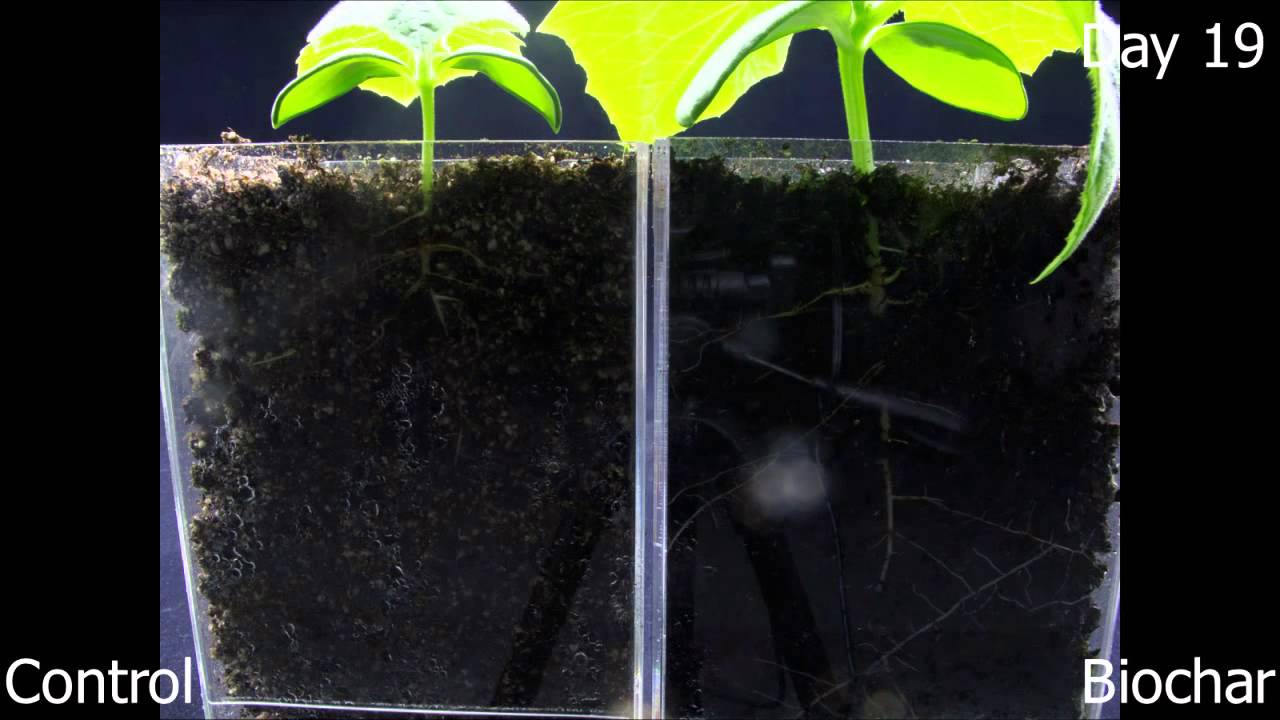
Larger Image
Published on Jan 23, 2014
Amazing 28 day time lapse video in 1 minute, comparing plants that do not have biochar and plants that are using Cool Planet's new soil amendment product called CoolTerra. CoolTerra boosts plant growth, retain soil moisture, locks-in soil nutrients, increases microbial life and builds lasting fertility. To learn more visit: www.coolplanet.com/biochar
CoolTerra Biochar 28 Day Time Lapse - YouTube
Jan 23, 2014
Crop flops: GMOs lead ag down the wrong path | Grist
By Tom Philpott
Martchan / Shutterstock
Editor’s note: After we ran What I learned from six months of GMO research: None of it matters, Nathanael Johnson’s essay concluding his “Panic-Free GMOs” series, we heard from a lot of people who think that GMOs really do matter. We’re publishing three responses: one from Denise Caruso, author of Intervention: Confronting the Real Risks of Genetic Engineering and Life on a Biotech Planet; one from Ramez Naam, author of The Infinite Resource: The Power of Ideas on a Finite Planet; and — to kick things off today — one from Tom Philpott, whose work long graced these pages and who is now at Mother Jones.
Before I respond to Nathanael Johnson’s assertion that the “stakes are so low” in the debate over GMOs, I want to address a smaller point. “The debate isn’t about actual genetically modified organisms — if it was we’d be debating the individual plants, not GMOs as a whole,” Johnson writes.
That’s a good place to start: actually existing GMOs. What traits are on the market today, in use by farmers? First, I’ll note that there’s no shortage of land devoted to GMOs. Since the novel seeds hit the market in 1996, global GM crop acreage has expanded dramatically, reaching 420 million acres by 2012, reports the International Service for the Acquisition of Agri-biotech Applications. That’s a combined landmass more than four times larger than California. The pro-GMO ISAAA hails this expansion as “fastest adopted crop technology in the history of modern agriculture.”
Yet, for all of that land devoted to GMOs, there are just two traits in wide use: herbicide resistance and pest resistance (Bt). Note, in the below ISAAA chart, the “<1″ at the bottom. That represents the percentage of all global GMO acres planted in crops that aren’t either herbicide- or pesticide-tolerant: that is to say, less than 1 percent.

Now, one might ask: But isn’t the industry on the brink of rolling out wonder crops — new varieties that are more nutritious, or use water more efficiently, or need less fertilizer? One way to tell is to peek into the U.S. Department of Agriculture pipeline of new GMO products being considered for deregulation. Here we can expect to find the stuff the industry has tested and found rugged and ready for field conditions. What’s in there? Thirteen products — nine of which involve herbicide tolerance or insect resistance. Of those nine, five are engineered to resist two herbicides — a dispiriting trend I’ll explore more below. The others are an apple variety engineered not to brown, a eucalyptus designed to resist freezing, a potato charged with bruising less easily, and an alfalfa type meant to contain less lignin.
Something tells me that none of these novelty items are destined to crack ISAAA’s <1 percent box.
It’s true that rice engineered to deliver beta-carotene is due out in 2016 in the Philippines, and that citrus trees engineered to resist a ruinous pathogen have shown promise. Then there are those virus-resistant GM papayas in Hawaii — though it should be noted that the state’s entire papaya production covers about 2,000 acres, the size of a moderately sized corn farm in Iowa. But until the “golden rice” and the novel oranges prove effective, durable, and acceptable to a large swath of growers, we live in a world in which upwards of 99 percent of GMOs are engineered for the two traits mentioned above.
And that means that actually-existing GMOs remain essentially an appendage of the pesticide industry, which has dominated the technology from the start. But a fixation on pesticides doesn’t fully answer the question of why the industry’s vaunted innovation has stagnated into variations on two themes, with a few promising products at the margin. Monsanto, for one, has signaled its intention to diversify away from pesticides by entering what might be called theclimate-change-services business; and back in 2008, the companypledged to create seeds that would “reduce by one-third the amount of key resources required to grow crops by the year 2030,” while also doubling yields.
More than five years later, where’s the progress? For that, I think, we have to look to the fact that genes and traits (the cool things we want plants to do in the field) don’t always track on a one-to-one basis. There are single genes that confer resistance to particular herbicides or express the toxic-to-insects trait of Bacillus thuringiensis, the basis of Bt corn and cotton. But there’s no one gene that regulates the way a plant uses water — which probably explains why Monsanto’s “drought-tolerant” corn, deregulated by the USDA in 2012, has fallen with such a thud. In its Final Environmental Assessment of the crop, the USDA delivered quite a caveat. “It is prudent to acknowledge,” the agency declared, that the Monsanto product’s ability to fend off drought “does not exceed the natural variation observed in regionally-adapted varieties of conventional corn (representing different genetic backgrounds).” Translation: In areas of the U.S. corn belt where drought is typically a factor, conventional breeders had already developed varieties that do just as well under drought conditions as Monsanto’s genetically altered product.
Churning out crops designed to require less nitrogen — which involves another complex process beyond the scope of a single gene — has so far proven to be an equally vexed project.
So what we have here, in essence, is a bit of a carnival-game scheme: an industry that lives by trumpeting elusive promises while quietly profiting from old tricks. In that sense, I agree with Johnson: stakes are low in the GMO debate, in that it’s an industry that’s wildly overhyped — by champions and foes alike.
But there’s another sense in which stakes are high indeed. The industry’s core traits, herbicide and pesticide resistance, have proven vulnerable. Nearly half — and growing — of all U.S. farms are plagued by weeds resistant to Monsanto’s herbicide Roundup, and farmers have responded by jacking up their Roundup doses and adding to them older, more toxic herbicides. Meanwhile, a pest called the western corn rootworm has evolved resistance to Bt corn. Here’s NPR’s Dan Charles, writing last summer:
It appears that farmers have gotten part of the message: Biotechnology alone will not solve their rootworm problems. But instead of shifting away from those corn hybrids, or from corn altogether, many are doubling down on insect-fighting technology, deploying more chemical pesticides than before. Companies like Syngenta or AMVAC Chemical that sell soil insecticides for use in corn fields are reporting huge increases in sales: 50 or even 100 percent over the past two years.
The failure of these products — a profitable failure, if you make both GMOs and pesticides — has brought industrial-scale agriculture to a crossroads. Farmers could respond by making tweaks that have been proven to maintain productivity while slashing herbicide, insecticide, and fertilizer use — simple changes like adding another crop to the rotation and planting fall cover crops, as demonstrated by a landmark 2012 study by Iowa State University researchers.
Such a relatively minor change in farming practices would bring enormous benefits to society — to name a few, more carbon stored in soil, less fouling of drinking water with agrichemical runoff, and greater resilience to drought in the heart of the U.S. grain belt. U.S. farm policy could and should underwrite a shift to a more diversified and low-input agriculture — an unlikely prospect, given that the industry deftly invests a chunk of its profits in lobbying Congress, and that its “feed the world” rhetoric has won over a broad swath of progressive thought leaders.
Or farmers could head down the path paved for them by Monsanto and its very few peers in the agrichemical/GMO game, including Dow and DuPont. This way involves responding to the plague of resistant weeds by adding yet another herbicide to the mix, through those double-herbicide-resistant products now marching through the USDA’s deregulation process.
In a 2012 paper, Penn State researchers pondered what would likely happen if those products make their way onto farm fields. Chances are “actually quite high” that they will give rise to a new generation of superweeds that resist both Roundup and the older, more toxic herbicides that will come into use. And farmers will likely respond just as they responded to the advent of Roundup resistance — by applying ever higher doses. Here’s what the Penn State team envisions:
Editor’s note: After we ran What I learned from six months of GMO research: None of it matters, Nathanael Johnson’s essay concluding his “Panic-Free GMOs” series, we heard from a lot of people who think that GMOs really do matter. We’re publishing three responses: one from Denise Caruso, author of Intervention: Confronting the Real Risks of Genetic Engineering and Life on a Biotech Planet; one from Ramez Naam, author of The Infinite Resource: The Power of Ideas on a Finite Planet; and — to kick things off today — one from Tom Philpott, whose work long graced these pages and who is now at Mother Jones.
Before I respond to Nathanael Johnson’s assertion that the “stakes are so low” in the debate over GMOs, I want to address a smaller point. “The debate isn’t about actual genetically modified organisms — if it was we’d be debating the individual plants, not GMOs as a whole,” Johnson writes.
That’s a good place to start: actually existing GMOs. What traits are on the market today, in use by farmers? First, I’ll note that there’s no shortage of land devoted to GMOs. Since the novel seeds hit the market in 1996, global GM crop acreage has expanded dramatically, reaching 420 million acres by 2012, reports the International Service for the Acquisition of Agri-biotech Applications. That’s a combined landmass more than four times larger than California. The pro-GMO ISAAA hails this expansion as “fastest adopted crop technology in the history of modern agriculture.”
Yet, for all of that land devoted to GMOs, there are just two traits in wide use: herbicide resistance and pest resistance (Bt). Note, in the below ISAAA chart, the “<1″ at the bottom. That represents the percentage of all global GMO acres planted in crops that aren’t either herbicide- or pesticide-tolerant: that is to say, less than 1 percent.
Now, one might ask: But isn’t the industry on the brink of rolling out wonder crops — new varieties that are more nutritious, or use water more efficiently, or need less fertilizer? One way to tell is to peek into the U.S. Department of Agriculture pipeline of new GMO products being considered for deregulation. Here we can expect to find the stuff the industry has tested and found rugged and ready for field conditions. What’s in there? Thirteen products — nine of which involve herbicide tolerance or insect resistance. Of those nine, five are engineered to resist two herbicides — a dispiriting trend I’ll explore more below. The others are an apple variety engineered not to brown, a eucalyptus designed to resist freezing, a potato charged with bruising less easily, and an alfalfa type meant to contain less lignin.
Something tells me that none of these novelty items are destined to crack ISAAA’s <1 percent box.
It’s true that rice engineered to deliver beta-carotene is due out in 2016 in the Philippines, and that citrus trees engineered to resist a ruinous pathogen have shown promise. Then there are those virus-resistant GM papayas in Hawaii — though it should be noted that the state’s entire papaya production covers about 2,000 acres, the size of a moderately sized corn farm in Iowa. But until the “golden rice” and the novel oranges prove effective, durable, and acceptable to a large swath of growers, we live in a world in which upwards of 99 percent of GMOs are engineered for the two traits mentioned above.
And that means that actually-existing GMOs remain essentially an appendage of the pesticide industry, which has dominated the technology from the start. But a fixation on pesticides doesn’t fully answer the question of why the industry’s vaunted innovation has stagnated into variations on two themes, with a few promising products at the margin. Monsanto, for one, has signaled its intention to diversify away from pesticides by entering what might be called theclimate-change-services business; and back in 2008, the companypledged to create seeds that would “reduce by one-third the amount of key resources required to grow crops by the year 2030,” while also doubling yields.
More than five years later, where’s the progress? For that, I think, we have to look to the fact that genes and traits (the cool things we want plants to do in the field) don’t always track on a one-to-one basis. There are single genes that confer resistance to particular herbicides or express the toxic-to-insects trait of Bacillus thuringiensis, the basis of Bt corn and cotton. But there’s no one gene that regulates the way a plant uses water — which probably explains why Monsanto’s “drought-tolerant” corn, deregulated by the USDA in 2012, has fallen with such a thud. In its Final Environmental Assessment of the crop, the USDA delivered quite a caveat. “It is prudent to acknowledge,” the agency declared, that the Monsanto product’s ability to fend off drought “does not exceed the natural variation observed in regionally-adapted varieties of conventional corn (representing different genetic backgrounds).” Translation: In areas of the U.S. corn belt where drought is typically a factor, conventional breeders had already developed varieties that do just as well under drought conditions as Monsanto’s genetically altered product.
Churning out crops designed to require less nitrogen — which involves another complex process beyond the scope of a single gene — has so far proven to be an equally vexed project.
So what we have here, in essence, is a bit of a carnival-game scheme: an industry that lives by trumpeting elusive promises while quietly profiting from old tricks. In that sense, I agree with Johnson: stakes are low in the GMO debate, in that it’s an industry that’s wildly overhyped — by champions and foes alike.
But there’s another sense in which stakes are high indeed. The industry’s core traits, herbicide and pesticide resistance, have proven vulnerable. Nearly half — and growing — of all U.S. farms are plagued by weeds resistant to Monsanto’s herbicide Roundup, and farmers have responded by jacking up their Roundup doses and adding to them older, more toxic herbicides. Meanwhile, a pest called the western corn rootworm has evolved resistance to Bt corn. Here’s NPR’s Dan Charles, writing last summer:
It appears that farmers have gotten part of the message: Biotechnology alone will not solve their rootworm problems. But instead of shifting away from those corn hybrids, or from corn altogether, many are doubling down on insect-fighting technology, deploying more chemical pesticides than before. Companies like Syngenta or AMVAC Chemical that sell soil insecticides for use in corn fields are reporting huge increases in sales: 50 or even 100 percent over the past two years.
The failure of these products — a profitable failure, if you make both GMOs and pesticides — has brought industrial-scale agriculture to a crossroads. Farmers could respond by making tweaks that have been proven to maintain productivity while slashing herbicide, insecticide, and fertilizer use — simple changes like adding another crop to the rotation and planting fall cover crops, as demonstrated by a landmark 2012 study by Iowa State University researchers.
Such a relatively minor change in farming practices would bring enormous benefits to society — to name a few, more carbon stored in soil, less fouling of drinking water with agrichemical runoff, and greater resilience to drought in the heart of the U.S. grain belt. U.S. farm policy could and should underwrite a shift to a more diversified and low-input agriculture — an unlikely prospect, given that the industry deftly invests a chunk of its profits in lobbying Congress, and that its “feed the world” rhetoric has won over a broad swath of progressive thought leaders.
Or farmers could head down the path paved for them by Monsanto and its very few peers in the agrichemical/GMO game, including Dow and DuPont. This way involves responding to the plague of resistant weeds by adding yet another herbicide to the mix, through those double-herbicide-resistant products now marching through the USDA’s deregulation process.
In a 2012 paper, Penn State researchers pondered what would likely happen if those products make their way onto farm fields. Chances are “actually quite high” that they will give rise to a new generation of superweeds that resist both Roundup and the older, more toxic herbicides that will come into use. And farmers will likely respond just as they responded to the advent of Roundup resistance — by applying ever higher doses. Here’s what the Penn State team envisions:
From Mortensen, at al, “Navigating a Critical Juncture for Sustainable Weed Management,” BioScience, Jan. 2012The authors predict that glyphosate (Roundup) use will hold steady at high levels — and use of other herbicides, like 2,4-D, will soar.
So it seems to me that the stakes in this fight are indeed quite high. Yet, given what’s going on within the halls of the USDA and on our farm fields — corn and soy covers more than half of U.S. cropland, and nearly 90 percent of it is GMO — I wonder if the agrichmemical industry hasn’t already won.
Crop flops: GMOs lead ag down the wrong path | Grist
Jan 22, 2014
Are Agriculture Exports Killing Us? | Mother Jones
By Tom Philpott
Wed Jan. 22, 2014

Agricultural exports cause $36 billion in annual healthcare costs, along with about 5,100 premature deaths.
That kind of thinking has driven agriculture policy at least since the days when Richard Nixon's ag secretary Earl Butz exhorted farmers to scale up operations and plant "fencerow to fencerow" in order to supply foreign markets.
But a new paper (PDF) from Harvard suggests massive ag exports might not be the economic boon imagined by USDA secretaries. The researchers looked at a single farm pollutant, ammonia (NH3), which makes its way into the air from fertilizer applied to farm fields and from the manure that accumulates on livestock farms. Once it enters the atmosphere, as Erik Stokstad explained in an excellent (pay-walled) news item in Science, it "reacts with other air pollutants to create tiny particles that can lodge deep in the lungs, causing asthma attacks, bronchitis, and heart attacks."
The Harvard team found data on the ammonia emissions associated with various major crops and meat products between 2000 and 2009, calculated what percentage of each commodity goes to exports, and figured out what share of total ag-based ammonia emissions come from growing food for export.

Having calculated the total, they set about figuring out the public-health costs associated with all of that export-driven ammonia billowing about in the air we breathe. The results, as our friends at UpWorthy might say, will astonish you—but not in a warm and fuzzy way. They calculated that our agricultural exports cause $36 billion in annual ammonia-realted healthcare costs, along with about 5,100 premature deaths.
Now, $36 billion might seem somewhat modest compared to the total value of US ag exports, which as Vilsack recently announced, have surged to a record. But the headline export numbers are raw—they don't account for how much farmers spent to produce their export-bound bounty. When the researchers looked at the 2000-2009 period and averaged total exports minus production costs, they found that the net value of US ag exports came in at about $23.5 billion annually (see chart above).
Thousands of deaths aside, simple math—$23 billion in gains vs. $36 billion in costs—suggests that the US policy of pushing ag exports is a net economic loser. And as the authors make clear, ammonia emissions are only one of the hidden costs associated with large-scale agriculture. Others include eutrophication (fertilizer-fed dead zones in lakes and deltas), loss of biodiversity, and greenhouse-gas emissions, including another by-product of excess fertilizer and manure, nitrous oxide.
Of course, the $36 billion in costs associated with ammonia emissions don't affect the bottom lines of the gigantic meat and grain-trading firms that move all that meat and grain from here to foreign markets. Nor does it affect the input suppliers that sell farmers the fertilizers and pesticides to grow the grain that's exported, both directly and in the form of grain-fed beef, pork, and chicken. Such costs are what economists call "externalities"—burdens that fall not on the corporations that profit from making a problematic good, but rather on society as a whole.
And that's a pretty good deal, if you're in the business of, say, producing pork in the US for the booming Chinese market. No wonder a Chinese company bought US pork giant Smithfield last year.
Are Agriculture Exports Killing Us? | Mother Jones
Wed Jan. 22, 2014
A large hog farm and its ammonia–spewing "manure lagoon." USDA/NRCS
Late last year, US Department of Agriculture chief Tom Vilsack boasted that US agriculture exports had hit an all-time high in fiscal 2013, and hailed "historic work by the Obama Administration to break down barriers to US products and achieve new agreements to expand exports." Underlying Vilsack's glee is the idea that growing huge amounts of food here and selling a big chunk of it overseas bolsters the US economy and stabilizes rural America.
Late last year, US Department of Agriculture chief Tom Vilsack boasted that US agriculture exports had hit an all-time high in fiscal 2013, and hailed "historic work by the Obama Administration to break down barriers to US products and achieve new agreements to expand exports." Underlying Vilsack's glee is the idea that growing huge amounts of food here and selling a big chunk of it overseas bolsters the US economy and stabilizes rural America.
Agricultural exports cause $36 billion in annual healthcare costs, along with about 5,100 premature deaths.
That kind of thinking has driven agriculture policy at least since the days when Richard Nixon's ag secretary Earl Butz exhorted farmers to scale up operations and plant "fencerow to fencerow" in order to supply foreign markets.
But a new paper (PDF) from Harvard suggests massive ag exports might not be the economic boon imagined by USDA secretaries. The researchers looked at a single farm pollutant, ammonia (NH3), which makes its way into the air from fertilizer applied to farm fields and from the manure that accumulates on livestock farms. Once it enters the atmosphere, as Erik Stokstad explained in an excellent (pay-walled) news item in Science, it "reacts with other air pollutants to create tiny particles that can lodge deep in the lungs, causing asthma attacks, bronchitis, and heart attacks."
The Harvard team found data on the ammonia emissions associated with various major crops and meat products between 2000 and 2009, calculated what percentage of each commodity goes to exports, and figured out what share of total ag-based ammonia emissions come from growing food for export.
Having calculated the total, they set about figuring out the public-health costs associated with all of that export-driven ammonia billowing about in the air we breathe. The results, as our friends at UpWorthy might say, will astonish you—but not in a warm and fuzzy way. They calculated that our agricultural exports cause $36 billion in annual ammonia-realted healthcare costs, along with about 5,100 premature deaths.
Now, $36 billion might seem somewhat modest compared to the total value of US ag exports, which as Vilsack recently announced, have surged to a record. But the headline export numbers are raw—they don't account for how much farmers spent to produce their export-bound bounty. When the researchers looked at the 2000-2009 period and averaged total exports minus production costs, they found that the net value of US ag exports came in at about $23.5 billion annually (see chart above).
Thousands of deaths aside, simple math—$23 billion in gains vs. $36 billion in costs—suggests that the US policy of pushing ag exports is a net economic loser. And as the authors make clear, ammonia emissions are only one of the hidden costs associated with large-scale agriculture. Others include eutrophication (fertilizer-fed dead zones in lakes and deltas), loss of biodiversity, and greenhouse-gas emissions, including another by-product of excess fertilizer and manure, nitrous oxide.
Of course, the $36 billion in costs associated with ammonia emissions don't affect the bottom lines of the gigantic meat and grain-trading firms that move all that meat and grain from here to foreign markets. Nor does it affect the input suppliers that sell farmers the fertilizers and pesticides to grow the grain that's exported, both directly and in the form of grain-fed beef, pork, and chicken. Such costs are what economists call "externalities"—burdens that fall not on the corporations that profit from making a problematic good, but rather on society as a whole.
And that's a pretty good deal, if you're in the business of, say, producing pork in the US for the booming Chinese market. No wonder a Chinese company bought US pork giant Smithfield last year.
Are Agriculture Exports Killing Us? | Mother Jones
Jan 21, 2014
Resin 'n Wood Episode 1 The Basics

Published on Jan 21, 2014
A new series that look at using epoxy resin with woodturning. This episode looks at the basics of what type of resin to use, how to mix it and prevent the bubbles.
The resin used in this video is available from
http://store.brendanstemp.com.au
Resin 'n Wood Episode 1 The Basics
Jan 20, 2014
Homemade - DIY - Scroll Saw! Drill Powered! - YouTube

Published on Jan 10, 2014
Homemade Scroll Saw Powered by a Drill. Use A drill as a motor for this shop made scroll saw.
Foot Powered Scroll Saw- http://youtu.be/sGyJYMHP_Ww
Facebook - https://www.facebook.com/izzyswanswoo...
Homemade - DIY - Scroll Saw! Drill Powered!
Jan 18, 2014
Food is Medicine: Fight Colds With Immune Boosting Soup Recipe - Real Food - MOTHER EARTH NEWS
Food is medicine when you choose natural, healthful ingredients. Discover the healthful properties of this cold and flu-fighting Immune Boosting Soup Recipe.
January 17, 2014
By Dale Pinnock

This one-pot wonder of an immune boosting soup is an absolute powerhouse when it comes to dealing with colds and flu. Photo by Martin Poole
Food is more than just fuel; it's key in helping us live longer, healthier lives. Looking carefully at the science of nutrition, Dale Pinnock uses his culinary skills to create practical, delicious dishes that are a pleasure to eat but also alleviate a variety of ailments and illnesses. The Medicinal Chef (Sterling Publishing, 2013) includes recipes that target the skin; joints; respiratory, digestive, metabolic, and nervous systems. The following excerpt provides an immune boosting recipe to fight colds and an explanation of how the ingredients serve your body.
Buy this book from the MOTHER EARTH NEWS store: The Medicinal Chef - How Can Food Help Us Become Healthier?
Many of us view food simply as the fuel we need to consume to keep us going. Things like carbohydrates and proteins — the macronutrients — are just that, providing energy and materials for growth and repair. But the thing is that food is so much more. As well as the macronutrients, there are the micronutrients: the vitamins, minerals, trace elements, and essential fatty acids. These are the keys that allow chemical events to take place in the body. Zinc, for example, is used to regulate our white blood cells and the way the brain uses and responds to its own chemistry; it even creates proteins that regulate inflammation. Essential fatty acids are the building blocks for hormones and a whole group of communication molecules that work to regulate pain and inflammation. The B vitamins turn food into energy, and magnesium is essential for more than 1,000 chemical reactions in the body. So it’s clear that getting enough vitamins and minerals will have a huge impact on our daily health.
Things get really exciting, however, when we start to look at the compounds in many ingredients that aren’t strictly nutrients, since none of them are essential for health, but which can deliver medicinal effects in their own right. Enter the phytonutrients. These are chemicals in plants such as color pigments, hormones and structural compounds. They are starting to be widely researched and are proving to have some wondrous effects. Chemicals in cherries can help beat insomnia. Chocolate can lower blood pressure. Red wine can protect us from heart disease. And that is just the beginning! When we put these things together, it becomes clear that what we eat can have a very profound effect upon our capacity to get better.
Goji Berries
Immune system health
No longer difficult to find in most health stores, goji berries contain a very special type of large sugar molecule called polysaccharides. These sugars have been shown to increase the production of white blood cells, the army of the immune system. This makes goji berries a useful ingredient during colds and flu, and for keeping the immune system strong at other times, too.
Onions
Allergies
Onions are very high in a compound called quercetin, which has a mild but effective antihistamine activity. Allergies involve a localized release of histamine by white blood cells, which causes the inflammation and irritation.
Digestive system health
Onions, like all of the Allium family, are rich in a compound called inulin, which is a potent prebiotic. This will increase the numbers of “good” bacteria, which regulate virtually every aspect of digestive health.
Shiitake Mushrooms
Immune system health
Shiitake mushrooms are one among a few varieties of mushroom that contain a powerful, unique sugar called polysaccharides. There are many of these in nature, but the type found in shiitake mushrooms are beta-glucans, and these have been researched globally for more than 40 years. One area in which there is the strongest evidence is the effect they have upon the immune system. They have been shown to cause an increase in the production of white blood cells (our immune system’s army), and their response to pathogens or damaged cells. Just a small amount of these compounds daily can really give the immune system a bit of a boost.
Sweet Potatoes
Immune system health
Sweet potatoes contain a unique type of storage protein used by the plant as a food source during various stages of its growth cycle. Research carried out in China has shown that this protein may stimulate the production of white blood cells, possibly helping with immunity.
Olive Oil
Heart & circulation
Olive oil has been touted as a healthy oil for centuries, and in many cultures. Modern research has confirmed some rather beneficial properties in this widely used oil. Olive oil is very high in an omega-9 fatty acid called oleic acid, which has been shown in a lot of research to lower total (LDL) cholesterol levels, and improve the ratio between good (LDL) and bad (HDL) cholesterol. It also contains some unique antioxidants called polyphenols, which help to reduce platelet aggregation (basically, reducing clotting).
Chili Peppers
High blood pressure & circulation
Chili peppers contain a powerful phytochemical called capsaicin, which gives them their intense heat. Capsaicin causes the cells that line the inside of our blood vessels to secrete a chemical called nitric oxide, which is naturally produced by these cells (chile just gives them a kick in the right direction). Nitric oxide then tells the muscles in the blood vessel walls to relax, so the vessel gets wider. This has two benefits: firstly, the wider the blood vessel, the lower the pressure within it, and secondly, circulation to the extremities is improved.
Garlic
Heart & circulation
Garlic contains some seriously potent chemical activity. It contains a powerful compound called ajoene, which interacts with something called the platelet aggregation factor, a compound in the body that regulates the rate and extent to which blood clots. Some surgeons and dentists even advise patients against eating garlic a couple of days prior to surgery in case it increases their bleeding. On a day-to-day basis, however, it can offer protection against clotting, helpful against strokes and heart attacks.
Colds & flu
Garlic contains a group of powerful essential oils — these are what make you smell like Buffy the Vampire Slayer’s inside pocket when you’ve eaten too much of it. These oils can only be removed from the body through the breath, rather than the usual routes of elimination through the bowels, and urine. As we breathe out they move through the respiratory tract and can kill off bugs and viruses, such as those that can cause colds and flu.
Ginger
Nausea
Ginger has a longstanding reputation as a useful remedy for the treatment of mild nausea, from morning sickness to motion sickness. It isn’t clear how it does this, but many people believe it works by stimulating the production of digestive juices.
Immune Boosting Soup Recipe
This one-pot wonder of a soup is an absolute powerhouse when it comes to dealing with colds and flu. Don’t be put off by the goji berries — these sweet treats were once hard to find, and cost the earth, but thankfully they can now be found cheaply in any health food store.
Ingredients:
1 red onion, minced
1 green chile, minced
4 garlic cloves, minced
2-inch piece fresh gingerroot, minced
2 tablespoons olive oil
2 medium sweet potatoes, diced, skins left on
1 punnet shiitake mushrooms, sliced
2 handfuls goji berries
vegetable stock, to cover
salt and black pepper
Instructions:
Put the onion, chile, garlic, and ginger in a large pan with the olive oil. Cook over medium-high heat for about 5 minutes, until the onion softens.
Add the sweet potatoes and mushrooms to the pan along with the goji berries. Stir well, then add enough vegetable stock to cover all the ingredients. Simmer well for 10 to 15 minutes, until the potato is soft. Season with salt and pepper.
Carefully add the soup to a blender in batches, and blend into a smooth, vivid orange, spicy soup. Makes 4 servings.
Food is Medicine: Fight Colds With Immune Boosting Soup Recipe - Real Food - MOTHER EARTH NEWS:
January 17, 2014
By Dale Pinnock
This one-pot wonder of an immune boosting soup is an absolute powerhouse when it comes to dealing with colds and flu. Photo by Martin Poole
Food is more than just fuel; it's key in helping us live longer, healthier lives. Looking carefully at the science of nutrition, Dale Pinnock uses his culinary skills to create practical, delicious dishes that are a pleasure to eat but also alleviate a variety of ailments and illnesses. The Medicinal Chef (Sterling Publishing, 2013) includes recipes that target the skin; joints; respiratory, digestive, metabolic, and nervous systems. The following excerpt provides an immune boosting recipe to fight colds and an explanation of how the ingredients serve your body.
Buy this book from the MOTHER EARTH NEWS store: The Medicinal Chef - How Can Food Help Us Become Healthier?
Many of us view food simply as the fuel we need to consume to keep us going. Things like carbohydrates and proteins — the macronutrients — are just that, providing energy and materials for growth and repair. But the thing is that food is so much more. As well as the macronutrients, there are the micronutrients: the vitamins, minerals, trace elements, and essential fatty acids. These are the keys that allow chemical events to take place in the body. Zinc, for example, is used to regulate our white blood cells and the way the brain uses and responds to its own chemistry; it even creates proteins that regulate inflammation. Essential fatty acids are the building blocks for hormones and a whole group of communication molecules that work to regulate pain and inflammation. The B vitamins turn food into energy, and magnesium is essential for more than 1,000 chemical reactions in the body. So it’s clear that getting enough vitamins and minerals will have a huge impact on our daily health.
Things get really exciting, however, when we start to look at the compounds in many ingredients that aren’t strictly nutrients, since none of them are essential for health, but which can deliver medicinal effects in their own right. Enter the phytonutrients. These are chemicals in plants such as color pigments, hormones and structural compounds. They are starting to be widely researched and are proving to have some wondrous effects. Chemicals in cherries can help beat insomnia. Chocolate can lower blood pressure. Red wine can protect us from heart disease. And that is just the beginning! When we put these things together, it becomes clear that what we eat can have a very profound effect upon our capacity to get better.
Goji Berries
Immune system health
No longer difficult to find in most health stores, goji berries contain a very special type of large sugar molecule called polysaccharides. These sugars have been shown to increase the production of white blood cells, the army of the immune system. This makes goji berries a useful ingredient during colds and flu, and for keeping the immune system strong at other times, too.
Onions
Allergies
Onions are very high in a compound called quercetin, which has a mild but effective antihistamine activity. Allergies involve a localized release of histamine by white blood cells, which causes the inflammation and irritation.
Digestive system health
Onions, like all of the Allium family, are rich in a compound called inulin, which is a potent prebiotic. This will increase the numbers of “good” bacteria, which regulate virtually every aspect of digestive health.
Shiitake Mushrooms
Immune system health
Shiitake mushrooms are one among a few varieties of mushroom that contain a powerful, unique sugar called polysaccharides. There are many of these in nature, but the type found in shiitake mushrooms are beta-glucans, and these have been researched globally for more than 40 years. One area in which there is the strongest evidence is the effect they have upon the immune system. They have been shown to cause an increase in the production of white blood cells (our immune system’s army), and their response to pathogens or damaged cells. Just a small amount of these compounds daily can really give the immune system a bit of a boost.
Sweet Potatoes
Immune system health
Sweet potatoes contain a unique type of storage protein used by the plant as a food source during various stages of its growth cycle. Research carried out in China has shown that this protein may stimulate the production of white blood cells, possibly helping with immunity.
Olive Oil
Heart & circulation
Olive oil has been touted as a healthy oil for centuries, and in many cultures. Modern research has confirmed some rather beneficial properties in this widely used oil. Olive oil is very high in an omega-9 fatty acid called oleic acid, which has been shown in a lot of research to lower total (LDL) cholesterol levels, and improve the ratio between good (LDL) and bad (HDL) cholesterol. It also contains some unique antioxidants called polyphenols, which help to reduce platelet aggregation (basically, reducing clotting).
Chili Peppers
High blood pressure & circulation
Chili peppers contain a powerful phytochemical called capsaicin, which gives them their intense heat. Capsaicin causes the cells that line the inside of our blood vessels to secrete a chemical called nitric oxide, which is naturally produced by these cells (chile just gives them a kick in the right direction). Nitric oxide then tells the muscles in the blood vessel walls to relax, so the vessel gets wider. This has two benefits: firstly, the wider the blood vessel, the lower the pressure within it, and secondly, circulation to the extremities is improved.
Garlic
Heart & circulation
Garlic contains some seriously potent chemical activity. It contains a powerful compound called ajoene, which interacts with something called the platelet aggregation factor, a compound in the body that regulates the rate and extent to which blood clots. Some surgeons and dentists even advise patients against eating garlic a couple of days prior to surgery in case it increases their bleeding. On a day-to-day basis, however, it can offer protection against clotting, helpful against strokes and heart attacks.
Colds & flu
Garlic contains a group of powerful essential oils — these are what make you smell like Buffy the Vampire Slayer’s inside pocket when you’ve eaten too much of it. These oils can only be removed from the body through the breath, rather than the usual routes of elimination through the bowels, and urine. As we breathe out they move through the respiratory tract and can kill off bugs and viruses, such as those that can cause colds and flu.
Ginger
Nausea
Ginger has a longstanding reputation as a useful remedy for the treatment of mild nausea, from morning sickness to motion sickness. It isn’t clear how it does this, but many people believe it works by stimulating the production of digestive juices.
Immune Boosting Soup Recipe
This one-pot wonder of a soup is an absolute powerhouse when it comes to dealing with colds and flu. Don’t be put off by the goji berries — these sweet treats were once hard to find, and cost the earth, but thankfully they can now be found cheaply in any health food store.
Ingredients:
1 red onion, minced
1 green chile, minced
4 garlic cloves, minced
2-inch piece fresh gingerroot, minced
2 tablespoons olive oil
2 medium sweet potatoes, diced, skins left on
1 punnet shiitake mushrooms, sliced
2 handfuls goji berries
vegetable stock, to cover
salt and black pepper
Instructions:
Put the onion, chile, garlic, and ginger in a large pan with the olive oil. Cook over medium-high heat for about 5 minutes, until the onion softens.
Add the sweet potatoes and mushrooms to the pan along with the goji berries. Stir well, then add enough vegetable stock to cover all the ingredients. Simmer well for 10 to 15 minutes, until the potato is soft. Season with salt and pepper.
Carefully add the soup to a blender in batches, and blend into a smooth, vivid orange, spicy soup. Makes 4 servings.
Food is Medicine: Fight Colds With Immune Boosting Soup Recipe - Real Food - MOTHER EARTH NEWS:
Jan 14, 2014
"How Wood Dries" - "Removing Pith" - "Wood Tenderloin"

"Wood Tenderloin"
Published on Jan 13, 2014
Sam Angelo explains in simple terms how wood shrinks, expands, and moves during the drying process. This video will be an excellent tutorial on drying wood for woodturning and woodworking projects.
How Wood Dries - YouTube
Jan 13, 2014
7 Reasons You Need to Eat More Eggs
Many Americans were raised on the theory that eggs were loaded with artery-clogging cholesterol, and that eating them was a surefire way to promote coronary heart disease. That couldn’t be further from the truth, though. When Wake Forest University researchers reviewed some of the top scientific studies, they found no link between eating eggs and heart disease.
In fact, many leading health experts call eggs the perfect food. The white part and the yolk work together to bring you an ample serving of important vitamins, healthy fats, trace minerals, and other nutrients—all in one convenient, low-calorie package. After all, a single whole, large egg contains just 72 calories. They’re easy to cook, too—nature’s healthy version of convenience food. Here are seven reasons to put eggs back on your menu.

In fact, many leading health experts call eggs the perfect food. The white part and the yolk work together to bring you an ample serving of important vitamins, healthy fats, trace minerals, and other nutrients—all in one convenient, low-calorie package. After all, a single whole, large egg contains just 72 calories. They’re easy to cook, too—nature’s healthy version of convenience food. Here are seven reasons to put eggs back on your menu.
Instant Mood Boost
The Good News: Eggs contain a beneficial blend of omega-3 fatty acids, zinc, B vitamins, and iodide, nutrients that work together to battle fatigue and reverse bad moods.
Bonus Tip: Don’t be tricked by “free-range” eggs. The hens may still be housed inside of warehouses (but at least not in tiny cages)
Read More: 11 Instant Mood-Boosting Foods
Nourish Your Muscular System
The Good News: Eggs are one of nature’s best food sources, packaging muscle-protecting protein in a low-calorie food. The B12 in eggs also aids in muscle contraction, a must for avid gardeners!
Bonus Tip: Don’t be fooled by the word natural on your egg carton. “Natural” eggs could come from hens fed antibiotics and genetically engineered feed, two things banned in organic eggs.
Read More: How to Raise Backyard Chickens
Guard Against Cancer
The Good News: Women who eat higher levels of choline, a nutrient found in eggs, are 24 percent less likely to develop breast cancer, according to a recent study. One large egg boasts about 30 percent of your Recommended Dietary Allowance of choline.
Bonus Tip: Most of the choline is concentrated in the yolk, so be sure to include the whole egg in your omelet.
Read More: How Organic Are Those Eggs?
Feed Your Brain
The Good News: The choline in eggs helps keep your memory sharp while increasing the release of acetylcholine, a neurotransmitter that helps your brain store and recall information better. Eggs from hens raised outside on grass pastures also contain more omega-3 fatty acids that help power your brain.
Bonus Tip: Find a farmer who raises birds on pasture and supplements with organic feed. Eggs from chickens raised on grass produce eggs with much vitamin E, which scientists believe could help protect you from developing Alzheimer’s disease.
Read More: 11 Foods That Make You Smarter
Save Your Sight
The Good News: Eggs are a rich source of lutein and zeaxanthin, antioxidants that help stave off macular degeneration and cataracts. (Just be sure to eat the yolks!)
Bonus Tip: For an even more potent eye-protecting meal, mix lutein- and zeaxanthin-rich kale or spinach into your omelet.
Read More: 6 Healthy Fats You Should Eat
Slim Down
The Good News: Here’s a delicious way to lose weight! Researchers from Louisiana State University found that when obese people choose an egg breakfast over bagels at least five times a week, they lost 65 percent more weight. And Saint Louis University scientists discovered that eating eggs in the morning led to eating fewer calories throughout the rest of the day, too.
Bonus Tip: Organic, Animal Welfare Approved, and Certified Humane eggs ban the practice of routinely feeding antibiotics to hens.
Read More: 7 Slim-Down Food Swaps
Stop Extinction
The Good News: You can help preserve old-school chicken breeds based on the eggs you choose to eat. Industrial farming generally uses one or two different hen breeds, which threatens the diversity of the species’ gene pool. Luckily, demand for heritage breed eggs is causing a surge in other breeds—some that were or are on the verge of extinction!
Bonus Tip: Search LocalHarvest.org to find farmers in your area that raise heritage breed hens out on pasture.
Like what you see here? Sign up for the FREE Organic Gardening Newsletter.
7 Reasons You Need to Eat More Eggs
Jan 9, 2014
Great, Easy To Understand Sketchup Training

Published on Jan 7, 2014
Learn how to design small houses and structures using free Sketchup. In part 1 we design a 12x16 small house exterior complete with doors, windows and roof. Visithttp://www.simplesolarhomesteading.com for the contest and more info.
Sketchup Tiny House Design Lesson 1 by LaMar - YouTube
Extreme Weather - The Jet Stream and the Polar Vortex - Climate, Ice, and Weather Whiplash - Explained!!!

Larger Image
Published on Jun 3, 2013
New video couples interviews with two experts -- Rutgers' Jennifer Francis and Weather Underground's Jeff Masters -- to explore the 'Why?' of two years of mirror images of weather across North America
Well Explained!!! Monte
Climate, Ice, and Weather Whiplash - YouTube
Jan 8, 2014
Langston University Goat & Research Extension
Goats for Vegetation Management
Steve Hart
Langston University
PDF version of this module
Unit Objective
After completion of this module of instruction the producer should be able to state reasons why producers should manage vegetation on the family farm and why goats are a good animal for vegetation management. The producer should know the advantages of co-grazing goats and cattle and be able to select the proper stocking rate for goats grazing with cattle. The producer should be able to score a minimum of 85% on the module test.
Specific Objectives
After completion of this instructional module the producer should be able to:
Match terms with the correct definition.
State the purpose of using goats for vegetation management.
State reasons why producers should manage vegetation.
Identify options producers have for vegetation management.
Distinguish between mechanical and chemical vegetation control.
State the compatibility of goats with cattle.
Select the proper stocking rate of goats in combination with cattle.
Identify management factors to consider when using goats for vegetation management.
State ways for making fence modifications to control/contain goats on the property.
State the meaning of 10-47-12 when related to wire fence.
State the meaning of the statement “rent-a-goat.”
Identify some constraints for operating a rent-a-goat program.
Describe goat vegetation management in Oklahoma.
Develop an individual farm vegetation management program.
Module Contents
Introduction
Why Manage Vegetation?
Factors in the Establishment of Unwanted Vegetation
Vegetation Management Options
Goats in Vegetation Management
Beneficial characteristics
Dietary preferences
Vegetation control
Potential Production Systems
Goats for Custom Brush Control
Establishing a Brush Control Business
Considerations in Using Goats for Brush Control
Fencing
Predators
Parasites
Facilities
Observations in Oklahoma Using Goats for Vegetation Management
Browse species
Herbaceous species
Forbs
Glossary
Introduction
For well over one hundred years goats have been used to manage unwanted vegetation in the United States. The role of goats in vegetation management is expected to expand dramatically in the near future due to a combination of factors including: environmental degradation created by past systems of farming; reduced efforts to control unwanted vegetation that have increased its spread and growth; the increasing expense of mechanical methods of vegetation control, most of which rely on the use of fossil fuel-driven machinery; and the increasing reluctance and moral unacceptability of the use of herbicides due to pollution hazards and potential long-term harm to the environment.
Dramatic changes in the goat industry over the last two decades have also paved the way for increased use of goats for vegetation management. The Angora goat boom in the mid and late 1980's moved goats from Texas into adjacent states. The dramatic influx of Boer goats in the early 1990's increased the number of states with significant numbers of goats and goat producers, especially in the South. Goat markets have become bigger and the price stronger in response to the demand for meat and other goat products from ethnic populations. During the last five years goat numbers have grown nearly exponentially for a myriad of reasons. Although goat numbers in most states are only 1-5% of cattle numbers, goats are becoming an accepted farm animal. As more people raise goats, the goat’s natural dietary preference for brush and weeds is more publicly visible and becoming more appreciated.
Why Manage Vegetation?
The most common reason given by producers wanting to manage vegetation is to grow more grass to produce more beef. There may also be a desire to enhance the productivity of degraded range sites or improve landscape aesthetics. Another reason is to control invading plant species, such as kudzu in the South, sericea lespedeza in several states, red cedar, many oak species and many other invasive plant species which differ by location. Often large ranches may have some vegetation problems and allow free goat grazing or even pay for goat grazing to control weeds and brush.
Reduction of fire hazards due to excessive brush growth is another important reason for managing vegetation with goats. Excessive understory growth and accumulation of fine fuel and growth of flammable species such as red cedar can lead to fire hazards. A large amount of government land is in an advanced stage of brush and weed growth due to budgetary constraints. These areas are developing fire hazards that are of concern. The potential for free, or fee-based, grazing provided by different local, state, or federal government agencies exists and will grow in the future.
Dense understory brush can also destroy wildlife habitat, a situation that can be remedied through grazing by goats. Goats can also assist in increasing the biodiversity of grasslands, thereby helping owners to be good stewards of the land. It has been observed that goats help to heal gullies and washes due to their behavior of walking in mass across these areas creating pockets with their feet where seeds can become established. In addition to restoring plant life and biodiversity, this also reduces water runoff and active erosion. Since goats do not like to walk in water, they do not pollute natural water sources with their waste as cattle do.
Factors in the Establishment of Unwanted Vegetation
Unfortunately, vegetation management is not as simple as removing undesirable plant species from a site. There are usually underlying problems that initially encouraged the growth of invasive or unwanted plant species. One of the biggest factors is erosion. Much of the severe erosion found in the southern United States is due to the cultivation of natural ecosystems, with crops, typically cotton. This cultivation entailed the use of such practices as clean tillage and planting rows vertically on slopes. Once the land could no longer grow profitable yields, it was abandoned and became “go-back land.” By then, erosion had removed the top several inches of soil containing most of the nutrients and organic matter needed for plant growth. The remaining soil had severely diminished productivity leading to reduced vigor of the grasses growing in it.
Water infiltration rate and holding capacity is also reduced by cultivation due to accelerated losses of organic matter and the creation of plow-pans and loss of soil structure. This results in a greater proportion of the infiltrated water being in the subsoil. Because woody species have deeper roots to obtain water and are good at sequestering plant nutrients, they are more competitive against grass in eroded areas than in the former non-eroded state. The loss of productivity potential of the soil limits expenditures that can be made for managing vegetation.
The second animal management factor that favors woody species is overgrazing. Overgrazing increases erosion, reduces water infiltration, and reduces the vigor of native grasses putting them at a competitive disadvantage to invading plant species. Another animal management factor leading to establishment of unwanted vegetation is grazing of an area by only one animal species, usually cattle. Cattle utilize predominantly grasses, a few forbs, and almost no browse. Grazed plants, especially overgrazed plants, are at a competitive disadvantage to ungrazed species (forbs and woody plant species) because of the loss of significant photosynthate. Another factor has been the suppression of periodic fires that would assist in reducing establishment of woody species. As a consequence of the above factors, permanent ecological changes have been created at many sites that give a competitive advantage to woody species. Thus, if there is a desire to maintain areas as savannahs or grazing lands, invasive woody and weedy plant species will have to be perpetually controlled.
Vegetation Management Options
Producers have several options available for managing undesired vegetation and the choice of method depends upon economics, potential for pollution, target species, and acceptability of herbicide use. These options include fire, mechanical (mowing, bulldozing, roller chopping, chaining or root plowing), chemical (spraying of herbicides), and animal impact (grazing with various species of animals with different grazing management practices).
Fire is an economical and effective tool for controlling many plant species, but some species readily sprout back from the roots or seed. Fire may be an effective pretreatment for goats, especially where the woody species are over ten feet tall. Fire can be dangerous if it gets out of control and liability concerns have limited its use in recent years. Most mechanical methods are too expensive and although they can quickly achieve dramatic results, these are often short-lived. Chemical control has been effective in the past, but has become more costly due to the increasing expense of chemicals and application. Runoff and/or spray drift from chemical application can be a problem. Chemical control is not usually specific and results in killing more than the targeted species. Spraying native range for weeds has resulted in a 20-30% reduction in grassland production presumably due to the herbicide killing nitrogen fixing legumes. Further, some individuals object to the use of chemicals based on their personal values. Animal impact involves control of grazing animal species (cattle, sheep, goats, horses, etc.), time of year of grazing, duration of grazing, and length of rest period for the site. Managing grazing in this manner can be effective in controlling some species of vegetation, but the required level of management is often unavailable.
Goats in Vegetation Management
Beneficial characteristics
Several characteristics of goats make them the animal of choice for vegetation management. Goats are a low-input animal, require a minimum investment for start-up, have low expenditures for maintenance, and require only a moderate level of labor for animal management. However, goats do require a high level of management knowledge. Goats have a diverse dietary preference and consume a wide variety of plants. They have very nimble lips allowing for selection and consumption of the most nutritious components of the available biomass. Goats have a preference for browse and can consume significant amounts of forbs. They can stand on their hind legs reaching over 6 feet into browse plants. Goats tolerate higher levels of tannins than cattle or sheep and rarely bloat. In addition, they have few problems from plant toxicity as the large number of plant species consumed daily generally prevents consumption of a toxic dose of any particular one. The diet diversity of goats probably minimizes their likelihood of mineral deficiencies.
Through their grazing habits, goats reduce the production of seeds by consuming seeding stems; the immature seeds consumed do not survive passage through the digestive tract. Goats may reduce woody vegetation through debarking, resulting in plant death. Through digestion and the passing of feces and urine, goats release plant nutrients tied up in unwanted vegetation making those nutrients available for other plant growth. Further, as goats make progress in controlling vegetation, ticks and snakes can be reduced due to reductions in their habitat. A final benefit of using goats to control vegetation is that while these animals consume undesirable plants they are producing a saleable product. Instead of spending between $10.00 and $25.00 per acre for chemical control, goats may provide a return of $10.00 to $25.00 per acre while controlling vegetation.
Dietary preferences
It is necessary for goats to consume a plant in order to control it. Therefore, the question is, “Will goats eat the target species?” This is not a simple question to answer because many factors affect what plant species a goat will consume. The greatest factor in determining what plant species a goat consumes is what they learned to eat from their mothers. Goats can also learn from their peers, although to a much lesser extent. The second biggest factor relates to year of birth in that animals born in a year in which there was a greater availability of a particular weed species, usually due to climatic conditions, will have learned to eat more of that species. These two factors account for different groups of goats having different dietary preferences.
Dietary preferences also change with time of year and location. In central Oklahoma goats eat significant amounts of red cedar only during the winter, but in Kansas and Missouri goats will consume red cedar in the summer. In many cases, goats will walk past a certain plant species for weeks and then one day decide that it is time to eat that species. Also, at some locations goats will eat a given species, but the same goats at another location will not consume that species, presumably due to differences in soil/climate factors affecting plant palatability. Thus, it is difficult to predict whether goats will consume a specific weed at a specific location.
There are many plant species that are preferred by goats regardless of location. Highly preferred plant species include blackberry, green briar, sumac, winged sumac, winged elm, poison ivy, ironweed, sericea lespedeza, and kudzu. Moderately preferred plant species include post oak, blackjack oak, multiflora rose, sunflower, buckbrush, and some thistles. Most grasses fall into this moderately preferred category. Lesser preferred plant species include Osage orange, Illinois bundleflower, hackberry, ragweed, and giant ragweed.

Goats will not provide the rapid control or eradication of undesirable vegetation seen with herbicides. However, one should see evidence of the target plant species being consumed by the end of the grazing season. Often, highly preferred vegetation may be grazed “into the ground” by summer’s end. Do not fret if the target plant species has not been grazed by the middle of summer. It is likely that the goats will graze it later in the season. If goats are not consuming the target plant species, there are two possible remedies. The first is to find some goats that consume that plant species and add them to the herd to teach the current animals to consume it. The second is to train some animals to eat that plant species. One researcher has been somewhat successful in training animals to eat weedy species and her techniques are located at www.livestockforlandscapes.com. Trained animals also taught peers to eat the targeted plant. Further, goats will not penetrate tall vegetation readily and mowing strips through dense vegetation will help goats to penetrate it.
Vegetation control

Through their grazing habits, goats reduce the production of seeds by consuming seeding stems; the immature seeds consumed do not survive passage through the digestive tract. Goats may reduce woody vegetation through debarking, resulting in plant death. Through digestion and the passing of feces and urine, goats release plant nutrients tied up in unwanted vegetation making those nutrients available for other plant growth. Further, as goats make progress in controlling vegetation, ticks and snakes can be reduced due to reductions in their habitat. A final benefit of using goats to control vegetation is that while these animals consume undesirable plants they are producing a saleable product. Instead of spending between $10.00 and $25.00 per acre for chemical control, goats may provide a return of $10.00 to $25.00 per acre while controlling vegetation.
Dietary preferences
It is necessary for goats to consume a plant in order to control it. Therefore, the question is, “Will goats eat the target species?” This is not a simple question to answer because many factors affect what plant species a goat will consume. The greatest factor in determining what plant species a goat consumes is what they learned to eat from their mothers. Goats can also learn from their peers, although to a much lesser extent. The second biggest factor relates to year of birth in that animals born in a year in which there was a greater availability of a particular weed species, usually due to climatic conditions, will have learned to eat more of that species. These two factors account for different groups of goats having different dietary preferences.
Dietary preferences also change with time of year and location. In central Oklahoma goats eat significant amounts of red cedar only during the winter, but in Kansas and Missouri goats will consume red cedar in the summer. In many cases, goats will walk past a certain plant species for weeks and then one day decide that it is time to eat that species. Also, at some locations goats will eat a given species, but the same goats at another location will not consume that species, presumably due to differences in soil/climate factors affecting plant palatability. Thus, it is difficult to predict whether goats will consume a specific weed at a specific location.
There are many plant species that are preferred by goats regardless of location. Highly preferred plant species include blackberry, green briar, sumac, winged sumac, winged elm, poison ivy, ironweed, sericea lespedeza, and kudzu. Moderately preferred plant species include post oak, blackjack oak, multiflora rose, sunflower, buckbrush, and some thistles. Most grasses fall into this moderately preferred category. Lesser preferred plant species include Osage orange, Illinois bundleflower, hackberry, ragweed, and giant ragweed.
Goats will not provide the rapid control or eradication of undesirable vegetation seen with herbicides. However, one should see evidence of the target plant species being consumed by the end of the grazing season. Often, highly preferred vegetation may be grazed “into the ground” by summer’s end. Do not fret if the target plant species has not been grazed by the middle of summer. It is likely that the goats will graze it later in the season. If goats are not consuming the target plant species, there are two possible remedies. The first is to find some goats that consume that plant species and add them to the herd to teach the current animals to consume it. The second is to train some animals to eat that plant species. One researcher has been somewhat successful in training animals to eat weedy species and her techniques are located at www.livestockforlandscapes.com. Trained animals also taught peers to eat the targeted plant. Further, goats will not penetrate tall vegetation readily and mowing strips through dense vegetation will help goats to penetrate it.
Vegetation control
Time is needed for goats to sustainably control brush and weeds. Brush and weeds are not as well adapted to repeated defoliation as are grasses and repeated defoliation stresses these plants and reduces carbohydrate reserves. This stress makes the plant more subject to damage or death through insect and disease attack. Finally, when the root carbohydrates are depleted, the plant will die. Stripping of bark by goats, such as seen in honey and black locust and red cedar, will kill woody trees. Some annual plants are controlled through the consumption of seed stems as mentioned previously. However, for most plants there is an accumulation of seeds in the soil (seed bank) that will sprout back for several years. If control continues, the number of sprouts will decrease yearly as the seeds lose their viability. Some plants that have “hard seed” such as vetch and lespedeza will remain in the ground and continue to sprout for more than 10 years. One study with sericea lespedeza showed that grazing by goats caused more seeds in the seed bank to sprout, depleting the seed bank faster.
As expected, goats are much more effective at controlling unwanted vegetation if they are utilized early in an infestation, providing quicker control. Usually, however, vegetation problems progress to the extreme before control is attempted. Woody species can be more readily controlled at heights of less than 10 feet than at heights of 20 feet or more. At the latter heights, control may require an extended period of time and/or pretreatment such as burning or chaining.
Some producers may choose to maintain brush as a renewable feed resource for their goats. To achieve this, don’t allow goats to defoliate brush during the first month of spring growth, do not allow goats to defoliate it severely at any time, and allow 8 weeks recovery between defoliations. To fully recover and develop carbohydrate reserves for future regrowth, do not defoliate the month prior to expected frost. Conversely, if the goal is to kill brush, it should be defoliated early in the spring, repeatedly defoliated throughout the growing season not allowing it to recover, and grazed late in the fall. This is typically what happens under continuous grazing management.
Potential Production Systems
A major decision is the type of goat enterprise desired. Do you want to have a brood goat operation, a stocker goat operation, or have mature wethers? Do you want to co-graze with cattle, horses, or sheep?
A brood goat operation where does produce kids requires the greatest management input and encounters the most problems due to kidding and raising kids. This enterprise also has the potential for the greatest profits. Grazing pressure must be limited or animal production will suffer. The animals must be fed and managed the whole year, even when the brush is dormant. Kidding time attracts predators because the kids are easy prey. Kidding time requires more labor and management.
Stocker goats reduce management requirements, but have the additional risk of bringing in sick animals that require doctoring. Predator problems are less than for brood goat production. Because of sale to market, stocker goats do not have to be fed through the winter. Profits are dependent on market timing. Stocker goat weight gains are variable ranging from slight weight loss when using high stocking densities for aggressive vegetation control to 6 lbs of gain per month under good pasture conditions. Weight gains vary depending on breed of goat with some breeds having greater potential for gains and some breeds being more aggressive foragers. Stocker goats will gain little to no weight during the first month following purchase while they are recovering from the stress of shipping. Generally, lightweight, growthy animals weighing 40 to 50 pounds are purchased at the beginning of the grazing season and all animals are sold at the end of the grazing season.
Mature wethers can be an appropriate grazing animal under certain cases. They require minimal management input and can be utilized for several years. Predator problems are the lowest of any production system. These animals can be “pushed” to eat undesirable species without adversely impacting revenues. These animals produce little income from sales and income realized is usually derived from savings in weed control or for being paid to use these animals for weed control. Animals must be replaced as they age.
Goats can graze in combination with cattle, horses, or sheep. Goats eat a diverse diet consisting predominantly of browse, and lesser amounts of grass and forbs whereas horses and cattle eat predominantly grass and sheep consume predominantly grass and forbs. Therefore, goats compete little with these other grazing species. Goats combine well with cattle in grazing systems and 0.5 to 2 goats can be grazed per cow. This co-grazing can enhance farm profitability and provide income diversification. Often, grass will replace the browse consumed by goats thereby enabling a future increase in cattle stocking rate. In pastures where forbs are a dominating unwanted plant, sheep may be a better choice to co-graze with cattle than goats. In terms of animal health, goats share very few parasites with cattle or horses and co-grazing these species can reduce parasite problems. However, goats do share parasites with sheep and co-grazing sheep and goats will not reduce parasite problems.
It is generally fairly easy for cattlemen to add goats to an operation. A main concern and expense is improving existing fencing to contain goats. Usually, only the outer fences need to be made “goat proof.” Inside the fenced area the goats will usually go to the weeds and brush without the need for additional pen/pasture fencing. This is particularly true if the cattleman is cell grazing cattle with one strand of electric fence. If cattle working facilities are used for goats, the lower part of fences, gates and panels will need upgrading to make them goat proof. Provisions for watering goats are needed. A mound of earth or rocks next to a livestock watering tank can help the goats reach water. The tank may need a rock placed in it sufficiently large so that if a goat gets knocked into the water, he can climb out of the tank.
Goats for Custom Brush Control
Using goats for custom brush control is at times referred to as a “rent-a-goat” operation. Many landowners that need goats for vegetation management may not want to get into the goat business due to a lack of expertise, capital, time, or other resources. This provides potential for goat producers to capitalize on free grazing and/or get paid for grazing. Landowners needing these services include the federal government, such as the Forest Service or Army Corps of Engineers, state governments, and local governments that want to control brush in drainage areas, on lake dams, and to reduce fire hazards in residential areas. The Army Corps of Engineers and other government agencies have utilized the services of custom brush control by goats, but due to budgetary constraints have mainly provided only free grazing.
The main constraints to rent-a-goat businesses include cost of fencing, water supply, the need to check on animals daily, and a place to keep goats when not being used to control brush. The latter constraint applies particularly to government agencies that typically want their land free of goats by deer hunting season. In some free grazing situations provided by government entities, the hosting agency may be able to provide some assistance “in-kind.” This may be through providing a water source, varying degrees of fencing materials and/or labor, or the provision of a person to check on water and goats daily. However, the goat owner would still be expected to resolve any problems relating to escaped or sick animals. As fencing is a major hurdle in making a rent-a-goat operation work, this potential should be explored. Electric fence is cheap, but requires management. Existing fence can often be modified to contain goats; however, if new fencing is required funding will be the biggest challenge. If a private rancher is giving or paying a goat producer for weed and brush control, the above considerations will apply.
Establishing a Brush Control Business
If you want to use goats for brush control, how do you get into the business? The first step is to visit other producers, especially those that are using goats for weed and brush control to see if goats will control your type of vegetation. Find out information about their goat management practices. Work to learn all you can about goats from extension personnel, other producers, and the internet. A good source of information is the modules contained in this certification program. Make a farm plan and budget as described in the Farm Business Planning and Goat Farm Budgeting modules. You may need to secure financing and these documents will help you with loan applications.
Plan your production system and animal management practices. What type of enterprise (doe-kid operation, stocker operation or mature wether operation) will work best for you? How will predators and parasites be controlled? Establish a relationship with a veterinarian interested in goats and work with him to plan a herd health program. Plan a nutrition program including a yearly feed budget, mineral supplementation, and approximate feed costs. Conduct research on marketing in your area and develop a marketing plan. Time spent developing a good marketing plan can result in a greater return on investment. What kind of fencing will you use? These factors and many others need to be considered before the first goat is purchased.
After the aforementioned aspects have been considered, find out where to purchase suitable goats. Most goats sold at auction are culls. A better option than buying auction animals is to purchase from producers that have a reputation for quality animals and raise animals similar to those desired. Begin with a herd size that is easily manageable and comfortable for you; the herd will multiply over the years. Several large ranches have started out with small groups and as the owners feel more comfortable with their management of goats buy larger groups of goats. As the goats accomplish weed and brush control, numbers can be reduced appropriately.
Considerations in Using Goats for Brush Control
Main considerations in using goats for vegetation management include adequate fencing, preventing predation, controlling internal parasites, and facilities.
Fencing
Often the cost of fencing is a major limitation to using goats for vegetation management. Sometimes existing fences can be modified cheaply to contain goats. Both conventional fence and electric fencing can be effectively used to fence goats but the use of electric fence requires a commitment to fence maintenance that some managers cannot make. Problems can occur with existing field fence that is of a net wire type with only six inches between vertical strands. Goats will be able to push their heads through the fence but cannot pull their head back through because the horns get caught. The goat will remain trapped in the fence until the manager frees the goat, a predator eats the goat, or the goat dies. To prevent this problem in short sections of fence, every other vertical strand of wire can be clipped with wire cutters. The most workable remedy is installation of several strands of electric fence in front of the net wire to prevent goats from reaching it or the complete removal of field fence and installation of more suitable goat fencing. More information on fencing can be found in the Goat Facilities module.
If five strand barbed wire fencing is present, there are several alternatives which are covered in more detail in a Langston publication on fencing. Two or three strands of barbed wire can be added to the lower part of the fence with stay wires between posts. Goats most commonly escape by going under a fence, so ensure that the lowest strand of wire is within 7 inches of the ground. Washes, water gaps, and wildlife trails under fences need special attention. Modifying a barbed wire fence in this fashion is fairly cost effective, but requires significant labor. Another alternative is to use one or two strands of electric fence low to the ground about a foot in front of a five strand barbed wire fence. Step-in posts or fiberglass sucker rod posts can be used. Stand-off insulators work well but tend to be expensive. Solar powered chargers can work well in remote areas; although they are less powerful and more expensive for the same output as plug-in fence chargers. A plug-in fence charger is more reliable than a solar unit and should be used if possible.
If no fence is present, goat net wire fence can be installed. This type of fencing is called 10-47-12 Sheep and Goat Wire. It has 10 horizontal strands, is 47 inches high, and has a 12 inch spacing of vertical wires. There are two versions of this fence, a standard low tensile type that is easily bent, and a newer, high tensile version in which the wire is difficult to bend and will to some extent spring back to its original shape. This high tensile version offers the advantage of retaining its shape if something moderately heavy, such as tree branches, falls on it. Installing high tensile fence requires more skill than the conventional version and corner posts must be well set.
Electric fencing is another option for goat producers. Four strands of electric fence 30 inches high have been proven to effectively hold goats. Some producers have used only 3 strands, but this is less secure. A variety of posts and insulators are available. There are three rules for the successful use of electric fence: 1) correct installation using quality materials; 2) train animals to the fence; and 3) check the fence voltage every day. Find someone who has successfully used electric fence to assist with selection of materials and provide proper construction techniques and recommendations. Animals can be trained to an electric fence by having the electric fence across the corner of a trap or pen that is goat proof. Another method of training goats to an electric fence is to suspend aluminum soft drink cans on the fence from top to bottom (dipping in molasses is optional). The cans will attract curious goats to test the fence and the goats will learn to respect it. By checking the fence daily to ensure a current of at least 4,500 volts, problems will be found and fixed before animals discover the fence is not “hot” and escape.
Predators
Predators are a serious problem when using goats for vegetation management as locations are often remote with habitat that provides natural cover for predators. Guard animals put with the goats can prevent predator attack. The number of guard animals needs to be sufficient to cover the area and terrain in which the goats are kept. If guard dogs are used, plans need to be made for feeding them. They can be fed using self feeders, but the goats need to be excluded from the feeder because goats can founder on dog food. Further, pet foods may contain ruminant by-products that are prohibited by law from being fed to other ruminant species, including goats. This is to prevent occurrences of transmissable spongiform encephalopathies, the most commonly known one being “mad cow disease” or BSE, from occurring in domesticated ruminants. Other information on guard animals can be found in the modules on Livestock Guardian Dogs and Predator Control.
Parasites
Parasite problems are generally considerably less when using goats for vegetation management than when grazing conventional pastures. This is due to goats browsing and consuming feed that is above ground level. Many browse species also contain tannins which aid in parasite control. However, if the goats are patch grazing grass, they can develop serious parasite problems. If high stocking rates are used relative to available vegetation goats will be forced to graze close to the ground. Goats that are losing weight are more susceptible to parasites. Good management practices will include some type of parasite monitoring procedure such as fecal egg counts or visual examination of the mucous membranes, both detailed in the module onInternal & External Parasites of Goats.
Facilities
Goats being used for vegetation control in the southern United States typically need little shelter. Often goats have enough shade and shelter from the rain by utilizing cover from existing trees during the summer. Goats need shelter from the wind during the winter which may be accomplished with a gully, pond bank, brushy mott, or brush pile. Standing brush or cedars can also provide shelter. Does should be bred to kid late enough in the spring so that shelter is not required. Does can kid in the field with minimal assistance. In northern climates, shelter may be necessary due to the cold weather. Goats have relatively little subcutaneous fat and are subject to being chilled. Some goat producers in northern climates kid in the barn before pastures emerge and release does and kids to pasture when it begins to grow. These producers often kid in small pens or “jugs” and after animals have bonded return them to the herd. This is labor intensive but some producers have learned to do it efficiently.
Observations in Oklahoma Using Goats for Vegetation Management
Browse species
Blackberry (Rubus oklahomas) - Goats relish blackberries and readily defoliate them. Control is usually obtained with three years browsing by goats.
Blackjack oak (Quercus marilandica) - Goats consume leaves and produce a browse line. While they will control sprouts, they generally cannot control trees over 12 ft tall.
Buckbrush (Symphoricarpos orbiculatus) - This species tends to be low on the goat’s preference list, but they will consume the foliage. There are reports in some areas of goats having a high preference for this species. Where goats have a low preference for this species, it may take five years or longer for control to be realized.
Eastern red cedar (Juniperus virginiana) - The time required for control varies with location. At some locations, goats have found this species readily palatable and defoliated and debarked it in the first year or two of grazing, resulting in good control. At other locations, the goats had a much lower preference for it, but consumed more in the winter. Even in these areas, as long as goats had access to the cedar during the winter, it was mostly controlled within five years except for the very largest trees.
Elm (Ulmus spp.) - Goats consumed leaves and produced a browse line. They controlled sprouts, but did not control trees over 12 ft. high.
Greenbriar (Smilax bona-nox) - Goats aggressively consume the leaves of greenbriar and may consume some of the stems. They are able to control greenbriar within three years.
Hackberry (Celtis occidentalis) - Goats consumed hackberry and left a browse line. They controlled sprouts, but did not control trees over 12 ft high.
Honey locust (Gleditsia triacanthos) and black locust (Robinia pseudoacacia) - Goats readily control these species in a year or two because they not only eat the leaves, but pull strips of bark from the trees to eat. This will kill even very tall trees.
Osage orange (Maclura pomifera) - Also called hedge or Bios d’ arc. Goats readily consume the leaves and will put a browse line on the trees. However, goats do not debark trees and, therefore, do not provide control of large trees. Some goats will consume the fruit of the trees, called horse apples or hedge apples.
Poison ivy (Toxicondendron radicans) - Goats have a high preference for poison ivy and it is one of the first woody species to disappear when goats are introduced into an area.
Post oak (Quercus stellata) - Goats consume leaves and produce a browse line. While they will control sprouts, they generally cannot control trees over 12 ft tall.
Persimmon (Diospyros virginiana) - Goats may browse and control persimmon on some sites, but on others, it is poorly utilized.
Rose species, including multiflora rose (Rosa spp.) - Goats readily defoliated these plants and reduced plant vigor the first year. However, three or more years of grazing were required to fully control this species.
Roughleaf dogwood (Cornus drummondii) - Goats readily consume dogwood and even debark some stems, resulting in control in two or three years.
Sand plum (Prunus augustifolia) - Goats love sand plum and will immediately defoliate it when available, resulting in quick loss of vigor. However, the plant has good carbohydrate reserves in the roots and will continue to produce foliage for several years. This plant is readily controlled in three years.
Shinnery oak (Quercus havardii) - Goats consumed shinnery oak and gradually controlled it. One of the benefits of using goats was that plant nutrients were returned through the goat manure, increasing available nitrogen and phosphorus in the soil, facilitating establishment of grasses. Control is a long term effort, requiring more time if the stand is more mature. A study in Texas indicated that quicker control could be obtained if the shinnery oak was first mowed down, the goats then readily consumed the sprouts and maintained control of the species.
Smooth sumac(Rhus glabra) - Control of this species varied with location which must be the affect of plant palatability and the preference goats have for the species. At several locations, plants up to 12 foot tall were killed in one to two years whereas at one location goats refused to consume the species. At the locations where goats controlled the species, they consumed not only the foliage, but debarked many of the stems, hastening the death of many plants.
Winged elm (Ulmus alata) - Goats readily consumed winged elm and controlled it within two or three years.
Winged sumac (Rhus copulina) - Goats seem to have a greater preference for winged sumac than smooth sumac. They readily consume the foliage and may consume the bark, resulting in control in two or three years.
Herbaceous species
Several herbaceous species deserve comments because of their importance. Goats will normally consume most herbaceous species with a few exceptions, such as mullein (Verbascum thaspus) and yellow crownbeard (Verbesena occidentalis).
Sericia lespeceza (Lespedeza cuneata) - Goats often delayed consuming sericia lespedeza until mid-summer and then aggressively consumed it the remainder of the summer, often defoliating it to nearly level ground. Sericia has a large carbohydrate reserve in the roots of perennial plants and it takes three to five years for control. Goats usually consume the plants before viable seed is produced mitigating the problem of goats spreading the seed through fecal matter. This also aids in depleting seed in the soil seedbank and enhances long-term control. As goats graze and reduce the vigor of sericia lespedeza, grasses tend to fill in grazed areas.
Broomsedge bluestem (Andropogon virginicus) - Goats consume broomsedge and will gradually bring the species under control.
Western ragweed (Ambrosia psilostachya) - Goats generally consume little of the species although there are reports in some areas of goats consuming significant amounts. Sometimes, the goats will consume the reproductive portion of the plant which may reduce seed production, but in general, goats do not have a major impact on western ragweed.
Nightshade (Solanum elaegnifolium) - This plants is toxic and goats do not consume it as long as there are other herbaceous species available. There are reports in Mexico of this plant being by being consumed in small quantities by goats.
Forbs
Goats will consume many forbs, including amaranth, lambsquarter, ironweed, dock, bur dock and others, providing good control of many of them.
Glossary
Biodiversity - the number of different plant species in an area; the more species of plants, the more productive and stable the ecosystem.
Browse - leaf and twig growth of woody species.
Forb - any non-woody broad leaf plant that is not a grass.>
Go-back land - land that was once cultivated and allowed to go back to grass and weeds usually for the purpose of being grazed by cattle.
Mott - a clump of small trees.
Range - an area of land that is populated with native species plants, often never cultivated.
Savannah - a site dominated by grass with occasional patches of woody plant species.
Seed bank - reference to weed and brush seeds that have accumulated in the soil over many years.
Langston University Goat & Research Extension
Jan 7, 2014
Jan 4, 2014
Homemade Venison Cheddar-Jalapeno Summer Sausage - Allrecipes

Submitted By: Emily Tisdale
Photo By: tamrann
Prep Time: 30 Minutes
Cook Time: 1 Hour 30 Minutes
Ready In: 1 Day 2 Hours
Servings: 40
"This is a nice change from regular summer sausage. The cheddar and jalapenos give it a bit of a spicy kick that is sure to please at gatherings. We serve this at the 'Beast Feasts' we host every year where all the dishes are from wild game. This recipe works well with beef as well."
INGREDIENTS:
1 cup cold water
3 tablespoons sugar-based curing
mixture (such as Morton® Tender Quick
®)
2 teaspoons mustard seed
1 teaspoon garlic powder
1 teaspoon coarse ground black pepper
2 teaspoons liquid smoke flavoring
3 pounds lean ground venison
1 cup shredded Cheddar cheese
2 jalapeno peppers, seeded and minced
DIRECTIONS:
1. Stir the water, curing mixture, mustard seed, garlic powder, black pepper, and liquid smoke in a large bowl until the curing mixture has dissolved. Mix in the ground venison, Cheddar cheese, and jalapeno peppers; mix until evenly blended and somewhat sticky, about 3 minutes. Divide the mixture in half, and roll each half into 2 inch thick logs. Wrap each log tightly with aluminum foil, and refrigerate for 24 hours.
2. Preheat an oven to 300 degrees F (150 degrees C). Line a baking sheet with aluminum foil, then remove the foil from the sausage logs, and place them onto the baking sheet.
3. Bake in the preheated oven until the internal temperature reaches 170 degrees F (75 degrees C), 1 1/2 to 2 hours. Cool the sausages on a rack until they have cooled to room temperature. Dab occasionally with a paper towel to absorb excess grease. Slice thinly to serve.
Full Article:
http://allrecipes.com/recipe/venison-cheddar-jalapeno-summer-sausage/
Dec 31, 2013
21 Uses for Epsom Salt
We use epsom salt (affiliate) a lot at our house. It is a good source of magnesium (here’s why we love magnesium) and has dozens of household uses.
Here are our favorites:
As a relaxing Magnesium Bath Soak – Add at least 1 cup of epsom salt to a warm bath and soak for 20 minutes.
Splinter Removal- Soak in concentrated epsom salt water to pull out a splinter.
Magnesium Foot Scrub- Make a homemade magnesium scrub (recipe here) for a boost of magnesium and super soft skin.
Better Vegetables- Add a tablespoon of epsom salt to the soil below a tomato plant to boost growth.
Facial Wash- Add a pinch of epsom salt to your usual face cleaner (or to your oil cleansing routine) for a skin exfoliating magnesium boost.
Tile/Grout Cleaner- Mix equal parts of liquid dish soap and epsom salts and use to scrub tile and grout. Rinse well for a streak free shine.
Body Aches- Add 2 cups of epsom salt to a warm bath and soak for at least 20 minutes to help relieve muscle sprains and for a transdermal magnesium boost.
Homemade Sea Salt Spray- Make your own sea salt spray to add texture and volume to hair- recipe here.
Water House Plants- Help house plants grow by adding a couple tablespoons of epsom salt to the water when you water them.
Volumizing Hair Mask- Combine equal parts of conditioner and epsom salt and leave on hair for 20 minutes. Rinse well and let air dry for thicker hair.
Foot Soak- For a concentrated magnesium boost, add 1 cup of epsom salt to a hot foot soak and soak for 20 minutes.
Get rid of slugs- Have slugs in your garden or on your patio? Sprinkle epsom salt to deter them.
Making Magnesium Lotion- Using magnesium flakes is a better option, but in a pinch, you can use epsom salt to make homemade magnesium oil (recipe here).
Laxative- For occasional constipation, a teaspoon of epsom salt dissolved in water can help. Check with a doctor first.
Beautiful Roses- Add a tablespoon a week to the soil around rose bushes before watering for faster growth.
Soil Prep- Before planting, we add a few bags of epsom salt to the soil in the garden and water in to help replenish soil magnesium levels.
Headache relief- There is evidence that soaking in a soothing epsom salt bath may help relieve headache.
Smooth skin- Mix 1/2 cup epsom salt with 1/4 cup olive oil and scrub skin in the shower for healthy and smooth skin.
Itchy Skin or Bug Bites- Dissolve a tablespoon of epsom salt in to 1/2 cup of water and cool. Spritz on itchy skin or apply a wet compress to help relieve itching.
Minor Sunburn Relief- Use the same ratio in the itchy skin relief above and spritz on to minor sunburns to help soothe them.
Help Kids Sleep Better- Add a cup to kids’ bath water before bed to help them sleep peacefully..
Full Article: 21 Uses for Epsom Salt
16 Foods That’ll Re-Grow from Kitchen Scraps | Wake Up World

By Andy Whiteley
Co- Founder of Wake Up World
Looking for a healthy way to get more from your garden? Like to know your food is free of the pesticides and other nasties that are often sprayed on commercial crops? Re-growing food from your kitchen scraps is a good way to do it!
There’s nothing like eating your own home- grown vegies, and there are heaps of different foods that will re- grow from the scrap pieces that you’d normally throw out or put into your compost bin.
It’s fun. And very simple … if you know how to do it.
Just remember … the quality of the “parent” vegetable scrap will help to determine the quality of the re-growth. So, wherever possible, I recommend buying local organic produce, so you know your re-grown plants are fresh, healthy and free of chemical and genetic meddling.
Leeks, Scallions, Spring Onions and Fennel
You can either use the white root end of a vegetable that you have already cut, or buy a handful of new vegetables to use specifically for growing.
Simply place the white root end in a glass jar with a little water, and leave it in a sunny position. I keep mine in the kitchen window. The green leafy part of the plant will continue to shoot. When it’s time to cook, just snip off what you need from the green growth and leave the white root end in water to keep growing. Freshen up the water each week or so, and you’ll never have to buy them again.
Lemongrass
Lemongrass grows just like any other grass. To propagate it, place the root end (after you’ve cut the rest off) in a glass jar with a little water, and leave it in a sunny position.
Within a week or so, new growth will start to appear. Transplant your lemongrass into a pot and leave it in a sunny outdoor position. You can harvest your lemongrass when the stalks reach around a foot tall – just cut off what you need and leave the plant to keep growing.
Celery, Bok Choi, Romaine Lettuce & Cabbage
Similar to leeks, these vegetables will re-grow from the white root end. Cut the stalks off as you normally would, and place the root end in a shallow bowl of water – enough to cover the roots but not the top of your cutting. Place it in a sunny window position, occasionally spraying your cutting with water to keep the top moist.
After a few days, you should start to see roots and new leaves appear. After a week or so, transplant it into soil with just the leaves showing above the level of the soil. The plant will continue to grow, and within a few weeks it will sprout a whole new head.
Alternatively you can plant your cutting directly into soil (without starting the process in water) but you will need to keep the soil very moist for the first week until the new shoots start to appear.
Ginger
Ginger is very easy to re-grow. Simply plant a spare piece of ginger rhizome (the thick knobbly bit you cook with) in potting soil with the newest (ie. smallest) buds facing upward. Ginger enjoys filtered, not direct, sunlight in a warm moist environment.
Before long it will start to grow new shoots and roots. Once the plant is established and you’re ready to harvest, pull up the whole plant, roots and all. Remove a piece of the rhizome, and re-plant it to repeat the process.
Ginger also makes a very attractive house-plant, so if you don’t use a lot of ginger in your cooking you can still enjoy the lovely plant between harvests.
Potatoes
Re-growing potatoes is a great way to avoid waste, as you can re-grow potatoes from any old potato that has ‘eyes’ growing on it. Pick a potato that has robust eyes, and cut it into pieces around 2 inches square, ensuring each piece has at least one or two eyes. Leave the cut pieces to sit at room temperature for a day or two, which allows the cut areas to dry and callous over. This prevents the potato piece from rotting after you plant it, ensuring that the new shoots get the maximum nutrition from each potato piece.
Potato plants enjoy a high-nutrient environment, so it is best to turn compost through your soil before you plant them. Plant your potato pieces around 8 inches deep with the eye facing upward, and cover it with around 4 inches of soil, leaving the other 4 inches empty. As your plant begins to grow and more roots appear, add more soil. If your plant really takes off, mound more soil around the base of the plant to help support its growth.
Garlic
You can re-grow a plant from just a single clove – just plant it, root-end down, in a warm position with plenty of direct sunlight. The garlic will root itself and produce new shoots. Once established, cut back the shoots and the plant will put all its energy into producing a tasty big garlic bulb. And like ginger, you can repeat the process with your new bulb.
Onions
Onions are one of the easiest vegetables to propagate. Just cut off the root end of your onion, leaving a ½ inch of onion on the roots. Place it in a sunny position in your garden and cover the top with soil. Ensure the soil is kept moist. Onions prefer a warm sunny environment, so if you live in a colder climate, keep them in pots and move them indoors during frostier months.
As you use your home-grown onions, keep re-planting the root ends you cut off, and you’ll never need to buy onions again.
Sweet Potatoes
When planted, sweet potato will produce eye-shoots much like a potato. Bury all or part of a sweet potato under a thin layer of soil in a moist sunny location. New shoots will start to appear through the soil in a week or so. Once the shoots reach around four inches in height, remove them and re-plant them, allowing about 12 inches space between each plant. It will take around 4 months for your sweet potatoes to be ready. In the meantime, keep an eye out for slugs… they love sweet potatoes.
To propagate sweet potatoes, it is essential to use an organic source since most commercial growers spray their sweet potatoes to prevent them from shooting.
Mushroom
Mushrooms can be propagated from cuttings, but they’re one of the more difficult vegies to re-grow. They enjoy warm humidity and nutrient-rich soil, but have to compete with other fungus for survival in that environment. Although it is not their preferred climate, cooler environments give mushrooms a better chance of winning the race against other fungi.
Prepare a mix of soil and compost in a pot (not in the ground) so your re-growth is portable and you can control the temperature of your mushroom. I have found most success with a warm filtered light during the day and a cool temperature at night. Just remove the head of the mushroom and plant the stalk in the soil, leaving just the top exposed. In the right conditions, the base will grow a whole new head. (In my experience, you’ll know fairly quickly if your mushroom has taken to the soil as it will either start to grow or start to rot in the first few days).
Pineapple
To re-grow pineapples, you need to remove the green leafy piece at the top and ensure that no fruit remains attached. Either hold the crown firmly by the leaves and twist the stalk out, or you can cut the top off the pineapple and remove the remaining fruit flesh with a knife (otherwise it will rot after planting and may kill your plant). Carefully slice small, horizontal sections from the bottom of the crown until you see root buds (the small circles on the flat base of the stalk). Remove the bottom few layers of leaves leaving about an inch base at the bottom of the stalk.
Plant your pineapple crown in a warm and well drained environment. Water your plant regularly at first, reducing to weekly watering once the plant is established. You will see growth in the first few months but it will take around 2-3 years before you are eating your own home-grown pineapples.
And one for the kids….. ‘Pet’ Carrot Tops!!
I call this a ‘pet’ because the plant that re-grows from planting a carrot top will NOT produce edible carrots, only a new carrot plant. The vegetable itself is a taproot which can’t re-grow once it has been removed from the plant. But it makes an attractive flowering plant for the kitchen, and they’re easy and lots of fun to grow…. for kids of all ages!
Cut the top off your carrot, leaving about an inch of vegetable at the root. Stick toothpicks into the sides of the carrot stump and balance it in a glass or jar. Fill the glass with water so that the level reaches the bottom of the cutting. Leave the glass in filtered, not direct, sunlight and ensure water is topped up to keep the bottom of your cutting wet. You’ll see roots sprout in a few days, and you can transplant your ‘pet’ carrot into soil after a week or so.
Your success re-growing lovely fresh vegies from scrap may vary, depending on your climate, the season, soil quality and sunlight available in your home or garden. And some vegies just propagate easier than others do. In my experience, a bit of trial and error is required, so don’t be afraid to do some experimenting. Get your hands dirty. It’s lots of fun! And there’s nothing like eating your own home-grown vegies.
Article Sources:
wakeup-world.com/2012/06/21/four-foods-thatll-re-grow-from-kitchen-scraps
gardeningknowhow.com/children-in-the-garden/grow-carrot-tops
frugalliving.about.com/od/growyourownfoods/tp/How-To-Regrow-Foods
gardenofeaden.blogspot.com.au/2010/01/how-to-grow-sweet-potatoes-in-pots
gardenguides.com/88669-can-grow-mushrooms-store-bought-mushrooms
youtube.com/watch?v=2YIO3Zw5H6E
permies.com/t/2997/plants/Vegetables-You-Eat-Replant
tipnut.com/nifty-food-plants
gardenswag.com/2011/12/5-foods-you-can-grow-from-kitchen-scraps
gardenguides.com/117543-plant-cuttings-potatoes
organicauthority.com
tropicalpermaculture.com/growing-ginger
gardenswag.com/2011/12/5-foods-you-can-grow-from-kitchen-scraps
instructables.com/id/Grow-Onions-from-Discarded-Onion-Bottoms
17apart.com/2012/02/how-to-regrowing-bok-choy
rickswoodshopcreations.com/Pineapple/pineapple
About the Author
Andy is co-founder of Wake Up World and an avid amateur gardener.
Full Article: 16 Foods That’ll Re-Grow from Kitchen Scraps | Wake Up World
Subscribe to:
Posts (Atom)

 Posts


