Nov 9, 2013

Farms Wreck the Environment More Than Fossil Fuels --- Allan Savory: Holistic Management - FORA.tv


Trailer
Published on Nov 9, 2013

Full video from the UP Experience available at:http://fora.tv/2013/10/24/Allan_Savor...

Allan Savory, president of the Savory Institute, argues that soil erosion caused by agriculture will cause more damage to the environment than burning fossil fuels.

Full Video:

Allan Savory: Holistic Management from The UP Experience on FORA.tv

SummaryAllan Savory is President & Co-Founder of the Savory Institute. Formerly a farmer, game rancher, politician from Zimbabwe, Savory developed his methodology of "holistic management" to combat desertification for thousands of land, livestock, and wildlife managers.

BIO

Allan SavoryAllan was born in Rhodesia, southern Africa. He pursued an early career as a research biologist and Game Ranger in the British Colonial Service of what was then Northern Rhodesia (today Zambia), and later as a farmer, game rancher, politician, and international consultant, based in Southern Rhodesia (today Zimbabwe).

In the 1960s, while working on the interrelated problems of increasing poverty and disappearing wildlife, he made a significant breakthrough in understanding what was causing the degradation and desertification of the world’s grassland ecosystems. Since that time, he has consulted on four continents, developing sustainable solutions to this global problem. Most notably, his methodology of “holistic management” has demonstrated consistent results for thousands of land, livestock, and wildlife managers.

In 1979, Savory immigrated to the United States, where he co-founded the nonprofit organization Holistic Management International with his wife, Jody Butterfield. In 1992, they formed a second nonprofit (social welfare) organization Janine Drnear Victoria Falls, Zimbabwe, the Africa Centre for Holistic Management, donating a ranch that would serve as a learning site for people all over Africa. Savory and the five local chiefs are permanent trustees of the Africa Centre. Savory and his wife divide their time between Zimbabwe and New Mexico.

Savory has been awarded the Banksia International Award for the person or organization doing the most for the environment on a global scale, and his current work in Africa continues to receive much praise and recognition. In 2010, the Africa Centre for Holistic Management received the Buckminster Fuller Award for the organization working to solve the world’s most pressing problems.

Read more at http://fora.tv/2013/10/24/Allan_Savory_Holistic_Management#eMYW3gUDjcjmj6tv.99

Room / Small Building / Radiant Hand Warmer


Feeling chilly and don't want to turn up the heat? Here's a cheap and easy alternative to heating a small room - tealights and flowerpots.

By positioning two flowerpots over four tealight candles in a bread baking dish, you can heat a small room or office. The gap between the two pots enables a flow of air that then passes warm air around the room.

We have friends who have tried this method and it works well.
CAUTION!

Be aware that the baking dish and pots will become VERY HOT! DO NOT TOUCH THEM whilst the candle is alight.

NEVER leave a naked flame unattended. Blow it out before you leave the room.
Heat Your Room For 8 Pence A Day | Permaculture Magazine

Wood Stove Decathlon - Popular Mechanics People's Choice Award - The Alliance for Green Heat


cutaway04compresses.jpg
How Dragon Heaters Work, Dragon HeaterLarger Image

The world's brightest wood stove designers and manufacturers will compete in the Wood Stove Decathlon Nov. 16 to 19 at the National Mall in Washington, D.C. The competition challenges 14 finalists to build next-generation wood stoves that are low-emission, high-efficiency, innovative, and affordable.

Below is a list of Teams who have been chosen as finalists for the Wood Stove Decathlon. Scroll down to see a list of entities interested in sponsoring Teams. Teams can contact the sponsors directly if they are offering something that may help them.

Finalists

DRAGON HEATER
FIREMASTER
HELBRO STOVES
HWAM
INTERCONTINENTAL
KIMBERLY
MULCIBER
OFENBAU AND FEUERSTELLEN
SMARTSTOVE
TRAVIS
TULIKIVI
WALKER STOVES
WITTUS
WOODSTOCK SOAPSTONE

Finalists
DRAGON HEATER

Company: Dragon Heater
Website: DragonHeaters.com
Location: Texas, USA
Team Captain: Sandy Mathieu
Contact: sandymathieu@fastmail.fm

Stove: Helix
This heater is a hybrid of traditional wood stoves and rocket heaters. It utilizes a traditional firebox with horizontal feeding of the wood including a glass door for viewing the fire. Then, it uses the turbulence and an internal stack or secondary burn chamber from rocket heaters to produce very hot, optimized burns.


FIREMASTER


Compay: Inventor and Director Jason Stewart
Website: http://www.intensifire.co.nz/
Location: New Zealand
Team Captain: Jason Stewart
Contact: 64 9 4220054 / firemasternz@gmail.com

Stove: The IntensiFire
The IntensiFire is a low cost downdraft retrofit for conventional wood stoves. Downdraft brings the benefit of more complete combustion and greater transfer of heat to the home, up to 60% more for the same amount of wood. It will bring the benefits of secondary combustion air to older stoves that don't have this function. Baffles are no longer required and the cost of the IntensiFire is around the same as the cost of a replacement baffle.

Media Coverage: Inventor breaks in to US stove trial
Meet the Contestants


HELBRO STOVES

Company: http://stenovne.dk
Sponsor: Petersen Tegl
Location: Denmark
Team Captain: Lars Helbro
Contact: +45 23239339 / lars@stenovne.dk

Stove: Gymse
The Gymse is a masonry heater developed five years ago to see how simply a masonry heater could be built without compromising the basic qualities of high efficiency, clean burning, easy handling for the user, one fire per day and 24 hours of heat. The Gymse can work on any available chimney flue size, it has the potential of condensing operation, and can operate with the door open (or without a door at all). Since it can be made from clay and almost any kind of stone, the Gymse is designed for affordability as well.
Update: We regret that Helbro Stoves will be unable to participate this year in the Wood Stove Decathlon, due to the logistical limitations and time constraints of building a masonry stove on the National Mall.


HWAM

Company: HWAM
Website: http://www.hwam.com
Location: Denmark
Team Captain: Stephen Rhodes
Contact: 360-961-2258
Email: srhodes@DLD-international.com

Stove: HWAM 3630 IHS
The newly-developed Autopilot IHS™ (Intelligent Heat System) from HWAM A/S creates a more intelligent stove that can compete with pellet burning stoves, heat pumps, solar panels and other, non-fossil energy sources. HWAM Autopilot IHS™ not only controls combustion automatically - it also allows the user to set the room temperature to the required level with the help of a remote control which also tells when to refuel the stove. HWAM 3630 IHS features a control system that electronically measures combustion conditions through the use of a lambda oxygen sensor and a thermocouple. An onboard computer then allocates combustion air through three separate valves to help the consumer achieve the same results at home that are obtained in test labs under ideal conditions. This HWAM stove bears the Nordic Ecolabel.

Media Coverage: Meet the Contestants


INTERCONTINENTAL

Company: New England Hearth & Soapstone
Location: Connecticut, USA
Website: http://www.rodzander.com/
Team Captain: Rod Zander
Contact: 860-491-3091 / rod@rodzander.com

Stove: Intercontinental 2B4W
The 2B4W wood stove is a new type of masonry heater that may be created from recycled materials. The form is two used steel oil barrels stacked on top of each other. Inside, heat is stored in high density firebrick. The stove utilizes a computer combustion control system and an O2 (lambda) sensor which reduces operator error and provides convenience. The owner uses less wood and gets more heat, perfect for a low energy home or a third world dwelling as primary heat. The exterior barrels may be decorated to create a very localized motif, or can be simple modern industrial stainless steel. Application is worldwide from temperate to boreal zones, from alpine mountains to the seashore.

Media Coverage: Meet the Contestants


KIMBERLY

Company: Unforgettable Fire LLC
Website: www.unforgettablefirellc.com
Team Captain: Roger M Lehet
Location: Washington State, USA
Contact: 206 850 2322 / sales@unforgettablefirellc.com

Stove: Kimberly Stove™
The Kimberly Stove is a cylindrical shaped stove measuring 25.5 inches tall with a 10 inch diameter weighing 56 pounds. It has been built with off grid and emergency preparedness in mind and as such is portable so it can be used in a myriad of applications. The design is a gasification chamber on the bottom and an afterburner on the top. The stove is manufactured for durability and ease of use. Other key features include a thermo electric generator, hot water coils, an oven, 12 volt blower system and accessories for portability. The installation costs are reduced due to size and ease of installation. Kimberly was originally designed for use in small spaces such as boats, RV's and tiny houses, but can heat up to 1500 sq/ft of well insulated living space. It can provide domestic heat while cooking, baking, producing hot water and electricity.

Media Coverage: Meet the Contestants
Popular Mechanics' Team Profile


MULCIBER

School: University of Maryland, College Park
Location: Maryland, USA
Team Captain: Taylor Myers
Contact: 301-514-6937 / tmacksmyers@gmail.com

Stove: Mulciber Wood Stove
The Mulciber Wood Stove seeks to provide a clean, simple, and easy-to-use wood stove. Simple heat recovery and smart ventilation and burning control systems are built in. Air flow is controlled by automatic systems, responding to changes in the burning environment and constantly maintaining the ideal burning conditions. Even start up is easy with a forced air ventilation system. The unique co-axial inlet helps harvest excess heat that normally just goes out the chimney while keeping the system closed to the rest of the home. Thermoelectric generators provide power to circulate stove heat throughout the home, creating a more comfortable environment.

Media coverage: http://www.enfp.umd.edu/html/news/news_story.php?id=7070
Popular Mechanics' Team Profile


OFENBAU AND FEUERSTELLEN

Company: Ofenbau & Feuerstellen
Website: www.feuermacher.com
Location: Austria
Team Captain: Richard Jussel
Contact: +43281251128 / feuermacher@gmx.at
This team is looking for partners.

Stove: Ecolabelled Tile Stove
This is an Austrian Kachelofen (tile stove) with a combustion chamber that received the Eco-label of Austria. The tile stove incorporates this eco-labeled combustion chamber technology for cooking and heating. It achieves low emissions through the way the air streams into the inner body of the stove. The air inlet leads through a tight baffle/damper situated in the stove's base and branches to controlled slits into the combustion chamber.


SMARTSTOVE

Company: Inven Inc
Website: www.inveninc.com
Location: Massachusetts, United States
Team Captain: Dan McFarland
Contact: 508-631-4123 / dtm3@inveninc.com
This team is looking for sponsors/partners.

Stove: SmartStove™
SmartStove™ is a control system designed to automate stove controls throughout the combustion cycle of a cordwood insert or stove. By combining active manipulation of the draft and fan controls, users are free to go about their lives without having to constantly make adjustments to keep a wood fire burning efficiently. The SmartStove uses an electronic combustion control system combining state of the art electronics and firmware developed specifically for cordwood appliances.

Media Coverage: Meet the Contestants


TRAVIS

Company: Travis Industries, Inc.
Website: http://www.travisindustries.com
Location: Washington State, USA
Team Captain: Alan Atemboski
Contact: 425-609-2500 / a.atemboski@travis-inc.com

Stove: Travis
The Cape Cod™ is Lopi's "Super Stove" boasting 80% efficiency (HHV, using B415 test) and 0.45 grams per hour, making it the cleanest burning wood stove as tested on the U.S. market. This stove features a massive firebox and convection heat exchanger and is designed to be durable and attractive in cast iron.

Media Coverage: Meet the Contestants
Popular Mechanics' Team Profile


TULIKIVI

Company: Tulikivi US Inc
Website: www.tulikivi.com
Location: Finland
Team Captain: Päivi Saarelainen (Mrs.)
Contact: paivi.saarelainen@tulikivi.fi

Stove: Hiisi 4
The Hiisi is Tulikivi's smallest hybrid heat-retaining fireplace and is especially well suited to modern low energy construction projects. It's designed to already meet the world's tightest emissions standards set for 2015. The Hiisi differs from standard room-heating stoves in that these are not normally heat-retaining units. The Hiisi's heat-retaining soapstone releases heat more slowly, and in the form of soft, pleasant radiant heat and can heat water. Despite its compact size, the Hiisi is a hybrid fireplaces, meanings that both pellets and wood can be burned in their firebox without the need for any further equipment, accessories or even electricity.
WALKER STOVES

Company: Walker Stoves
Website: http://walkerstoves.com/
Location: Washington, USA
Team Captain: Matt Remine
Contact: mremine@olypen.com

Stove: Walker Stove
The Walker Stove can be installed as a stand-alone heater, incorporated into a masonry stove installation or coupled to the optional Mass Modules thermal batteries. By using a combustion design which allows the exhaust flue to be decoupled from the burn chamber, the Walker Stove virtually eliminates the potential for dangerous over fire events, as well as eliminating the possibility of a chimney fire. This same design allows The Walker Stove to be used as the heart of a system of heated mass thermal storage or as a stand-alone space heater.

Media Coverage: Meet the Contestants
Popular Mechanics' Team Profile


WITTUS

Company: Wittus-Fire by Design
Website: http://wittus.com
Location: New York, United States
Team Captain: Niels Wittus
Contact: 914-764-5679 / nw@wittus.com

Stove: XEOOS TwinFire®
The Wittus Twinfire is a double chambered wood burning stove. Originally designed by two German Engineers as a way to provide an efficient burning method and minimize pollution in third world countries, the xeoos® Twinfire has a patented combustion system that accounts for high efficiency wood burning capacity and is EPA certified and approved to UL / ULC standards. The concept behind the combustion system is called "gasification": a process that converts carbonaceous materials, such as wood, into the simpler elements carbon monoxide and hydrogen by reacting the raw material at high temperatures. This process results in a gas mixture that is often referred to as woodgas, which is superheated and mixed with air and results in complete combustion and high efficiency.

Media Coverage: Meet the Contestants


WOODSTOCK SOAPSTONE

Company: Woodstock Soapstone Company Inc.
Location: New Hampshire, USA
Website: www.woodstove.com
Location: New Hampshire, United States
Team Captain: Thomas Morrissey
Contact: 603-298-5955 / tomm@woodstove.com

Stove: Ideal Steel Hybrid
The Union Hybrid stove is designed to be clean, efficient, affordable, and fun to use. The Union Hybrid stove is an advanced performance hybrid: it employs secondary combustion and a catalytic combustor, along with a self-regulating air/fuel ratio for maximum output and efficiency. The Union Hybrid stove is also a materials hybrid, using steel, cast iron, and soapstone to build durability and thermal mass into an affordable final product. The styling of the Union Hybrid stove pays homage to American Industry and Manufacturing by incorporating an industrial design aesthetic.

Media Coverage: Meet the Contestants

Wood Stove Decathlon Finalist: Dragon Heater
The world's brightest wood stove designers and manufacturers will compete in the Wood Stove Decathlon Nov. 16 to 19 at the National Mall in Washington, D.C. The competition challenges 14 finalists to build next-generation wood stoves that are low-emission, high-efficiency, innovative, and affordable. We wanted to hear more about these stoves in the builders' own words. Today: Sandy Mathieu, whose Texas-based company, Dragon Heaters, builds a hybrid stove with a patent-pending combustion chamber. (Don't forget to vote for your favorite! Popular Mechanics will present a People's Choice Award to the finalist that earns the most votes.)


Read more: Wood Stove Decathlon Finalist: Dragon Heater - Popular Mechanics
Follow us: @PopMech on Twitter | popularmechanics on Facebook
Visit us at PopularMechanics.com

The Alliance for Green Heat

Nov 8, 2013

Time to skip a turn with buying land?

DANIEL LOOKER 11/05/2013

In the farmland market, are you planning your next move?

If farming were a game that comes in a box, some Iowa fields would be the equivalent of Monopoly’s Boardwalk. Just this fall, land near Cedar Rapids with a corn suitability rating of 83 out of a potential 100 brought $18,000 an acre.

It missed the record $21,900-an-acre sale in the northwest part of the state in October 2012. Both prices are out of the ordinary. USDA’s most recent cropland average, from early summer, puts Iowa land at $8,600 an acre – behind only Arizona and top-ranked California, with a $10,190 average.

Even that $8,600 value makes paper millionaires of any part-time farmer lucky enough to own 116 acres of mediocre land. Iowa land appreciated at almost 18% last year, according to USDA. The rest of the Corn Belt was only slightly behind, with similar double-digit growth and with Illinois and Indiana land prices above $7,000. All these averages understate top land values by a lot, as any farmer in the “I” states will tell you.

Several years of this giddy, double-digit ride also make most of us a little nervous, prompting fears of a bubble.

Economist Mike Duffy doesn’t see one.

“We haven’t really had that irrational exuberance. It’s been exuberance fueled by record income,” he says. Income shared by nearly everyone. The bottom third of Iowa Farm Business Association members usually don’t report a profit. They did in 1973, 2011, and 2012.

Few people know the Iowa land market better than this veteran Iowa State University economist. He remembers the painful ag land price collapse of the 1980s, when he worked to help farm families hold livelihoods together.

Duffy’s statistical reach goes far. “I have rent and value data back into the 1920s,” he says. He goes to auctions and follows sales. Each May, he helps run a land valuation conference attended by real estate brokers. Duffy puts together a land value survey that has been going since 1941. This year’s results are out next month.

What does he see now? In May, a survey of land experts at the valuation conference forecasts 14% higher values in the year ending last month.

“Most of that increase has already occurred,” Duffy says. “It’s kind of a precarious market, kind of teetering.”

Some recent auctions met sellers’ goals; others didn’t.

“The big run-ups we’ve been having definitely aren’t occurring, and I don’t think they will,” Duffy says.

That view is widely shared. The Federal Reserve Bank of Chicago’s most recent land value survey showed no gain in the second quarter of this year, with values slipping some in Illinois and Michigan. The Federal Reserve Bank of Kansas City’s survey this summer says, “While most bankers expected farmland values to remain at current levels, an increasing number of respondents felt that farmland values may have peaked.”

Illinois farmland prices increased only 2.5% to 3% in the first half of 2013, says a survey in that state.

A private survey conducted by Rabobank shows a similar trend for farmland values of an increase of about 2% to 3%.

“If we get lower prices on this crop, then we expect to see a leveling off into next year, as well,” says Sterling Liddell, a Rabobank economist and vice president in St. Louis.

The Iowa Realtor’s Land Institute survey of Iowa values released in September showed annual growth of 10.6% – but just 1.2% from March to September.

Jim and Cathy Sladek, who farm near Iowa City, are among those who look at all this and are staying out of the land market. “I don’t have a crystal ball here, but the reason land prices went up is because of high crop prices and low interest rates,” he says.

Odds of interest rates staying at historic lows and corn prices rebounding to last year’s $7 range “are slim to none,” he says. “To me, that just indicates land is going to soften for a while.”

Sladek says it almost makes sense to sell some of the land he owns so that he could rent more until land prices settle back.

“If I were strictly a business person and didn’t have an attachment to the land, from a pure economic standpoint, that’s what I should be doing,” he says.

He’s not, of course. He already rents part of his family’s operation, which is scattered across five counties. Sladek started his farming career in the 1980s, when he cautiously began buying land. He limited himself to paying no more than $14 for each corn suitability rating point. “Now it’s going for $140 a point. It’s crazy,” he says.

I agree. We all know that part of the Midwest land price boom is tied to growth in corn demand for ethanol and strong soybean exports to China. Both markets are likely maturing.

So Sladek is biding his time. “I keep telling my son, it may not be like the 1980s, but there will be an opportunity to buy land,” he says. He admits, even now, he would have a hard time resisting a parcel up for sale if he could see it from his farm office window – if it’s “one I have an emotional attachment to,” he says. “I have to admit, I’m a farmer.”

That’s precisely why the land market isn’t a board game. Land grows commodities. Land itself isn’t a commodity. Each parcel is unique, often with emotional appeal. That’s one of many reasons why prices likely won’t crash. Yet, Duffy offers a caution and says, “Everybody forgets that in 2009, which was just four years ago, we saw a drop in value.” Roll the dice carefully.

Time to skip a turn with buying land?

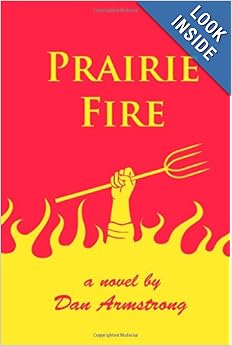
Prairie Fire: Dan Armstrong: Amazon.com: Books


"It's unbelievably current, reads like a thriller, totally absorbing, and covers everything immediate: grain shortages and grain markets, family farmers organizing against government and agribusinesses, oil pipelines and depletion, Central Asia, Afghanistan wars and terrorists, Washington's power players (the establishment), the CIA and its drug connection, the chemical industry, aerospace industry, defense industry, electronics, surveillance. I mean it's all there. " one reader wrote.
Prairie Fire: Dan Armstrong:

The Bean and Grain Project: Outperforming Chemical Agriculture - YouTube


Published on Nov 7, 2013

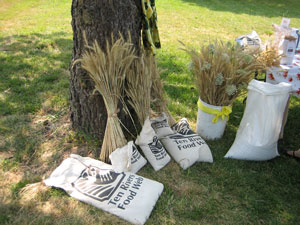
The Bean and Grain Project is exploring bean, grain, and edible seed varieties which can be added to those already grown in Oregon's Willamette Valley. Oregon Tilth co-founder and farmer Harry MacCormack shares wisdom and stories about farms transitioning from chemical to organic farming. His book "The Transition Document: Toward a Biologically Resilient Agriculture" is a compendium of organic practices, like using compost tea to feed soil micro-organisms. Dan Armstrong, the author of the novel "Prairie Fire", notes that the project aims to increase the diversity of staple crops and add resilience to the regional food system.

Peak Moment TV exists because of viewers like you. Subscribe to news and donate at http://www.peakmoment.tv, right side. Thanks for being in the Peak Moment community.

Links:
The Bean and Grain Project: Outperforming Chemical Agriculture - YouTube
Grain Display
http://www.mudcitypress.com/beanandgrain8.html
http://www.sunbowfarm.org/transition-document.php
http://mudcitypress.com/transitiondocument.html

Nov 5, 2013

Noam Chomsky slams Canada's shale gas energy plans | Environment | theguardian.com

Exploitation of Canada's tar sands and shale gas will have dire consequences for the environment, says Chomsky

Martin Lukacs
theguardian.com, Friday 1 November 2013

Noam Chomsky speaking at University of Montreal conference. Photograph: JeanYves Ahern/Demotix/Corbis

Canada's rush to exploit its tar sands and shale gas resources will destroy the environment "as fast as possible", according to Noam Chomsky.

In an interview with the Guardian, the linguist and author criticised theenergy policies of the Canadian government under Prime Minister Stephen Harper.

He said: "It means taking every drop of hydrocarbon out of the ground, whether it's shale gas in New Brunswick or tar sands in Alberta and trying to destroy the environment as fast as possible, with barely a question raised about what the world will look like as a result."

But indigenous peoples in Canada blocking fossil fuel developments are taking the lead in combatting climate change, he said. Chomsky highlighted indigenous opposition to the Alberta tar sands, the oil deposit that is Canada's fastest growing source of carbon emissions and is slated for massive expansion despite attracting international criticism and protest.

"It is pretty ironic that the so-called 'least advanced' people are the ones taking the lead in trying to protect all of us, while the richest and most powerful among us are the ones who are trying to drive the society to destruction," said Chomsky.

Chomsky expressed concern about an indigenous community in New Brunswick whose encampment blockading shale gas exploration was raided by a heavily armed Canadian police force two weeks ago.

Those protests come on the heels of the indigenous-led Idle No More movement that sprang up in late 2012 in response to the Harper government's repeal of numerous environmental protections and aggressive promotion of resource projects, often on indigenous lands.

Chomsky was in Montreal last weekend to give a lecture and celebrate the 50th anniversary of the magazine Canadian Dimension.

He told the Guardian that progressives "should work climate change into their efforts to organise", but in a way that emphasises how addressing climate change can improve rather than worsen peoples' lives.

"If it's a prophecy of doom, it will act as a dampener, and people's reaction will be ok, I'll enjoy myself for a couple of years while there's still a chance. But as a call to action, it can be energising. Like, do you want your children, and grandchildren, to have a decent life?"

While supporting the principles of the "degrowth" movement that aims to reign in over-production and over-consumption, Chomsky cited mass transportation, localised agriculture, and energy efficiency improvements as useful forms of growth that could mitigate climate change and improve quality of living.

"If you could take a subway from the suburbs in Boston, where I live, to downtown in 10 minutes, that improves your life over sitting in a traffic jam. People should see that."

Chomsky said that a "major issue" behind climate change is the deficiencies of the market system.

"Markets are lethal, if only because of ignoring externalities, the impacts of their transactions on the environment," he said.

"When you turn to energy production, in market exchanges each participant is asking what can I gain from it? You don't ask what are the costs to others. In this case the cost to others is the destruction of the environment. So the externalities are not trivial."

Chomsky said during the 2008 financial crisis, the big banks could "forget the fact that they're supposed to believe in markets, run cap in hand to the government and say bail us out".

"In the case of the environment there's no one to bail it out."

Noam Chomsky slams Canada's shale gas energy plans | Environment | theguardian.com

Nov 1, 2013

Google Glass as an agronomy tool


See how one farmer and crop adviser see the future unfolding for Google Glass and other similar devices as a tool in the farmer's agronomy management.


Google Glass as an agronomy tool

Oct 31, 2013

Sustainable farming strategy mimics savanna ecosystem | Manitoba Co-operator

Farmer and author Mark Shepard conducted a workshop in Manitoba last month

Aerial view of swales and berms that are used to trap water.  photo: daniel winters


Garden of Eden-style farming combines strategic water management, 
perennial fruit and nut crops, along with multi-species grazing

Forget “food forests” and the latest genetically engineered crops.

The key to feeding a soaring global population lies in mimicking the most photosynthetically productive natural system on Earth – the savanna, says American farmer and author Mark Shepard.

Unlike a forest, where the canopy shuts out sunlight, a savanna complex is composed of multiple layers of trees, bushes and shrubs that allow sunlight to penetrate through to a grass understorey capable of supporting annual crops and grazing livestock.

And it was from this habitat that Homo sapiens emerged.

Shepard has spent the past 18 years developing his vision for “Restoration Agriculture” on a 110-acre farm in Wisconsin, and has written a book of the same title.
Workshop

In a recent weekend workshop, the operator of New Forest Farm was sharply critical of both the hippies, for “hallucinating” a future world of vegan backyard vegetable gardeners, and Big Ag, with its calls for more intensive, ecologically destructive annual cropping propped up by an ever-more potent arsenal of chemicals and fertilizers.

“If you were to just eat out of your vegetable garden, you’d starve to death because there’s not enough carbohydrates, proteins and oils,” said Shepard, who has training in both mechanical engineering and ecology.

Modern agriculture, on the other hand, which produces the staple food crops the world depends on, has succeeded in polluting the wells in his area with nitrates and atrazine after only 60 years, Shepard said.

“All civilizations that have relied on annual agriculture have collapsed,” he said.

Systems that don’t work with nature are inherently destructive and inefficient, because they require the existing ecology to first be eradicated and then continually suppressed. In modern times, that’s done by fossil fuel-dependent technologies, and in the past, through endless physical labour.

“I assert that we can revegetate the entire planet in 15 years and produce more food, more fuel, more medicines, more fibre, while cleaning up the water and detoxifying our environment. And we can do that while making a profit,” said Shepard.
King Corn

King Corn is often touted as a solution to world hunger, but despite its capacity to produce nearly 14 million calories per acre, it is not nutritionally complete and requires a never-ending supply of non-renewable inputs and fuel to produce, he said.

An acre of designed savanna-style agriculture, in comparison, with its animal component included, can sustainably produce well over five million calories per acre with virtually no inputs, writes Shepard in his book.

On his farm, he has planted 250,000 trees, bushes and shrubs producing edible fruits and nuts selected to thrive in the local biome along a carefully thought-out “keyline” pattern based on the land’s contours to maximize water-storage capacity and minimize erosion. In between the layered rows of trees, spaced to accommodate his tillage and harvesting equipment, he grazes cattle, sheep, and poultry in successive waves.

By arranging his farm to maximize his photosynthetic harvest, and using livestock to redistribute nutrients, he figures that he has increased productivity fourfold without the use of costly inputs or excessive labour.

When designing a “real-world” permaculture farm, Shepard uses the native ecology as a guide for choosing what plants will thrive and offer good economic returns.
Mixed skyline

On his farm, in the Oak Savanna biome of Wisconsin, that means tall, nut-bearing trees such as oak, chestnut and beech, with a large variety of home-raised apple trees taking up the middle layer.

In the niche beneath that, he plants spreading shrubs such as hazelnuts, cherries, plums and peaches, grass-competitive perennials such as raspberries and blackberries, and shade-tolerant gooseberries and currants.

Grapes are thrown in wherever they might thrive, and mushrooms are harvested from dead wood.

Portable electric fences are used to manage grazing, and prevent damage to vulnerable trees.

Suckering roots are controlled with a subsoiler, which he periodically uses to reinforce the keyline pattern. Ponds that were formed by the keyline’s tendency to capture and retain rainfall and snowmelt provide habitat for pollinators and pest-devouring critters, as well as irrigation when needed.

“Let’s take our agriculture and push it into the forest, and bring the forest out into our agriculture to make one, unified system that we’re managing all at once,” said Shepard.

Disease is a major obstacle for perennial cropping. Shepard uses the Luther Burbank method for selection, which involves planting thousands of seeds and cuttings, then selecting only the very best disease-resistant and highly productive specimens for propagation.

In just 400 years, he notes, the North American continent has been transformed by annual cropping from a resource-rich, species-diverse paradise, to a devastated landscape on the verge of ecological ruin.

Many of his best customers are “prepper” survivalists. They are often dismissed as “crackpots,” but Shepard said he admires them for their sense of urgent purpose.

With Peak Oil, a financial system on the verge of collapse, natural disasters, and the looming threat of global war and civil insurrection, he believes that a “new nature of the future” needs to be created to ensure a decent quality of life for future generations.

“This is what the planet does. So why don’t we line up with it and live a really cool life having a blast?”

Sustainable farming strategy mimics savanna ecosystem | Manitoba Co-operator

Oct 30, 2013

The Unsettling of America: Culture & Agriculture: Wendell Berry


GREAT READ... REALLY ENJOYED Wendell Berry's WISDOM... DEAD ON... NAILS IT...

The Unsettling of America has been recognized as a classic of American letters. In it, Wendell Berry argues that good farming is a cultural development. Today’s agribusiness, however, takes farming out of its cultural context and away from families. As a result, we as a nation are more estranged from the land—from the intimate knowledge, love, and care of it.

Sadly, as Berry notes in his Afterword to this third edition, his arguments and observations are more relevant than ever. We continue to suffer loss of community, the devaluation of human work, and the destruction of nature under an economic system dedicated to the mechanistic pursuit of products and profits. Although “this book has not had the happy fate of being proved wrong,” Berry writes, there are good people working “to make something comely and enduring of our life on this earth.” Wendell Berry is one of those people, writing and working, as ever, with passion, eloquence, and conviction.
The Unsettling of America: Culture & Agriculture: Wendell Berry: 9780871568779: Amazon.com: Books

Crop Insurance Hazards Revealed in Lost Pheasants in Grasslands - Bloomberg

By Alan Bjerga - Oct 29, 2013

The hunters tramp through neck-high prairie grass with a pair of golden retrievers named Moe and Buck, flushing out birds in a freezing autumn drizzle.

When one flutters from the South Dakota grassland, Dick Schmith, 58, calls “rooster!” Guns rise and a long-tailed pheasant drops. Moe bounds through the meadow to pick it up.

Crop Insurance Hazards Revealed in Lost Pheasants in Grasslands

A number of reasons are cited for the decline, ranging from harsh weather to a boom in commodity prices that has encouraged farmers to plow grassland and plant crops, reducing habitat for pheasants and other wildlife. Photographer: Kent Kidd/Getty Images

Such successes, key to the state’s $172 million pheasant season, are getting harder to come by. Bird numbers are down almost two-thirds from last year.

A number of reasons are cited for the decline, ranging from harsh weather to a boom in commodity prices that has encouraged farmers to plow grassland and plant crops, reducing habitat for pheasants and other wildlife.

Some see a man-made element: taxpayer-supported crop insurance, a program that critics say has contributed to a decline in acres set aside for conservation. A House-Senate conference panel that begins meeting today will consider trimming government subsidies for the insurance and adding conservation incentives as lawmakers reconcile multiyear farm bills approved by each chamber.

“By making it less risky for farmers to plant lucrative cash crops in these areas, we’re seeing expansion onto lands that probably wouldn’t be planted without the benefit of the crop insurance program to encourage it,” said Claire O’Connor, a Santa Monica, California-based policy analyst with the Natural Resources Defense Council.

Most Expensive

Crop insurance, intended to protect growers from price and weather risk, has become the most expensive U.S. farm-aid program, costing taxpayers $14 billion in subsidies for farmers and payments to companies, including ACE Ltd. and a unit of Wells Fargo & Co., after last year’s drought pushed payouts to a record, according to U.S. Department of Agriculture data.


Besides a loss of habitat, expanded planting can worsen erosion and chemical runoff and damage ecologically sensitive land, said conservation groups such as the NRDC and Environmental Working Group.

Insurers counter by saying their industry is being unfairly singled out when the crop insurance program’s impact on the loss of grassland is “at most 1 or 2 percent,” said David Graves, manager for the American Association of Crop Insurers, a trade group in Washington.

“Farmers don’t go out and adjust land-use patterns only to be able to take advantage of a crop insurance program,” he said. “The banker wouldn’t let them.”
Higher Rates

Land considered high-risk due to poor soil quality, or a location prone to erosion, floods or other disasters, also comes with higher premiums. Acres converted from grassland also carry lower benefits, which blunts cultivation of marginal acres, according to National Crop Insurance Services Inc. of Overland Park, Kansas, an industry group.

Under the insurance program, the government subsidizes the majority of premiums paid by farmers, covers much of the administrative costs tallied by insurers to run the program, and guarantees that all losses are met. A series of stories by Bloomberg in September examined the debate over the program’s structure and costs.

More than a half-decade into a price boom expected to push farm profits to a record $120.6 billion this year, land in Midwest and Plains states has shifted toward crops, according to the USDA. This year’s corn acreage of 97.4 million acres was the highest since 1936. About 86 percent of U.S. acreage was covered by taxpayer-backed crop insurance last year, the agency said.
Wildlife Policies

At the same time, about 400,000 acres of grasses and newly broken ground went into production last year alone, according to USDA data analyzed by the Center for Rural Affairs, a farm-advocacy group in Lyons, Nebraska.

“This is about more than a few hunters running around chasing birds,” said Dave Nomsen, vice-president for governmental affairs at Pheasants Forever, a St. Paul, Minnesota-based advocate for hunting and habitat. “This is about having solid wildlife, water and conservation policies that benefit everyone” by providing cleaner air and soil while reducing chemical runoff into water, he said.

As cropland has gone up, nationwide enrollment in the government’s Conservation Reserve Program, which pays farmers to idle land to improve water, soil and habitat, has dropped 20 percent from its 2007 peak, to 29.5 million acres in 2012. In South Dakota, where crop revenues have risen 44 percent to $7.7 billion from a half-decade earlier, the drop was 29 percent, with set-aside acreage last year at its lowest since 1988.
South Dakota

About 4.4 percent of South Dakota’s land moved from grass to other uses from 2007 to 2012, with corn-planting accounting for about a third of the loss, according to a study sponsored by seven state farm bureaus released last July. The study found little relationship between crop-insurance subsidies and changes in land use.

A 2012 study led by Iowa State University found that up to 3 percent of land covered by the program in the Dakotas may have remained grassland were it not for insurance subsidies. A 2011 USDA study focusing on the same region in the years before the commodity-price boom found that crop insurance may have increased cultivated land by about 1 percent.

Higher prices are the main motivating factor behind increased production, and adding cropland isn’t something producers take lightly, said Keith Alverson, 33, who raises 2,500 acres of corn and soybeans with his family near Chester, South Dakota, about 40 miles from Sioux Falls, the state’s largest city.

“Farmers will respond to the market, but you’re not going to tear up grass unless you feel like it will make sense in the long term, because it’s expensive to do,” he said. “We certainly need to strike a balance.”
Fewer Birds

Less grassland means fewer birds, said Tom Kirschenmann, wildlife chief for South Dakota’s Department of Game, Fish & Parks.

“We’re seeing native grassland being converted. We’re seeing tree shelter belts being removed, and in some areas we’re seeing wetland loss,” he said. “We’ve also had problems with weather, but we can’t control the weather. We can talk about conservation programs.”

Environmentalists and farm subsidy critics are trying to drive that conversation as farm-bill talks intensify on Capitol Hill.

While overall increases in cropland attributable to the program may be small, local effects can be much greater, said Craig Cox, a vice president based in Ames, Iowa, for the Environmental Working Group, which seeks broader reform of crop insurance, including reduced premium subsidies and a halt to proposed program expansions.
Farmer Discounts

In Congress, lawmakers are debating “conservation compliance,” which would require farmers to create conservation plans for their property before qualifying for crop insurance while discouraging the draining of wetlands or farming highly erodible land.

Backers note that such plans have long been required for participation in other farm-subsidy programs.

Conservation compliance is important regardless of how much new land comes into cultivation because it covers all farmland, no matter how it’s used. “Compliance simply tries to improve the way sensitive acres are managed,” said Cox in an e-mail.

The New York-based Natural Resources Defense Council is advocating for the equivalent of “good driver” discounts on crop insurance, which would offer premium reductions to farmers who improve land-use practices.
Environmental Benefits

Compliance opponents say adding such requirements to crop insurance may keep some farmers from signing up for coverage, thus raising premiums and taxpayer costs while providing few additional environmental benefits.

In May, 31 commodity, crop insurance and conservation organizations ranging from the National Cotton Council to the Environmental Defense Fund agreed to support a compliance provision that phases in over time. That proposal, included in the Senate farm bill approved in June, balances the interests of conservationists and the industry, said Graves, whose insurance organization supports the compromise.

The House of Representatives bill doesn’t have the provision. Lawmakers including House Agriculture Committee Chairman Frank Lucas, an Oklahoma Republican, don’t support the approach, saying it would be hard to enforce and impose a regulatory burden on farmers.

The Senate’s bill also included a measure to reduce crop-insurance costs. It would trim the government’s portion of farmers’ insurance policy premiums to 47 percent from 62 percent for growers with adjusted gross incomes over $750,000 a year.
Sodsaver Provisions

The measure, affecting about 20,000 producers nationwide, would save about $100 million a year. The House didn’t include those cuts in its version of the bill, but did pass the non-binding resolution urging its conference committee members to adopt them.

The two chambers also differ on so-called sodsaver provisions, which would lower federal insurance-premium subsidies on newly broken land. While the Senate would implement the policy nationwide, the House would limit it to five states in the so-called prairie pothole region where conversion has been most dramatic, including South Dakota, North Dakota, Montana, Iowa and Minnesota.

“I don’t want to incentivize bad land practices and over-production,” said Representative Kristi Noem, a South Dakota Republican and House farm-bill conferee who backs a nationwide sodsaver provision and doesn’t support conservation compliance. “If crop insurance is doing that in some area, it needs to be tweaked.”
McGovern’s Gun

At Leader Sporting Goods, a hunting-gear store in Mitchell where the late U.S. Senator and Democratic presidential candidate George McGovern would go to get his gun repaired, sales are flat. Owners Ken and Jeanne Blaalid said the bird numbers have kept out-of-state hunters away.

“People we’ve known for years will call us and say the birds aren’t there, that’s why they’re not coming,” said Jeanne Blaalid, adding that half her store’s sales come during the three pheasant-hunting months. “You have to have habitat.”

Hunters say they see the effect of less land on bird populations as they enter pheasant country.

“When you sit on a farm in the morning, you will hear pheasants cackling,” said Thomas “Red” Pederson, a member of the group that has driven six hours from Minneapolis to hunt the birds near Highmore, about 40 miles east of Pierre, the state capital. “This year we haven’t heard so much.”
Burning Sloughs

“A couple years ago, I was coming across South Dakota and I was wondering what was going on, it was fire after fire. It was sloughs being burned so they could be prepared for corn fields next spring,” said Pederson, who was nicknamed “Red” back in the day when he had a full head of hair.

The 8,000-acre ranch where they were hunting is owned by Jim Faulstich and mixes crops including grain, wheat and oats with range and grasslands he keeps as pheasant habitat to attract hunters.

With prices driving crop decisions, the market may ease the habitat crunch even if the government doesn’t, Faulstich said.

Corn, which peaked last year at $8.49 a bushel in Chicago, is down almost 50 percent. Crop-price booms tend to be followed by busts -- and then the grassland returns as farmers idle property, he said.

Still, relying on market fluctuations is no way to balance land and wildlife, Faulstich said.

“I’ve made a lot of money off of corn, but I try to keep several things going on at once. There’s no question I could have made more money on corn than on pheasants the past two years, but we’ll see what that looks like two years from now,” he said, loading Buck and Moe, the retrievers, into his 1986 Ford F-150.

“This is something we can manage better.”
Crop Insurance Hazards Revealed in Lost Pheasants in Grasslands - Bloomberg

How You Pay Farmers To Watch Their Crop Shrivel Up and Die | Mother Jones

The federal crop insurance program puts farmers in a real bind. And as climate change intensifies, it's only getting worse.

—By Laird Townsend
Wed Oct. 30, 2013
Eric Herm, 36, unloads non-genetically-modified cotton seed into a storage barn on his 6,700 acre farm in West Texas. Photograph: Ben Depp

In 2011, Eric Herm's cantaloupes exploded.

A fourth-generation cotton farmer in West Texas, Herm was experimenting with a home garden to help feed his family during the onset of a drought in the area. Blistering heat, including 100 degree days as early as May, was wilting Herm's cotton—and in the end, it turned his melons into pressure cookers.

Most of Herm's neighbors have lost their cotton crop the last three of four growing seasons—part of the most severe regional drought in more than 50 years. According to the National Oceanic and Atmospheric Administration, 2012 temperatures in the US were the hottest in recorded history. And a May 2013 report by the American Meteorological Society's Journal of Climate concluded that "human-induced climate change" played a statistically significant role in the record-breaking temperatures of 2011, adding that the period from October 2010 to September 2011 "was Texas's driest 12-month period on record."
As of October 2013, more than 80 percent of Herm's neighbors declared their cotton a failure and collected crop insurance claims, subsidized by US taxpayers.

With the exception of scattered irrigation, most farmers in West Texas practice "dryland" farming, meaning they're entirely dependent on rain. Rainfall on Herm's acreage had previously averaged 17 inches a year, but in 2011 and 2012 the annual averages were 3 and 8 inches, he said. Even the driest years of the Dust Bowl, which lasted off and on from 1930 to 1940, brought about 9 to 14 inches of rain to Herm's region, according to Natalie Umphlett of the Nebraska-basedHigh Plains Regional Climate Center.

"In the back of my mind I'm wondering, 'where do I go if things get that bad,'" Herm said back in May, while planting for the 2013 growing season. "If we do not make a crop this year, I'm going to have to a real serious look at [the] future."

The latest news is not reassuring. As of October 2013, more than 80 percent of Herm's neighbors declared their cotton a failure and collected crop insurance claims, subsidized by US taxpayers.

If recent research by the US Department of Agriculture is any indication, the crop failures will be a sign of the future. In a February 2013 report, the agency rounded up relevant scientific findings from 56 experts from federal service, universities, and non-government organizations. The results cast doubt on the viability of the US heartland in the age of warming—and not just for dryland cotton. "Continued changes by mid-century and beyond," the report said, "are expected to have generally detrimental effects on most crops and livestock." Among other problems, "weed control costs total more than $11 billion a year in the US. Those costs are expected to rise with increasing temperatures and carbon dioxide concentrations."

Interviews with more than a dozen climatologists, agronomists, agro-economists, and agricultural statisticians have generally echoed the USDA's prognosis: after about 30 years, greenhouse gas concentrations will reach critical enough levels to significantly disrupt agriculture. But even the next ten years will probably prove challenging for American farmers, because the weather will be more variable. As Columbia University associate professor of international and public affairs Wolfram Schlenker put it, "there's more certainty that there will be less certainty."

In any case, taxpapyers are on the hook for climate-related disruption of US food production—mainly in annual outlays for crop insurance. In February 2013, the same month that the USDA released its bleak assessment on global warming, the Government Accountability Office released a statement warning about the federal government's "fiscal exposure to climate change," including the crop insurance program.
If the current version of the farm bill were extended ten years into the future, crop insurance could cost $8.41 billion per year.

Based on USDA data, if the current version of the farm bill were extended ten years into the future, even without expansions under debate, crop insurance would cost $8.41 billion per year, or $84.1 billion total, according to Jim Langley of the Congressional Budget Office. With the expansions the projected costs rise to about $99 billion. And that figure does not account for recent climate-related impacts on crop yields, including the drought of 2011 and 2012 in Texas and the midwest.

"We treated those two years as outliers," said Langley. "We don't explicitly take into account climate change. It's not like something dramatic is going to happen in next ten years. We assume weather going to be normal."

To be sure, it's hard to turn estimates about climate impacts on agriculture, and by extension crop insurance outlays into hard numbers. And there's no consensus that taxpayers will pay more than projected. Advocates of crop insurance claim that the program works better than disaster relief. "It forces farmers to manage risk before, not after it happens, which saves taxpayers money," Tom Zacharias, president of National Crop Insurance Services, an industry group, has written.

Still, the tab has been steadily rising. According to the Midwest Center for Investigative Reporting, taxpayer subsidies for crop insurance averaged $3.1 billion annually between 2000-2006, but have more than doubled to an average of $7.6 billion for 2007-2012. Much of the fiscal bleeding has resulted from what's called a "harvest price option," an insurance option that compensates farmers for the revenue they missed when prices skyrocket amid climate-related scarcity. In the extreme weather since 2009 costs have tripled overall, rising every year from about $4.8 billion to the record high of more than $13 billion in 2012, according to Patrick Westhoff of the University of Missouri's Food and Agricultural Policy Research Institute.

These increasing costs, at least partially related to climate variability, have called attention to the role of crop insurance in the farm bill. Under the new bill, the crop insurance program would largely replace traditional crop subsidies, becoming the main way taxpayers are asked to support farmers. On Wednesday, a House-Senate conference will begin to reconcile two versions of the bill, both of which are strongly favored by agribusiness and insurance interests. Most of the politicking has long since been choreographed, as a range of lobbying reports and campaign contributions could attest. But the stakes in the debate are profound and long lasting, and they can be seen clearly in the desiccated row crops of West Texas.

QUINTON KEARNEY, 38, who farms with his wife and five employees near Lamesa, Texas, about 60 miles south of Lubbock, started out in 1996 with 700 acres and steadily expanded to 9,700 acres. Like other farmers in the area, Kearney lives in a comfortable middle class home.

But after three years of drought and two failed crops, Kearney's margins have become razor thin. Since insurance payouts are based on past yields, every year a farmer loses his crop means he can claim less the following year—even as his premiums go up. "It's rough," Kearney says. "There's only so much salary you can pay after 3 years of drought, and still have cushion if the banker calls in the chips."

Another farmer, Steve Bodine, who farms 2,000 acres about 40 miles south of Kearney, barely broke even the previous two years, even after collecting on claims. He had similar luck in 2013. "Three in a row, it's getting really hard to stomach," Bodine said.

Given an average crop price, insurance claims might provide margins of 1 or 2 percent, according to farmers in the area. By guaranteeing at least this minimum margin, taxpayers are keeping conventional large-scale farmers on the land. But perhaps just as importantly, they are subsidizing the producers of expensive things that farmers buy each year—starting with seed.

In a normal year, virtually all of the cotton farmers around here plant Monsanto's Roundup Ready "technology," as they call it. The advantages are obvious: it saves tremendous time, doing away with hoeing crews for weeding and related personnel management. The labor is essentially replaced by a large spray rig, a 400-gallon tank filled with Roundup, and fuel to drive it through the fields maybe twice a season. The spray kills everything except the cotton, which is genetically engineered to resist it.

But the drought has temporarily called into question the use of GMO seeds. At planting time this May, the ground was essentially dust, with almost no chance for seeds to grow. In such unfavorable conditions on the heels of two straight crop losses, no smart farm manager on the southern plains would feel comfortable investing in expensive technology.

In a previous era, after a dry winter on the heels of three drought years, the grandparents of today's farmers would not have spent the money even to plow the land for planting. They would have let the ground fallow and tried to find a job, perhaps in the oil fields, hoping to return with the rains. But today's generation can collect on crop insurance, which means they do things differently.

To be eligible to file a crop insurance claim, a farmer is required to plant the seed. That provision provides a built-in advantage to the seed companies, because farmers must plant by government-mandate deadline, no matter how futile the act of doing so. But Roundup Ready cotton seed is expensive—as much as $350 to $400 a bag, farmers said, which can amount to more than $100,000 in annual seed costs. In interviews, every one of a half-dozen local farmers who normally purchased Monsanto technology said they simply abandoned the practice this year. Instead, they purchased conventional seed at one-fifth the cost. Then they planted it, knowing that it would be very hard to turn it into a successful crop—but that if the crop failed, insurance might keep them afloat until the rains returned. That would give them a chance to resume normal practices.

"It's a no-brainer," said Louis Addison, an agent with Adams Crop Insurance in Lamesa, Texas. "It doesn't make much sense to put a $350-to $400 bag in a dry seed bed when you own or are storing good viable seed in your barn. They were just seeding to satisfy their insurance requirements."
"You're almost pushed into this GM seed deal because it's about the only way to farm anymore."

The crop insurance program works in favor of the companies that produce the GM seeds—and a range of other related agricultural inputs—that farmers in the area typically buy in non-drought years. No wonder, then, that more than 120 insurance and farm interests, from John Deere and Monsanto to the insurance companies Ace and Wells Fargo, lobbied for crop insurance in 2012. (In an email, Monsanto spokeswoman Christy Toedebusch declined to comment on the role of federally subsidized crop insurance, noting that the company is in the process of purchasing the Climate Corporation, which will allow it to sell supplemental crop insurance. She added that the company's seed pricing "is in line with the marketplace.")

Even if the rain came, it would have been extremely difficult to produce a crop with the conventional seed the farmers planted. That's because it would have required old-fashioned weeding—spraying Roundup would have taken out the plants along with the weeds—and these farms were mostly too big for that. They would have had a hard time summoning up the old hoeing crews from the pre-biotech days.

"We used to have migrant crews that would come in and take care of the weed problem," says Addison, "but the GM seeds have basically done away with that. It makes it very difficult on the farmer, you're almost pushed into this GM seed deal because it's about the only way to farm anymore."

Of the farmers I interviewed who abandoned Monsanto seeds this year, every one ended up filing for an early crop failure, adding to taxpayer subsidies. Addison did not know any such farmer who made a crop.

EVEN IF the rains return, the farmers of West Texas face a string of economic and ecological dilemmas that could affect their bottom line. In place of labor, farmers now pay for GMO seeds, diesel, fertilizer, $200,000 spray rigs, and other sophisticated equipment. The smart farmers see only one way out: "we have to do it on a lot of acres," Kearney said. "It's the only way we can make it work."

Following a nationwide trend, the farms in West Texas grew significantly larger as biotech seeds spread in the 1990s and have not shrunk since then. Crop insurance has facilitated the trend. Federal subsidies cover about 60 percent of farmer's crop insurance costs on both ends—premiums and payouts. Banks treat the subsidized insurance as collateral to finance expenses during the growing year. Farmers can also pay higher premiums to guarantee a high portion of revenue—as much as 75 percent. The result is that the subsidies drastically reduce the risk of annual operations—and of expansion.

But this risk reduction brings risks of its own. The Environmental Working Group found that crop insurance has played a role in encouraging farmers to expand row crops onto marginal land like wetlands or prairie, which exacerbates vulnerability to erosion, floods, and drought.

And yet the crop insurance program provides no formal incentive for water conservation or soil preservation, key elements in climate adaptation. On their own a few farmers around here experiment with traditional conservation practices, including cover crops. Some farmers have recently planted black-eyed peas and other secondary crops in the wake of cotton failures, bringing new nutrients to the soil. Others participate in voluntary paid conservation set-aside programs, which increases acreage for wildlife.
If you thought more than one year out, one farmer told me, "you couldn't get out of bed in the morning."

But they don't talk about global warming. They talk about drought, which is something their elders survived in the 30s and 50s by dint of off-farm work, gardens, and butchered hogs. Even those who monitor climate science and allow themselves an occasional "sinking feeling," as one farmer put it, are constrained by the stubborn optimism that is necessary for farming. If you thought more than one year out, one told me, "you couldn't get out of bed in the morning."

So what if the government were to pull the plug on crop insurance? It would mark the end of independent farming on the southern plains, says Bodine, where his family's been farming almost 100 years. "There is a legacy here," he told me. "You do away with crop insurance, there's no way people can get financed."

But Bruce Babcock, an Iowa State agricultural economist and critic of the subsidies of crop insurance, has another idea: If the US scaled down subsidies, he says, it could scale up research in adaptation—identifying what varieties best adapt to drought, researching crover crops and soil moisture, studying where crops should be grown. "That's going to have to take place in the next 10 to 30 years. Farming is like any business—areas that can adapt best to climate change will make more money over time. This kind of [adaptation] support will help farmers more than handouts and crop insurance will."

If Babcock got his way and funding changed from insurance subsidies to adaptation funding, the farmer who might stand the best chance of surviving are the ones who resisted the trend. Eric Herm, 40, grew up on his father's farm in Ackerly near Big Springs, left at age 23, and returned in 2005, full of ideas about environmental stewardship, including the home garden full of cantaloupes. He has ensured that the 6,700-acre farm remained free of Roundup Ready cotton: at most, the acreage receives an older-generation herbicide treatment before planting.

In order to practice these non-GMO methods, Herm and his father have retained longstanding relationships with migrant labor from the Rio Grande Valley—about the only farmers around that do so for weeding (some crews have returned this season for secondary crops like sorghum and black-eyed peas).

As it turned out, this workforce saved the Herms during the 2013 planting season. With three weeding crews of 20 to 25 workers each, the Herms' team was able to go over the crop rows with the routine two passes with a weeding tractor and two passes with hoes. The exception was four passes each on 250 special acres—Herm's first certified organic cotton crop.

"I can't tell you how many people told me I couldn't do this," says Herm, about the cotton that he says is the only organic variety for 20 miles. "Without herbicides they said you'll never able to make it work. I worked harder on it, but it's going to be worth it." Most habitual Roundup Ready farmers around Herm, even those that received roughly the same rain Herm did, had planted conventional seeds—and failed out their crops in July.

As of early October, Herm was tending to a full crop on most his fields, still hoping for rain before the harvest.

Reporting for this story was supported by the Fund for Investigative Journalism. Additional reporting support was provided by the Midwest Center for Investigative Reporting.

Naomi Klein: How science is telling us all to revolt

Is our relentless quest for economic growth killing the planet? Climate scientists have seen the data – and they are coming to some incendiary conclusions.

BY NAOMI KLEIN PUBLISHED 29 OCTOBER 2013


Waste land: large-scale irrigation strips nutrients from the soil, scars the landscape and could alter climactic conditions beyond repair. Image: Edward Burtynsky, courtesy Nicholas Metivier Gallery, Toronto/ Flowers, London, Pivot Irrigation #11 High Plains, Texas Panhandle, USA (2011)

In December 2012, a pink-haired complex systems researcher named Brad Werner made his way through the throng of 24,000 earth and space scientists at the Fall Meeting of the American Geophysical Union, held annually in San Francisco. This year’s conference had some big-name participants, from Ed Stone of Nasa’s Voyager project, explaining a new milestone on the path to interstellar space, to the film-maker James Cameron, discussing his adventures in deep-sea submersibles.

But it was Werner’s own session that was attracting much of the buzz. It was titled “Is Earth F**ked?” (full title: “Is Earth F**ked? Dynamical Futility of Global Environmental Management and Possibilities for Sustainability via Direct Action Activism”).

Standing at the front of the conference room, the geophysicist from the University of California, San Diego walked the crowd through the advanced computer model he was using to answer that question. He talked about system boundaries, perturbations, dissipation, attractors, bifurcations and a whole bunch of other stuff largely incomprehensible to those of us uninitiated in complex systems theory. But the bottom line was clear enough: global capitalism has made the depletion of resources so rapid, convenient and barrier-free that “earth-human systems” are becoming dangerously unstable in response. When pressed by a journalist for a clear answer on the “are we f**ked” question, Werner set the jargon aside and replied, “More or less.”

There was one dynamic in the model, however, that offered some hope. Werner termed it “resistance” – movements of “people or groups of people” who “adopt a certain set of dynamics that does not fit within the capitalist culture”. According to the abstract for his presentation, this includes “environmental direct action, resistance taken from outside the dominant culture, as in protests, blockades and sabotage by indigenous peoples, workers, anarchists and other activist groups”.

Serious scientific gatherings don’t usually feature calls for mass political resistance, much less direct action and sabotage. But then again, Werner wasn’t exactly calling for those things. He was merely observing that mass uprisings of people – along the lines of the abolition movement, the civil rights movement or Occupy Wall Street – represent the likeliest source of “friction” to slow down an economic machine that is careening out of control. We know that past social movements have “had tremendous influence on . . . how the dominant culture evolved”, he pointed out. So it stands to reason that, “if we’re thinking about the future of the earth, and the future of our coupling to the environment, we have to include resistance as part of that dynamics”. And that, Werner argued, is not a matter of opinion, but “really a geophysics problem”.

Plenty of scientists have been moved by their research findings to take action in the streets. Physicists, astronomers, medical doctors and biologists have been at the forefront of movements against nuclear weapons, nuclear power, war, chemical contamination and creationism. And in November 2012,Nature published a commentary by the financier and environmental philanthropist Jeremy Grantham urging scientists to join this tradition and “be arrested if necessary”, because climate change “is not only the crisis of your lives – it is also the crisis of our species’ existence”.

Some scientists need no convincing. The godfather of modern climate science, James Hansen, is a formidable activist, having been arrested some half-dozen times for resisting mountain-top removal coal mining and tar sands pipelines (he even left his job at Nasa this year in part to have more time for campaigning). Two years ago, when I was arrested outside the White House at a mass action against the Keystone XL tar sands pipeline, one of the 166 people in cuffs that day was a glaciologist named Jason Box, a world-renowned expert on Greenland’s melting ice sheet.

“I couldn’t maintain my self-respect if I didn’t go,” Box said at the time, adding that “just voting doesn’t seem to be enough in this case. I need to be a citizen also.”

This is laudable, but what Werner is doing with his modelling is different. He isn’t saying that his research drove him to take action to stop a particular policy; he is saying that his research shows that our entire economic paradigm is a threat to ecological stability. And indeed that challenging this economic paradigm – through mass-movement counter-pressure – is humanity’s best shot at avoiding catastrophe.

That’s heavy stuff. But he’s not alone. Werner is part of a small but increasingly influential group of scientists whose research into the destabilisation of natural systems – particularly the climate system – is leading them to similarly transformative, even revolutionary, conclusions. And for any closet revolutionary who has ever dreamed of overthrowing the present economic order in favour of one a little less likely to cause Italian pensioners to hang themselves in their homes, this work should be of particular interest. Because it makes the ditching of that cruel system in favour of something new (and perhaps, with lots of work, better) no longer a matter of mere ideological preference but rather one of species-wide existential necessity.

Leading the pack of these new scientific revolutionaries is one of Britain’s top climate experts, Kevin Anderson, the deputy director of the Tyndall Centre for Climate Change Research, which has quickly established itself as one of the UK’s premier climate research institutions. Addressing everyone from the Department for International Development to Manchester City Council, Anderson has spent more than a decade patiently translating the implications of the latest climate science to politicians, economists and campaigners. In clear and understandable language, he lays out a rigorous road map for emissions reduction, one that provides a decent shot at keeping global temperature rise below 2° Celsius, a target that most governments have determined would stave off catastrophe.

But in recent years Anderson’s papers and slide shows have become more alarming. Under titles such as “Climate Change: Going Beyond Dangerous . . . Brutal Numbers and Tenuous Hope”, he points out that the chances of staying within anything like safe temperature levels are diminishing fast.

With his colleague Alice Bows, a climate mitigation expert at the Tyndall Centre, Anderson points out that we have lost so much time to political stalling and weak climate policies – all while global consumption (and emissions) ballooned – that we are now facing cuts so drastic that they challenge the fundamental logic of prioritising GDP growth above all else.

Anderson and Bows inform us that the often-cited long-term mitigation target – an 80 per cent emissions cut below 1990 levels by 2050 – has been selected purely for reasons of political expediency and has “no scientific basis”. That’s because climate impacts come not just from what we emit today and tomorrow, but from the cumulative emissions that build up in the atmosphere over time. And they warn that by focusing on targets three and a half decades into the future – rather than on what we can do to cut carbon sharply and immediately – there is a serious risk that we will allow our emissions to continue to soar for years to come, thereby blowing through far too much of our 2° “carbon budget” and putting ourselves in an impossible position later in the century.

Which is why Anderson and Bows argue that, if the governments of developed countries are serious about hitting the agreedupon international target of keeping warming below 2° Celsius, and if reductions are to respect any kind of equity principle (basically that the countries that have been spewing carbon for the better part of two centuries need to cut before the countries where more than a billion people still don’t have electricity), then the reductions need to be a lot deeper, and they need to come a lot sooner.

To have even a 50/50 chance of hitting the 2° target (which, they and many others warn, already involves facing an array of hugely damaging climate impacts), the industrialised countries need to start cutting their greenhouse-gas emissions by something like 10 per cent a year – and they need to start right now. But Anderson and Bows go further, pointing out that this target cannot be met with the array of modest carbon pricing or green-tech solutions usually advocated by big green groups. These measures will certainly help, to be sure, but they are simply not enough: a 10 per cent drop in emissions, year after year, is virtually unprecedented since we started powering our economies with coal. In fact, cuts above 1 per cent per year “have historically been associated only with economic recession or upheaval”, as the economist Nicholas Stern put it in his 2006 report for the British government.

Even after the Soviet Union collapsed, reductions of this duration and depth did not happen (the former Soviet countries experienced average annual reductions of roughly 5 per cent over a period of ten years). They did not happen after Wall Street crashed in 2008 (wealthy countries experienced about a 7 per cent drop between 2008 and 2009, but their CO2 emissions rebounded with gusto in 2010 and emissions in China and India had continued to rise). Only in the immediate aftermath of the great market crash of 1929 did the United States, for instance, see emissions drop for several consecutive years by more than 10 per cent annually, according to historical data from the Carbon Dioxide Information Analysis Centre. But that was the worst economic crisis of modern times.

If we are to avoid that kind of carnage while meeting our science-based emissions targets, carbon reduction must be managed carefully through what Anderson and Bows describe as “radical and immediate de-growth strategies in the US, EU and other wealthy nations”. Which is fine, except that we happen to have an economic system that fetishises GDP growth above all else, regardless of the human or ecological consequences, and in which the neoliberal political class has utterly abdicated its responsibility to manage anything (since the market is the invisible genius to which everything must be entrusted).

So what Anderson and Bows are really saying is that there is still time to avoid catastrophic warming, but not within the rules of capitalism as they are currently constructed. Which may be the best argument we have ever had for changing those rules.

In a 2012 essay that appeared in the influential scientific journal Nature Climate Change, Anderson and Bows laid down something of a gauntlet, accusing many of their fellow scientists of failing to come clean about the kind of changes that climate change demands of humanity. On this it is worth quoting the pair at length:

. . . in developing emission scenarios scientists repeatedly and severely underplay the implications of their analyses. When it comes to avoiding a 2°C rise, “impossible” is translated into “difficult but doable”, whereas “urgent and radical” emerge as “challenging” – all to appease the god of economics (or, more precisely, finance). For example, to avoid exceeding the maximum rate of emission reduction dictated by economists, “impossibly” early peaks in emissions are assumed, together with naive notions about “big” engineering and the deployment rates of low-carbon infrastructure. More disturbingly, as emissions budgets dwindle, so geoengineering is increasingly proposed to ensure that the diktat of economists remains unquestioned.

In other words, in order to appear reasonable within neoliberal economic circles, scientists have been dramatically soft-peddling the implications of their research. By August 2013, Anderson was willing to be even more blunt, writing that the boat had sailed on gradual change. “Perhaps at the time of the 1992 Earth Summit, or even at the turn of the millennium, 2°C levels of mitigation could have been achieved through significant evolutionary changes within the political and economic hegemony. But climate change is a cumulative issue! Now, in 2013, we in high-emitting (post-)industrial nations face a very different prospect. Our ongoing and collective carbon profligacy has squandered any opportunity for the ‘evolutionary change’ afforded by our earlier (and larger) 2°C carbon budget. Today, after two decades of bluff and lies, the remaining 2°C budget demands revolutionary change to the political and economic hegemony” (his emphasis).

We probably shouldn’t be surprised that some climate scientists are a little spooked by the radical implications of even their own research. Most of them were just quietly doing their work measuring ice cores, running global climate models and studying ocean acidification, only to discover, as the Australian climate expert and author Clive Hamilton puts it, that they “were unwittingly destabilising the political and social order”.

But there are many people who are well aware of the revolutionary nature of climate science. It’s why some of the governments that decided to chuck their climate commitments in favour of digging up more carbon have had to find ever more thuggish ways to silence and intimidate their nations’ scientists. In Britain, this strategy is becoming more overt, with Ian Boyd, the chief scientific adviser at the Department for Environment, Food and Rural Affairs, writing recently that scientists should avoid “suggesting that policies are either right or wrong” and should express their views “by working with embedded advisers (such as myself), and by being the voice of reason, rather than dissent, in the public arena”.

If you want to know where this leads, check out what’s happening in Canada, where I live. The Conservative government of Stephen Harper has done such an effective job of gagging scientists and shutting down critical research projects that, in July 2012, a couple thousand scientists and supporters held a mock-funeral on Parliament Hill in Ottawa, mourning “the death of evidence”. Their placards said, “No Science, No Evidence, No Truth”.

But the truth is getting out anyway. The fact that the business-as-usual pursuit of profits and growth is destabilising life on earth is no longer something we need to read about in scientific journals. The early signs are unfolding before our eyes. And increasing numbers of us are responding accordingly: blockading fracking activity in Balcombe; interfering with Arctic drilling preparations in Russian waters (at tremendous personal cost); taking tar sands operators to court for violating indigenous sovereignty; and countless other acts of resistance large and small. In Brad Werner’s computer model, this is the “friction” needed to slow down the forces of destabilisation; the great climate campaigner Bill McKibben calls it the “antibodies” rising up to fight the planet’s “spiking fever”.

It’s not a revolution, but it’s a start. And it might just buy us enough time to figure out a way to live on this planet that is distinctly less f**ked.

Naomi Klein, the author of “The Shock Doctrine” and “No Logo”, is working on a book and a film about the revolutionary power of climate change. You call follow her on twitter @naomiaklein

Naomi Klein: How science is telling us all to revolt