Feb 14, 2013

NOVA | Earth From Space


Watch Earth from Space on PBS. See more from NOVA.

Review:
  • Earth from Space takes you on an epic quest to discover the invisible forces and processes that sustain life on our planet and, for the first time, see them in action in their natural environment in vivid detail. These truly unique images will explore the deepest mysteries of its existence, raising profound questions and challenging the old assumptions of how Earth's system works. Written by Darlow Smithson Productions
  • Great 2 hour program!  Monte
  • Wow! --> Best 1 hour and 53 minutes I have spent learning about our plant! Highly recommend, if you are interested it understanding how our environment works in detail. I do not think you will regret spending the time... You will be surprised and know much more than a lot of politicians that are representing us...

Program Description

"Earth From Space" is a groundbreaking two-hour special that reveals a spectacular new space-based vision of our planet. Produced in extensive consultation with NASA scientists, NOVA takes data from earth-observing satellites and transforms it into dazzling visual sequences, each one exposing the intricate and surprising web of forces that sustains life on earth.

Viewers witness how dust blown from the Sahara fertilizes the Amazon; how a vast submarine "waterfall" off Antarctica helps drive ocean currents around the world; and how the Sun's heating up of the southern Atlantic gives birth to a colossally powerful hurricane. From the microscopic world of water molecules vaporizing over the ocean to the magnetic field that is bigger than Earth itself, the show reveals the astonishing beauty and complexity of our dynamic planet.

RELATED LINKS
The Uses of Satellite Imagery

Images from near-Earth orbit help us with everything from weather forecasting and disaster management to archeology.


Global Weather Machine

What are the primary forces behind what we call weather, and how does El NiƱo take over the global weather system?


Glacier Hazards From Space

View satellite images of glaciers that have wreaked havoc—or might soon.


Inside the Jet Stream

What exactly is this high, eastward-flowing wind we hear about on weather reports? Find out in this interactive.


Hotter Oceans, Fiercer Storms

In this audio slide show, examine the link between rising sea surface temperature and more intense storms.


What Does the Earth Sound Like?

Twin satellites probing the Earth's radiation belts return the clearest recordings yet of a "chorus" of radio waves.


Hurricanes and Climate Change

Why climate change is making hurricanes more dangerous.


A climate scientist suggests that rapid warming in the Arctic helped create October's "superstorm."


Hurricane Power

Your average hurricane releases enough energy to power the world 200 times over. Go figure.

Journey back to the beginning of everything: the universe, Earth and life itself.


The Sun Lab

Research solar storms using images from NASA telescopes; share your work; and find out about careers in science.

Need Your Help Stopping The Keystone Pipeline!


Published on Feb 14, 2013

Actress/Activist Daryl Hannah & Michael Brune, Executive Director Sierra Club join Thom Hartmann. In last night's State of the Union - President Obama argued that now is the time to act to curb climate change - and to save our environment for future generations. So why are we still considering projects like the Keystone XL pipeline - that only further our nation's toxic addiction fossil fuels? Join the #ForwardOnClimate Rally! At 12 Noon on Sunday, February 17, thousands of Americans will head to Washington, D.C. to make Forward on Climate the largest climate rally in history. Join this historic event to make your voice heard and help the president start his second term with strong climate action. For more information about rides, housing and answers to Frequently Asked Questions, visit http://forwardonclimate.org

"The Rest of the Story" is that companies that were going to put oil in pipeline are going bankrupt now...!

Funny what slight reduction in a price of a barrel of oil does to a project that should not be built to begin with...Monte

Feb 11, 2013
Twilight of an energy boom: Alberta's new fiscal challenge - The Globe and Mail · Larger Image A squared-off concrete shell sits in a frozen field, a short distance from Highway 63 north of Fort McMurray. It was to be the first ...

Adirondack Loveseat Glider Rocker Plans


Adirondack Loveseat Glider Rocker Plans - Free Plans

Download the Free Woodworking Plans to build this loveseat glider rocker (PDF).

Difficulty Level
  • Woodworking: Moderate 
  • Finishing: Paint or Stain/Polyurethane 
Time to Complete
  • 30-40 Hours (woodworking) - 20-30 (finishing) 
Materials Needed
  • 1 - 1x6 x 6' - wood stock of choice 
  • 7 - 2x4 x 8' - wood stock of choice 
  • 12 - 1x4 x 8' - wood stock of choice 
  • 1 - 1x4 x 8' - hardwood of choice 
  • 1 - set of 8 glider rocker bearings and hardware 
  • 1-1/4" deck screws 
  • 2-1/2" deck screws 
  • Woodworking Glue

Best Flashlight Values for Dollar Spent - Dorcy LEDs!


Flashlights that are a great value!
We highly recommend these two.
Look at what Amazon customers thought. 
Monte & Eileen

We have had bad experiences with rechargeable flashlights, the most recent being a Stanley SL5W09 5 Watt LED Spotlight.  These work great for one year, and then their non-replaceable recharge battery fails!


Larger Image
Dorcy 41-4750 180 Lumen High Flux LED Cyber Light Flashlight with Batteries
$16+
 @ Amazon Prime

Feb 13, 2013

Midwest Soil Could Take 2 Years to Recover from Drought - PARCHED DEEP There'll be at least two more years of drought -- six feet down

FEBRUARY 13, 2013
By: University News Release

RELATED STORIES
Climate Outlooks Indicate Moisture, but Drought Isn't Over
Drought Won’t Knock Us Down
An Interactive Look at Soil Moisture


Published on Feb 6, 2013
Midwest soil could take up to two years to recover from long drought. For more information, http://cafnrnews.com/2013/01/parched-....

The Midwest suffered the worst drought in years last summer, and Midwest soil has been suffering from a drought since early 2010. As a result, crops have wilted and farmers have fallen on hard times. Now, a University of Missouri researcher says that it may take at least two years for crops and soil to recover.

Randall Miles, associate professor of soil science at the MU School of Natural Resources, found that soil in the Midwest is dry down to as deep as 5 feet, where the roots of the crops absorb moisture and nutrients.

"I wouldn't count on a full recovery of soil moisture any time soon," Miles said. "Even if parts of the Midwest receive a lot of snowfall and rain this spring, it will take time for the moisture to move deeply into the soil where the driest conditions exist."

In 2012, Miles found that some roots had to go down as much as 8 feet to extract water. Typically, 1 foot of soil holds 2 inches of water. To recharge completely, a fully depleted soil would require about 16 inches of water over normal precipitation amounts.

"The soil moisture will recharge with a hydrologic process where water moves downward from surface water and fills in the pore space found in the soil," Miles said. "However, during the winter months it is important to remember that a foot of snowfall equals about an inch of rainfall, so the soil could take some time to recharge."

Miles has been testing the depths of soil moisture around Missouri and found that parts of the state where Hurricane Isaac dropped extra rainfall were wet in the first few inches of soil, but dry below that level. While that moisture helps for a short while, Miles said the moisture will evaporate with just a few days of high winds.

"In order for the soil moisture to return to a normal state this year, the rain and snow would almost have to come continuously," Miles said. "The weather would almost have to be like the precipitation found in London, coming down light and slowly to minimize runoff."

In addition to soil moisture being affected by the drought, Miles says that it could take two years of good rains for microbes and insects to recover, as well as barge traffic on the Mississippi and Missouri rivers.

"Until we start seeing normal rainfall, the water levels on the Mississippi and Missouri rivers are going to be low, affecting the number of barges that can pass on the rivers at one time," Miles said.

Miles believes that it could be two to three years before farmers can expect bumper crops again.


PARCHED DEEP
There'll be at least two more years of drought -- six feet down

January 22, 2013
Story: Randy Mertens | mertensr@missouri.edu

Randy Miles.

Even if the Midwest gets normal rain and snow, it will take almost two years for soil moisture deep in the earth to recharge and sustain normal crop growth, a soil scientist said.

Randall Miles, associate professor of soil science at the College of Agriculture, Food and Natural Resources, University of Missouri, said that two years of drought in the Heartland have left many prime growing areas bone dry to at least five feet down. This is where the roots of the crops live, sucking up moisture and nutrients. Without enough water, these crops produce poor yields.

“Don’t count a full recovery of soil moisture soon,” Miles said. “Even if parts of the Midwest receive a lot of snowfall and rain, that moisture will take time to move deep into the soil where the driest conditions exist.”

Miles said that roots have had to go down as deep as eight feet to extract water. Soil moisture recharge is a hydrologic process where water from rain and snow moves downward from surface water and fills in the pore space found in soil. The soil is recharged naturally by rain and snow melt.

Hurricane Helped a Little

Parts of Missouri, Indiana and Illinois caught September rains from the remnants of Hurricane Isaac, which helped some of the recharging process there. Other areas, though, weren’t as fortunate. The most recent U.S. Drought Monitor shows a stage 4 (most severe on the rating scale) drought in the central Great Plains of South Dakota, Nebraska, Kansas and Oklahoma, with neighboring regions showing increased degrees of drought.

Miles has been observing the depths of soil moisture around Missouri. Places where Hurricane Isaac dropped extra rainfall are wet down to a few inches, but the ground is still dry below that level.

Miles pointed out that moisture near the surface can evaporate with just a few days of high winds, higher than normal temperatures or low relative humidity. This can keep prevent moisture from having a chance to move deep into the soil where it is needed.

“The rain and snow will have to come almost continuously – an almost London type of weather pattern – if the soil is to be recharged soon,” Miles said. “It will have to come down slow and steady to minimize runoff.”

Microbial Health and River Depth a Problem, Too

It could take two years of good rains for beneficial microbes and insects to recover, also, Miles said. “The soil lives in a balance of water and biological activity,” Miles pointed out. “The deep drought has disrupted that biological activity.”

The dry soil has impacted the Midwest’s corn crop. Without the drought’s influence, the USDA’s trend line called for an average yield of 162 bushels of corn per acre. In 2012, that yield was only 122 bushels per acre. There have been four years of below trend line production in many areas. Many Midwestern ranchers have culled their herds because there isn’t enough feed forage or water from ponds and streams that have dried up.

Miles said that a lack of moisture passing through the soil and into waterways could also impact barge traffic on the Mississippi and Missouri Rivers. Those river levels could be down for another two or more years, too.

what is BIOCHAR?

Great resource by


Brian Cartwright


Link --> what is BIOCHAR?

Synthetic Nitrogen Fertilizers Deplete Soil Nitrogen: A Global Dilemma for Sustainable Cereal Production - Journal of Environmental Quality - Article | American Society of Agronomy


The complete detailed article --> https://www.agronomy.org/publications/jeq/articles/38/6/2295

Synthetic Nitrogen Fertilizers Deplete Soil Nitrogen: A Global Dilemma for Sustainable Cereal Production 
R. L. Mulvaney *,
S. A. Khan and
T. R. Ellsworth
 Author Affiliations
Dep. of Natural Resources and Environmental Sciences, Turner Hall, 1102 S. Goodwin Ave., Univ. of Illinois, Urbana, IL 61801. This study was performed with partial funding under Projects ILLU-875-375 and ILLU-875-397, Illinois Agric. Exp. Stn., and with additional support generated through the 15N Analysis Service

Hines Farm Blog: New research: synthetic nitrogen destroys soil ...
Feb 09, 2013
“Fertilizer is good for the father and bad for the sons.” –Dutch saying. For all of its ecological baggage, synthetic nitrogen does one good deed for the environment: it helps build carbon in soil. At least, that's what scientists have ...
In this special Grist series, we'll be looking at where synthetic nitrogen comes from and what our reliance on it is doing to our health and to the health of our waterways and climate. We'll also be looking at ways in which ...
Mar 02, 2010
Overuse of Nitrogen is Depleting our Soils! TECHNICAL REPORTS Plant and Environment Interactions Synthetic Nitrogen Fertilizers Deplete Soil Nitrogen: A Global Dilemma for Sustainable Cereal Production ...

US farmers may stop planting GMs after poor global yields - 2/6/2013 - Farmers Weekly

Robyn Vinter
Wednesday 06 February 2013 08:30

Some US farmers are considering returning to conventional seed after increased pest resistance and crop failures meant GM crops saw smaller yields globally than their non-GM counterparts.

Farmers in the USA pay about an extra $100 per acre for GM seed, and many are questioning whether they will continue to see benefits from using GMs.

"It's all about cost benefit analysis," said economist Dan Basse, president of American agricultural research company AgResource.

"Farmers are paying extra for the technology but have seen yields which are no better than 10 years ago. They're starting to wonder why they're spending extra money on the technology."

One of the biggest problems the USA has seen with GM seed is resistance. While it was expected to be 40 years before resistance began to develop pests such as corn rootworm have formed a resistance to GM crops in as few as 14 years.

"Farmers are paying extra for the technology but have seen yields which are no better than 10 years ago."

Dan Basse
"Some of these bugs will eat the plant and it will make them sick, but not kill them. It starts off in pockets of the country but then becomes more widespread.

"We're looking at going back to cultivation to control it," said Mr Basse. "I now use insecticides again."

One of the issues if farmers do move back towards non-GMs will be the availability of seed, he said, as around 87% of US farmers plant genetically modified seed.

The top performing countries by crop yield last year were in Asia, in particular China, where farmers do not use GM seed.

University students invent way to curb wood waste -Recycling - Waste & Recycling News


Courtesy, Wikimedia CommonsStudents from the University of Washington developed technology to convert logging waste into a valuable soil additive.

Courtesy, Jenny KnothA mobile kiln consists of heat-resistant panels that are assembled around a pile of logging waste, which is then ignited to create biochar.

When a forest is harvested by loggers or cleared for development, any woody debris that can't be sold is typically heaped into huge "slash piles" and left in place.

Although an emerging biomass industry is siphoning some of that material to biomass burners for energy, limitations on that market mean most of the woody waste is disposed of by open burning, a process that "does a good job of creating bad air quality," said Craig Rawlings, president of Forest Business Network.

Students from the University of Washington decided they could do better.

"We know it's worth something, and we don't want to just leave it there, and we don't want to just burn it," UW forester Jenny Knoth said.

Knoth was part of an interdisciplinary team sponsored by the National Science Foundation that developed a technology to turn woody biomass into a profitable product called biochar. Biochar, charcoal made from plant material, is highly valued as a soil amendment; it improves soil productivity by increasing water-holding capacity and sequestering carbon, Knoth said. The team's technology, a mobile kiln that is assembled around a slash pile, converts woody waste into biochar onsite, greatly reducing transportation and other costs.

The team initially intended to use the charcoal it generated for energy, but discovered there was a higher demand for biochar as a soil amendment, Knoth said. She and two other students startedCarbon Cultures, a company to promote the technology and raise money by selling biochar.

The technology evolved from a heat-resistant blanket thrown over woody debris to portable panels that are assembled around a slash pile, forming a kiln that cooks woody waste at temperatures to about 1,100 degrees Fahrenheit (600 Celsius). Because the kiln limits the amount of oxygen that can reach the material, the biomass decomposes by pyrolysis, forming charcoal.

One unit, which measures five feet in diameter and is about five feet tall, can process its contents in less than two hours, Knoth said. Several units can be running at the same site at once. The process has a 30% conversion rate; 70% of the woody mass goes away, much being water. And the kiln technology produces less gases and particulates like methane, carbon dioxide and smoke, Knoth said.

"[By using] this process of pyrolysis, we … now have a product, and we're not just converting biomass into [carbon dioxide]. … And the other really main, important thing is we're reducing the particulates and the emissions," Knoth said.

In addition to turning waste into a resource and reducing emissions, Knoth hopes the technology can help make forest fires less severe by expanding the conditions under which slash piles can be burned. If slash piles aren't dealt with in time, they can provide additional fuel for dangerous forest fires. Although the technology has not yet been approved by natural resources officials, Knoth hopes they'll be able to prove the kiln is a "safer way of reducing this waste problem in the woods."

Knoth and her colleagues have been testing the technology in an experimental forest owned by the university. The technology's first public demonstration is planned for early November. At this time, the company is focusing on selling biochar, but it is looking into renting or selling kilns in the future, Knoth said.

Forest Business Network's Rawlings said the organization has been following the group's technology as it develops. He sees it being adopted by a wide range of forestry interests, from logging companies to government agencies.

Woody waste "is something that the industry and forest landowners are always dealing with because it's always a cost and it's always a problem," Rawlings said. "I think it takes a lot of tools to address problems, and I think that would be a really viable tool for forest land managers and loggers that have to deal with logging slash."

Contact Waste & Recycling News reporter Kerri Jansen at kjansen@wasterecyclingnews.com or 313-446-6098.

Feb 12, 2013

MusiCares Tribute to Bruce Springsteen


Published on Feb 12, 2013
Film by Thom Zimny

"You got to stay interested in life"

  Related Links:
Oct 24, 2012
Bruce Springsteen America Rally ... Bob Dylan - With God On Our Side (1964) · Bruce Springsteen America Rally · Climate of Doubt | FRONTLINE | PBS. ▻ 14 October - 21 October (3). ▻ 7 October - 14 October (2) ...
Apr 12, 2012
Bruce Springsteen and the E Street Band perform onstage at SiriusXM's 10th anniversary celebration at the Apollo Theater in Harlem, New York March 9, 2012. REUTERS/Carlo Allegri This article is adapted from The Cause: ...
Mar 30, 2012
AUSTIN -- In a deeply personal keynote address to the South By Southwest Conference, Bruce Springsteen spoke passionately about the music that had had a profound impact on his own writing. The Boss rhapsodized about ...

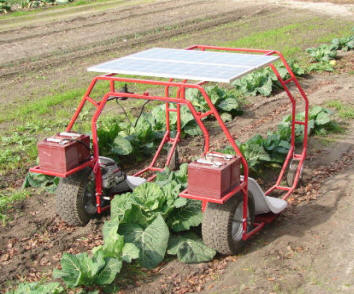
Solar Garden Helper Machine

Source Link

This is a really innovative machine to help with garden chores like planting, weeding, and picking.


Its not only helpful, but is also solar powered!

Better known as the PD-Riverman on The Homesteading Forum for providing the details on this machine.

This is Randy's original post on the Homesteading Today forum...

Description From Randy

I really Love gardening but I have a bad back and when it comes to staying bent over in the garden it gets rough. So I built this Helper Machine. I call it My P-Machine. Planting/Picking/Pulling weeds/Putting around the garden machine.
Frame

The machine was fabricated out of 1" square tubing 1/8" thick. This was my first build using a welder and tubing bender so do not look at the welding to closely.

The two seats are adjustable---they will move several inches closer to the row middle or several inches farther away.

Drive System

The drive motors, wiring harness and control were removed from a power wheel chair. The two motors operate on 24 volts and are already a gear reduction motor. Since I was using a larger rear tire than is on the power wheel chair and I wanted a lot of torque I reduced their output even more to 4.6 to 1 by using a 13 tooth sprocket on the motor and a 60 tooth on the wheels drive axle. A #35 chain connects the sprockets.

The machines top speed is about the speed of a walk but can be slowed down to a craw by using the original wheel chair speed adjust control with the joy stick pushed all the way forward. Naturally it will stop by releasing the joystick or returning it to its centered position. The machine works like a Zero turn lawn mower or a rear drive power wheel chair meaning the front tires swivel as the rear tires control the turn. No need for front wheel steering this way.

The Control can be moved easily from one side to the other so I drive it from either side. The control can also be moved to the middle.
Electrical

I have four T-105 6 volt Trojan golfcart batteries on two racks above/behind the drive wheels so that less weight will be put on the front swivel tires. The four batteries are hooked in series for 24 volt set-up. I am using two 12 volt 80 watt solar panels hooked in series that will run through a 20 amp 24 volt charge controller to keep the batteries charged properly. The wiring was simple because I used everything off the power wheel chair including the wiring harness. I had to lengthen the wires some because this machine is so much bigger than the wheel chair.

The 24 volt battery set-up was wired to the original battery disconnect plug that was on the wheel chair battery pack, so its just a simple plug into the harness. The 24 volt solar charge controller wires hooks to the batteries in the same place as the positive and negative wires for the disconnect plug.

I had the 4 Trojan batteries, but I could also have used two 12 volt deep cycle batteries. Or, I could have used the original batteries off the wheel chair, but those batteries were going bad. So, I used what I had. I am sure the run time will be a lot longer the way I have it set-up. 


After testing it, I have plans to do some more to it to make it more useful. I think it will help me so much in my BIG garden.

LAST WORD Solar Farming is the Future - ABE Publications, Department of Agricultural and Biological Enginering, University of Illinois


... with no fertilizer or tillage input and that produces no

harmful runoff or emissions. Imagine an energy source so

huge it has the potential to provide many times the energy we

could ever expect to need. You don’t have to imagine it—it’s

solar energy. Solar energy falls everywhere at the rate of a

horsepower per square yard (1000 watts per square meter),

and it’s free.

I think it’s time to recognize where our energy must ultimately come from, and speed up building for that future. Agbio engineers can be an important part of that future in planning and developing what I call “solar energy farming.”

Right now, it appears that the mainstream has realized

that making fuel from food (ethanol from corn) is not a very

good idea: first, because it raises the cost of food for poor

people around the world (is that morally acceptable?), and

second, because present practice requires such large inputs of

fossil fuel energy.

The emphasis now seems to be shifting to making liquid

fuels from biomass and plant cellulose, but a lot of work still

needs to be done to develop this process. Certainly the idea of

using marginal land, and utilizing wastes that are otherwise a

nuisance or a hazard, is laudable, and we are going to need

liquid fuels regardless of how many plug-in hybrid cars we

have. We should therefore pursue this alternative.

However, in the November 2007 issue of Smithsonian,

Richard Coniff pointed out that even if we could set aside

41 million ha (100 million acres) for cellulosic ethanol crops,

of the approximate 324 million ha (800 million acres) in the

United States, we would produce only about one-eighth of the

projected U.S. energy consumption in 2025.

By my calculations, the amount of biomass energy produced by an acre of corn in a season is less than the solar

energy falling on that acre in one day. That is less than one

percent efficiency. Photovoltaic systems can be 15 percent

efficient, and concentrating solar thermal plants can be about

30 percent, and they don’t need to compete with crops for

land.

Why not encourage ag-bio engineers to develop solar

energy farms? We could investigate the use of road rights-ofway (the Swiss have done this) and levee slopes as installation sites. In addition, I have read that plants grow better in

arid climates between rows of solar panels, possibly because

of the concentration of rainfall, so how about symbiotic systems of crops and solar in the same field? There must be

many other interesting possibilities for integrating solar energy systems.

Solar electricity could help plug-in hybrids shift about

80 percent of the daily trip mileage to electricity for drivers in

the United States. The cost per mile would be one-third as

much for electricity as for gasoline (at ten cents per kWh and

three dollars per gallon). I have read that a capacity increase

of 20 percent or less in our electrical power system would

handle this additional load.

Of course, critics say that solar energy is intermittent,

and diffuse, and the biggie: “The sun doesn’t shine at night!”

The greatest load on our current electrical system happens in

mid-afternoon in summer, when air conditioners are operating and when solar energy systems would be working just

fine. Solar energy could provide much of this peak load, and

we could supply a large share of our overall electrical needs

with solar before we would need to think much about energy

storage. Meanwhile, every hour of sunshine can reduce the

use of fossil fuel (and production of emissions). Solar electricity is expensive, but we already know the costs, and they

might well turn out to be no more than the more exotic solutions that have been proposed, such as CO2

sequestration

from coal-fired plants.

After several tries, Congress has finally extended the

solar tax credits. We need to do more to build a solar infrastructure. On the day the last barrel of oil is pumped, will we

be ready?

I believe that engineers are generally believed to be honest and accurate. We need to also be informed and articulate

about important issues such as this.

LAST WORD

Solar Farming

is the Future

Imagine a crop that can be harvested daily on the most

rocky, barren, acrid land ...

ASABE member William H. Peterson is associate professor emeritus

Source Link:

Feb 11, 2013

Nick Turse Describes the Real Vietnam War | Moyers & Company | BillMoyers.com


Nick Turse Describes the Real Vietnam War from BillMoyers.com on Vimeo.
February 8, 2013

Journalist Nick Turse describes his personal mission to compile a complete and compelling account of the Vietnam War’s horror as experienced by all sides, including innocent civilians who were sucked into its violent vortex.

Turse, who devoted 12 years to tracking down the true story of Vietnam, unlocked secret troves of documents, interviewed officials and veterans — including many accused of war atrocities — and traveled throughout the Vietnamese countryside talking with eyewitnesses to create his book, Kill Anything That Moves: The Real American War in Vietnam.

“American culture has never fully come to grips with Vietnam,” Turse tells Bill, referring to “hidden and forbidden histories that just haven’t been fully engaged.”

Explore More:
Read part of James Henry’s witness statement from 1970, in which he details acts of depravity committed by fellow U.S. soldiers during the Vietnam War. Also view the summary fact sheet of the Army’s final report on the “Henry allegations” in 1974.

Producer: Gina Kim. Editor: Rob Kuhns. Associate Producer:Reniqua Allen. Intro Editor: Paul Henry Desjarlais.

Problems Wash Ashore as Lake Michigan's Water Level Hits Low


Published on Feb 11, 2013

Lake Michigan, one of the crown jewels of Chicago and the Midwest, has recently experienced a dramatic drop in water levels. As Elizabeth Brackett of WTTW Chicago reports, that drop has created economic problems for towns that border its shore.

The Undercurrent: Hedges v. Obama, NDAA Part 1 - YouTube


Published on Feb 11, 2013

Lauren covers the February 6, 2013 hearing in the case of Hedges v. Obama in federal court in lower Manhattan. At contention is clause 1021 of the National Defense Authorization Act, or NDAA, which allows for the indefinite detention of American citizens without warrant. The plaintiffs give a press conference in Foley Square. Interviews include Attorney Bruce Afran; whistleblowers Jesselyn Radack and Thomas Drake; case organizer Tangerine Bolen; and Pulitzer Prize-winning journalist Chris Hedges.

Sunlight stimulates release of climate-warming gas from melting Arctic permafrost, study says


Larger Image


Larger Image

University of Michigan ecologist George Kling at a landslide thermokarst on a glacial headwall near Toolik Lake, Alaska. As permafrost ice melts, the soil collapses and either creates an erosional hole in the tundra or a landslide such as this one. These features are called thermokarst failures. Photo courtesy of George Kling. Ancient carbon trapped in Arctic permafrost is extremely sensitive to sunlight and, if exposed to the surface when long-frozen soils melt and collapse, can release climate-warming carbon dioxide gas into the atmosphere much faster than previously thought.

Read Full article: http://phys.org/news/2013-02-sunlight-climate-warming-gas-arctic-permafrost.html#jCp

Farming arrived in Europe with migrants, isotopic data show

February 11, 2013 by Terry Devitt 

For decades, archaeologists have debated how farming spread to Stone Age Europe, setting the stage for the rise of Western civilization. 

Now, new data gleaned from the teeth of prehistoric farmers and the hunter-gatherers with whom they briefly overlapped shows that agriculture was introduced to Central Europe from the Near East by colonizers who brought farming technology with them. "One of the big questions in European archaeology has been whether farming was brought or borrowed from the Near East," says T. Douglas Price, a University of Wisconsin-Madison archaeologist who, with Cardiff University's Dusan Boric, measured strontium isotopes (Isotope analysis - Wikipedia, the free encyclopedia)  in the teeth of 153 humans from Neolithic burials in an area known as the Danube Gorges in modern Romania and Serbia. 

The report, which appears this week (Feb. 11, 2013) in the Proceedings of the National Academy of Sciences, draws on isotopic signatures of strontium found in the tooth enamel of people who died nearly 8,000 years ago, about 6,200 B.C. Strontium is a chemical found in rocks everywhere. 

It enters the body through diet at or around birth and etches an indelible signature in teeth that accurately documents the geology of an individual's birthplace. "The evidence from the Danube Gorges shows clearly that new people came in bringing farming and replaced the earlier Mesolithic hunter-gatherers," says Price, a UW-Madison professor of anthropology and an expert on early agriculture in Europe. 

The Danube Gorges slice through the Carpathian Mountains and in the Stone Age were a heavily forested setting, rich in fish and game, including huge sturgeon, catfish, red deer and wild boar. The bends and twists of the Danube in the Gorges region made it especially important as a source of fish, and thus potentially a desirable entryway to Europe for highly mobile and expanding Neolithic communities accompanied by their domesticates – wheat, barley, flax, goats and cattle. 

The new research, explains Price, speaks to the question of colonization versus adoption of transformative technologies such as farming. "It is also useful because it suggests another route across the Black Sea or up the east coast of Bulgaria to the Danube for farmers moving into Europe. This contrasts with movement by sea across the Mediterranean or Aegean, which is the standard picture." 

Archaeologists have long wrestled with the question of how farming spread across Europe, ushering in a host of technologies, including the use of pottery, that ultimately led to the rise Western civilizations. Two big ideas have dominated the debate: Did the technology arrive with colonizers from Asia, notably Anatolia or modern Turkey? Or did the technology, including newly domesticated plants and animals, simply diffuse across the European landscape through networks of local foragers? 

There is some evidence for the importation of early agriculture along the shores of the Mediterranean and in Central Europe, Price notes, "but elsewhere in Europe it is not clear whether it was colonists or locals adopting." Isotopic studies of strontium and other chemicals found in the teeth and bones of Neolithic humans, however, are now helping archaeologists better track the movement of ancient peoples across the landscape. Strontium signatures last not just a lifetime, but potentially thousands of years as tooth enamel, the densest tissue in the body, resists decomposition and contamination after death. 

It is now commonly used by archaeologists to determine if an individual was local or foreign to the place where their remains were discovered. An interesting finding of the study is that 8,000 years ago, when Neolithic farmers were beginning to migrate into the Danube Gorges and overlap with Mesolithic hunter-gatherers, more women than men were identified as foreigners. A possible explanation for the variance, according to the study, is that women came to these sites from Neolithic farming communities as part of an ongoing social exchange. In the Danube Gorges, the overlap of colonizing early farmers and hunter-gatherers lasted perhaps a couple of hundred years before the forager societies were completely absorbed by the beginning of the sixth millennium B.C. Journal reference: 

Proceedings of the National Academy of Sciences Provided by University of Wisconsin-Madison 

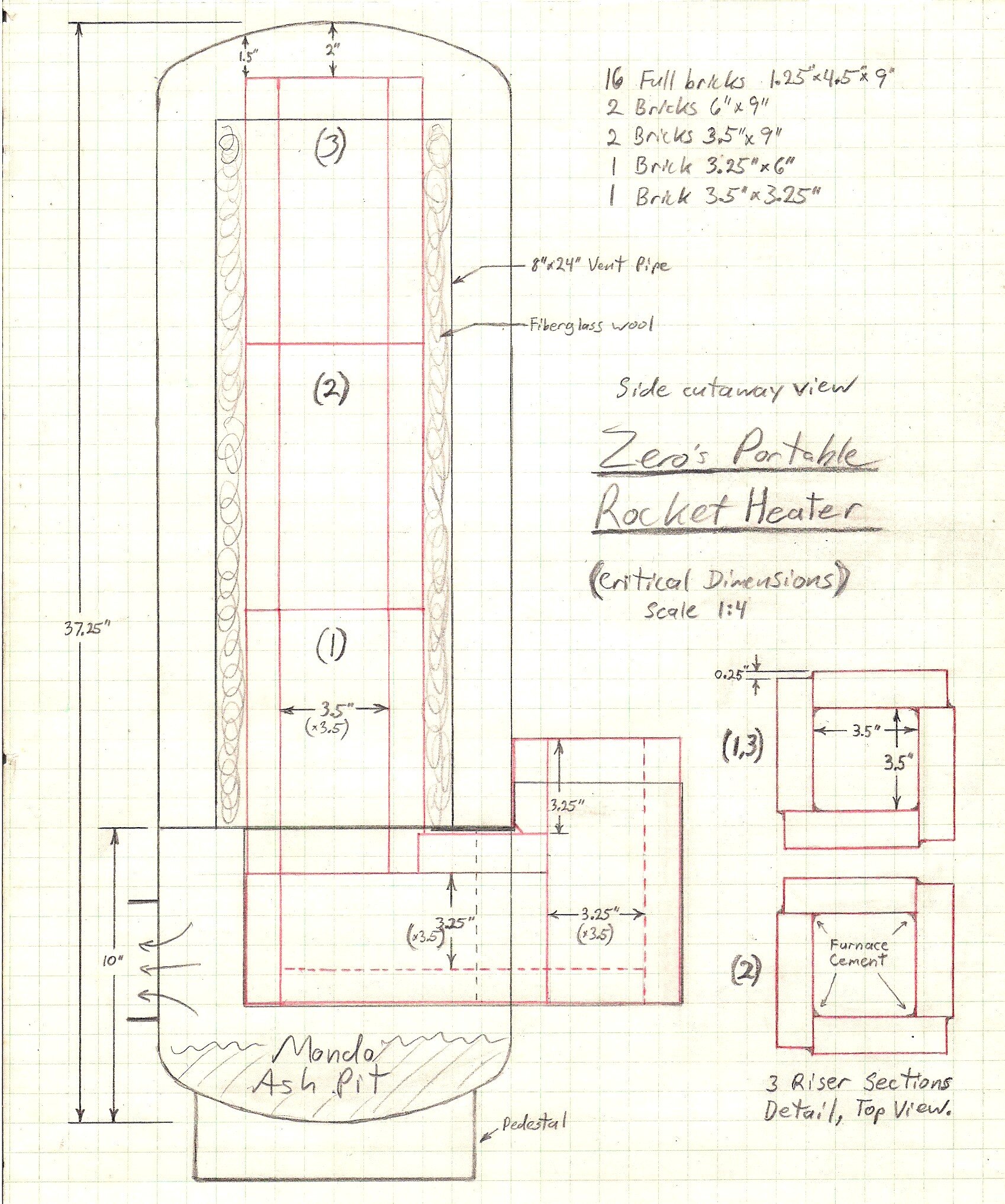
Rocket Stove Heater - Great Innovative Design!


Nice Innovative Design by ZeroFossilFuel ... Monte


ZeroFossilFuel
Published on Feb 11, 2013
It's done. It's great. Get out there and build something!

Why You're So Afraid of Change (and What You Can Do About It)


Wonderful Lifehacker article.... Monte


Larger Image
Adam Dachis
Change freaks us out—probably even more than public speaking, but it's the sort of amorphous issue that we don't think about because it manifests itself subtly in so many ways. Whether a relationship starts or ends, you're moving, you've got a new job, or you've lost someone you love, change—whether it's good or bad—causes stress. Here's how it works and how to handle it without losing your mind.

The earlier you learned something, the harder it is to change. "You can't teach an old dog new tricks" is a saying for a reason.

We Seek Out People Like Us to Avoid ChangeFull size
Because new information bothers our brains, we tend to find friends and form groups that reinforce our beliefs—whether they're correct or not. When many people agree, it's easy to discount the opinions of others in the face of undeniable logic. This occurs because of a phenomenon known as the illusion of asymmetric insight. David McRaney, writer of the blog and book about self-delusion You Are Not So Smart, explains:

The illusion of asymmetric insight makes it seem as though you know everyone else far better than they know you, and not only that, but you know them better than they know themselves. You believe the same thing about groups of which you are a member. As a whole, your group understands outsiders better than outsiders understand your group, and you understand the group better than its members know the group to which they belong.

This lovely phenomenon gives you cause to discount conflicting information as bias and stick with what you know. Essentially, you attack the possibility of change because you think you know better than everyone else and have the friends to back you up.

We Hate to Feel Like We Wasted Our Time and Effort

Full size
Sometimes change involves a significant loss, and our brains hate loss. When we invest ourselves emotionally in anything, it becomes harder to change because we don't want to lose all the time and effort we already exerted. As a result, we have a hard time letting go of a project we know deep down will fail. We also struggle to end doomed relationships because we're terrible at accepting the whole thing was for naught. In reality, time isn't wasted but our brains like to see the entire time as a loss rather than just a part of the inevitable conclusion. If you've ever played a game of Farmville and struggled to stop, you know exactly how this feels.

Lots more ... Read Full Article

Twilight of an energy boom: Alberta’s new fiscal challenge - The Globe and Mail


Larger Image

A squared-off concrete shell sits in a frozen field, a short distance from Highway 63 north of Fort McMurray. It was to be the first building block of the $11.6-billion Voyageur oil sands upgrader, which was taking shape in 2008 as the latest megaproject to inject adrenalin into an Alberta economy that was already riding high on its good fortune.

Rest of the Story!

Funny what slight reduction in a price of a barrel of oil does to a project that should not be built to begin with...

Pain Remedies You May Not Have Tried

One-quarter of Americans are in pain daily, according to the journal The Lancet. That’s a lot of hurt, but today there are more practitioners than ever to help you find relief. While there’s no one magic bullet that erases pain across the spectrum, the rise of alternative and holistic medicine has made drug-free therapies more available and reliable. Some therapies on this list are so tried and true that they are routinely covered by insurance; others are less established and more expensive, though many practitioners provide service on a sliding fee scale according to a patient’s resources. What works for someone else might not work for you, but each of these 10 types of specialists is worth seeking out if you are one of the millions of Americans for whom pain is a fact of life.

1. Massage Therapists
Massage therapists use touch to ease tension and relieve the aches and pains that come from stress, injury, and physical exertion as well as chronic conditions including fibromyalgia. You want to find a practitioner who is licensed in your state and has been certified by the National Certification Board for Therapeutic Massage and Body Work. There are many styles of body work—from widely offered massage varieties, like Swedish and Shiatsu, to more specialized practices, like Reiki—and you may need to experiment with the different modalities until you find the treatment that works for you.

How to find one: Get a referral from the American Massage Therapy Association. While not all states require a license to practice massage, municipalities and counties often set regulations. The AMTA recommends asking massage therapists if they are licensed or otherwise meet requirements to practice in your area.


2. Acupuncturists
Acupuncturists use superthin needles to stimulate energetic pathways that heal and balance the body’s systems according to traditional Chinese medicine. Acupuncture is used to treat a wide range of conditions, from insomnia to migraine headaches, and the body of scientific research on its effectiveness has grown dramatically in the past 10 years. Many people report a reduction in pain after a series of treatments, and acupuncture is gaining traction in the medical community, particularly among those who practice holistic medicine.

How to find one: Check out the American Association of Acupuncturists & Oriental Medicine.


3. Physical Therapists
These pain experts typically step in to help you heal from an injury after your MD's work is done, but they also commonly work with those who experience chronic pain. They put patients on a path to well-being by prescribing specific exercises to stretch and strengthen the body—for example, get a jogger with runner’s knee lacing up her sneakers in time for a 5-K. Often, coached sessions come first and are followed by a program to do on your own at home. Foam rollers, fitness balls, and resistance bands are some of the tools you might see in a physical therapist’s office.

How to find one: Find a qualified practitioner through the American Physical Therapy Association.


4. Pharmacists
Your pharmacist isn't just there to hand out prescriptions. These highly trained professionals can dispense expert advice too. Talk to your pharmacist about your pain, and he or she may be able to recommend an over-the-counter option that works well. And if you are picking up a prescription, your pharmacist can alert you to any hazardous interactions.


5. Nutritionists
Nutritionists can help you lose weight, and many people underestimate the degree to which excess pounds can put painful stress on the joints and spine. Seek out a registered dietitian—they are some of the savviest people around when it comes to food. For example, an RD can help you get to the bottom of any food sensitivities you may have that can cause mysterious headaches or stomachaches. They can also set you up on an anti-inflammatory diet that can help ease pain as well as aid in the prevention of diseases like diabetes.

How to find one: Turn to the American Dietetic Association.


6. Yoga Instructors
Yoga classes have brought relief to many back pain and tension headache sufferers. This mind-body practice combines awareness and breathing with a series of poses that loosen up muscles and joints. It also increases range of motion and aligns the spine, which can ease aches for those who have chronic back complaints. Styles of yoga range from seated to athletic, so there’s a class for everyone regardless of fitness level. How to find one: Yoga is taught everywhere from yoga studios to health clubs to retreat centers. Once you’re in class, tell the instructor about any injuries or chronic pain issues, and don’t do anything that hurts or strains your body.


7. Meditation Experts
Meditation experts can help you learn to quiet your mind and sink into a state of stress-free relaxation, but you don’t need to see one in person to learn the skills and get relief. Books, guided meditation recordings, and even online tutorials can help you become a Zen master. Meditation is a particularly great option because the benefits are many and the risks are none. And unlike some other alternative treatments, scientific studies have shown that meditation can diminish pain. How to find one: Many yoga studios offer guided meditation sessions, where an instructor will help you get settled in a comfortable position before leading the group in breathing exercises. On your own, try these simple meditation techniques.


8. Hypnotists
Hypnotists are not like what you've seen in the movies, where they sway a watch before your eyes and make you cluck like a chicken. A trained hypnotherapist can, however, help patients deal with issues both physical and psychological. The therapist simply talks to you in a soothing tone as he or she guides you into a highly relaxed state.

How to find one: Get a referral from the American Society of Clinical Hypnosis.


9. Psychologists
Mental health experts are important for anyone suffering from any kind of chronic pain—whether the source is cancer, migraine headaches, lower back issues, or anything in between—because those who live with pain on an ongoing basis are more likely to get depressed. Once that happens, the depression itself can bring on additional discomfort, kicking off a vicious cycle. Psychologists can help stop that downward spiral in its tracks by providing the emotional support pain sufferers need.

How to find one: Check out the American Psychological Association’s tips for choosing the right therapist.


10. Chiropractors
Chiropractors have a bad reputation in some circles, probably because of the myth that their treatments can be painful or dangerous, but these pros have had extensive health care training and can offer safe and effective relief. A visit to one can be helpful for many people, especially those suffering with back, neck, and head pain. Chiropractors treat patients primarily through a series of precise spinal manipulations and adjustments that bring relief by restoring the body’s natural alignment. How to find one: Get a referral from the American Chiropractic Association.

Published November 2011, Prevention

Solar Electric Tractor Model 12 - Steve Heckeroth

WOW - major progress in all electric tractors... Monte


Published on Feb 11, 2013
http://permies.com

Steve Heckeroth shows his Model 12 electric tractor. This one is 20 horsepower, although since it is electric it has power comparable to a 40 hp diesel or a 60hp gasoline tractor. Steve explains how this has to do with torque peak performance of the electric motors being so much better than gas or diesel.

In this video we see the loader in action. The three point hitch and the PTO (power take off). We move some bales of straw and do a little bushhogging.

One problem with electric cars is range from the charging station. But an electric tractor rarely strays far from its charging station.

Another problem with electric tractors is battery weight. But with an electric tractor, the extra battery weight gives better traction!

This electric tractor is solar powered. The whole homestead is solar powered! And Steve has a solar electric car too!

Steve talks about using hydraulic pumps for things like the load vs. linear actuators.

Steve mentions the porsche spider he once converted to an electric car.

The solar electric tractor is labeled SolTrac and Steve says that he is changing the name to SolecTrac.

We see the thing film amorphous solar stuff on his barn roof. Peel and stick roll out solar panels. 8kw (kilowatts).

Lithium batteries. 48 volt pack. Battery management system. Each cell is monitored during charging. A/C to D/C converter. A/C motor. Most electric cars use higher voltage for greater speed. 48 volts is great for a tractor. This tractor has a transmission including hi/low range. Linear actuators for the steering. Steve thinks this is better than hydrostatic.

Use a low geat for rototilling or mowing and a higher gear for using the loader.

Regenerative braking. $15,000 for an electric farm tractor. $30,000 for the fancy electric tractor (sans solar).

Relevant:
http://www.permies.com/t/2741/gear/el...
http://www.permies.com/t/17061/podcas...

Feb 10, 2013

Susan Crawford on Why U.S. Internet Access is Slow, Costly and Unfair


Go Susan! 
Get our Phone Bill Reduced
and Better and Faster Internet Access!  
...Monte
Susan Crawford on Why U.S. Internet Access is Slow, Costly, and Unfair from BillMoyers.com on Vimeo.
February 8, 2013

Susan Crawford, former special assistant to President Obama for science, technology and innovation, and author of Captive Audience: The Telecom Industry and Monopoly Power in the New Gilded Age, joins Bill to discuss how our government has allowed a few powerful media conglomerates to put profit ahead of the public interest — rigging the rules, raising prices, and stifling competition. As a result, Crawford says, all of us are at the mercy of the biggest business monopoly since Standard Oil in the first Gilded Age a hundred years ago.

“The rich are getting gouged, the poor are very often left out, and this means that we’re creating, yet again, two Americas, and deepening inequality through this communications inequality,” Crawford tells Bill.
Susan P. Crawford - Wikipedia, the free encyclopedia

Feb 9, 2013

Earth-observing satellite to launch from Calif. (Update)


February 8, 2013 by Alicia Chang

This artist rendering released by NASA shows the Landsat satellite in orbit around Earth.

The satellite is slated to launch Monday, Feb. 11, 2013 from Vandenberg Air Force Base, Calif. It's the eighth satellite in a program that began in 1972. (AP Photo/NASA) 

A new Earth-observing satellite is set to provide another watchful eye over our planet's glaciers, forests, water resources and urban sprawl. 

If all goes as planned, the Landsat satellite will be launched into orbit Monday from Vandenberg Air Force Base in California. It would be the eighth such satellite in a series designed to continuously track natural changes and society's influence on Earth's resources. Since the maiden launch in 1972, the satellites have been providing "uninterrupted observations," David Jarrett, program executive at NASA headquarters, said during a pre-launch news conference on Friday. 

During the past 40 years, the Landsat satellites have been key in documenting changes to the Earth, pinpointing where droughts are occurring, how crops across the globe are faring and how erosion is affecting coastlines. 

The satellites also have recorded retreating glaciers in Greenland, captured the 1980 Mount St. Helens eruption and recovery aftermath, tracked population growth in Phoenix and deforestation in the Amazon. Although NASA aimed for a Monday liftoff, launch director Omar Baez said there were two remaining engineering issues to complete. 

It was too early to know whether that would affect the launch schedule, he said. 

The newest Landsat will be the most powerful yet. Once in orbit, it will circle Earth 14 times a day. It was expected to beam back 400 images a day to ground stations in South Dakota, Alaska and Norway. 

As in previous missions, the images will be freely available on the Internet. The $855 million project is managed by NASA and the U.S. Geological Survey. The space agency developed the satellite and its two sensors, which are more sensitive than previous ones. After a checkout period in orbit, day-to-day duties will be turned over to the USGS. 

The latest Landsat will build on past missions. The USGS recently retired Landsat 5, which operated since 1984 and has returned 2 1/2 million images. Landsat 7, launched in 1999, continues to operate.

Read more at: http://phys.org/news/2013-02-earth-observing-satellite.html#jCp

DIY Track Saw and Other Ideas for Cutting Up Sheet Goods


DIY Track Saw
Track saw for $120, includes the saw.


Festool

Cutting plywood: how to break down sheet goods
Steve Ramsey

Starting Peppers


Starting Peppers, The Wisconsin Vegetable Gardener

http://www.blogtalkradio.com/doctorpr... (website)
http://www.dollarseed.com
http://www.willowspringssoap.com
http://www.manuretea.com

Making seed planting tape, pumpkin flour, re-using items for water drip trays, saving potatoes, gardening books


Uploaded on Feb 13, 2012
Making seed planting tape, pumpkin flour, re-using items for water drip trays, saving potatoes, gardening books.

Starting Onion & Leek Seeds


Source Link: The Wisconsin Vegetable Gardener
Published on Jan 15, 2013

Joey shows how to start onion and leek seeds and explains why watering from bottom is best for good seedling production.

http://www.blogtalkradio.com/doctorpr...
http://www.thewisconsinvegetablegarde... (website)
http://www.dollarseed.com
http://www.willowspringssoap.com
http://www.manuretea.com