Jul 17, 2012

Is it or isn't it? The Higgs boson story


Artist's impression of a proton-proton collision producing a pair of gamma rays (yellow) in the ATLAS detector (Image: CERN)

The recent discovery at the Large Hadron Collider (LHC) of the European Organization for Nuclear Research (CERN) of a massive particle "consistent with" the predicted properties of the Higgs boson hit the news with the force of a hurricane. But the phrase "consistent with" suggests that the CERN observation may also be "consistent with" other types of particle. Is it or isn't it? We're going to attempt to clarify the situation for you.


Before we start, let's get rid of one widespread misconception being thrown about by the news media. The Higgs boson is often called the God particle (but never by scientists). The reason for that moniker is that Leon Lederman, Director Emeritus of Fermilab and Nobel Prize winner, wrote a popular book on the Higgs boson. He wanted to call the book "The Goddamn Particle" because of the difficulty and expense of finding the Higgs, but the publisher thought that sales might suffer. The publisher then suggested "The God Particle" as an alternative, to which Lederman eventually acceded. The name is thus a response to a bad joke, rather than an indication of spirituality or divine origin.


Structures of atoms, nucleons, electrons, and quarks according to the Standard Model of particle physics (Image: CERN)

We're going to look at just what the ATLAS (A Toroidal LHC Apparatus) and CMS (Compact Muon Solenoid) experiments at CERN saw, why the data is "consistent with" detection of the Higgs boson, and what other particles may be "consistent with" the same data.

First, though, some background information. There are four known forces in nature, two of which (gravity and electromagnetism) you can experience directly. When you get up out of a chair you fight the force of gravity, and when you shuffle your feet on carpet and touch a doorknob, the small spark is driven by the electromagnetic force.

The others are the strong and weak nuclear forces. The strong force holds together the nuclei of atoms, as well as binding the quarks inside protons and neutrons. If it were slightly smaller in strength, there would be no stable atoms, save for hydrogen.

Finally, the weak nuclear force is a large part of what makes particle physics interesting. This is because only the weak force can change an up quark into a down quark, and vice versa. Quarks are the particles which make up protons and neutrons – a proton is the combination of two up quarks and a down quark, while a neutron consists of one up quark and two down quarks. In the decay of a neutron into a proton one quark changes from down to up, which requires that a weak interaction happens.

Without the weak force, the type of hydrogen fusion that powers the Sun would be impossible – when you fuse four hydrogen atoms to get a helium-4 nucleus, two of the hydrogen atoms must turn into neutrons. This will not occur without the weak force.

The Standard Model of particle physics is a theoretical description of three of the four forces which control our universe (gravity strongly resists treatment within the structure of the Standard Model). Developed in its current form when quarks were first observed, discoveries of the Standard Model-predicted top and bottom quarks, and the tau neutrino (possibly also the Higgs boson) have given physicists more confidence in the basic picture.

However, the Standard Model is not a complete theory of the underlying structure of the universe. Among other problems, it does not allow prediction of the masses of the various particles, and it contains neither gravity, dark energy nor dark matter (together making up about 96 percent of the universe!). It's the best we have at present, but further work is required to formulate better models, which is where the CERN experiments come in.

The Standard Model predicts that the Higgs boson is the last elementary particle waiting to be discovered. In this view, all particles gain mass through their interaction with the uniform Higgs field, which exists throughout the universe. (Why uniform? Otherwise mass would vary depending on which direction it was traveling through space.) This is the simplest, but not the only, approach to explain why particles, kings, and cabbages have mass. If you can find the Higgs boson, the Higgs field also exists. But if the new particle discovered at CERN is not the Higgs boson, this could be the first solid indication that the Standard Model is wrong.


The ATLAS (right) and CMS (left) detectors (Photo: CERN)

What we know

What have the CERN experiments actually seen? Well, to start with, there is almost certainly a new particle with a mass of roughly 125 GeV. This mass can be estimated from the trajectories taken by the decay products. Weighing about 133 times the mass of a proton, the new particle is among the most massive particles so far detected. Only the top quark is heavier, at about 170 GeV. Among particles that can be isolated, the W and Z bosons (carriers of the weak nuclear force) are heaviest at 80-90 GeV.


A proton-proton collision producing a pair of energetic photons (gamma rays) as seen by the ATLAS detector. The photons are indicated by the red trajectories. An excess of such gamma pairs is among the evidence for the new Higgs candidate particle (Image: CERN)

In order to appreciate the CERN result, it's important to understand what's meant by the term "spin." Spin is a quantum mechanical property related to angular momentum that also obeys properties and rules that seem very strange compared to our experience of spinning objects. Fortunately, all we need to know here is that quantum mechanics predicts (and observation confirms) that spin comes in integer multiples of half of a fundamental magnitude. Thus, all particles have either half-integral spin (...-3/2, -1/2, 1/2, 3/2...) or integral spin (...-2, -1, 0, 1, 2...). Half-integral spin particles are called fermions, and integral spin particles are called bosons for reasons which need not concern us here.

CERN's new particle is observed to decay into a pair of photons (gamma rays). As photons have a spin of one, the particle from which they are emitted must have either spin-0 (1-1), or spin-2 (1+1). The experiments show the new particle has integral spin, so it is a boson. Spin-2 particles are rather unlikely to be made in a collider, so the new particle is probably (but not necessarily) a spin-0 particle.


Event recorded with the CMS detector in 2012 at a proton-proton centre of mass energy of 8 TeV. The event shows what may be a two-photon Higgs boson decay (photons in green) (Image: CERN)

The final bit of data we have characterizing the new particle is its decay modes – that is, what do we see the particle decaying into and with what probability? The new particle has been observed to decay via the following modes. The Higgs boson can also decay into the same modes.
A bottom quark and an antibottom quark
A tau lepton and an antitau lepton
A pair of photons
A W boson and an anti-W boson
A Z boson and an anti-Z bosonWhile the theoretical Higgs boson and the new particle have the same decay modes, it appears that there are certain discrepancies between the new particle's decay probabilities and those predicted for the Higgs boson. The probabilities for the bottom quark and tau lepton decay modes is much smaller in observations of the new particle than those predicted for the Higgs boson, and the probability for the photon decay mode is about 50 percent larger than predicted for the Higgs boson.

In summary, the data tells us that the new particle weighs about 125 GeV, has a spin of 0 or 2, and is not solidly in agreement with the decay modes predicted for the Standard Model Higgs. Not a lot of information. The CERN researchers describe the properties of the new particle as "consistent with" the Higgs boson. However, if the current distribution of decay mode probabilities survives the improved statistics resulting from the accumulation of more data, the Standard Model Higgs boson is in a bit of trouble, as is the Standard Model itself.
Other contenders

What else could the new particle be? There are other version of the Higgs interaction giving mass to particles. If the new particle does not decay into tau leptons, that would suggest that its interaction with tau leptons is rather weak, and also that it is not responsible for their mass. Perhaps the new particle is only the Higgs boson for bosons, but some other particle gives the fermions (electrons and leptons) their mass. This is in line with the original formulations of the Higgs field, which was to only explain how bosons got their mass.

This answer would require an extension of the Standard Model, probably in the direction of supersymmetry. Supersymmetry relates elementary particles of one spin to other particles called superpartners that differ by half a unit of spin. Supersymmetry is only one possible theory that would extend the Standard Model, but it is particularly interesting in that it offers possible solutions to numerous problems. An explanation for dark matter (80 percent of the matter in the universe) is among the benefits.

In addition, mathematical physicists have proven that supersymmetry is the only approach to develop a consistent description of spacetime and the internal symmetries of the particle zoo. On the other hand, there is no clear experimental result pointing toward a supersymmetric model of the universe. Such a model would contain at least five "Higgs bosons," whose properties would differ from the Higgs boson of the Standard Model. The property that could help make this distinction is something known as "parity." All we really need to know here is that if the new particle has odd rather than even parity, it would be suggestive of the influence of supersymmetry.
Is it, or isn't it?

Back to the original question - is it or isn't it? If the new particle is found to have odd parity, or if the decay mode discrepancies survive as more data is acquired, the new particle is likely not the Higgs boson of the Standard Model. This would actually be very exciting, as it may be the first dent in the Standard Model taking us toward a new level of understanding of the universe. Or we may have indeed just discovered the Higgs, but there is still a need to search for new clues as to the extra levels of structure we know must exist. The answers (and the questions) will become clearer as more data is gathered in coming years. Either way, these are certainly interesting times for physics.

Source: CERN

Illinois Innovators: Rajmohan Ghandi


Published on Jul 17, 2012 by Illinois1867
Rajmohan Ghandi is the biographer and grandson of the Mahatma Gandhi. He is also a research professor at the University of Illinois Center for South Asian and Middle Eastern Studies. He continues the work of his grandfather, trying to bring the world together through understanding and cooperation. Since September 11, 2001, he has addressed the issues between the West and the world of Islam. We look at this remarkable man, who is internationally recognized not just for his name, but for his work.

I am proud that University of Illinois leaders, professors, students, and former students are known for more meaningful endeavors than their sports program, Bud Lite endorsements, ... etc. All universities should learn from Penn State's mistaken priorities... Monte

Jul 16, 2012

Two of the Best Social Commentaries Ever Made


Published on Jun 19, 2012 by Namaste1001


George Carlin and Bill Hicks telling it like it is... Monte

Building an Office Shelf/Storage Unit - YouTube


Published on Jul 16, 2012 by thintz12
http://www.newwoodworker.com/basic/oficeshelf.html

Building an (office) shelf unit. Building it square.

Precautions with late-season herbicide applications July 12, 2012 - University of Illinois Extension

Aaron Hager
Aaron Hager, Extension Specialist, Weed Science/IPM, hager@illinois.edu

The adverse environmental conditions common across much of Illinois are challenging the performance of many foliar-applied soybean herbicides.

Weeds that survive an initial herbicide application are often resprayed later in the season. However, according to University of Illinois associate professor of weed science Aaron Hager, the likelihood of controlling larger, moisture-stressed weeds continues to decline.

Moreover, herbicides applied late in the season are more likely to persist long enough to injure sensitive rotational crops. Nearly all herbicide labels (soil-applied or postemergence) specify the interval between herbicide application and planting a rotational crop. Some of these restrictions are based solely on time, while others take into account factors such as soil pH and the amount of precipitation received after herbicide application when determining interval length.

"Soil moisture is often the most critical factor governing the efficacy and persistence of soil-residual herbicides," Hager said. "Many herbicides are degraded in soil by the activity of soil microorganisms, and populations of these microorganisms can be greatly depressed when soil moisture is limited."

Dry soils can also enhance herbicide adsorption to soil colloids, thus rendering the herbicide unavailable for plant uptake and degradation by soil microbial populations. Some herbicide rotational intervals are increased if a specified amount of precipitation is not received by a certain calendar date.

The intervals are established to prevent herbicide residues from reaching levels that will adversely affect the rotational crop. Respecting these intervals becomes particularly important with late-season herbicide applications and when soil moisture is limited.

"Please keep in mind that the labels of almost all postemergence soybean herbicides indicate a preharvest interval or a soybean developmental stage beyond which applications cannot be made," said Hager.

Labels of some products may indicate both a developmental stage (before soybean bloom, for example) and a preharvest interval. Preharvest intervals indicate the amount of time that must elapse between the herbicide application and crop harvest.

Failure to observe the preharvest interval may result in herbicide residue levels in the harvested portion of the crop in excess of established limits. Moreover, labels on many postemergence soybean herbicides specify that foraging of, or grazing livestock on, treated soybean is not allowed.

Source: Aaron Hager, Extension Specialist, Weed Science/IPM, hager@illinois.edu

Local Contact: Russel Higgins, Commercial Agriculture Educator, Crop Sciences (Northern Illinois Agronomy Research Center, Shabbona IL), rahiggin@illinois.edu

Growing Bulb Fennel

Benedict Vanheems
Full Article


For those in the Northern Hemisphere the longest day of the year falls on either the 20th or 21st June (for Southern Hemispherists it’s the 21st/22nd December). The longest day of the year marks a distinct turning point in the gardener’s calendar, with summer well and truly in command and, hopefully, the first flush of harvests coming and thick and fast if not already snaffled up.

With the likes of early peas and potatoes, broad beans and carrots lifted and plucked, the first free gaps on the plot will be making an appearance round about now. Of course, no vegetable grower worth his salt needs reminding that this is the perfect signal to sow and plant once more, for crops that will be enjoyed in a few months’ time and on into autumn/fall. For me, spring is very much a mad rush to get everything up and running before the really good growing weather arrives; starting off veg from midsummer is a more relaxed affair – a far cry from the sprinter’s pace of those earlier sowings.
Fabulous Florence fennel

Perhaps the most indulgent vegetable to start off at this time of year is Florence fennel, otherwise known as finocchio or, more commonly, bulb fennel. The handsome feathery foliage of this crop is matched only by its exquisite aniseed flavour that makes a fine pairing with fish (try baking parcels of mackerel with slices of fennel and lemon for a sublime dinner). But fennel has more strings to its bow than this – pop chunks into a stew to freshen things up, or finely slice a bulb over a garden-gathered salad using a chef’s mandolin. The leaves can be used in place of herb fennel.

Bulb fennel is perhaps a slightly misleading name, as the ‘bulb’ is in fact the swollen stem base of the plant. But this is nitpicking as all you really need to know is that this is a vegetable to luxuriate in – a gourmet kitchen gardener’s treat!
The right site

One of the reasons to sow bulb fennel at midsummer is its love of sunny conditions. Hailing from the Mediterranean, it is at home in a fertile yet free-drained soil that’s lovingly basked by the warming rays of summer. While those in Mediterranean-equivalent zones can of course sow in spring, those at more northerly latitudes must bide their time to be sure of success. By midsummer the soil will have warmed up more than adequately and success will be all but assured.

Despite its sun-kissed origins, however, bulb fennel will not tolerate dry conditions. While a moisture-starved soil isn’t necessarily bad for the plant itself, it’s not great news for us; dry soil encourages plants to run to flower prematurely at the expense of those juicy bulbs. Soil that was manured for a previous crop and that’s topped with a mulch of organic matter will stand a better chance at retaining that all-important soil moisture.

To be sure of adequate moisture it is likely you’ll need to thoroughly water the ground before re-sowing with fennel. Beware the thick canopies of the potato, which exclude all but the heaviest downpours of rain. Having lifted all of your spuds the soil that’s left has a tendency to be dust-dry. Either wait for a good rainstorm to pass before sowing your fennel, or go over the ground several times with the watering can or hose to re-wet. Bulb fennel can also be grown in containers of multipurpose compost.
Sowing and growing

Sowing is easy and best done direct where the bulb fennel is to grow. Sow the seeds into weed-free soil that’s been raked to a fine texture, setting seeds about 1cm (0.5in) deep. You can either station sow three or four seeds every 25-30cm (10-12in) each way, thinning to leave the strongest seedling at each position, or sow the seeds in rows before thinning in stages. It’s also possible to sow into module trays of compost before planting out, but do this promptly as the plants absolutely hate root disturbance.

Few pests will trouble your seedlings but slugs (as ever!) can be the exception. Nightly patrols to collect the slimy molluscs, the laying of beer traps or a sprinkling of pet-safe slug pellets will help to control the population.

As the stem bases begin to swell plants can be ‘earthed up’ just like potatoes by pushing loose soil up against the bases. This not only produces paler and hence more tender bulbs, it will give plants proper support and keep them from rocking back and forth in the wind.
Bolt out of the blue

Don’t let your bulb fennel run to seed or 'bolt'. The number one rule when growing this otherwise easy-care vegetable is that you must – and I mean must – keep the roots quenched (though never waterlogged). Water during any dry spells and apply a mulch of grass clippings or similar around the plants to lock it in.

Modern varieties are proving ever more resistant to bolting. The roll call of bolt-resistant varieties includes ‘Victoria’ with its orderly foliage, late-season ‘Cantino’ and the appropriately-named ‘Perfection’. Look out for them. In the very hottest climates heat alone can induce flowering – shading from other taller crops or temporary netting can alleviate the heat.

If one or two plants do stretch to flower, don’t despair. There’s no hurry to lift them out for the compost bin. The yellow umbels that follow not only look fantastic but are a powerful draw for all manner of beneficial insects. Fennel in full flower is a stunning sight and you could even put the case that your fennel is acting as pollinator/pest predator provider!
Enjoying the bulbs

Bulb fennel can be used at any size, with the smallest and most tender bulbs best for use raw in salads. Warm bulbs taken during the heat of the day can be freshened up by submerging thin slices in a bowl of iced water for up to an hour. They’ll soon regain their rigidity and full flavour. Cut the bulbs an inch above ground level and allow the stump to re-sprout (a trick that also works for cabbages). The bonus take of feathery shoots is both delicious and delicate.

However you use your bulb fennel you’ll be pleased you made the sowing. Just think, within just two months of reading this you could be enjoying the luxury of your own bulbs. It’s a tempting thought.

Permaculture Principles for Vegetable Gardeners

Friday, July 13, 2012 by Barbara Pleasant
Full Article

I hear that permaculture gardening is a hot topic in Europe, but every time I decide to study permaculture, my eyes glaze over and I get sleepy before I find new nuggets of wisdom I can put into action in my garden. I think it's the somewhat abstract design principles that throw me off. After 30 years of organic gardening in several different places, I favor a "first things first and get it done" approach to creating a sustainable landscape that provides an abundance of good food. The five guidelines below summarize my personal approach to putting permaculture principles to work in a productive vegetable garden.
1. Use your best spot to grow vegetables in permanent beds

Growing vegetables involves a big investment of time, and many gardeners struggle with small spaces and too much shade. The sunniest spot is always the best place for veggies, which cannot reach their peak of flavor and nutrition without at least 6 hours of direct sun each day. Once you have selected the best spot, you may need to thin low branches from nearby trees as you gradually create deeply dug, permanent beds that provide fertile, well-drained growing space for your home grown veggies. Do everything you can to make sure your vegetable garden site is as good as it can be.

2. Grow perennial vegetables and herbs that are adapted to your site, soil and climate

Food crops that come back year after year like asparagus and rhubarb are huge time-savers in the garden, and the same goes for long-lived kitchen herbs. Upkeep is usually limited to pruning, weeding and fertilizing once or twice a year, and I think perennial plants help give a garden personality. Because they like it there, a distant area of my garden is becoming a preserve for medicinal herbs like echinacea, elecampane, lemon balm and valerian. A low spot that stays moist for a long time after it rains has proven ideal for rhubarb. Finding the perfect site for a productive perennial you love earns you a permaculture star.
3. Enrich boundaries with berries

Blueberries, currants, grapes, raspberries, blackberries and other small fruits can be used to structure the landscape's boundaries. Most benefit from a trellis or other support, so training them over or along a fence is often quite practical. Grapes are especially useful in small yards, because they can be trained.
4. Use mulching, drip irrigation and composting to minimize water inputs and eliminate waste

These are permaculture principles that smart organic gardeners follow anyway, mostly because they are good for our gardens and our plants. I always need more mulch and compost, so I cultivate several grassy areas for clipping production, and pull up and compost what seems like tons of cover crop plants. I am not trying to reform the world. Rather, attentive organic gardening practices such as these naturally transform any spot into a more beautiful and productive space.
5. Watch and learn

This echoes the permaculture principle to observe and interact, but my garden humbles my fragile human intellect season after season. Too often our tendencies are to take thriving crops for granted, and react with alarm when problems develop.

Taking the time to stop, watch and learn is critical to your development as a vegetable gardener - a complicated process that requires learning a little about ten thousand things, from soil science to plant pathology. The best way I have found to make sure I take learning breaks is to make myself walk among my beds for ten minutes without doing anything - just looking to see how the plants, soil, insects, and sun are getting along together. It's rare for me not to discover something new.

Just for fun, I like to imagine what my landscape would do if left to return to its natural state. What plants would keep coming back, and which would perish by the end of the first season? My human-enforced permaculture principles would crumble as trees took over, but until then many birds and beasts would eat their fill of berries and apples, and the asparagus and rhubarb would fight to the end to hold their space. I can aspire to permaculture perfection all of my days, but nature will win in the end.

Jul 15, 2012

Kings Royal XXIX at Eldora Speedway - Music Mashup - Burn It To The Ground - YouTube

NICE MASHUP VIDEO & MUSIC !!!  Monte


Published on Jul 15, 2012 by EldoraSpeedwayInc
A 'mashup' of video clips from around the track during the 29th annual Kings Royal at Eldora Speedway - July 14, 2012


Published on Jul 15, 2012 by EldoraSpeedwayInc
Highlights from the 29th annual Kings Royal, held at the Eldora Speedway July 14, 2012. An entertaining race saw Sammy Swindell pick up his third Kings Royal crown. The event will air on SPEED TV July 28, 2012 at 2:00 P.M. (EST)


Published on Jul 14, 2012 by EldoraSpeedwayInc
Feature highlights from the July 13, 2012 'Knight Before the Kings Royal' event at Eldora Speedway. Joey Saldana topped a field of 48 World of Outlaws Sprint Car drivers, including reigning NASCAR Sprint Cup Champion Tony Stewart.

Jul 13, 2012

10 Most Outrageously Overpaid CEOs | Economy | AlterNet

Wow! Great piece by Josh... added photos... Monte

By Josh Harkinson, Mother Jones
Posted on July 12, 2012, Printed on July 13, 2012
http://www.alternet.org/story/156293/10_most_outrageously_overpaid_ceos

In 2010, people cheered when Congress gave shareholders the right to vote on the pay of corporate CEOs. Too bad those nonbinding votes haven't embarrassed the greed out of the chief executives. In fact, CEO pay crept up another 5 percent last year, once again far outstripping wage gains for middle-class workers.

While some CEOs, such as GE's Jeffrey Immelt, took a modest pay cut in 2011, many continued drawing outsized checks. Here we list 10 of the most egregiously overcompensated executives. They're selected not just on the size of their pay packages, but how much more they were paid than their peers at similar companies, as well as the disparity between their personal fortunes and those of their employer. Collectively, they highlight the cozy relationships between today's corporate boards and their chief executives. "You don't suggest [corporate compensation] consultants who are Dobermans," Warren Buffet, a critic of excessive CEO salaries, quipped in this YouTube clip. "You get cocker spaniels and make sure that their tails are wagging."

File:Tim Cook 2009 cropped.jpg
Timothy D. Cook, Apple
Compensation: $378 million
Corporate profits (2010–2011): +85%
Stock gain/loss (2010–2011): +34%

By far the nation's highest paid CEO, Tim Cook earned more last year than the next four best-compensated CEOs combined. He raked in 378 million times the salary of his predecessor, Steve Jobs, whose 2010 pay was just $1. Apple could pay Jobs so little because it had given him stock options early in his tenure that exploded in value with the launch of its iPhones and tablets. The company clearly wants to replicate that approach with Cook, whose pay was mostly a one-time grant of $377 million in Apple shares. But even when averaged over their 10-year vesting period, those shares at current prices give Cook an annual take of $38 million, which is more than all but nine CEOs earned last year. "If Apple continues its growth at even more modest levels than it has in the past," corporate governance consultant Paul Hodgson toldBloomberg, "then the award is going to far exceed anything we've ever seen."


David Simon, Simon Property Group

Compensation: $137.2 million Corporate profits: +67% Stock gain/loss: +33%

Simon and Cook are the only two CEOs of publicly traded companies who occupy the exclusive nine-figure niche, but other than getting big lump payments in stock, they have little in common. Simon's real estate investment trust earned just 4 percent of what Apple brought in last year, and it had smaller percentage gains in profits and stock price. Shareholders showed their displeasure at Simon Property Group's annual meeting in May, voting nearly 3 to 1 to reject Simon's pay deal. While the company responded that it would "take their views into consideration," it did not pledge to renegotiate Simon's pay.


David M. Zaslav, Discovery Communications

Compensation: $52.4 million Corporate profits: +80% Stock gain/loss:-2%

Shares in the media conglomerate that owns Animal Planet and the Discovery Channel slid last year over fears of ad revenue declines and concerns that the internet and Netflix are decimating cable profits. Even so, Discovery gave Zaslav a 23 percent raise, making him second only to Leslie Moonves of CBS (a much larger company) as the nation's highest-paid media executive. In May, Discovery Communications' stock slipped again when the company booked losses on OWN, its joint venture with Oprah Winfrey.

Mike Jeffries, CEO of Abercrombie & Fitch, i.e., the SCARY and REAL face of A&F. Don’t you think he’s sexy?
Michael S. Jeffries, Abercrombie & Fitch

Compensation: $46.6 million
Corporate profits: -16%
Stock gain/loss: -7%

Jeffries' pay more than doubled last year even as Abercrombie shares took a tumble, dragged down by the preppy retailer's poor performance in Japan, Canada, and Europe. He raked in more than four times as much as the CEO of Dicks Sporting Goods, a similarly sized retailer that logged a respectable 16 percent return on investment. Jeffries' company has resorted to antics such accusing Jersey Shore star Michael "The Situation" Sorrentino of damaging the brand by donning Abercrombie shirts on television. A day after the company offered Sorrentino "substantial payment" not to wear its clothes, its stock plunged 9 percent.

Rupert Murdoch, News Corporation
Compensation: $29.3 million
Corporate profits: +18%
Stock gain/loss: +49%

News Corporation shares rose dramatically last year, but public confidence in the company that owns British tabloids, Fox News, and the Wall Street Journal plummeted. Starting last July, a series of investigations revealed that News Corp.'s tabloid, News of the World, had engaged in hacking private cell phones on a much wider scale than previously disclosed—and with the knowledge of senior News Corp. executives. The inquiries led to the shuttering of the tabloid, the resignation of Dow Jones CEO Les Hinton, and the arrest of three former high-level News of the World employees. Yet amid this imbroglio, News Corp. boosted Murdoch's salary by 75 percent. In May, a British parliamentary committee released a report concluding that Murdoch had "exhibited willful blindness to what was going on in his companies and publications," and was "not a fit person to exercise stewardship of a major company."


Ian M. Cumming, Leucadia National
Compensation: $29.3 million
Corporate profits: -99%
Stock gain/loss: -21%

A diversified holding company with interests ranging from mining to vacation rentals, Leucadia National is often described as a "mini Berkshire Hathaway." But unlike Warren Buffet, a vocal critic of excessive CEO salaries, Cumming took a whopping 555 percent pay raise last year (mostly in stock options), even as shareholders lost their shirts. Cumming acts as both CEO and longtime chairman of the board—an easy formula for chumming it up with board members who serve on Leucadia's compensation committee. Granting stock to execs is "not based on any specific formula," notes the company's proxy statement, "but rather on a subjective assessment of the executive's level and performance."

Gregory W. Cappelli, Apollo Group
Compensation: $25.1 million
Corporate profits: N.A.
Stock gain/loss: +10%

Cappelli's pay shot up more than 1,400 percent last year, and it's far from clear what he did to deserve $23.5 million in stock and stock options; shares in Apollo, which owns the for-profit University of Phoenix, were up just 10 percent last year, and Cappelli isn't even the company's sole CEO. (He splits the title with Charles B. Edelstein, who received an even bigger options grant in 2008.) Stock options are supposed to give CEOs an incentive to promote long-term growth, but that clearly hasn't worked at Apollo. Since January 2008, it has underperformed the S&P 500 and most other education companies. In 2012, its stock is down 40 percent.

File:Lloyd C. Blankfein.jpg
Lloyd C. Blankfein, Goldman Sachs
Compensation: $16.2 million
Corporate profits: -67%
Stock performance: -45%

If Goldman Sachs really is a vampire squid that bleeds the rest of the economy, then perhaps we should thank Blankfein for bleeding Goldman Sachs. In 2011, net income fell 67 percent at America's most-despised investment bank and it announced plans to eliminate 1,000 employees—though it separately said it would hire 1,000 new ones overseas. In the midst of all this cost cutting, Blankfein took a 15 percent pay raise.

John T. Chambers, Cisco Systems
Compensation: $12.9 million
Corporate profits: -16%
Stock performance: -30%

Chambers earned $6 million less last year than he did in 2010 (when he also made our most-overpaid list), but his $12.6 million take is no bargain for employees or shareholders. Beset by weak demand and stiff competition, Cisco lost 30 percent of its market value in 2011 even as it announced plans to cut 6,500 workers—the largest layoff in company history. Chambers isn't exactly feeling their pain. Though Cisco's shares have never recovered from their peak in 2007—when Chambers earned $11 million—his salary has increased an average of 15 percent per year ever since.

Robert L. Antin, VCA Antech
Compensation: $12.1 million
Corporate profits: -13%
Stock performance: -15%

Never heard of VCA Antech? You're not alone. This provider of "pet healthcare services" had just $1.5 billion in sales last year—a drop in the bucket compared to, say, the profitable drugstore chain CVS, which nonetheless paid its CEO $100,000 less than Antin earned. Profits fell 13 percent at VCA Antech last year, but that didn't dissuade the company's board from giving Antin—who holds the triple title of chairman, president, and CEO—a 536 percent raise that included $10 million in stock and a $928,000 cash bonus. His package was opposed by a leading corporate governance consultancy and by his own shareholders—58 percent rejected it in a nonbinding "say on pay" vote.

Josh Harkinson is a staff reporter at Mother Jones. For more of his stories, click here. Email him with tips at jharkinson (at) motherjones (dot) com. To follow him on Twitter, click here. Get Josh Harkinson's RSS feed.

Jul 11, 2012

John Deere, CVS Caremark, HP, MillerCoors, And Best Buy Drop ALEC | Republic Report


POSTED AT 2:23 PM BY SUZANNE MERKELSON

Today, five new companies have pledged to stop funding the American Legislative Exchange Council (ALEC). They include John Deere, CVS Caremark, MillerCoors, HP, and Best Buy.

According to the activist group ColorOfChange:

“Over the last few weeks, we have closely followed the issues surrounding the American Legislative Exchange Council (ALEC) and have heard from numerous stakeholders expressing their views,” said Larry Burton, CVS Caremark Senior Vice President for Government Affairs, in an email to ColorOfChange. “As a result, after careful consideration of the available information, CVS Caremark has discontinued its membership in ALEC.”

“We’ve not contributed to ALEC this year, nor do we intend to,” said Tim Scully, MillerCoors VP of Government Affairs in a phone conversation with ColorOfChange staff. “We’ve not renewed our membership nor do we have any plans to renew our membership.”

“I write to confirm that, although HP appears to have worked with ALEC in the past, HP is not currently a member of that organization,” said Gregg R. Melinson, VP of Government Relations and Deputy General Counsel for HP, in an email to ColorOfChange.

“[W]e are no longer a member of ALEC. Best Buy was a member of ALEC in 2011 and did not renew its membership in 2012,” said Susan Busch, Best Buy Senior Director of External Relations, in an email to ColorOfChange.

These five companies join at least 20 others, including Dell, Wal-Mart, Amazon.com, and Coca-Cola, in leaving ALEC, the corporate front group behind state legislation including Stand Your Ground and disenfranching voter ID laws.

60 Minutes: Jack Abramoff on Lobbying and Gov Corruption


Uploaded by veksink on Nov 8, 2011

Crooked lobbyist Jack Abramoff explains how he asserted his influence in Congress for years, and how such corruption continues today despite ethics reform. (mirrored from http://youtu.be/CHiicN0Kg10)

Record Polluter Lobbying Contributes To Record Heat | Republic Report


POSTED AT 2:00 PM BY SUZANNE MERKELSON

It was so hot in D.C. this weekend that a plane trying to depart from Reagan National Airport actually sunk intomelting tarmac. In Colorado, wildfires have destroyed over 600 homes in a matter of days. Meanwhile, the recent “derecho” storm, one so severe it needs a special name, killed at least 23 people and left 1.4 million more without power from Illinois to Virginia. In the last week alone, over 2,000 individual heat records were broken across the country. The National Oceanic and Atmospheric Administration said that this past spring “marked the largest temperature departure from average of any season on record for the contiguous United States.”

This is climate change. And it’s only going to get more intense.

The increase in carbon pollution come from a variety of factors, particularly the burning of fossil fuels. But the rising mercury is most definitely corollated with the rising influence of corporate money in politics.

Despite mounting evidence both that burning of fossil fuels contributes to climate change, and that climate change is harming people around the world, the United States has only seen one significant attempt — a failed attempt — by federal lawmakers to limit the heat-trapping gases, including carbon dioxide, that have been linked to climate change. The American Clean Energy and Security Act of 2009 (also known as Waxman-Markey, after its authors in the House) was approved by the House of Representative in June, 2009, by a vote of 219-212. It later died in the Senate.

Who killed one of humankind’s best chances to save itself from itself? Lobbyists for the industries who profit from warming the planet.

During the 2009 legislative push, pro-environmental interest groups spent a record $22.4 million on lobbying efforts, which, according to the Center for Responsive Politics, is double the average expenditure for the eight years prior.

This was no match for the oil and gas industry, which spent $175 million lobbying against the bill, including $27.4 million from ExxonMobil. As ThinkProgress reported:

Six of the seven companies with the largest lobbying expenditures are Big Oil companies””ExxonMobil (1), ConocoPhillips (2), Chevron (3), BP (5), Koch Industries (6), and Shell (7). Their 18-month lobbying expenditures total $143 million. Their agenda varies among companies, but generally they oppose most proposals to reduce global warming pollution from oil refineries and transportation fuels.

Meanwhile, Big Oil didn’t just lobby to kill the bill. Oil and gas companies have spent millions of dollars on junk climate science, as well as campaign contributions to politicians willing to compromise humankind’s longterm future for their short-term career gains.

U.S. Corn Growers Farming in Hell as Midwest Heat Spreads


Corn in Belleville, Illinois. Photographer: Erik M. Lunsford/St. Louis Post-Dispatch/MCT/Zuma Press
Bloomberg News

By Jeff Wilson on July 09, 2012
  
The worst U.S. drought since Ronald Reagan was president is withering the world’s largest corn crop, and the speed of the damage may spur the government to make a record cut in its July estimate for domestic inventories.

Tumbling yields will combine with the greatest-ever global demand to leave U.S. stockpiles on Sept. 1, 2013, at 1.216 billion bushels (30.89 million metric tons), according to the average of 31 analyst estimates compiled by Bloomberg. That’s 35 percent below the U.S. Department of Agriculture’s June 12 forecast, implying the biggest reduction since at least 1973. The USDA updates its harvest and inventory estimates July 11.

Crops on July 1 were in the worst condition since 1988, and a Midwest heat wave last week set or tied 1,067 temperature records, government data show. Prices surged 37 percent in three weeks, and Rabobank International said June 28 that corn may rise 9.9 percent more by December to near a record $8 a bushel. The gain is threatening to boost food costs the United Nations says fell 15 percent from a record in February 2011 and feed prices for meat producers including Smithfield Foods Inc. (SFD) (SFD)

“The drought is much worse than last year and approaching the 1988 disaster,” said John Cory, the chief executive officer of Rochester, Indiana-based grain processor Prairie Mills Products LLC. “There are crops that won’t make it. The dairy and livestock industries are going to get hit very hard. People are just beginning to realize the depth of the problem.”
Top Commodities

Corn rallied 18 percent in the month through July 6 on the Chicago Board of Trade to $6.93, trailing only wheat among 24 commodities tracked by the Standard & Poor’s GSCI Spot Index, which rose 2 percent. The MSCI All-Country World Index of equities advanced 4 percent, and the dollar gained 1.3 percent against a basket of six currencies in the period. Treasuries returned 0.5 percent, a Bank of America Corp. index shows. Corn for December delivery in Chicago extended the rally today, jumping 5.3 percent to settle at $7.30.

About 53 percent of the Midwest, where farmers harvested 60 percent of last year’s U.S. crop, had moderate to extreme drought conditions as of July 3, the highest since the government-funded U.S. Drought Monitor in Lincoln, Nebraska, began tracking the data in 2000. In the seven days ended July 6, temperatures in the region averaged as much as 15 degrees Fahrenheit above normal. Soil moisture in Illinois, Indiana, Ohio, Missouri and Kentucky is so low that it ranks in the 10th percentile among all other years since 1895.

Fields are parched just as corn plants began to pollinate, a critical period for determining kernel development and final yields. About 48 percent of the crop in the U.S., the world’s largest grower and exporter, was in good or excellent condition as of July 1, the lowest for that date since 1988 and down from 77 percent on May 18, government data show.
Yield Losses

The USDA may cut its production forecast by 8.5 percent, the biggest July reduction since a drought in 1988 led the government to cut its estimate by 29 percent, a separate Bloomberg survey of 14 analysts showed. Farmers probably will collect 13.534 billion bushels, compared with the USDA’s June forecast for a record 14.79 billion, based on the average of estimates in the survey.

Goldman Sachs Group Inc. said July 2 that yields will reach 153.5 bushels an acre, below the USDA estimate for an all-time high of 166.

“Corn yields were falling five bushels a day during the past week” in the driest parts of the Midwest, said Fred Below, a plant biologist at the University of Illinois in Urbana. “You couldn’t choreograph worse weather conditions for pollination. It’s like farming in hell.”
Record Crop

Even with the drought, U.S. production in 2012 is expected to rise 9.5 percent from last year to a record after farmers sowed the most acres since 1937, the survey showed. Higher output would help boost inventories before next year’s harvest, up from what analysts said will be a 16-year low on Sept. 1 of 837 million bushels.

Futures fell 2.2 percent on July 6, the most in two weeks, after the USDA reported a 90 percent drop in export sales in the week ended June 28. U.S. refiners curbed output of corn-based ethanol last week to the lowest since September as gasoline demand weakened, government data show.

Corn’s rally also may stall if Europe’s widening debt crisis and a faltering global economy erode record demand for the grain. The International Monetary Fund will reduce its estimate for growth this year because of weakness in investment, employment and manufacturing in Europe, the U.S., Brazil, India and China, Managing Director Christine Lagarde said July 6.

“The shrinking global economy is the elephant in the room that no one wants to discuss as long as U.S. crops are under siege,” said Dale Durcholz, the senior market analyst for Bloomington, Illinois-based AgriVisor LLC. “Corn demand at $5 is much more robust than when it costs $7.”
Changing Expectations

Corn tumbled into a bear market in September and kept dropping as farmers planted more crops. Robert Manly, the chief financial officer at Smithfield Foods, the largest U.S. pork producer, told analysts on a June 14 conference call (SFD) that hog- raising costs would “begin to decline starting in the fall.” Corn has surged 41 percent since then, reaching a nine-month high today.

U.S. corn production may drop to 11 billion bushels, the smallest crop in seven years, because the hot, dry weather killed the pollen and rains now may be too late to reverse the damage, according to Cory, the Indiana mill owner and a former investment banker. Prices may reach $9 before demand slows, he said.

World corn use rose to a record every year since 1997 as the expanding economy boosted incomes and the consumption of meat and dairy products from animals raised on the grain. The USDA projected last month a 6.4 percent increase in global demand to 923.39 million tons in the year that starts Sept. 1, the biggest gain in six years. More U.S. output went to ethanol production than livestock feed in 2011 for the first time ever.
Vulnerable Period

While the U.S. harvest is about two months away, the drought reached plants at the most vulnerable period in their growing cycle, said Nick Higgins, a London-based analyst at Rabobank, predicting a 13.488 billion-bushel harvest.

Based on current soil moisture and June temperatures, the drought is probably the worst since 1988, said Joel Widenor, a vice president at the Commodity Weather Group in Bethesda, Maryland. The private forecaster said July 5 that corn output this year will be 13.52 billion bushels, and that hot, dry weather in the next two weeks may reduce yields further.

The drought may spark a rebound in global food prices this month through October, halting a slide that sent costs in June to the lowest level in 21 months, Abdolreza Abbassian, an economist in Rome at the United Nations’ Food & Agriculture Organization, said July 5.
Base Ingredient

“Corn is key because of its widespread use as a base ingredient in so many foods and for its use in feed for livestock,” said Stanley Crouch, who helps oversee $2 billion of assets as chief investment officer at New York-based Aegis Capital Corp. “We are at the tipping point.”

In May, retail prices of boneless hams, ground beef and cheese in the U.S. were close to all-time highs set earlier this year, while chicken breast jumped more than 12 percent during the first five months of the year, government data show.

“When people look at rising prices for hamburger, butter, eggs and other protein sources from higher corn costs, that’s when more money ends up in the food basket,” said Minneapolis- based Michael Swanson, a senior agricultural economist at Wells Fargo & Co., the biggest U.S. farm lender. “We were hoping for a break, and we aren’t going to get it.”

To contact the reporter on this story: Jeff Wilson in Chicago at jwilson29@bloomberg.net

To contact the editor responsible for this story: Steve Stroth at sstroth@bloomberg.net

Hines Farm Garden Fresh Tomatoes - Best BLT Sandwich

With picking of our first garden fresh tomatoes yesterday, we have begun enjoying the summer BLTs...  Monte & Eileen


Below is one nice recipe...

An easy-to-make bacon, lettuce, and tomato sandwich
BY CHANTEL LAMBETH


Thick slices of crispy bacon, perfectly ripe tomatoes, and fresh lettuce are the main components to the BLT. The simplicity of this recipe allows plenty of room for creative freedom. You can change out the lettuce for a more nutritional green—try smashed avocado instead of mayo, or add a fried egg. Another way to customize is to make your own mayonnaise; this particular recipe has a jazzed-up mayonnaise, with cilantro and chipotle peppers in adobo sauce* that gives it a spicy kick.

This recipe also calls for heirloom tomatoes. In case you're not up on 'em, heirloom tomatoes are those funky-looking tomatoes, as opposed to the usual perfect-looking red ones you see. They're called heirlooms because they're grown from seeds passed down from generation to generation, and because they're (usually) organically grown, they tend to appear in pure, sometimes grotty-looking forms. You might see one that's red, another that's yellow and green, and they may even look dirty. No matter, they just taste better, especially on a BLT.

*chipotle peppers in adobo sauce is available canned in most supermarkets. We like La Costeña's.


Large Image
photo: Chantel Lambeth
Basic BLT

Servings:1 Sandwich

Ingredients
3 to 4 thick slices double-smoked bacon
2 thin slices large heirloom tomato
1 handful baby spinach
2 slices whole grain bread, lightly toasted or grilled
1 1/2 tablespoons mayonnaise
1 1/2 tablespoons chipotle peppers in adobo sauce
1 tablespoon fresh cilantro, chopped
Directions:

Heat a large sauté pan or cast iron pan on medium low heat.
Lay the strips of bacon in a single layer on the pan.
Slowly cook the bacon, rendering out the fat, until lightly browned on one side.
Using a fork or tongs, turn the strips of bacon over to cook the other side. When the bacon strips are sufficiently cooked remove from pan and place on a plate lined with a paper towel to absorb the excess fat.
Pour out excess fat from the pan into a jar or a container to either dispose of or to store. (Never pour bacon grease down the sink, it will clog your pipes.)
In a small bowl, combine mayonnaise, adobo sauce, and cilantro.
Spread mayonnaise over the bread slices.
Layer the sandwich with sliced tomato, bacon, and spinach.
Cut on the diagonal.
Eat immediately.
Level of Difficulty:
Easy
Prep Time:
10 minutes
Cooking Time:
10 minutes

Jul 10, 2012

Hugelkultured Swale Design Explained in Detail


Published on Jul 10, 2012 by MidwestPermaculture

Bill Wilson explains the hugelkultured swale, built on the Center for Sustainable Communitys property in Stelle, IL.http://midwestpermaculture.com

Jul 9, 2012

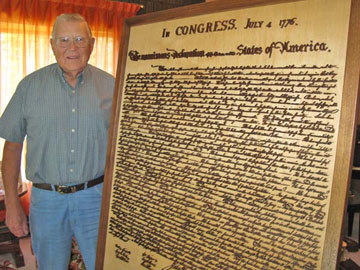
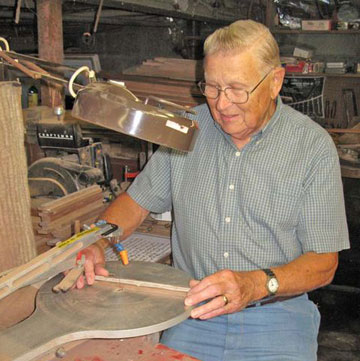
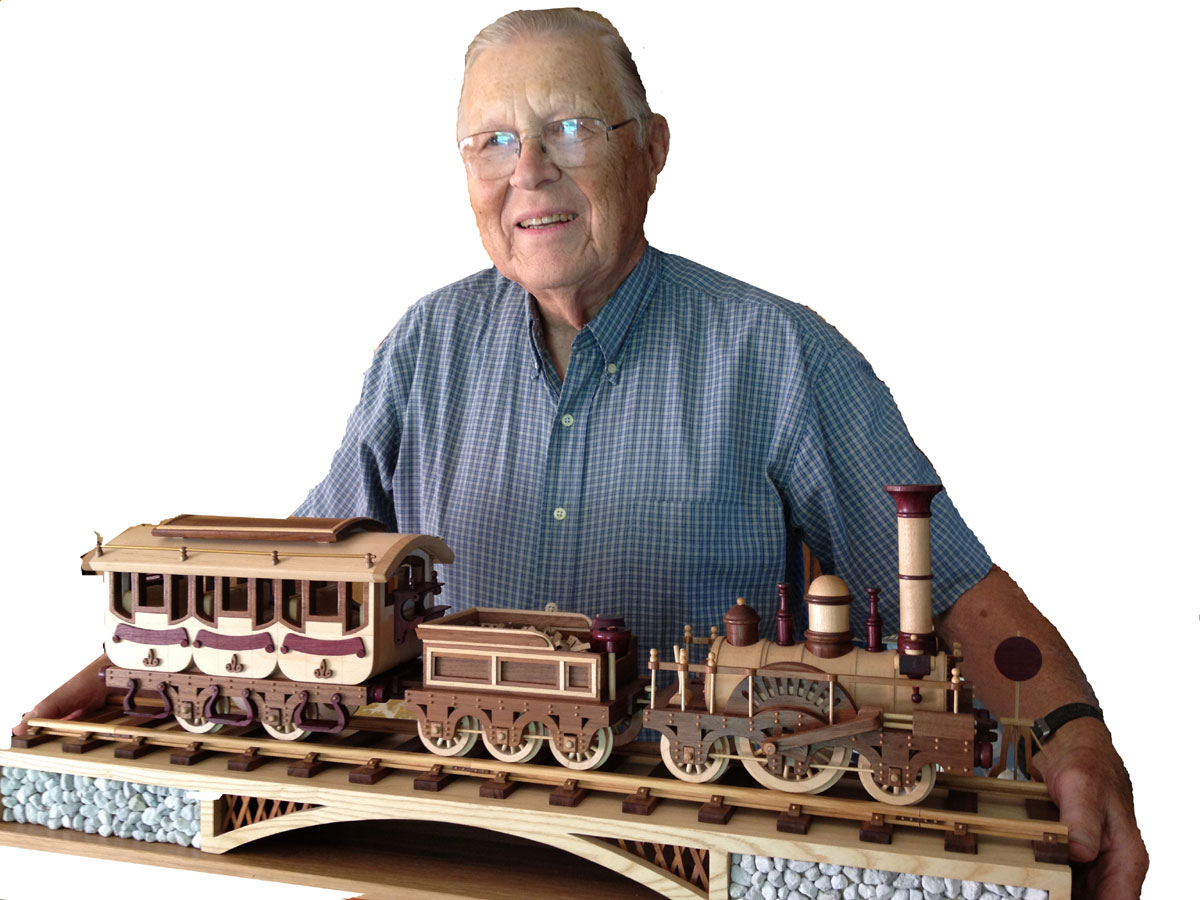
Navy Veteran Carves the Declaration of Independence


Navy Veteran Carves the Declaration of Independence

Visit with Charlie Kested, the 83-year-old Navy veteran and woodworker who carved the entire Declaration of Independence out of walnut using a scrollsaw.

Johnstown man pays tribute to Declaration of Independence - YNN, Your News Now

An 81-year old Johnstown man puts the finishing touches on a decade-long project, just in time to celebrate our nation's 234th birthday. As Mohawk Valley bureau reporter Dayana Perez tells us, his piece is a tribute to what many consider America's most important document.

http://centralny.ynn.com/content/video_stories/510094/johnstown-man-pays-tribute-to-declaration-of-independence/?ap=1&MP4 - video


Story:

Jul 8, 2012

Five Poems by Philip Appleman | BillMoyers.com

Five Poems by Philip Appleman
July 3, 2012

Philip-Appleman_0258_Guest
Philip Appleman
Poet

Philip Appleman is a renowned poet, novelist, and editor whose writing spans themes of religion, morality, love and Darwin. Known for his incisive social commentary and poetic imagination, Appleman has authored nine books of poetry, three novels, and six volumes of non-fiction. Much of Appleman’s most acclaimed work explores the life and theories of 19th century naturalist Charles Darwin. A scholar of Darwin, Appleman edited the critical anthologyDarwin, and wrote the poetry books Darwin’s Ark and Darwin’s Bestiary, earning him praise for illuminating the “overwhelming sanity” of Darwin’s thought with clarity and wit.

Other distinguished works include New and Selected Poems, Let There Be Light, Open Doorways, Summer Love and Surf, andKarma, Dharma, Pudding & Pie. His most recent book, Perfidious Proverbs, is a collection of satirical poems that expose the potential folly and hypocrisies of religion in our culture.

Appleman’s prolific writing has won him numerous awards, including a fellowship in poetry from the National Endowment for the Arts, the Castagnola Award from the Poetry Society of America, a Friend of Darwin Award from the National Center for Science Education, and the Humanist Arts Award from the American Humanist Association. His poetry and fiction have appeared in scores of publications including Harper’s Magazine, The Nation, New Republic, The New York Times, Paris Review, Poetry, Sewanee Review, and Yale Review.

Born in Indiana in 1926, Appleman went on to earn degrees from Northwestern University, the University of Michigan, and the University of Lyon. He served in the U.S. Army Air Corps during World War II and in the Merchant Marine after the war. After his many years as a distinguished Professor of English at Indiana University, Appleman moved to New York where he currently resides with his wife Marjorie, a playwright and his companion of 62 years.

===========
Known for his incisive social commentary and imagination, Philip Appleman is a renowned poet, novelist, and editor whose writing spans themes of religion, morality, love… and Darwin. Watch him read a number of poems below, and enjoy his conversation — including more readings — with Bill Moyers on Moyers & Company this weekend (Check your local listings).

Five Easy Prayers for Pagans | A Simple Explanation for Everything | The Trickle-Down Theory of Happiness | The Ant | On a Morning Full of Sun |

A real philosopher and visionary. So refreshing to hear someone who can see beyond the intellectual rubble left by blind faith in religions. Jo Darling

I agree wholeheartedly with Jo's comment. Philip Appleman is a very wise man that understands life's hurdles... Monte

Steve Horn | Sand Land: Frac Sand Mining in Western Wisconsin - Video Report by DeSmogBlog

Great work by Steve Horn... Read all his work Steve Horn's blog 


about Steve Horn
Steve Horn's blog


Full Post Source: Desmogblog (http://s.tt/1ejYE)


The rush to drill for unconventional gas, enabled by a process popularly known as "fracking," or hydraulic fracturing, has brought with it much collateral damage. Close observers know about contaminated water, earthquakes, and climate change impacts of the shale gas boom, but few look at the entire life cycle of fracking from cradle to grave.

Until recently, one of the most underlooked facets of the industry was the "cradle" portion of the shale gas lifecycle: frac sand mining in the hills of northwestern Wisconsin and bordering eastern Minnesota, areas now serving as the epicenter of the frac sand mining world.

The silence on the issue ended after several good investigative stories were produced by outlets in the past year or so, such as Wisconsin Watch, PR Watch, The Wisconsin State Journal, the Associated Press, The Wall Street Journal, Orion, EcoWatch, and most recently, Tom Dispatch. These various articles, all well worth reading, explain the land grab currently unfolding in the Midwest and the ecological damage that has accompanied it.

To put it bluntly, there could be no shale gas extraction without the sand. As Tom Dispatch's Ellen Cantarow recently explained,

That sand, which props open fractures in the shale, has to come from somewhere. Without it, the fracking industry would grind to a halt. So big multinational corporations are descending on this bucolic region to cart off its prehistoric sand, which will later be forcefully injected into the earth elsewhere across the country to produce more natural gas. Geology that has taken millions of years to form is now being transformed into part of a system, a machine, helping to drive global climate change.

Frac sand, which consists of fine-grained sillica, can cause the respiratory illness, silicosis. Washing the frac sand in preparation for the fracking process is also a water intensive process, particularly threatening in the age of increasing water scarcity in the United Statesand around the world.

"The state's water supplies are also threatened as sand mining destroys sandstone formations which serve as giant filters for local aquifers." Sara Jerving of PR Watch wrote. "The mining process can use thousands of gallons of water which can also deplete aquifers."

The "frac sand rush" has been an uphill battle for small towns and municipalities that are trying to fight, or at the very least, attempt to negotiate with large corporations, with compartively little governmental oversight to deal with corporate behemoths such as EOG Resources, mirroring in many important ways the shale gas rush.

Cities and concerned citizens have done their best to keep up with the boom, but have no precedent to look for, no previous legislation to protect themselves, their infrastructure (see: roads and heavy trucks rolling through), their groundwater and their air.
Enter "Sand Land"

To further introduce the world to the impacts of frac sand mining, DeSmogBlog presents "Sand Land," a short video report filmed and produced by Milwaukee, WI by photo-journalist and film-maker, Spencer Chumbley of 414 Wire, co-reported on with DeSmogBlog Research Fellow, Steve Horn. The film serves as a short audio-visual primer on the issue.

We encourage you to watch and share it with friends, colleagues, and family.


Stay tuned for much more to come from DeSmogBlog on one particularly powerful sand-mining corporation, EOG Resources, formerly known as the now infamous Enron Oil and Gas, a little explored fossil fuel industry giant that does it all: frac sand mining, fracking, pipelines, and LNG terminals.

Image credit: Sara Jerving | PRWatch

Farron Cousins | Hot Enough For Ya? Extreme Weather Events Consistent With Climate Change Science

Full Post Source: Desmogblog (http://s.tt/1h6dz)


Large portions of the U.S. are on fire. Record droughts currently encompass massive swaths of America. The areas not experiencing droughts have been inundated with flooding. Winter weather in many areas was almost non-existent. A few years ago, an Academy Award-winning film called “An Inconvenient Truth” warned wary Americans that all of these events would become the new normal due to climate change. But these are no longer warnings – this is the reality that we’re living in now.

It is becoming increasingly more difficult to ignore the evidence of extreme weather that surrounds all of us. And it isn’t just the United States. Every corner of the globe is experiencing the direct effects of climate change in some form or fashion. And again, we were warned that all of this was going to happen.

My hometown of Gulf Breeze, Florida feels like it's been a petri dish for climate change disaster stories. In the past month, we’ve had two separate droughts that were both ended by flash flooding. In between these events, we avoided a hit from pre-season tropical storm Debby, which turned eastward and drenched central Florida with torrential rains. Last weekend we had a heat index of 112 degrees, and I awoke this morning (again, after weeks of drought) to find half of my yard underwater due to coastal flooding.

In the U.S., the reality of climate change has certainly been an eye opener for many Americans.

This year has been like none we’ve ever seen. It began in the winter, when snowfall dropped to near-record lows, whereas the previous year had given us record amounts of snowfall. Some areas did see an increase in snowfall, but that was quickly offset by record-breaking high temperatures. Springtime also brought us record-breaking temperatures, and has now become the hottest Spring season on record. In March alone, a staggering 15,000 high-temperature records were broken. For the entire year, as of July 3rd, we’ve broken more than 40,000 high-temperature records in the U.S.

In January of this year, the U.S. witnessed at least 70 tornadoes. Since then, almost 800 additional tornadoes have been reported in the country.

And, for once, most of the media is actually paying attention. Here’s a recent piece from the Associated Press, via Huffington Post:
Among the extreme events…record-breaking wildfires in the West in the past two years, including in Colorado, where blazes recently damaged or destroyed nearly 350 homes and killed two people.

Last spring was the warmest in the Unites States since 1895, when records were first kept. For only the third time since hurricane records started in 1851, two hurricanes formed over the North Atlantic before the season officially began June 1.

Think Progress reported on several NBC affiliates that have sounded the alarm over the extreme weather events we’re seeing:
NBC Meteorologist Bill Karins said on Friday , “We’ve never really seen a heat wave like this in the month of June.” Sadly, in a few decades this will just be considered a normal June.

How hot is it? It is so hot that NBC Washington’s Chief Meteorologist, Doug Kammerer, explained on air “If we did not have global warming, we wouldn’t see this.”

CBSNews.com ran the following:
The United States is parched, with more than half of the lower 48 states experiencing moderate to extreme drought, according to a report released today (July 5).

Just under 56 percent of the contiguous United States is in drought conditions, the most extensive area in the 12-year history of the U.S. Drought Monitor. The previous drought records occurred on Aug. 26, 2003, when 54.79 percent of the lower 48 were in drought and on Sept 10, 2002, when drought extended across 54.63 percent of this area.

There are countless stories online quoting experts who are proclaiming “this is what climate change looks like.”

But that’s just the online print world. The mainstream media is a different story all together. According to Media Matters, the idea of “climate change” has been absent from most of the reporting on the devastating wildfires that have engulfed Colorado: The major television and print outlets largely ignored climate change in their coverage of wildfires in Colorado, New Mexico and other Western states. All together, only 3 percent of the reports mentioned climate change, including 1.6 percent of television segments and 6 percent of text articles.

These findings are on par with a previous Media Matters report from earlier this year, that showed that coverage of climate change and related issues fell by 90% on Sunday morning talk shows between the years 2009 and 2011, and by 72% on nightly news programs.

The recent extreme weather events have done little to sway the hardcore climate deniers, but the American public seems to be paying attention. They are starting to realize that this is no longer an issue where we can bury our heads in the sand. Climate change is happening, and that’s the sad reality in which we now live.

The "Monsanto Rider": Are Biotech Companies About to Gain Immunity from Federal Law?

If you would like to join the hundreds of thousands of concerned citizens who have already written to Congress in support of the DeFazio amendment, please sign our petition here.

Congressman Jack Kingston, Georgia, Chairman of the House Agriculture Appropriations Committee poses questions before the House Agriculture Appropriations Subcommittee in Washington, D.C., Tuesday, March 6, 2012. 
Congressman Jack Kingston, Georgia, Chairman of the House Agriculture Appropriations Committee poses questions before the House Agriculture Appropriations Subcommittee in Washington, D.C., Tuesday, March 6, 2012. Kingston was voted "legislator of the year for 2011-2012" by the Biotechnology Industry Organization, whose members include Monsanto and DuPont. (Photo: Bob Nichols / USDAgov) 

Sunday, 08 July 2012 10:26

While many Americans were firing up barbecues and breaking out the sparklers to celebrate Independence Day, biotech industry executives were more likely chilling champagne to celebrate another kind of independence: immunity from federal law.

A so-called "Monsanto rider," quietly slipped into the multi-billion dollar FY 2013 Agricultural Appropriations bill, would require – not just allow, but require - the Secretary of Agriculture to grant a temporary permit for the planting or cultivation of a genetically engineered crop, even if a federal court has ordered the planting be halted until an Environmental Impact Statement is completed. All the farmer or the biotech producer has to do is ask, and the questionable crops could be released into the environment where they could potentially contaminate conventional or organic crops and, ultimately, the nation's food supply.

Unless the Senate or a citizen's army of farmers and consumers can stop them, the House of Representatives is likely to ram this dangerous rider through any day now.

In a statement issued last month, the Center For Food Safety had this to say about the biotech industry's latest attempt to circumvent legal and regulatory safeguards:

Ceding broad and unprecedented powers to industry, the rider poses a direct threat to the authority of U.S. courts, jettisons the U.S. Department of Agriculture's (USDA) established oversight powers on key agriculture issues and puts the nation's farmers and food supply at risk.

In other words, if this single line in the 90-page Agricultural Appropriations bill slips through, it's Independence Day for the biotech industry.

Rep. Peter DeFazio (D-Ore.) has sponsored an amendment to kill the rider, whose official name is "the farmers assurance" provision. But even if DeFazio's amendment makes it through the House vote, it still has to survive the Senate. Meanwhile, organizations like the Organic Consumers Association, Center for Food Safety, FoodDemocracyNow!, the Alliance for Natural Health USA and many others are gathering hundreds of thousands of signatures in protest of the rider, and in support of DeFazio's amendment.

Will Congress do the right thing and keep what are arguably already-weak safeguards in place, to protect farmers and the environment? Or will industry win yet another fight in the battle to exert total control over our farms and food supply?

Biotech's 'Legislator of the Year' behind the latest sneak attack

Whom do we have to thank for this sneak attack on USDA safeguards? The agricultural sub-committee chair Jack Kingston (R-Ga.) – who not coincidentally was voted "legislator of the year for 2011-2012" by none other than the Biotechnology Industry Organization, whose members include Monsanto and DuPont. As reported by Mother Jones, the Biotechnology Industry Organization declared Kingston a "champion of America's biotechnology industry" who has "helped to protect funding for programs essential to the survival of biotechnology companies across the United States."

Kingston clearly isn't interested in the survival of America's farmers.

Aiding and abetting Kingston is John C. Greenwood, former US Congressman from Pennsylvania and now president of the Biotechnology Industry Organization. No stranger to the inner workings of Congress, Greenwood lobbied for the "farmers assurance provision" in a June 13 letter to Congress, according to Mother Jones and Bloomberg, claiming that "a stream of lawsuits" have slowed approvals and "created uncertainties" for companies developing GE crops.

Greenwood was no doubt referring to several past lawsuits, including one brought in 2007 by the Center for Food safety challenging the legality of the USDA's approval of Monsanto's Roundup Ready alfalfa. In that case, a federal court ruled that the USDA's approval of GMO alfalfa violated environmental laws by failing to analyze risks such as the contamination of conventional and organic alfalfa, the evolution of glyphosate-resistant weeds, and increased use of Roundup. The USDA was forced to undertake a four-year study of GMO alfalfa's impacts under the National Environmental Policy Act (NEPA). During the four-year study, farmers were banned from planting or selling the crop – creating that 'uncertainty" that Greenwood is so worried about.

The USDA study slowed down the release of GMO alfalfa, but ultimately couldn't stop it. As Mother Jones reports, in 2011, the USDA deregulated the crop, even though according to itsown study, the USDA said that "gene flow" between GM and non-GM alfalfa is "probable," and threatens organic dairy producers and other users of non-GMO alfalfa, and that there is strong potential for the creation of Roundup-resistant "superweeds" that require ever-higher doses of Roundup and application of ever-more toxic herbicides. The report noted that two million acres of US farmland already harbor Roundup-resistant weeds caused by other Roundup Ready crops.

In another case – which perhaps paved the way for this latest provision now before the House - the USDA in 2011 outright defied a federal judge's order to halt the planting of Monsanto's controversial Roundup-Ready GMO sugar beets until it completed an Environmental Impact Statement. The USDA allowed farmers to continue planting the crop even while it was being assessed for safety on the grounds that there were no longer enough non-GMO seeds available to plant.

Who loses if Monsanto wins this one?

Among the biggest losers if Congress ignores the DeFazio amendment and passes the "farmers assurance provision" are thousands of farmers of conventional and organic crops, including those who rely on the export market for their livelihoods. An increasing number of global markets are requiring GMO-free agricultural products or, at the very least, enforcing strict GMO labeling laws. If this provision passes, it will allow unrestricted planting of potentially dangerous crops, exposing other safe and non-GMO crops to risk of contamination.

As we've seen in the past, farmers who grow crops that have been inadequately tested and later found dangerous, or whose safe crops become contaminated by nearby unsafe crops, risk huge losses and potentially, lawsuits from their customers. Ultimately, the entire US agriculture market and US economy suffers.

We have only to look back to the StarLink corn and LibertyLink rice contamination episodes for evidence of how misguided this provision is. In October 2000, traces of an Aventis GM corn called StarLink showed up in taco shells in the U.S. even though the corn had not been approved for human consumption because leading allergists were concerned it would cause food allergies. The contamination led to a massive billion dollar recall of over 300 food brands. The 'StarLink' gene also turned up unexpectedly in a second company's corn and in US corn exports, causing a costly disruption to the nation's grain-handling system, and spurring lawsuits by farmers whose crops were damaged.

A similar disaster occurred for US rice farmers in 2006. In august of that year the USDA announced that mutant DNA of Liberty Link, a genetically modified variety of rice developed by Bayer CropScience, a then-German agri-business giant, were found in commercially-grown long-grain rice in Arkansas, Louisiana, Mississippi, Texas and Missouri. LibertyLink rice, named for Bayer's broad-spectrum herbicide glufosinate-ammonium, was never intended for human consumption. Following the announcement of contamination, Japan banned all long-grain rice imports from the U.S., and U.S. trade with the EU and other countries ground to a halt. Rice farmers and cooperatives were forced to engage in five long years of litigationagainst Bayer

CropScience in an attempt to recoup some of their losses.

All the other ways this provision is just plain bad

There's a reason we have laws like the National Environmental Policy Act (NEPA) and thePlant Protection Act of 2000, which was specifically designed "to strengthen the safety net for agricultural producers by providing greater access to more affordable risk management tools and improved protection from production and income loss . . .". The 'farmers assurance provision" is a thinly disguised attempt by the biotech industry to undermine these protections. Worse yet, it's an affront to everyone who believes the US judicial system exists to protect US citizens and public health.

Why should you be outraged about this provision? For all these reasons:

· The Monsanto Rider is an unconstitutional violation of the separation of powers.Judicial review is an essential element of U.S. law, providing a critical and impartial check on government decisions that may negatively impact human health, the environment or livelihoods. Maintaining the clear-cut boundary of a Constitutionally-guaranteed separation of powers is essential to our government. This provision will blur that line.

· Judicial review is a gateway, not a roadblock. Congress should be fully supportive of our nation's independent judiciary. The ability of courts to review, evaluate and judge an issue that impacts public and environmental health is a strength, not a weakness, of our system. The loss of this fundamental safeguard could leave public health, the environment and livelihoods at risk.

· It removes the "legal brakes" that prevent fraud and abuse. In recent years, federal courts have ruled that several USDA GE crop approvals violated the law and required further study of their health and environmental impact. These judgments indicated that continued planting would cause harm to the environment and/or farmers and ordered interim planting restrictions pending further USDA analysis and consideration. The Monsanto rider would prevent a federal court from putting in place court-ordered restrictions, even if the approval were fraudulent or involved bribery.

· It's unnecessary and duplicative. Every court dealing with these issues is supposed to carefully weigh the interests of all affected farmers and consumers, as is already required by law. No farmer has ever had his or her crops destroyed as a result. USDA already has working mechanisms in place to allow partial approvals, and the Department has used them, making this provision completely unnecessary.

· It shuts out the USDA. The rider would not merely allow, it would compel the Secretary of Agriculture to immediately grant any requests for permits to allow continued planting and commercialization of an unlawfully approved GE crop. With this provision in place, USDA may not be able to prevent costly contamination episodes like Starlink or Liberty Link rice, which have already cost farmers hundreds of millions of dollars in losses. The rider would also make a mockery of USDA's legally mandated review, transforming it into a 'rubber stamp' approval process.

· It's a back-door amendment of a statute. This rider, quietly tacked onto an appropriations bill, is in effect a substantial amendment to USDA's governing statute for GE crops, the Plant Protection Act. If Congress feels the law needs to be changed, it should be done in a transparent manner by holding hearings, soliciting expert testimony and including full opportunity for public debate.

If we allow this "Monsanto Rider" to be slipped into the FY 2013 Agricultural Appropriations bill, consumers and farmers will lose what little control we have now over what we plant and what we eat.

If you would like to join the hundreds of thousands of concerned citizens who have already written to Congress in support of the DeFazio amendment, please sign our petition here.

Making Biochar | Permaculture Ottawa

Great explanation by Ron St. Louis... Monte Hines
Full Post: http://permacultureottawa.ca/making-biochar/

by Ron St. Louis

What is biochar?

Biochar Definition http://en.wikipedia.org/wiki/Biochar
Why make biochar?

I have been experimenting with biochar because:
playing with fire is fun
our soil is really really sandy and needs amendments
we have lots of dead-fall
playing with fire and fire contraptions is really fun

I originally got the idea from this video. http://www.youtube.com/watch?v=RXMUmby8PpU A few years back it was the only thing I could find on biochar. Now there is tons of videos on how to make it yourself if you search YouTube.

If you are on Facebook also check out Sean Butler‘s post on a controlled test using biochar. Anxious to see those results. https://www.facebook.com/media/set/?set=oa.281848498509622&type=1
The Process

I recycled a 55 gallon steel barrel, a smaller barrel and used stovepipe. The stovepipe had a stepped edge (for stacking with other parts) that made it easy to fit into a hole I cut in the lid of the barrel with tin snips. Note the holes punched into the barrel to allow oxygen in. The stovepipe is there to allow for better updraft.


Here I used a barrel originally used for grape/wine juice that was in a plastic liner.Unfortunately the paint on the barrel does have to burn off during the first burn. Suggestions to avoid that would be appreciated.


Add split wood into the inner barrel. Make sure they aren’t too big or packed too tight because they won’t convert properly to char.


Here is a photo from the last batch I tried but didn’t convert all the way because the wood was too big and packed too tight.


Place the inner barrel with wood inside the larger barrel.


Flip it upright and center. With the barrel sitting loosely upside down it allows the gasses from the wood to escape releasing pressure from the bottom. This also prevents oxygen from entering and ‘burning’ the wood and instead ‘converting’ it to char. The gasses that escape also go through the fire and supposedly burn up for cleaner combustion.


Fill in the outside diameter with kindling. Here I just used deadfall branches from around the property but you could easily use smaller split wood.


Fill it up almost to the top and add some newspaper to help start the fire.


FIRE!!!
Notice that I’ve put it up off the ground to mitigate the risk of fire. Make sure you do it out in the open to avoid burning nearby trees. I just used some steel structure that was left on the property. You can also just set it up on a few cinder blocks or patio stones.


Bigger FIRE!!! Now that it is going put the lid on with the stovepipe. This is already pretty hot sobe very careful. Make sure you have thick leather gloves and thick clothes that you don’t mind getting dirty. A hammer helps seal the lid. The barrel I had also came with a sealing ring. If you can still get it on without burning yourself, put it on to ensure a good seal.


Lid on and secured. It will smoke a lot at first. This will get really hot so take this time and energy to throw a pan on the top of the lid where there is room to cook your dinner.


After a few minutes you can see the fire has worked its way down the barrel. Notice the flames in the holes at the bottom of the barrel.


After 15-40 minutes you will see the wood is still burning but very clean. There is no more smoke coming from the top but it is still really hot. This is especially fun to do this in the darkbecause the barrel glows red hot and you can see heat and flames come out from the top of the stovepipe.


After a few hours have passed the barrel should be cool enough to open up. As you see there is barely anything left at all in the outer barrel.


This is what you hope comes out of the inner barrel. Nice light and fully converted CHAR!!! This batch turned out great.


Add some water to stop the dust and break up the larger pieces. I just smash it up using a piece of firewood. Add this to your compost and soil to create rich black water and nutrient absorbent earth.

At our cabin we have a bucket we throw it into where the boys urinate to add in the nitrogen before mixing in with the compost.

And that, my friends, is how you can easily make your own biochar for fuel or to amend poor soil.

Hines Farm - Some Whitetail Fawns, Does, and Buck - Late June / Early July 2012


Hines Farm - Young Whitetail Buck, June 30, 2012


Hines Farm - Whitetail Doe With Twins, June 30, 2012


Hines Farm - Whitetail Twin Fawns, spotted July 2, 2012


Hines Farm - Whitetail Doe with Fawn Getting His Lunch, July 7, 2912