Aug 1, 2010

My TLUD's Bigger 'n Yours

Climate change, habitat destruction, overexploitation of resources--these trends threaten the very fabric of life on earth. Awareness is growing and our leaders are gradually responding. Future generations will look back at our times and the actions we took. I believe that Biochar is among the handful of "keystone technologies" that will truly make a difference. The kiln load (Gmelina mill scrap) must get up to around 280C before it will produce enough combustible gas to "kick over" into pyrolysis mode, then gases will burn in the kiln's fire chamber and generate sufficient heat to sustain pyrolysis until the entire load has been carbonized. Our kiln was designed to have combustible gas from a different source injected into the fire chamber to "prime" the kiln until it could produce enough combustible gas to sustain the reaction on its own. We opted for a biomass gasifier for this purpose. Nik Foidl designed a beast for us––a TLUD (top-lit updraft) sawdust gasifier a meter in diameter, capable of generating 200-350kW. That's a lot of hot! A blower injects air into a space in the base of the unit, and the perforated floor of the basket allows air to migrate upward through the sawdust. Squirt a bit of kerosene onto the surface of the sawdust and ignite to get it started. Then put down the hood and turn on the blower. The flame front migrates downward, toward its oxygen source, producing a mess of smoke (mix of combustible gases). A pair of air ports in the hood of the TLUD introduce more air, causing the smoke to burst into flames, and the hot exhaust gases are injected into the kiln. The TLUD is powered by a single large blower regulated by butterfly valves. The primary butterfly controls the total air introduced into the system. A "Y" and pair of butterfly valves control the relative amount of primary air, which is injected into the base and blows through the sawdust; and secondary air, which is injected into the hood to ignite the gases. Hot, hot hot! Know of a bigger TLUD? We'd love to hear about it!

Jul 30, 2010

What is Biochar? Eric Knight, Iowa 2010

Eric Knight talkes about the value of biochar as soil amendement and as a way of moving carbon back to the soil. From the Biochar Conference in Iowa June 2010.

Eric Knight ... I SHARE YOUR ENTHUSIASM! ...Monte

Grow Your Own Soil: Compost Crops - One Straw: Be The Change

Readers will note that I am HUGE on living soils. We moved into a dead, denuded landscape and have spent the past 5 years dutifully rebuilding them. The single most important thing in healing soils is to add organic matter – essentially getting carbon back into the soil. Why? Carbon is the primary building block of all life and it is the fuel of the soil food web -from the zillions of bacteria and miles of fungal hyphae to the worms that feed on them. We’ve been trucking in organic matter for years now – mostly wood chips, but also straw and manures; by the ton. In fact, over the past five years I would estimate that we’ve surpassed 20 tons of raw material that we’ve either added directly to our soils (manures), or mulched (wood chips and straw). That may sound like alot, but at least half of the carbon is lost to the air as part of the decomposition process (no fears for global warming as the carbon in wood chips and manure was atmospheric carbon just a year or so ago before it was sequestered by the plants), plus to add an inch to a 1/4 acre (11,000 sq ft) which is my yard (minus house and driveway) you need to have about 9 tons of compost. That’s 34 yards of finished compost, or over 100 cu yards of raw material. Helping others get to this point is why I own a dump truck.
The result is that our soil is teeming with life and the gardens are really starting to “pop” this year with trees adding multiple feet of growth, 5+ cuttings of the Russian Comfrey, and sunflowers over 8′ tall. We will continue to “uppen” our soils with compost and mulches for decades to come. But I am trying to do this on as low of inputs as possible. In the last 5 years we have built our garden soils up and the lawn is getting healthier every year. It is time to try to see how sustainable I can make this system. It is time to start growing my own soil.
To grow your own soil you need plants that pull carbon out of the atmosphere, which of course all plants do, but some do it really damn well. I must tip my hat strongly to John Jeavons and his work on sustainable gardening here, but for annuals the choices are not too hard – what gets really damn big, with a thick stalk? Think sunflowers, sorghum, corn, quinoa, amaranth, etc. Add in all the small grains if left to dry out into straw and you get the idea. Perennial crops are also money as well. There are a wealth of BIG plants in the tall grass prairie – my favorites are cupplant, giant Joe Pye weed, sunchokes, and the myriad perennial sunflowers like maximillian and ox eye. The true Big Guns in this area are rapid growth trees, often referred to as weeds, harvested as coppice such as willows, box elder, black locust, and even chestnut and ash. Other “weeds” like lambsquarter, ragweed, and buttonweed get 6′+ tall , and even invasives like buckthorn coppice well.
Today I spent an hour touring the back yard with my Big Az 10 cu ft mulch wheel barrow, my sickle, and my new brush axe pulling weeds, hacking down old raspberry canes from last year, cutting back insurgent sunchokes, and taking the 4th cutting off the 60 or so russian comfrey I have around the gardens. That produced an immense amount of green material – piling it into my utility trailer I easily had 80 cu ft. That is far too much nitrogen for a pile so then I got out my loppers and a pruning saw and took some prunings from the buckthorn out back and two of our willow shrubs. It wasn’t enough, but in a few years the 2 dozen box elders and willows I have planted will be on line. Here are the results.

about 100#'s of material, but dang is it bulky. Brush Axe is leaning on the trailer.
That is from one lap of the backyard – I can do this about 3-4 times a year at present. In years past I just threw all the weeds into the compost bins, but it doesn’t work too well as the stalky stuff takes too long and the full size leaves mat up. Now with the Bio-80 shredder it makes marvelous weed puree.

Entropy ala weeds. At least half that pile is/was comfrey so the compost will be awesome. The recycling bin is the chipped tree prunings - not enough to offset the greens, but its a start..
Now the Bio-80 is powered by gasoline, and I am likely to catch flak in the comments for burning dead dinosaurs to save the world. I agree- its not ideal. But I am building a transitional system and am not afraid to break some eggs to make an omelet. The chipper is only 5hp and ran for about 20 minutes using less than a cup of fuel. In future years I hope to find a way to power the chipper on methane from the ‘Midden or ethanol from a local co-op. But for now I’m in bed with BP on this one. One very cool option would be to use a chicken “shredder” to break down the green material – 4 layers in a confined pen would make short work of this over a week or so of adding an inch or two a day for the girls to scratch in. Of course that is illegal here. Working on that too…

This bin is 40" cubed and is about 66% full. This will settle almost 30% in the coming days. Making soil takes ALOT of plant material. Plant more trees!
Finally, it takes ALOT of plants to make a yard of compost. A yard of finished compost weighs about 550#’s. So the 100-150#’s of material that I put in, most of which was water that will evaporate out, is just a start. But every journey begins with a step.
I am very proud that this bin. When I add another weed lap in September, plus all the corn, cupplant, sunchokes, and sorghum stalks form the yard this fall, this cu yard of finished compost will be 100% homegrown. As the gardens mature, I will begin getting leaf litter from the trees and willow and box elder coppice to add to it. My gardens, minus paths, are about 3000 sq ft – that means that 4-5 cu yards could cover it all with .5″ of compost annually, which is alot if you are only maintaining fertility. I can do that in about 5 years if I add more coppice trees; I am convinced that I can sustain the fertility of my gardens without additional inputs.
We can do this.
Be the change!
-Rob

Another coalition of groups--this time agricultural--has just come out in favor of adding a Renewable Electricity Standard (RES) to the energy bill

The National Farmers Union, National Association of Wheat Growers, American Farmland Trust, and International Biochar Initiative signed onto the letter to Senate Democratic and Republican leaders. Notes the letter, "Inclusion of [the RES] will help America’s drive toward energy independence, re-invigorate rural communities through job growth and income generation for agriculture, and significantly improve the environment and the air we breathe," adding, "American agriculture stands ready to help meet the country’s clean energy needs." NFU President Roger Johnson commented, “We are very disappointed with ... Majority Leader [Harry Reid's] omission of an RES from the recently introduced energy legislation. America’s farmers and ranchers support the opportunity to increase energy production under an RES, and the Senate should have an opportunity to vote for it.” The agricultural groups' initiative follows a similar one a few days ago by a coalition of labor unions, utilities, environmental groups, and renewable energy organizations and adds to the growing drumbeat in support of the RES. Urge Senators NOW to put the Renewable Electricity Standard (RES) back in the energy bill! Majority Leader Reid has announced that the Senate will take up a slimmed-down energy bill without a Renewable Electricity Standard (RES). Tell your Senators NOW that the wind industry urgently needs an RES in the energy bill in order to thrive. E-mail your elected officials and tell them that, without an RES, the Senate is endangering at least 360,000 jobs: 85,000 currently employed in the wind energy industry and the potential 274,000 additional jobs created by an RES. AWEA CEO Denise Bode says, "A refusal to pass an RES is an attack on every American worker and consumer…Workers, families, and our country demand a new energy future. That future must emphasize new strategies that embrace clean, renewable sources of energy that reduce costs, create jobs, and enhance our national security." www.powerofwind.com/ By Tom Gray, www.awea.org/blog/

First Industrial Biochar Unit in Europe

The PYREG - Reactor is used for decentralized production of high quality biochar for agriculture. For more information see: www.ithaka-journal.net or www.swiss-biochar.com

Bacteria Bring Leaves Back From the Dead - ScienceNOW

When the leaves they depend on turn a deathly yellow in the fall, leaf miner moths (Phyllonorycter blancardella) perform CPR. Even as the rest of the leaf wilts, the patch surrounding a leaf miner larva stays a bright and photosynthetically active green. Now, a new study shows that these green islands spark to life thanks to bacteria living within the grubs themselves.

Like mammals, many insects host internal microbes called endosymbionts that help them digest meals, often passing these friends from generation to generation. Insect endosymbionts have also proven themselves keen inventors, developing new defenses for their hosts. "The more we look at endosymbionts in insects, the more people find interesting and new functions," says ecologist David Giron of the Université François Rabelais in Tours, France.

It seemed possible to Giron that bacteria like those in the genus Wolbachia, which dwell in leaf miners, could also rewire plant metabolism. Many microbes, including Wolbachia, carry a gene also found in plants that spurs some plant cells to make hormones called cytokinins, he says. Cytokinins, which delay death in plant cells, can spur green islands on their own and are plentiful in leaf-miner islands.

To determine whether the bacteria nurtured the green islands, Giron and colleagues gave some female leaf miners oral doses of insect-safe antibiotics to kill their microbial partners. The researchers allowed the insects to lay eggs as usual on apple-tree leaves. Larvae from untreated mothers were able to form green islands, but larvae from dosed moms were not. Without bacteria "you don't have green islands, and if you don't have green islands, you die," Giron says. The team reported the results online in the Proceedings of the Royal Society B.

The researchers don't yet know if Wolbachia bacteria are making cytokinins on their own or if they're triggering plant life support through other means. In a previous study, scientists discovered that birch tree–infecting leaf miners could churn out cytokinins, but they didn't investigate whether these hormones came from the insects or their endosymbionts. Regardless of how they work, the bacteria are valuable compatriots. In dying leaves, green islands buy the moths as much as an extra month to reproduce and grow, the researchers suspect. With that additional time, leaf miners may be able to sneak in an extra generation of grubs before winter.

"It's a beautiful example of how an organism can solve a major problem by getting into a [mutually beneficial] relationship with a microbe," says chemical ecologist Ian Baldwin of the Max Planck Institute for Chemical Ecology in Jena, Germany. He says there are a lot of unanswered questions, such as whether Wolbachia living outside of insect bodies can still manage this breath of life. But the study shows just how much an insect's success is the work of its inner bugs, he says. "One can safely say that most insects ... are just Trojan horses."

Jul 29, 2010

How To Care For A Miscanthus Giganteus - www.WindDancerGarden.com

Chapters from The Post Carbon Reader are available now for download!

FOUNDATION CONCEPTS: Beyond the Limits to Growth
By Richard Heinberg • July 27, 2010

The underlying premise of the book (The Post Carbon Reader) is irrefutable: At some point in time, humanity's ever-increasing resource consumption will meet the very real limits of a planet with finite natural resources. We believe that time has come.

SMART DECLINE: The Buffalo Commons Meets Buffalo, New York
By Frank and Deborah Popper • July 19, 2010

In 2002, after decades of trying to restart economic development like most other Rust Belt cities, Youngstown made a radical change in approach. The city began devising a transformative plan to encourage some neighborhoods to keep emptying and their vegetation to return. The plan, still early in its implementation as we write would raze...

RESILIENCE: Personal Preparation
By Chris Martenson • July 6, 2010

My "standard of living" is a fraction of what it formerly was, but my quality of life has never been higher. We live in a house less than half the size of our former house, my beloved boat is gone, and we have a garden and chickens in the backyard...

CITIES: The Death of Sprawl
By Warren Karlenzig • June 23, 2010

In April 2009—just when people thought things couldn’t get worse in San Bernardino County, California—bulldozers demolished four perfectly good new houses and a dozen others still under construction in Victorville, 100 miles northeast of downtown Los Angeles...

WATER: Adapting to a New Normal
By Sandra Postel • June 22, 2010

Water, like energy, is essential to virtually every human endeavor. It is needed to grow food and fiber, to make clothes and computers, and, of course, to drink. The growing number of water shortages around the world and the possibility of these shortages leading to economic disruption, food crises, social tensions, and even war suggest that the challenges posed by water in the coming decades will rival those posed by declining oil supplies...

Jul 28, 2010

Build-It-Solar Blog

Renewable energy projects you can build. Keep up-to-date on what's new on the Build-It-Solar website, and discuss renewable energy topics.

Plans for solar thermal, PV, Wind, Heating, Cooling, Cooking, and energy saving projects for Do It Yourselfers

Build It Solar -- free plans for hundreds of solar projects More than 500 renewable energy and conservation projects you can build.

Jul 27, 2010

eGenesis Industries : Suppliers of continuous BIOCHAR & Bio-Energy Units

alpha
pyrolysis graphFeatures of these units:

1. Clean and simple continuous feed operation.

2. Energy negative operation.

3. 2-Stage Reactor chamber to separate heavy condensable gaseous compounds (which can be used for organic herbicides & pesticides etc) from the valuable pyrolysis (syngas) energy gases.

4. Low grade waste exhaust gases are utilized to pre-dry feed stock material to increase overall efficiency and reduce CO2 emissions.

5. Variable speed drive.

6. Variable operating temperatures.

7. Rugged design for durability.

8. Very few wearing parts

9. Low cost replacement parts.

10. Designed to handle a variety of feedstock material from cereal straw to feedlot waste and timber based wastes.

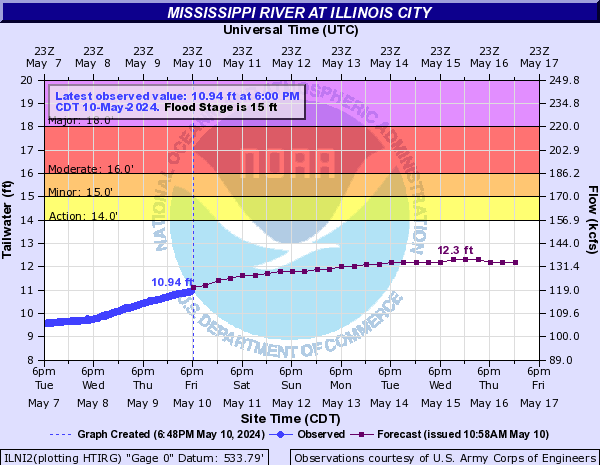
Advanced Hydrologic Prediction Service: Quad Cities: Mississippi River at Illinois City

Advanced Hydrologic Prediction Service: Quad Cities: Mississippi River at Illinois City
Mississippi River at Illinois City

Jul 25, 2010

DOE - Fossil Energy Techline: DOE Launches "Gasifipedia" Website

Online Collection of Introductory and In-Depth Resources Promotes Understanding of Gasification Technology Washington, DC — The Office of Fossil Energy’s National Energy Technology Laboratory (NETL) has launched a new public website called "Gasifipedia," a comprehensive online collection of resources to promote better understanding of gasification technology. Gasification offers an alternative to more established ways of converting feedstocks such as coal and biomass into useful products such as electricity or fuels. It is anticipated to be the technology of choice for future near zero-emissions, coal-based plants that produce power, fuels, and/or chemicals. Gasification is a technological process that uses heat, pressure, and steam to convert any carbon-based raw material into synthesis gas, or syngas. Composed primarily of carbon monoxide and hydrogen, syngas has a variety of uses; for example, it can be refined into pure hydrogen, transformed into liquid transportation fuels, or used to create electricity. The advantages of gasification, particularly in the generation of electricity from coal, may make it an increasingly important part of the world’s energy and industrial markets. The use of gasification in more than 20 industrialized countries, and the diversity of its products, illustrate the enormous potential for the continued growth of the gasification industry. The Gasifipedia website contains both introductory and in-depth information about gasification fundamentals, supporting technologies, gasification applications, environmental benefits, and the status of the latest research and development. Accessible from the NETL website, Gasifipedia features the following sections: Introduction to Gasification provides an overview of the gasification process, how the technology has been used in the past, and what forces have caused recent interest in the technology. Gasification in Detail delves into the chemical reactions taking place during the gasification process, and provides an introduction to the various types of gasifiers. Supporting Technologies details the other supporting technologies used in a typical gasification plant that are integrated with the gasification island. These technologies include coal storage and feed preparation, air separation, syngas cooling and heat recovery, syngas cleanup and conditioning, power train, and syngas conversion processes. Applications of Gasification Technology describes the numerous types of gasification facilities: integrated gasification combined cycle (IGCC) for electrical power, coal to liquid fuels, coal to synthetic natural gas, coal to hydrogen, coal to chemicals, and co-generation plants. Main Advantages of Gasification discusses the main reasons why gasification is considered the best clean-coal technology option for future near-zero-emissions power, fuel, and chemical plants. Gasification Research and Development details the wide range of research, development, and demonstration activities being conducted to improve the efficiency, feedstock and product versatility, and economics of gasification processes. As part of the Energy Department’s efforts to tap the full potential of the America’s abundant fossil energy resources in an affordable and environmentally acceptable manner, FE’s Advanced Integrated Gasification Combined Cycle program supports development of advanced gasification-based technologies that will reduce the cost of coal-based IGCC plants, improve thermal efficiency, and achieve near-zero atmospheric emissions of all pollutants.

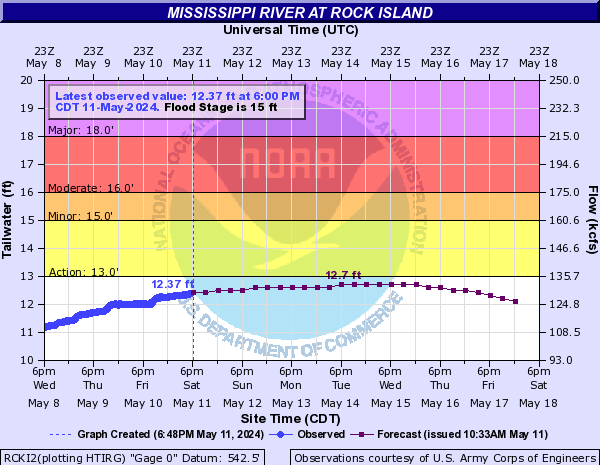
Mississippi River Basin Forecast - River Watch

LINK - Mississippi River Basin Forecast - River Watch

MISSISSIPPI RIVER and Major Tributaries

RIVER FORECASTS TAKE INTO ACCOUNT PAST PRECIPITATION...AS WELL AS PRECIPITATION AMOUNTS EXPECTED 24 HOURS INTO THE FUTURE FROM THE FORECAST ISSUANCE TIME.

Jul 24, 2010

Major Flooding Quad City Area coming Monday Tuesday and Wednesday - Significant Rain Last 24 Hours 07_24_2010_1247


Daily River Forecasts


000

FGUS53 KDVN 241841

RVDDVN

IAC011-019-031-045-055-057-061-087-095-097-101-103-105-107-111-113-

115-139-163-177-183-ILC011-015-067-071-073-085-109-131-155-161-177-

187-195-MOC045-199-251441-

DAILY RIVER AND LAKE SUMMARY

NATIONAL WEATHER SERVICE QUAD CITIES IA IL

141 PM CDT SAT JUL 24 2010


RIVER FORECASTS TAKE INTO ACCOUNT PAST PRECIPITATION...AS WELL AS

PRECIPITATION AMOUNTS EXPECTED 24 HOURS INTO THE FUTURE FROM THE

FORECAST ISSUANCE TIME.


ADDITIONAL RIVER AND WEATHER INFORMATION IS AVAILABLE AT

WWW.WEATHER.GOV/QUADCITIES .


.B DVN 0724 C DH07/DC1007241340/HT/HG/

.B1 DRD+1/HTIFF/HGIFF/DRD+2/HTIFF/HGIFF/DRD+3/HTIFF/HGIFF/

.B2 DRD+4/HTIFF/HGIFF/DRD+5/HTIFF/HGIFF

:

:------------------------------------------------------------------

: FLD 7 AM ********* FORECAST *********

: ID LOCATION STG STG SUN MON TUE WED THU

:------------------------------------------------------------------

: MISSISSIPPI RIVER

DLDI4 :DUBUQUE LD11 16: 14.3//15.8//15.5//14.7//13.7//12.8/

DBQI4 :DUBUQUE 17:/16.2//17.9//17.7//17.1//16.3//15.1

BLVI4 :BELLEVUE LD12 17: 15.3//17.6//18.0//17.3//16.3//15.3/

FLTI2 :FULTON LD13 16: 12.8//16.3//17.9//18.0//17.3//16.1/

CMMI4 :CAMANCHE 17:/14.8//17.5//18.6//18.8//18.2//17.4

LECI4 :LE CLAIRE LD14 11: 8.3//11.3//12.4//12.6//12.1//11.3/

RCKI2 :ROCK ISLAND LD15 15: 11.6//15.1//17.1//18.2//18.5//17.9/

ILNI2 :ILL. CITY LD16 15: 9.8//13.0//15.6//17.4//18.0//17.8/

MUSI4 :MUSCATINE 16:/11.5//14.6//17.2//18.8//19.5//19.2

NBOI2 :NEW BOSTON LD17 15: 11.6//14.1//16.6//18.2//19.3//19.3/

KHBI2 :KEITHSBURG 14:/11.3//12.7//14.8//16.6//17.7//18.0

GLDI2 :GLADSTONE LD18 10: 7.7// 8.8//11.0//12.8//13.9//14.4/

BRLI4 :BURLINGTON 15:/12.3//13.4//14.9//16.5//17.8//18.6

EOKI4 :KEOKUK LD19 16: 12.8//13.1//14.8//16.8//18.5//19.2/

GGYM7 :GREGORY LANDING 15:/14.7//14.8//15.5//17.3//19.1//20.4

:

: WAPSIPINICON RIVER

DEWI4 :DE WITT 11:/ 8.0// 9.9//11.4//11.3//12.1//13.3

:

: CEDAR RIVER

CIDI4 :CEDAR RAPIDS 12:/ 6.5// 7.4// 8.9// 9.9//10.4// 9.9

:

: IOWA RIVER

IOWI4 :IOWA CITY 22:/19.9//19.9//19.9//19.9//19.9//19.9

LNTI4 :LONE TREE 15:/13.1//13.4//13.1//13.1//13.1//13.0

WAPI4 :WAPELLO 20:/17.6//18.2//19.0//19.4//20.3//21.3

:

: DES MOINES RIVER

KEQI4 :KEOSAUQUA 22:/22.4//23.9//23.7//22.5//22.1//22.0

SFLM7 :ST FRANCISVILLE 18:/22.0//22.5//22.9//21.7//21.2//21.0

:

: ROCK RIVER

CMOI2 :COMO 10:/ 6.5//11.8//12.1//11.2//10.3// 9.6

JOSI2 :JOSLIN 12:/ 8.9//13.7//16.1//17.0//16.7//15.9

MLII2 :MOLINE 12:/ 9.3//11.2//12.9//13.9//13.9//13.5

.END

Solar Panels - How to build - 45 watt Harbor Freight Kit Review

Un-boxing and assembling the 45 Watt Harbor Freight Solar Panel kit. My Brother and I got this kit for Christmas and set it up on a sunny day in December. Basic assembly out of the box with a little bit of rigging. No tools necessary. Optional tools used: tack welder, vice grips, file, and knife if you have one. Awesome, lots of fun. Works good.

Jul 21, 2010

The Story of Cosmetics, released on July 21st, 2010

The Story of Cosmetics, released on July 21st, 2010, examines the pervasive use of toxic chemicals in our everyday personal care products, from lipstick to baby shampoo. Produced with Free Range Studios and hosted by Annie Leonard, the seven-minute film by The Story of Stuff Project reveals the implications for consumer and worker health and the environment, and outlines ways we can move the industry away from hazardous chemicals and towards safer alternatives. The film concludes with a call for viewers to support legislation aimed at ensuring the safety of cosmetics and personal care products.

Jul 20, 2010

Biochar: Panacea or peril?

By Francesca Rheannon Green Right Now

Biochar has emerged over the last couple years as a ray of hope on the otherwise bleak horizon of the planet’s environmental future. It has been hailed as a possible solution to climate change, world hunger, and rural poverty — though doubts are being raised in some quarters.

Last year, some of the world’s most eminent biochar experts gathered for a biochar conference at the University of Massachusetts-Amherst to discuss this ancient technology that is getting a new look by scientists, governments and investors. To the packed audience, this promising technology sounded like a panaceafor a whole host of problems. Biochar, the speakers said, could soak up large amounts of carbon from the atmosphere, supercharge soil fertility to feed the world’s hungry, promote jobs and economic opportunities for farmers, safely get rid of animal and plant waste, heat buildings greenly, and slash the kind of fertilizer use that is creating vast dead zones in coastal waters from nitrogen runoff.

“We see the synergisms in terms of food security, energy security, rural economic development and climate change working together,” the USDA’s David Laird explained between conference sessions. Laird runs the biochar research program at the agency’s National Laboratory For Agriculture and The Environment in Ames, Iowa.

Created by burning plant matter or animal wastes at low temperatures (pyrolysis), biochar has been around for centuries. The ancient indigenous civilizations of the Amazon may have supported their large populations on the rich soil, called “terra preta”, they created when they made charcoal – soils far more fertile than even those naturally occurring in the rainforest. These soils not only yield more crops, they also – critically for our warming planet — store carbon, sequestering it in the ground where it can be kept safely out of the atmosphere for hundreds or even a thousand years.

But can what the ancients did be replicated today?

Critics charge that the Amazonian terra preta was built up slowly over centuries in a process we still don’t understand. They question whether we know how to make biochar stable enough to sequester carbon over the centuries we will need to bring the earth’s atmosphere back within pre-fossil fuel era limits.

Biochar and the carbon cycle (Image: Cornell University)

But Cornell soil scientist Johannes Lehmann, author of the definitive scientific study of biochar, said in an interview last week that the evidence is getting stronger that biochar can store carbon in the soils safely over the long term. “Biochar is stable,” he says. “Charring prolongs the life and increases the stability by 1.5 and 2 orders of magnitude; instead of half of the carbon in the soil decomposing in ten years, it will take a thousand years to decompose.”

How long it really takes depends on where you are, Lehmann cautioned. “For a leaf falling in Alaska, the carbon will normally stay in the soil in a hundred years (without charring); in Nigeria, it will only stay a week,” he says “but the critical point is that charring increases stability everywhere.”

David Laird says the problem is that biochar is not a simple system. “We think of charcoal and immediately we think of having a barbecue in the backyard and a bag of charcoal. But the reality is, there are many different forms of charcoal.” There’s good char and bad char, he told me – and what may be good on one type of soil may be bad for another – something biochar entrepreneurs need to know to make sure they use the right kind of char under the right conditions. “We need to think about char by soil, by crop, by climate interactions, and ultimately optimize systems that work.”

But other problems may not be so easily remedied by providing better scientific information to entrepreneurs. Climate change journalist George Monbiot set off a fierce debate last year when he lambasted biochar as more hype than hope and charged that “charleaders” like NASA climatologist Jim Hansen and scientistJames Lovelock (creator of the Gaia Hypothesis) would be “pyrolising the planet in the name of saving it.”

The problem stems not so much from the science as from the business model for biochar. Bringing biochar into the market for trading carbon credits – which is being considered by the United Nations Framework Convention on Climate Change (UNFCCC) for inclusion in UN Certified Emission Reductions (CER) and Clean Development Mechanism (CDM) – would kickstart biochar production on an industrial scale. It would create a market for biochar carbon offsets that polluters would buy. That means biochar companies would need enough biomass to fuel their furnaces – and their bottom lines. That could mean more than a billion hectares worldwide devoted to biochar.

Where would the biomass on such a massive scale come from? From monocultural tree plantations, which could take over arable land, be carved out of existing natural forests, or displacepastoralists and nomads from so-called “marginal” lands – lands that don’t have a commercial value on the global market, but that provide habitat for diverse species and sustenance for the largely poor people who depend on them. And if native forests are cut down to feed biochar furnaces, their ability to capture carbon out of the atmosphere will be lost.

Johannes Lehmann says carbon trading mechanisms must look at the full life cycle of the biochar getting the credits. For example, is it displacing natural forests without replacing them? Is it being transported long distances using fossil fuels? Is it using more energy to produce char than it saves? Is it staying long enough in the soil? He advocates using agricultural waste, like rice straw in India, which is already being burned but not being turned into char or being returned to the soil.

But biochar doesn’t have to be produced on a large-scale commercial basis in order to accomplish the wonders for which it’s been touted. Small farmers all over the world can pyrolize their agricultural waste, turn it into energy for heat and use it to enhance soil fertility. Small-scale biochar technology is not expensive – you can build a tin-can pyrolizer in your garage, and backyard inventors are creating models that can be used on the small to medium scale for farms and communities.

Municipal governments can use it to turn garbage into compost and energy. Portable biochar furnaces could, for example, be leased from local manufacturers in western states to turn forests devastated by the pine bark beetle into usable fertilizer. (They may have to compete with those who want these dead pine trees for biofuel).

The real question is: Will biochar become a feedstock for profits by global companies who use their clout to water down or kill environmental regulations? Or will it be a feedstock fueling solutions to humanity’s most pressing problems? The jury is still out.

For more about biochar see these resources:

Francesca Rheannon writes about sustainability and corporate social responsibility. She is a contributing writer for CSRwire.com and co-manages the CSRwire blog, Talkback. She is also host and producer of the weekly radio show and podcast, Writers Voice.

Jul 19, 2010

The Necessity of Agriculture

an essay by wendell berry. Read it, along with Louis Bromfield’s Malabar Farm.

THE NECESSITY OF AGRICULTURE
By Wendell Berry, from a May 16 speech given in acceptance of the annual Louis Bromfield Society Award. Novelist and conservationist Louis Bromfield (1896–1956) was the author of over thirty works of fiction and non-fiction, including the Pulitzer Prize–winning novel Early Autumn. Berry’s new collection of poems, Leavings, was published by Counterpoint in October. His essay “Faustian Economics” appeared in the May 2008 issue of Harper’s Magazine.

I read Louis Bromfield’s Pleasant Valley and The Farm more than forty years ago, and I am still grateful for the confirmation and encouragement I received from those books. At the time when farming, as a vocation and an art, was going out of favor, Bromfield genuinely and unabashedly loved it. He was not one of those bad pastoral writers whose love for farming is distant, sentimental, and condescending. Bromfield clearly loved it familiarly and in detail; he loved the work and the people who did it well.


In any discussion of agriculture or food production, it would be hard to exaggerate the importance of such love. No doubt there are people who farm without it, but without it nobody will be a good farmer or a good husbander of the land. We seem now to be coming to a time when we will have to recognize the love of farming not as a quaint souvenir of an outdated past but as an economic necessity. And that recognition, when it comes, will bring with it a considerable embarrassment.

How great an embarrassment this may be is suggested by a recent article in the Wall Street Journal about Japan’s effort to “job-train” unemployed urban young people to be farmers. This is a serious, even urgent, effort. “Policy makers,” the article says, “are hoping newly unemployed young people will help revive Japan’s dwindling farm population. . . . ‘If they can’t find workers over the next several years, Japan’s agriculture will disappear,’ says Kazumasa Iwata, a government economist and former deputy governor of the Bank of Japan.” But this effort is falling significantly short of success because “many young people end up returning to cities, unable to adjust to life in the countryside.” To their surprise, evidently, farming involves hard work, long hours, and getting dirty—not to mention skills that city-bred people don’t have. Not to mention the necessity of loving farmwork if you are going to keep at it.

Even so, the prospect of reviving agriculture in Japan is brighter than in the United States. In Japan 6 percent of the population is still farming, as opposed to 1 or 2 percent of our people. And in Japan, as opposed to the United States, policymakers and economists seem to be aware of the existence of agriculture. They even think agriculture may be a good thing for a nation of eaters to have.

If agriculture and the necessity of food production ever penetrate the consciousness of our politicians and economists, how successful will they be in job-training our overeducated, ignorant young people to revive our own aging and dwindling farm population? What will it take to get significant numbers of our young people, white of collar and soft of hands, to submit to hard work and long days, not to mention getting dirty? In my worst, clearest moments I am afraid the necessity of agriculture will not be widely recognized without the sterner necessity of actual hunger. For half a century or so, our informal but most effective agricultural policy has been to eat as much, as effortlessly, as thoughtlessly, and as cheaply as we can, to hell with whatever else may be involved.

Such a policy can of course lead to actual hunger.

In Goethe’s Faust, the devil Mephistopheles is fulfilling some of the learned doctor’s wishes by means of witchcraft, which the doctor is finding unpleasant. The witches cook up a brew that promises to make him young, but Faust is nauseated by it. He asks (this is Randall Jarrell’s translation):

Has neither Nature nor some noble mind Discovered some remedy, some balsam?
Mephistopheles, who is a truth-telling devil, replies:
There is a natural way to make you young. . . . Go out in a field And start right in to work: dig, hoe, Keep your thoughts and yourself in that field,
Eat the food you raise . . . Be willing to manure the field you harvest. And that’s the best way—take it from me!— To go on being young at eighty.
Faust, a true intellectual, unsurprisingly objects:
Oh, but to live spade in hand— I’m not used to it, I couldn’t stand it. So narrow a life would not suit me.
And Mephistopheles replies: Well then, we still must have the witch.

Lately I’ve been returning to that passage again and again, and every time I read it I laugh. I laugh because it is a piece of superb wit, and because it is true. Faust’s idea that farm life is necessarily “narrow” remains perfectly up to date. And it is still true that to escape that alleged narrowness requires the agency of a supernatural or extrahuman power—though now, for Goethe’s witchcraft, we would properly substitute industrial agriculture.

This process from witchcraft to industrial agriculture does not seem to be especially happy. We could be forgiven, I think, if we find it horrifying. Farming does involve working hard and getting dirty. Faust, perhaps understandably, does not love it. To escape it, for a while at least, he has only to drink a nauseating beverage concocted by witches. But we, who have decided as a nation and by policy not to love farming, have escaped it, for a while at least, by turning it into an “agriindustry.” But agri-industry is a package containing far more than its label confesses. In addition to an array of labor-saving or peoplereplacing devices and potions, it has given us massive soil erosion and degradation, water pollution, maritime hypoxic zones; destroyed rural communities and cultures; reduced our farming population almost to disappearance; yielded toxic food; and instilled an absolute dependence on a despised and exploited force of migrant workers.

This is not, by any accounting, a bargain. Maybe we have begun to see that it is not, but we have only begun. We have ahead of us a lot of hard work that we are not going to be able to do with clean hands. We had better try to love it.

Louis Bromfield's Malabar Farm - man whose vision made him an early supporter of sustainable agricultural practices

Louis Bromfield's Malabar Farm is a living memorial to a man whose vision made him an early supporter of sustainable agricultural practices in the United States. He used his literary fame to rebuild several farms in Ohio, one of which was a favorite stop for some of Hollywood's best-known actors. In fact, Humphrey Bogart and Lauren Bacall were married there.

Audio Links

Radio Interview about farming 

Speech about soil conservation 

A 1946 Radio Interview about the food crisis 


A short documentary about the life and farming practices of Mansfield, OH native Louis Bromfield.

This video was used in "The Man Who Had Everything," a documentary produced by WOSU about the writer-turned-farmer's life.

Find more info about it here:
http://www.wosu.org/television/local-...

Jul 17, 2010

Building the Biocarbon Economy: — Climate Solutions

The biocarbon paradigm aims at leveraging plant growth and rich soils to halt the accumulation of carbon dioxide in the atmosphere and then to achieve a global turnaround. By making nature a climate ally humanity can actually begin to draw down carbon dioxide toward levels that prevailed before we began massively consuming fossil fuels. 

This is a series of briefings on biocarbon, specially focused on how the Pacific Northwest can mount regional initiatives to accelerate biocarbon progress:


Building the Biocarbon Economy: How the Northwest Can Lead
Full briefings series in one document

Jul 14, 2010

TERRA PRETA

GREENPOWERSCIENCE | This is our enriched soil, about 1/2 an acre:-)

Ames Tribune > Experts pioneer new technology at Biochar Conference

Weihua Deng, assistant scientist with the Center for Sustainable Environmental Technology, guides attendees of the U.S. Biochar Initiative Conference on a tour of Iowa State’s new Biorenewables Research Laboratory Wednesday in Ames."

By James Pusey
Staff Writer

Though biochar is a promising agricultural technology, few people know what it actually is.

A conference held in Ames this week aimed to help spread the word about biochar’s potential included invitations to some 270 scientists, industry representatives and entrepreneurs from around the world.

The 2010 U.S. Biochar Initiative Conference was from June 27 to 30 at the Scheman Building and focused on presenting the latest biochar research, deciding next actions and connecting researchers with industry representatives and entrepreneurs.

Biochar is one of the by-products of fast pyrolysis, the process used at Iowa State University’s BioCentury Research Farm to create bio-oil from organic material. Researchers have found that the dark, charcoal-like powder left over from pyrolization can be returned to the soil and vastly improve the quality of low-grade soils.

Harry Stine, president and founder of the Stine Seed Company in Adel, said he was first introduced to biochar when he stumbled across a highly productive farm in Germany where farmers were adding char from a kiln to its soil. Curiosity drove him to start his own biochar experiments.

“Adding the charcoal initially doubled our yield,” Stine said. “Now we’ve tripled our yields from what we had.”

Research being conducted at ISU has found that biochar is most effective on low-quality soils, but has little effect on good soils. However, Stine said scientists have yet to find an instance where putting biochar on soil has had harmful effects, and he doubts one could apply too much biochar to the soil.

“At first, we started adding biochar at low rates because we thought you could hurt stuff by adding too much,” he said. “Today, I find that hard to believe.”

Most conference attendees were from around the United States, but some traveled from as far away as Asia, Africa and South America.

Gerard Cornelissen, a researcher with the Norwegian Geotechnical Institute, said he was impressed by the potential benefits of biochar.

“It’s almost too good to be true, the win-win’s to be had,” Cornelissen said, “especially if we can help the poorest farmers on the worst soils. Then it’s a fantastic concept.”

Among the sponsors of the conference was the International Biochar Initiative, which has been in existence since 2007 and aims to further biochar’s cause by making changes in public policy. Executive Director Debbie Reed said the next step is for scientists to define exactly what biochar is, classify it and create standards for its production.

Thayer Tomlinson, the organization’s communication director, said the conference was the second held in the United States. The first took place in Boulder, Colo., last year.

“This is a great opportunity for everyone to come together, share research, but also share their experiences and talk about what they want to see out of this emerging industry,” Tomlinson said. “It’s the top of the field here.”

James Pusey can be reached

at (515) 663-6922

or jpusey@amestrib.com.

Beyond Farmers Markets: Building a Local Food System in Davenport, Iowa

by Alta Price, M.D.

The Quad-City Times ran a great opinion piece last Sunday written by Dan Carmody. Mr. Carmody lived and worked in Iowa, eventually moved into economic development in Rock Island, Illinois, then Indiana, and now works for Eastern Market Corp, a non profit local public market in Detroit.
The city of Davenport is trying to decide what to do with the Freight House building, part of which is used by the city’s most successful farmer’s market. Mr. Carmody has a wonderful vision for how Davenport could center a local food system around the Freight House. I’ll quote a few paragraph’s from the opinion piece, but encourage you to read the whole article.


The local food movement is not just about farmers markets. It’s about recalibrating the system we have developed to feed ourselves. Encouraging more local production and the direct sale of food from producer to consumer is a great start, but food systems’ other key components — processing, distribution, retailing and education — all need to be reassessed and modified to become more local, sustainable, viable and equitable. Local food system work is about the greenest thing a community can do.

He then gives specific examples of what could be done by Davenport at the Freight House to meet these goals. He also emphasizes the collaborative effort necessary to create a hub for a local food system, suggesting that the City of Davenport partner with Augustana College, the county extension services, and the Quad City Botanical Center. The type of projects he proposes would be appropriate to any city in Iowa developing a local food system.
He also makes that point that conventional agriculture and economic developers are skeptical of the local food movement, while local food activists sometimes advocate revolution rather than evolution. Both sides need to work together to gradually move towards a more environmentally sustainable, economically viable system.
The success of the microbrewery movement demonstrates that this approach is both feasible and economically advantageous.

He concludes
his article:


Collectively, we cannot feed ourselves only from local sources any more than we can continue to affordably feed ourselves on a system that requires 10 calories of energy for each calorie of food produced.


We must evolve a more sustainable food system as a way to deal with higher energy costs and a food system that encourages the consumption of healthier food as a way to deal with the higher health care costs, otherwise our economy will collapse.


Developing the Freight House as a local food hub can provide the regional forum which is needed if the Quad-Cities is to become a leader in the transformation of food systems.

For those of you in the Quad Cities area, mark your calendar for Wednesday, August 25, 2010. Mr. Carmody will be giving the keynote speech “Beyond Farmers Markets: Building Local Food Hubs” at the Iowa Downtown Summit at the River Center in Davenport.
Alta Price is a physician practicing Pathology in Davenport, Iowa. One of the original Deaniacs, she stays involved with Democracy for America, Iowa, and the Quad Cities. She advocates for quality, affordable health care for all, primarily as a volunteer with Progressive Action for the Common Good (Health Care Reform Issue Forum). She is also getting active with PACG's Local Foods Initiative. E-Mail Alta Price

Food Fuel Fertility = The New Paradigm - One Straw: Be The Change

Posted on July 13, 2010 by onestraw
Food. Fuel. Fertility. Of late, those 3 words hammer through my brain like a sledge whenever I get going on a new project. The reason is simple – I am convinced that our agriculture has to do all three if we are to build a new culture to survive the new reality of Climate Change on top of Energy Descent and our burgeoning billions. We talk and talk of sustainable culture – but I don’t want to sustain what we have now – the fear, the pollution, the waste – I want something far better. We need a Regenerative Culture. The Age of Exploitation must come to an end – the Age of Healing has arrived.

The Methane Midden is a good example of this thinking. While significantly on the energy/fertility side with its 4-6 months of hot water or methane on top of the 4000#’s of compost, it is also planted with squash and tomatoes to produce hundreds of pounds of food. The system is still being tested (the plants aren’t loving it) but the potential is immense. 7 weeks in and the pile is still over 125 degrees – with no turning or maintenance at all. Dang! Tomorrow I am going to harvest several hundred mature lambsquarter that are 9′ tall to be shredded for the methane feedstock. Much more to come on that project!


With that task of harvesting tall stalky plants in the back of my mind, this morning over breakfast I went on a fantastic internet fueled thought tangent on the feasibility of a fuel tweaked Three Sisters guild. It is so simple, which is why I am so excited. First – take the standard Three Sisters of corn + pole beans + winter squash and swap oilseed sunflowers for the corn. Why? Because my car and 2 wheel tractor run on diesel. Journey to Forever says that you can get 102 gallons of oil from an acre of sunflowers – 43,000 plants on 1′ spacing. But we are wanting a polyculture so we will need to let some light in by spreading the sunflower canopy a bit – say cut the spacing in half to 25,000 plants or so. That still leaves enough plants for 50 gallons of oil if we use oilseed varieties. Then take the understory and add back in the squash. Monoculture will get you 10-20 tons of squash per acre. So again, lets cut that down a bit and say 18,000#’s. That is ALOT of food. Food that keeps all winter long. Finally, we are vegetarians so we needs our protein. Add in the soup beans. 25 bushels per acre is typical @ 60#’s a bushel. Again, cut in half for polyculture and you get 12 bushels of beans, or 720 pounds. So to recap our acre is now growing enough seed to produce 50 gallons of oil, 18000#’s of squash and 700#’s of dry beans –both of which keep for months and months. That is rather good. Lets make it better!
Remember the thought stream that got me to this point over my now cold steel cut oats. Chopping down cellulose rich tall plants for methane fuel stock and compost. 25,000 8′ tall sunflowers…. lay them down end to end and its over 37 miles. I haven’t weighed one, but figure they weigh 5#’s each. That is 62 tons of green material that is going to be pretty close to perfect C:N ratio by harvest time. 125,000#’s of material – composted down with a 75% loss gets you to about 30,000#’s of compost, or 55 yards. That seems high so I would love to prove the math. That is enough to spread the entire acre with .4″ of compost- a very healthy amount and far more than I apply annually in my market gardens. Fertility would increase to say the least. 62 tons of material would also be enough to build 8 Methane Middens so that we can heat our winter greenhouses or the chicken barn. Dang sucka.
Back to the fuel part again. 50 gallons doesn’t sound like much. And it isn’t. Most of us only get 22 mpg and drive 12000 miles per car per year – 540 gallons per year per car. Ouch. But we all know that we will drive ALOT less in the future and most cars are fuel hogs. My VW TDI gets 42 MPG towing a 1000# of cargo in my trailer. Have I mentioned I love my car? So, even saving 5 gallons for the Grillo to till the acre, we still have enough oil to drive over 1750 miles towing all those squash and bushels of beans to market. If we relocalize that is 175 round trips to town 5 miles away – 3 trips a week. Huh.
But I want to re-stress my loathing of the food v. fuel argument. It is a farce if you think it through and know the science of biofuels-even ADM fed their ethanol mash to tilapia. So we take the 25,000 sunflowers, grind up the seeds (will need some energy there – unless we build a bicycle machine to do it), and press them. That seed mash left over from the pressing doesn’t just disappear. In fact, about 50% of the total oil is essentially impossible to remove from the pressed seeds without solvents, and the protein and carbohydrates are still there too –i.e. the food value of the seeds is still there. That means you still have 1500#’s of protein rich (40%) meal to feed to your livestock.
Can we rebuild the next 20 years to allow us to transition to a less energy dense future?
1 acre nets 18,000#’s of squash, 750#’s of dry beans (4500 cups cooked!), 1500#s of animal feed, 30,000#’s of compost after you have heated your buildings with 8 Methane Middens worth of energy, and you also managed to make enough oil to power the tractor and drive to town 3 times a week for the next year.
On one acre.
Be the Change!
-Rob

Jul 12, 2010

July 13, 2010: Dr. Johannes Lehmann, to Discuss Biochar at US Congress | International Biochar Initiative

July 13, 2010: Dr. Johannes Lehmann, to Discuss Biochar at US Congress

Cornell University Invites You to a Briefing on Carbon Sequestration Practices, Hope or Hype? The Science Behind Using Geologic Formations and Developing Biochar to Lock Carbon in the Earth and Out of the Atmosphere
US House of Representatives: Tuesday, July 13, 2010
10:00 - 11:00 am
2325 Rayburn HOB
US Senate: Tuesday, July 13, 2010
3:00 - 4:00 pm
SVC 201, Capitol Visitor Center
The entrance to the Capitol Visitor Center is on the east side of the U.S. Capitol Building. Please allow extra time to go through security.
Cornell Professors Johannes Lehmann and Teresa Jordan will discuss state-of-the-art carbon sequestration practices in climate mitigation strategies. One of the world's authorities on biological carbon sequestration with biochar, Professor Lehmann will discuss how heating biomass creates renewable energy and a charcoal co-product, biochar, which when applied to soils, captures carbon and improves crop performance. Biochar has the potential to mitigate climate change impacts and enhance soil quality.
Professor Jordan's groundbreaking team in the Northeast focuses on geologic sequestration, a process injecting carbon dioxide underground for long-term storage. She will address practices, risks, costs and uncertainties associated with sequestration in saline aquifers and emptied oil and gas reservoirs.
For more information, contact (202) 434-8035.
==============
Johannes Lehmann, Cornell associate professor of soil science and a leading authority on biochar, will explain how heated biomass can create renewable energy and a charcoal co-product called biochar. This biochar product is similar in structure to the Amazon region’s “terra preta,” which when applied to soil, captures carbon and improves crop performance. Lehmann says biochar may mitigate climate change and reduce fossil fuel consumption, but understanding the science of sequestration is critical to policy decisions.

Teresa Jordan, Cornell professor of geology, examines carbon injected underground for long-term storage. She will address practices, environmental risks, costs and uncertainties associated with sequestration in saline aquifers, the most widely available potential carbon reservoirs. Jordan’s current work in the Northeastern United States has implications for current legislative efforts to expand geologic sequestration as a climate mitigation strategy.

What is Big Agriculture doing with Biochar? - Naked Scientists Discussion Forum

Erich J. Knight
A Report on the US Biochar Conference at Iowa State University;
Session Presentations;
http://www.biorenew.iastate.edu/events/biochar2010/conference-agenda/agenda-overview.html, and click on the title of the session you want.

What a whirlwind at ISU, What a lab that the $22M of Conoco oil money built, and the 40 Acres of field trials, just overwhelming.

My opening plenary was well received, particularly the closing humorist sermon on a Carbon Based Religion. The plenary speakers I recruited were the talk of the conference; Gary DeLong on Soil Carbon Standards, and Laurens Rademakers of the Biochar Fund http://biocharfund.org/ (his Talk not posted yet)

My failures included;
Not getting Kyle Howell to speak on WalMart's Sustainability Index, or getting NASA-JPL to speak on Remote carbon sensor technology.

It was exciting to meet and inspiring to talk with people like Josiah Hunt and Trip Allen. Two men with the energy and knowledge to drive this market. Josiah, a passionate compost driven landscaper, (like myself) , His curiosity for the mysteries of the rhizosphere is palatable and lead to collaborations with U of H Microbiologist & agronomist. Trip, with equal energy and a clear whole ecology vision for southern California has "Biocharm" on the market; http://www.biocharm.com/
Jeff Wallin shared a totally integrated ecological system for a Mahogany tree Farm / Pyrolysis plant / Tropical Ag & live stock Farm. Including Char feed rations, Small Hydro Power and Aquaculture. The most holistic thinking I have seen for any Biochar project.

Kelpie Wilson; Biochar educator par excellence.
Every Science teacher in the country should have been there.

Many Biochar Pathways and Value Streams disscussed;
There are about a dozen Large and medium Pyrolitic & Gasifier reactor manufacturers,
Optimizing for gas ,bio-oil or char dependent on setting / feedstocks / energy needs.
SynQest has a novel path of corn cob feedstock - to - Anhydrous-Ammonia plus Biochar.

Highest value stream;
A dozen bagged char products on the home & nursery market,
Replacement of vermiculite and peat moss in growing mediums

Char composting amendment; Finished compost Retains 30% of the nitrogen normally emitted as GHG.

Soil Toxicity Remediation; High - P, manure feedstock chars sorbs heavy metals better that activated carbons. Also Atrazine , Dioxins and estrogens.

CharFeed ration; avoided methane belching & medications, reduced bedding/litter ammonia emmisions & increased feed conversion, over all GHG emissions cut by half.


Laurens Rademakers; Biochar King of the Congo;
ISU was so wise to have Laurens as the closing plenary speaker. So evocative, I left the hall tears streaming down my face, thinking of the potential for exponential growth across the continent.
At the Iowa House, late into the evenings, spending time telling stories of his and my experiences in Africa, I found a most brilliant man. A culturally comprehensive understanding of the continent, His solutions cascade like rain and will fill each Hamlet & Community in turn. Bottom line; He doubled the income for thousands of subsistence farmers!
He gave me a hard time one night, in passing, about my superlative words on some of my postings where I said It was only time between him and a Nobel. Well, I recanted then, but after his powerfully moving presentation, Now I reinstate it. Every mile saved walking for deforesting wood, Evey tree saved and every clean breath taken, lightens the load and helps to preserve this society and wonderful cultural legacy of pastoral & farming community.
On my reflection of our discussions, I would add some other titles; "Whole Congo Ecologist", or "Socioeconomic Shaman" healing soil and self-esteem in the infrastructural chaos of Congo, or "Char Czar" We amend, We seed, We rule.
The next step is for village Pyrolitic electricity and Bio-Oil river transport.


Thanks for all of your efforts.
Erich

Erich J. Knight
Chairman; Markets and Business Review Committee
US BiocharConference, at Iowa State University, June 27-30
http://www.biorenew.iastate.edu/events/biochar2010.html

EcoTechnologies Group Technical Adviser
http://www.ecotechnologies.com/index.html
Shenandoah Gardens (Owner)
1047 Dave Barry Rd.
McGaheysville, VA. 22840
540 289 9750
Co-Administrator, Biochar Data base & Discussion list TP-REPP

GREAT REPORT Erick! ... Monte